
 Akshay Dinesh
A solar flare can brighten, peak, and fade while a research rocket is still leaving the launch pad. That makes the Sun an unusually difficult target for a sounding rocket, which may have only about five minutes above the atmosphere to collect its best data. In 2024 and 2026, NASA teams changed the odds with a real-time alert system that estimates where a flare is occurring and whether it is likely to last long enough for a rocket to reach space. The system does not predict an eruption days in advance. It turns the first moments of a flare into an immediate, practical decision: launch now or keep waiting.
Why a solar flare is a difficult rocket target
Solar flares begin when magnetic energy stored in the Sun’s atmosphere is released, rapidly heating plasma and accelerating charged particles. The eruption produces radiation across the electromagnetic spectrum, including extreme ultraviolet light and X-rays. Those high-energy wavelengths reveal processes that ordinary visible-light images cannot show, but Earth’s atmosphere absorbs much of the radiation before it reaches the ground. To study it directly, researchers need instruments above most of the atmosphere.
Orbiting observatories can watch the Sun for years, yet a sounding rocket offers a different bargain. It is smaller and less expensive than an orbital mission, can test specialized instruments, and can sometimes be recovered and flown again. The price of that flexibility is time. A Black Brant IX follows a suborbital arc and gives its payload only a brief observing period before it descends, so every minute spent climbing matters.
Flares make that short clock even harder to manage. A launch crew can wait for days inside a fixed campaign window, but the target does not follow the range schedule. A conventional alert may confirm that X-ray brightness has crossed a threshold only after an eruption is well underway. By the time the team verifies the event, approves the launch, and the instrument rises above the absorbing atmosphere, the most useful part of the flare may already be over.
What the real-time alert system watches
Long-range flare forecasts usually describe probability: an active region may have a certain chance of producing an M- or X-class flare within the next 24 hours. The rocket team needed something between that broad forecast and a late notification that a flare had already become strong. Their system is closer to nowcasting. Once an eruption starts, it gathers fast observations, identifies the source region, and estimates whether the flare will remain useful during the rocket’s climb and observing window.
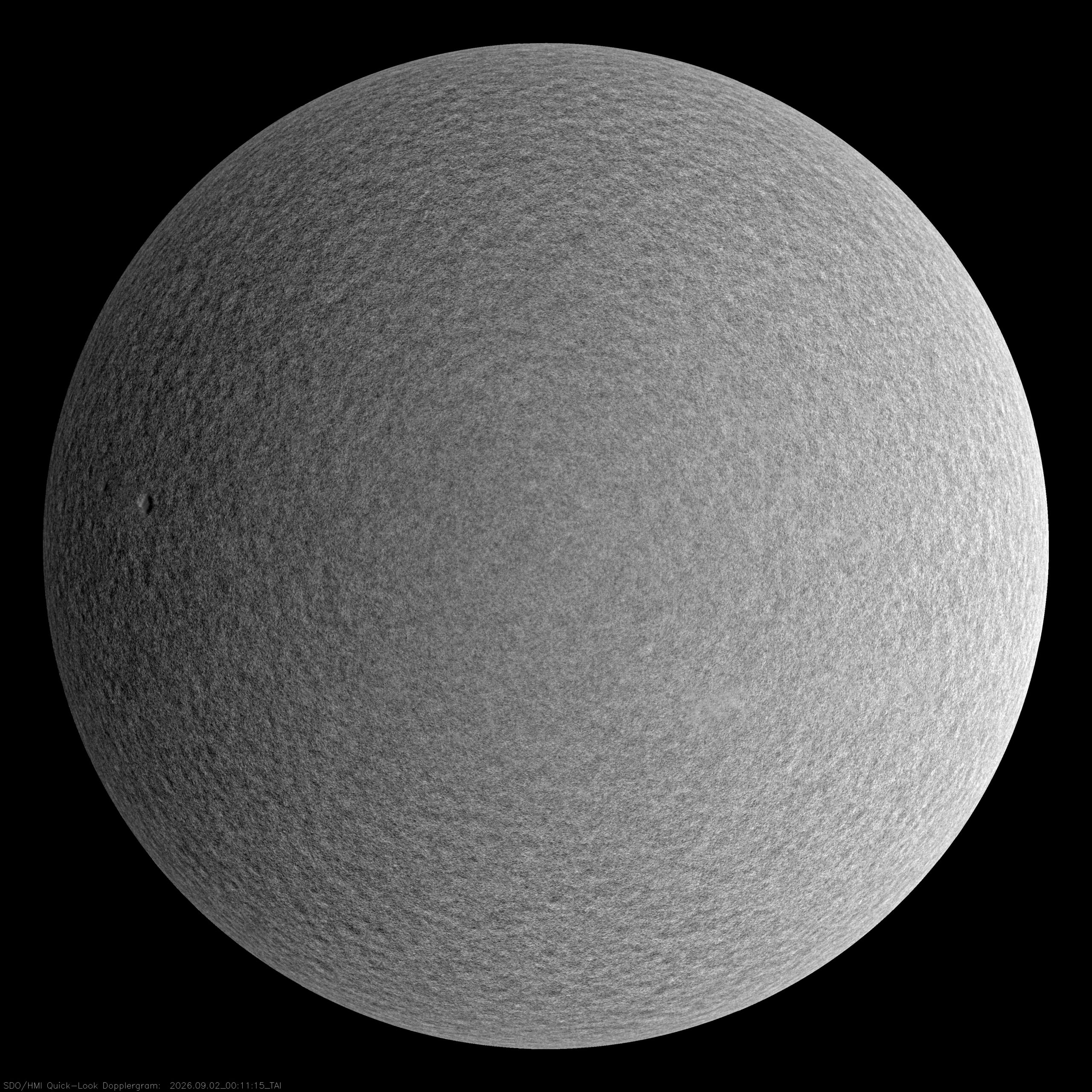
The data come from several places. NASA’s Solar Dynamics Observatory supplies rapid images and measurements in ultraviolet wavelengths, while NOAA’s Geostationary Operational Environmental Satellites track the Sun’s X-ray output. Ground-based observatories add another view of active regions, the magnetically complex areas where flares occur. Combining those streams helps the team answer three separate questions: Is this a genuine flare, where on the Sun is it happening, and is it likely to last?
A November 2026 paper in The Astrophysical Journal, led by Juliana T. Vievering, describes the early-alert system used for the first campaign. The later FOXSI-5 framework brought several tools into one operator display. One component applied trigger rules developed from more than 10,000 historical flares recorded by GOES. Another used a random-forest model to estimate how much time remained, while other services mapped hot material in Solar Dynamics Observatory images and tracked the flare’s short-term trend.
That mixture of automation and human judgment is central to the design. A model can update faster than a person can compare several live feeds, but the launch director still has to weigh data quality, rocket readiness, range safety, and the remaining campaign window. The output is decision support, not a command that fires a rocket by itself. Under those conditions, a useful alert must be quick, understandable, and honest about uncertainty.
The 2024 campaign proved the timing could work
The first major test came at Poker Flat Research Range in Alaska on April 17, 2024. The FOXSI-4 and Hi-C Flare experiments were waiting for an eruption suitable for both instruments. FOXSI, the Focusing Optics X-ray Solar Imager, was built to form direct images of solar X-rays with high sensitivity. Hi-C, the High-Resolution Coronal Imager, examined the corona in extreme ultraviolet light, providing a complementary view of the same rapidly changing event.
When an M-class flare began, the alert system gave the teams enough information to act inside a five-to-seven-minute decision window. FOXSI-4 launched first, and Hi-C followed about one minute later. The instruments observed the flare during the same event, allowing researchers to compare fine ultraviolet structures with the places producing energetic X-rays. A separate 2026 instrument paper reports that FOXSI-4 achieved direct focusing observations of a GOES M1.6-class flare with imaging spectroscopy in soft and hard X-rays.
The success was more than a lucky launch. It showed that multiple low-latency data sources could be turned into a usable decision while an eruption was changing in real time. A single delayed feed, a misleading rise in X-ray brightness, or an incorrect estimate of the flare’s duration could have wasted the flight. Instead, the system helped two specialized payloads arrive while the target was still active.
FOXSI-5 caught three flares in a five-minute flight
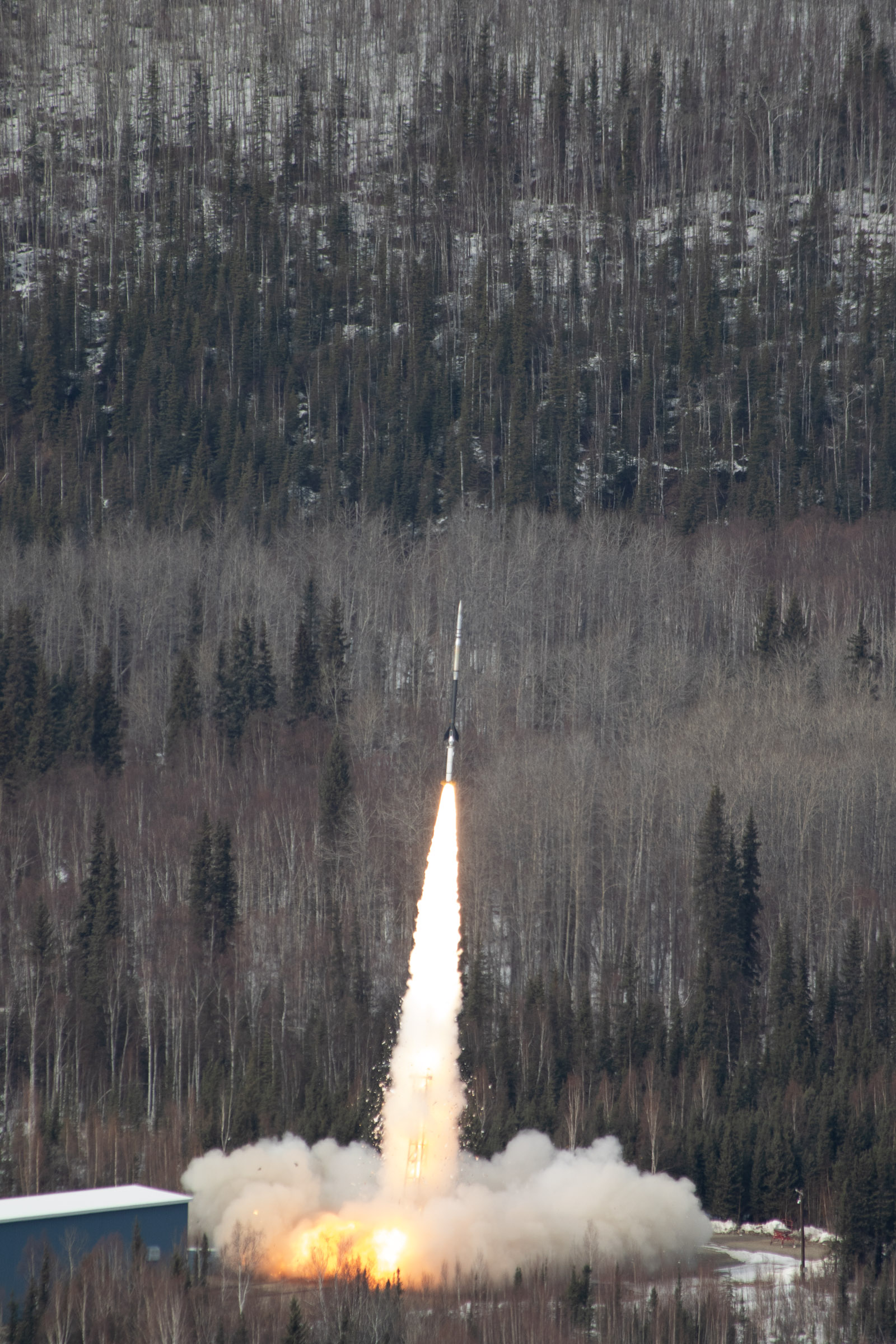
The next campaign raised the stakes. FOXSI-5 waited at Poker Flat for nearly two weeks in May 2026, with the team ready to launch on short notice. The Sun finally became active with only two days left in the window. At 11:23 a.m. local time on May 14, a Black Brant IX carried the instrument above Alaska, where FOXSI-5 successfully observed three small solar flares during its brief flight.
That result highlights why flare size is not the only measure of scientific value. Small flares happen more often than the spectacular eruptions that dominate headlines, and they offer repeated tests of how magnetic energy becomes heat and fast particles. FOXSI’s focusing optics can separate faint X-ray sources with better sensitivity and dynamic range than older indirect imaging methods. Seeing several flare sites during one flight gave the team an unusual snapshot of activity across the Sun.
The 2026 system was also a test of scientific infrastructure. Its tools were developed across several institutions, depended on live spacecraft and ground data, and had to keep working despite latency or missing inputs. Researchers presented the framework as a case study in coordinating distributed services for a decision that could not be replayed later. That lesson reaches beyond sounding rockets: observatories studying brief events need common data formats, clear displays, and plans for what to do when one source fails.
What five minutes can reveal, and what the system cannot do
Hard X-rays are especially useful because they trace energetic electrons produced during a flare. By locating those X-rays and measuring how their energy changes, researchers can test ideas about magnetic reconnection, particle acceleration, and the transfer of energy through the corona. When FOXSI data are combined with ultraviolet images, full-Sun X-ray measurements, and observations from other spacecraft, a few minutes become one tightly synchronized part of a much longer record.
The alert system also has limits. It is not a promise that a major flare will occur tomorrow, and it does not yet replace operational space-weather forecasting. It reacts to early signatures from an eruption that has begun, then estimates whether the event is suitable for a particular observing campaign. A trigger that works for a five-minute rocket flight may need different thresholds, validation, and reliability standards before it can guide other instruments or public warnings.
Even so, the approach solves a real problem in experimental science: how to place a short-lived instrument in the right place at the right time. The 2024 launches showed that an actionable early alert could coordinate two rockets around one M-class flare. FOXSI-5 then demonstrated that an improved system could guide another flight into three active events. The observing window remained tiny, but better timing made those five minutes count.