
 Akshay Dinesh
A charcoal grill looks simple: black fuel, metal vents, a grate, and heat. The interesting part is that the grill is not just holding fire. It is managing air. When the coals glow steadily, oxygen is reaching hot carbon, hot gases are rising, cooler air is being pulled in, and heat is moving toward the food in several ways at once. Change the airflow, and the whole system changes.
That is why opening or closing a vent can make a grill feel almost alive. More air can wake up dull coals. Too little air can make them fade, smoke, and cool. Too much uncontrolled air can make heat run higher than planned. The science is ordinary enough to happen in a backyard, but it is the same basic story behind combustion, convection, and heat transfer in many larger systems.
Charcoal Burns When Carbon Meets Oxygen
Charcoal is mostly carbon left behind after wood has been heated with limited oxygen. That process drives off much of the water and many volatile compounds in the original wood, leaving a fuel that can burn hot and steadily. When charcoal is lit, carbon at the surface reacts with oxygen in the air. The reaction releases heat, and that heat keeps nearby carbon hot enough to keep reacting.
In a clean, hot burn with enough oxygen, much of the carbon becomes carbon dioxide. Real fires are messier. Parts of the coal may be cooler, ash may block the surface, and oxygen may not reach every spot equally. Under those less complete conditions, burning fuel can also produce carbon monoxide, which is why charcoal belongs outdoors in open air rather than in a garage, tent, vehicle, or home.
The U.S. Consumer Product Safety Commission warns that charcoal can produce carbon monoxide until the coals are completely extinguished. That detail matters because a grill that looks quiet may still be chemically active. The same invisible gas risk that makes indoor charcoal dangerous also helps explain why airflow is not just a cooking preference. Combustion depends on the path oxygen takes in and the path exhaust gases take out.
Vents Control the Fire’s Breathing Room
A charcoal grill usually has lower vents near the fuel and upper vents near the lid. The lower vents let fresh air enter near the coals. The upper vents give hot gases and smoke a way to leave. Together, they create a pressure and temperature pattern that keeps air moving through the grill instead of sitting still around the fuel.
When lower vents are opened wider, more oxygen can reach the coals. The fire can burn faster, release more heat, and raise the grill temperature. When lower vents are narrowed, the oxygen supply drops. The coals may still glow, but the burn slows, the temperature falls, and smoke may increase because combustion is less complete.
The top vent matters too. If hot gases cannot leave easily, fresh air has less reason to enter. Opening the top vent gives rising gases an exit, which helps pull new air through the lower vent. Closing the top vent too far can make the grill sluggish even if the lower vent is partly open. Good airflow is a pathway, not just a hole.
Convection Pulls Fresh Air Toward the Coals
Hot air is less dense than cooler air, so it rises. In a grill, hot gases above the coals move upward and out through the lid vent. As they leave, cooler outside air is drawn in through lower openings. This motion is convection, and it is one reason a charcoal chimney starter works so well: the tall metal cylinder stacks fuel above an air opening, turning rising hot gases into a strong upward draft.
That draft does two jobs at once. It carries oxygen to the lower coals, and it carries heat upward toward the coals above them. The bottom coals ignite first, then rising hot gases and radiant heat warm the next layer. Once enough pieces are burning, the whole stack begins to glow. The metal shape does not create energy by itself. It arranges the air path so the fuel can use oxygen efficiently.
A covered grill does something similar, though usually less dramatically. The lid traps enough hot air to surround the food, while vents keep that air from becoming stagnant. For low-and-slow cooking, the goal is often a gentle, controlled draft. For hotter grilling, the goal is a stronger burn and more direct heat. In both cases, temperature follows air movement.
Heat Reaches Food in More Than One Way
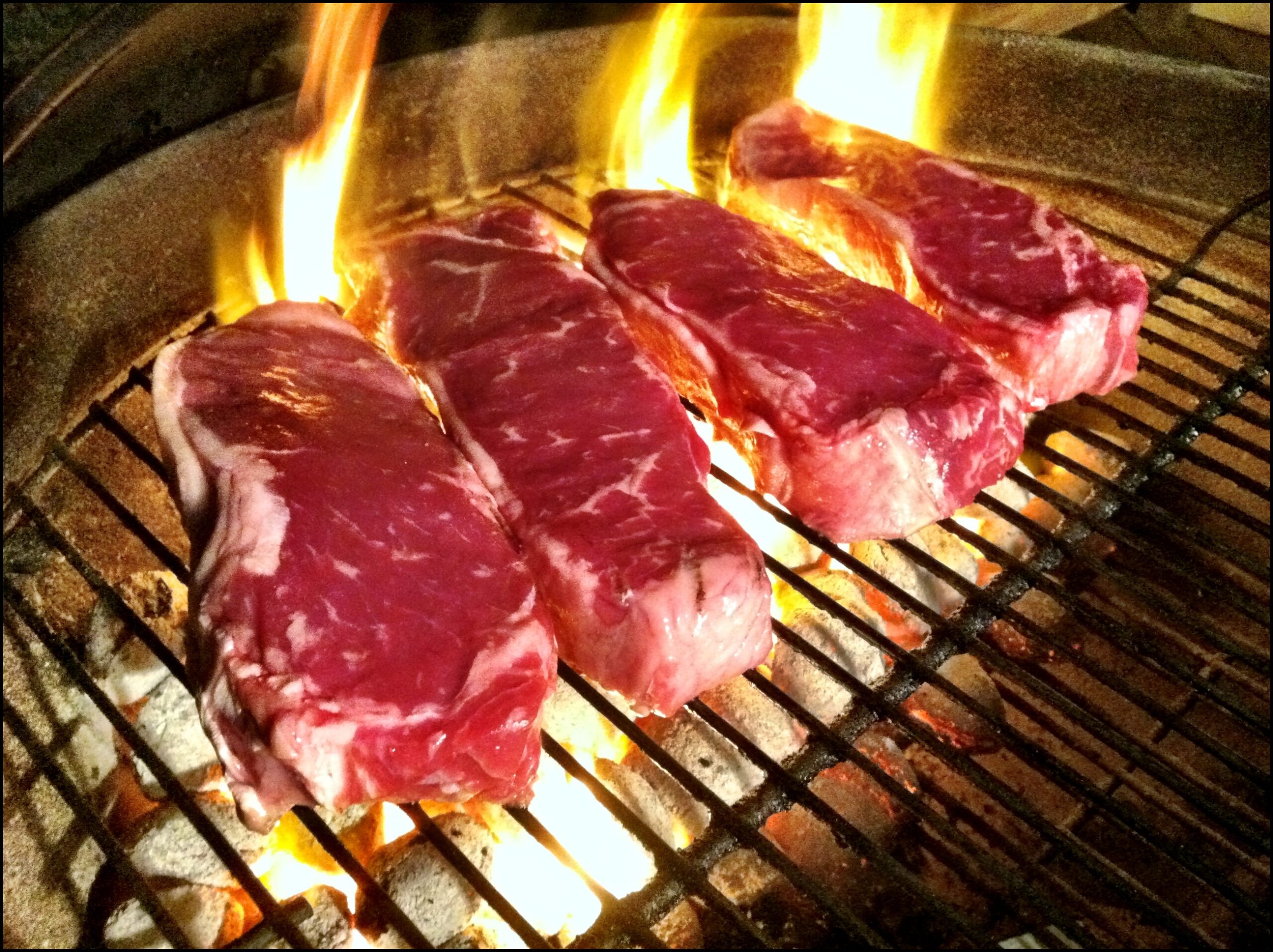
Glowing charcoal cooks food mainly through radiant heat, convection, and conduction. Radiant heat travels from the hot coals as infrared energy. That is why food directly above a bed of coals can brown quickly even before the surrounding air feels uniformly hot. The food is receiving energy straight from the glowing surface below.
Convection also matters. Hot air and combustion gases move around the food, especially when the lid is closed. This helps cook surfaces that are not directly facing the coals and makes the grill behave more like an outdoor oven. The moving air can even out temperature, but it can also dry the surface if the heat is high and the cooking time is long.
Conduction happens where food touches the metal grate. The grate absorbs heat from the coals and hot air, then transfers energy into the food at contact points. Those dark grill marks are not magic stripes from flame. They are places where hot metal delivered heat quickly into the surface, triggering browning reactions more intensely than the surrounding area.
Ash, Spacing, and Fuel Shape the Burn
Airflow is not controlled only by vents. The fuel bed itself can either welcome air or block it. If ash builds up under the coals, it can clog the lower openings and keep oxygen from reaching the fuel. If briquettes are packed too tightly, air has fewer channels to move through. If lump charcoal pieces are spread with large gaps, some areas may burn hot while others stay weak.
This is why arranging coals changes how a grill behaves. A thick pile creates a hotter zone because pieces heat one another and share a concentrated oxygen flow. A thinner layer spreads heat out and may burn more gently. A two-zone setup, with coals on one side and little or no fuel on the other, gives both direct radiant heat and a cooler area where food can finish more slowly.
Fuel type adds another layer. Briquettes are shaped for consistency and often burn predictably. Lump charcoal is irregular, so it may light quickly and respond sharply to airflow, but pieces can vary in size and density. Neither choice escapes the same physics. The fire still needs oxygen, the hot gases still rise, and ash still gets in the way if it blocks the path.
When Airflow Becomes a Safety Issue
Good airflow makes a grill easier to control, but it does not make charcoal safe indoors. Outdoor airflow spreads combustion gases into the open air. Enclosed spaces trap them. Carbon monoxide is especially dangerous because it has no color or smell, and a person may not recognize the problem before symptoms become serious.
The CPSC’s charcoal guidance is blunt because the chemistry leaves little room for shortcuts: charcoal should not be burned inside homes, garages, tents, campers, vehicles, or similar enclosed spaces. Ventilation that seems adequate is not a reliable protection. Freshly used coals should not be brought indoors either, because they can continue producing carbon monoxide while cooling.
Fire risk follows airflow too. Wind can push sparks, feed flare-ups, or make a grill burn hotter than expected. Grease and food drippings can ignite when they meet hot coals or surfaces. A grill set too close to siding, railings, dry leaves, or overhanging branches gives heat and sparks a chance to reach fuel that was never meant to be part of the cooking system.
Reading a Grill Like a Small Heat Engine
A charcoal grill is a small, open heat engine. Fuel stores chemical energy. Oxygen lets that fuel react. Convection moves gases through the grill. Radiation, moving air, and hot metal transfer energy into food. Vents, ash, spacing, wind, and the lid all affect how smoothly the system works.
That is why the most useful grill adjustments are often simple observations. Are the coals glowing evenly or fading under gray ash? Is smoke pouring out because air is restricted or because fat is dripping onto hot fuel? Does opening a vent raise the temperature after a few minutes? Does closing it calm the burn without smothering it completely?
Once airflow is visible in that way, charcoal grilling becomes less mysterious. The heat is not random, and the vents are not decoration. They are controls for a moving stream of oxygen and hot gas. A steady fire is really a steady conversation between fuel, air, and heat, with the cook learning how to keep that conversation from getting too quiet or too loud.






Add comment