
 Akshay Dinesh
Air conditioners feel ordinary because they sit in windows, behind houses, above ceilings, and inside walls. The chemistry inside them is less ordinary. A cooling system depends on a refrigerant, a fluid that can absorb heat indoors, carry it through a closed loop, and release it outdoors. For decades, that job has been done by chemicals that are excellent at moving heat but troublesome when they escape into the air.
That is why refrigerants are changing. The shift is not happening because older air conditioners suddenly stopped working, or because one familiar refrigerant disappeared overnight. It is happening because cooling demand is rising, leaks add up across millions of systems, and some common hydrofluorocarbon refrigerants can warm the atmosphere far more strongly than carbon dioxide molecule for molecule. Newer refrigerants try to keep the useful cooling performance while reducing the climate cost of accidental releases.
How a Refrigerant Moves Heat
A refrigerant works because it changes pressure, temperature, and state as it moves through an air conditioner or heat pump. Indoors, it passes through an evaporator coil at low pressure. There it boils, changing from liquid to gas while absorbing heat from indoor air. A fan pushes room air across the cold coil, and the cooled air returns to the living space.
The compressor then squeezes the refrigerant gas, raising its pressure and temperature. Outdoors, the hot refrigerant moves through a condenser coil, where it releases heat to outside air and condenses back into a liquid. An expansion device lowers the pressure again, and the cycle repeats. The same basic loop can cool a home in summer or, in a heat pump, move heat indoors during colder weather.
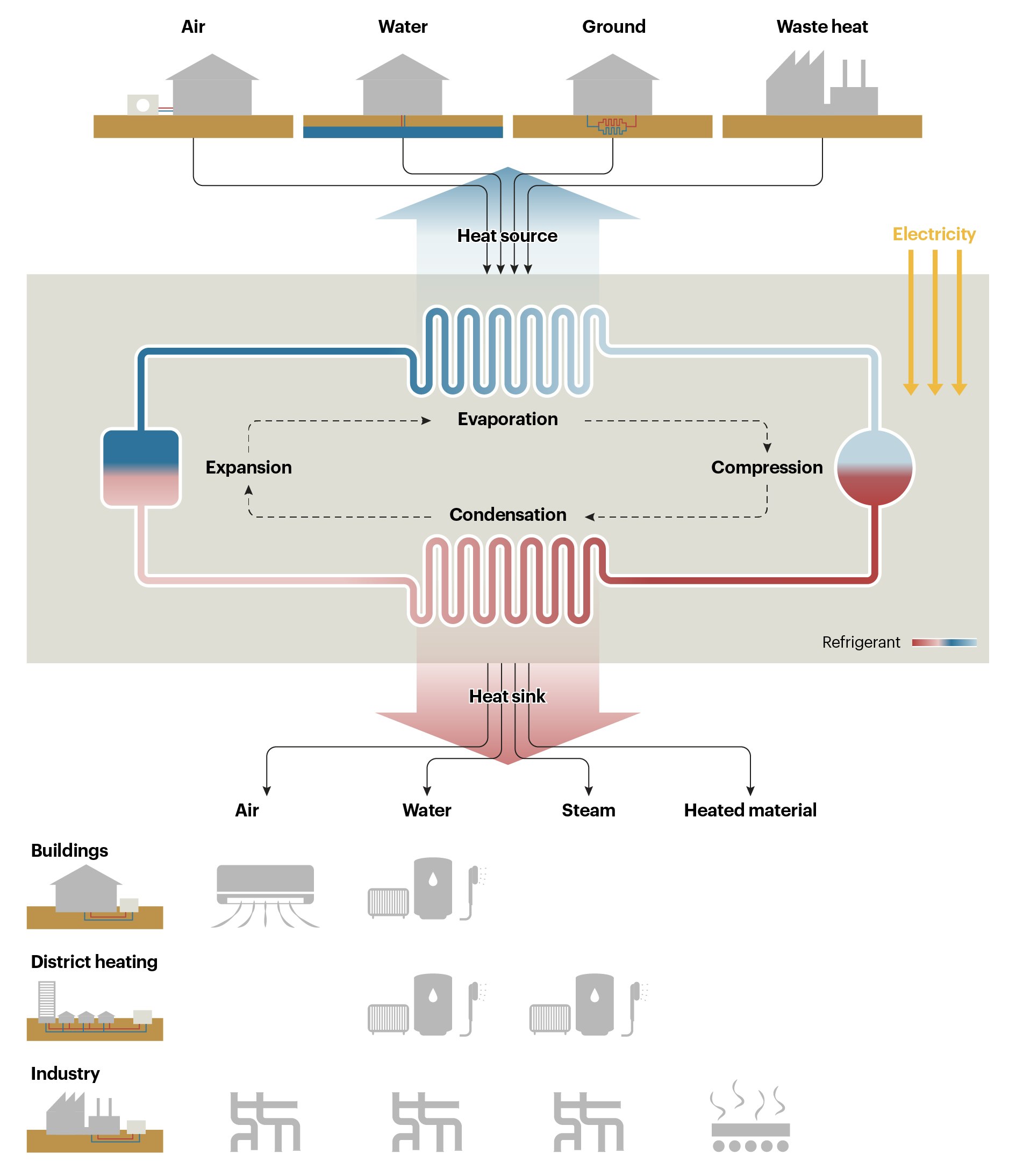
The chemical has to fit a demanding job. It must boil and condense at useful temperatures, work safely under pressure, avoid damaging equipment, and transfer heat efficiently. Small changes in refrigerant chemistry can affect compressor design, coil size, pressure ratings, service tools, safety codes, and manufacturing. That is why refrigerant transitions are slower and more technical than simply choosing a new liquid.
Why Older Refrigerants Became a Climate Problem
Refrigerant history is partly a story of solving one problem and discovering another. Chlorofluorocarbons and hydrochlorofluorocarbons were widely used in the twentieth century, but many damaged the stratospheric ozone layer. International controls under the Montreal Protocol pushed the world away from the worst ozone-depleting substances. Hydrofluorocarbons, or HFCs, became common replacements because they did not have the same ozone impact.
The problem is that many HFCs are powerful greenhouse gases. The U.S. Environmental Protection Agency describes HFCs as having global warming potentials that can be hundreds to thousands of times higher than carbon dioxide. Global warming potential is a comparison tool: carbon dioxide is assigned a value of 1, and other gases are compared by how much heat they trap over a set time period, usually 100 years.
That comparison does not mean a small air-conditioner leak has the same scale as burning large amounts of fuel. It means the leak is chemically potent. If a refrigerant with a high global warming potential escapes during installation, poor servicing, storm damage, equipment disposal, or a slow leak, a relatively small mass can have an outsized climate effect. Across millions of cooling systems, those losses become a policy and engineering concern.
What the R-410A Transition Means
One familiar refrigerant in residential air conditioning has been R-410A, a blend that replaced older ozone-depleting refrigerants in many systems. It performs well, but its global warming potential is high compared with many newer alternatives. The current transition in new equipment is part of the broader HFC phasedown created under the American Innovation and Manufacturing Act, often shortened to the AIM Act.
The AIM Act directs the EPA to reduce the production and consumption of HFCs over time and to manage transitions in specific sectors, including refrigeration and air conditioning. EPA materials describe the program as a phasedown rather than a simple one-day ban. That distinction matters. A phasedown lowers supply and pushes new equipment toward lower-GWP refrigerants, while existing systems can usually continue to be serviced under applicable rules.
For households, the practical point is narrower than many headlines make it sound. An older R-410A system does not automatically become illegal to own or repair. New equipment rules shape what manufacturers can make and what kinds of systems enter the market. Servicing an existing system, choosing whether to repair or replace it, and handling refrigerant safely remain separate questions. A licensed technician still has to recover refrigerant rather than venting it, match the correct refrigerant to the equipment, and follow safety rules for the system being serviced.
Why Lower-GWP Does Not Mean Simple
Lower-GWP refrigerants reduce one important environmental risk, but they are not magic substitutes. Engineers still have to balance efficiency, safety, pressure, cost, availability, and compatibility. Two names many homeowners may hear are R-32 and R-454B, both used as replacements in some new air-conditioning and heat-pump equipment. They can sharply reduce global warming potential compared with R-410A, but they may require equipment designed specifically for them.
Some newer refrigerants are classified as mildly flammable. That does not make modern systems unsafe when properly designed and installed, but it does change safety expectations. Equipment, sensors, charge limits, ventilation assumptions, service procedures, and technician training all matter. A refrigerant that is safer for the climate can still require more careful handling than the familiar chemicals it replaces.
Efficiency also matters because most of an air conditioner’s climate impact often comes from the electricity it uses over years of operation. A low-GWP refrigerant in an inefficient system is not the whole answer. A well-designed system should use a refrigerant with a lower leak impact while also moving heat efficiently, especially during the hottest hours when power demand is high. Refrigerant policy and energy-efficiency standards are different tools, but they point toward the same larger goal: cooling that protects health without increasing emissions more than necessary.
What Consumers Should Watch For
The refrigerant transition is easiest to understand through practical questions. If an existing air conditioner is working well, the refrigerant change alone is usually not a reason to replace it immediately. Proper maintenance, leak repair, and careful recovery at end of life matter more than panic replacing equipment. If a system is old, inefficient, or repeatedly leaking, the new refrigerant landscape becomes one more factor in the repair-or-replace decision.
When buying new equipment, it is worth asking what refrigerant the system uses, whether the installer is trained for that refrigerant, and how future service will be handled. The answer should match the equipment label and manufacturer specifications. Mixing refrigerants or treating newer A2L systems as if they were older systems can create performance and safety problems.
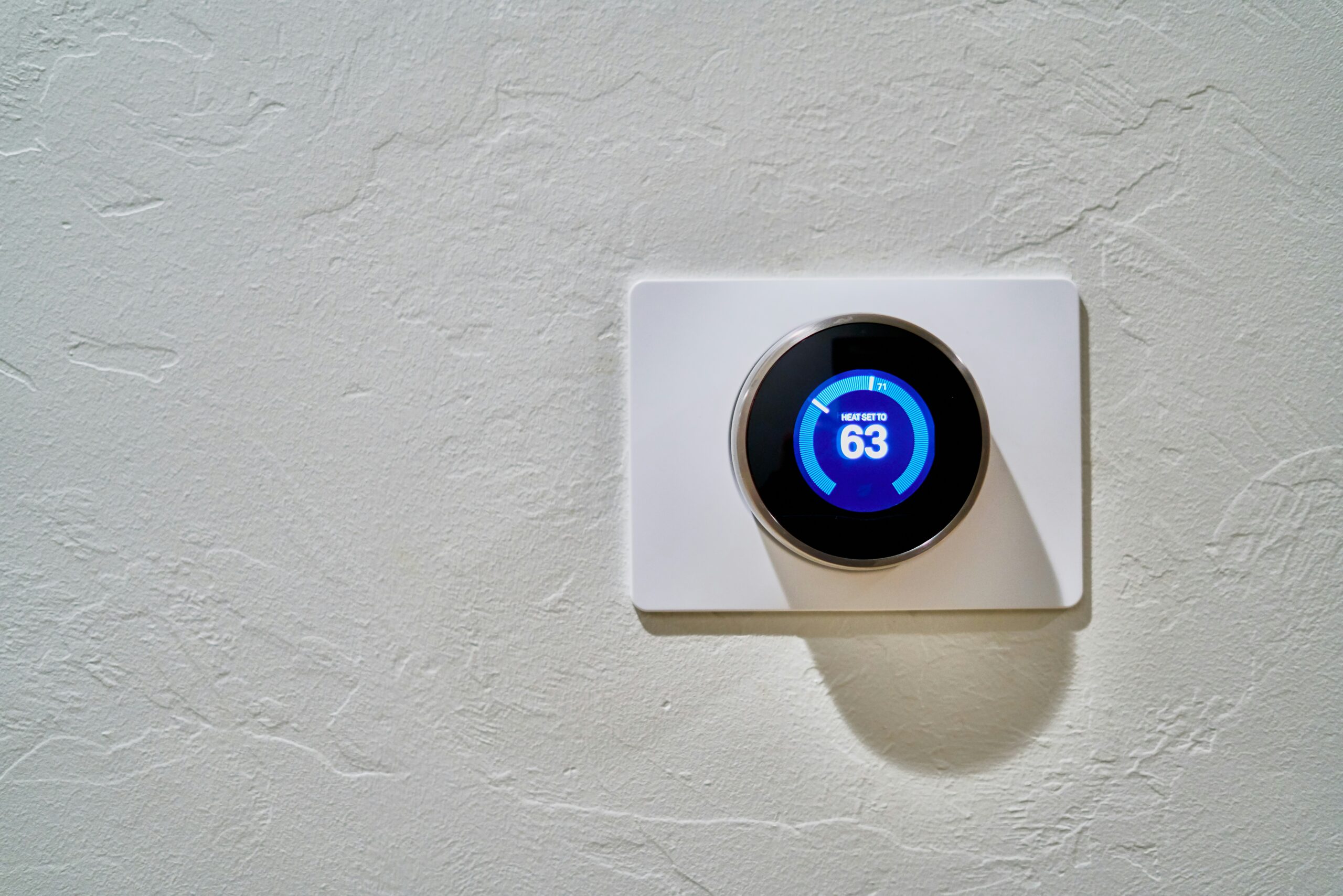
It is also useful to separate three ideas that often get blurred together: the refrigerant inside the machine, the efficiency of the machine, and the quality of the installation. A high-efficiency unit can perform poorly if it is sized badly or installed with duct problems. A lower-GWP refrigerant reduces the climate impact of leaks, but preventing leaks is still better. A smart thermostat may reduce wasted cooling, but it cannot fix an undercharged system or a dirty coil.
The Bigger Cooling Question
Cooling is becoming more important as heat waves strain homes, schools, workplaces, and power grids. Air conditioning can be lifesaving during extreme heat, especially for older adults, young children, people with medical conditions, and communities where nighttime temperatures remain high. The goal is not to make cooling seem wasteful. The goal is to make cooling cleaner, safer, and more reliable as more people need it.
Refrigerant changes are one piece of that work. Better building insulation, shade, ventilation, efficient heat pumps, cleaner electricity, leak detection, technician training, and responsible disposal all matter too. A refrigerant does its job invisibly when a system is working, but its chemistry connects the comfort of a single room to the atmosphere outside. That is why the small label on an air conditioner now carries a larger story about climate, engineering, and the future of everyday cooling.