 Akshay Dinesh
Pure water is a surprisingly poor conductor of electricity. That can sound strange because people often hear warnings about electricity and water together, but the danger usually comes from what is dissolved in the water, not from the water molecule alone. Tap water, rainwater, sports drinks, pool water, and seawater all contain dissolved substances. Some of those substances break apart into charged particles called ions, and those moving ions are what let an electric current pass through the liquid.
That is the central idea behind electrolytes. An electrolyte is a substance that forms ions when it dissolves in water or reacts with water. The word often appears on drink labels, but in chemistry it belongs to a broader family of ideas: solutions, charges, ionic compounds, acids, bases, and conductivity. Once the role of moving ions is clear, several everyday facts make more sense, from why salt water conducts better than distilled water to why chemists can test water quality by measuring conductance.
Electric Current Needs Moving Charge
Electric current is not a kind of invisible fluid that flows through anything it touches. It is the movement of electric charge. In a metal wire, the moving charges are electrons that can travel through the structure of the metal. In a liquid solution, the situation is different. The charge carriers are usually ions: atoms or groups of atoms that have gained or lost electrons and therefore carry a positive or negative charge.
A positive ion is called a cation, and a negative ion is called an anion. Sodium ions, written as Na+, are cations. Chloride ions, written as Cl-, are anions. When an electric field is applied across a solution, positive ions tend to move toward the negative side, while negative ions tend to move toward the positive side. That opposite motion is still organized charge movement, so the solution can conduct electricity.
Water matters because it gives ions room to move. A dry crystal of table salt is made of sodium and chloride ions, but those ions are locked into a repeating solid structure. They are charged, yet they cannot travel freely through the solid. When the salt dissolves, water molecules surround the ions and pull them away from the crystal. The ions become mobile, and mobility turns hidden charge into a working pathway for current.
How Water Pulls Ionic Compounds Apart
Water molecules are polar. Each molecule has a slightly negative oxygen side and slightly positive hydrogen sides. That uneven charge distribution lets water interact strongly with ions. The oxygen side is attracted to positive ions, while the hydrogen sides are attracted to negative ions. These attractions are strong enough to help separate many ionic compounds into individual particles.
Table salt is the familiar example:
NaCl(s) -> Na+(aq) + Cl-(aq)
The symbol (s) shows that sodium chloride begins as a solid. The symbol (aq) means the ions are dissolved in water. The equation does not mean the atoms disappear or become something mysterious. It means the solid crystal separates into charged particles that are now spread through the solution.
This process is called dissociation. It is why a small amount of salt can noticeably change water’s electrical behavior. More dissolved ions generally give current more possible charge carriers. That does not mean every solution with dissolved material conducts well. Sugar dissolves easily in water, but sugar molecules stay neutral. They spread out, yet they do not become positive and negative ions. A sugar solution therefore behaves very differently from a salt solution in a conductivity test.
Strong, Weak, and Non-Electrolytes
Chemists often sort dissolved substances into three practical groups: strong electrolytes, weak electrolytes, and nonelectrolytes. The difference is not about whether a substance sounds powerful. It is about how many ions the substance actually provides in solution.
A strong electrolyte produces many ions because it dissociates nearly completely or reacts with water to form ions almost completely. Many soluble salts are strong electrolytes. So are strong acids such as hydrochloric acid and strong bases such as sodium hydroxide. If a strong electrolyte dissolves well, the solution usually conducts clearly because charged particles are plentiful.
A weak electrolyte forms ions only partly. Acetic acid, the acid in vinegar, is a common example. Some acetic acid molecules donate hydrogen ions in water, but many remain as neutral molecules. The result is a solution that can conduct electricity, but not as strongly as a comparable solution full of ions.
A nonelectrolyte dissolves without producing ions. Sugar is the classroom favorite because it dissolves visibly but does not create charged particles. Ethanol is another example. The molecules mix with water, but the solution lacks the moving ions needed for strong electrical conduction.
- Strong electrolyte: many dissolved ions, usually strong conductivity.
- Weak electrolyte: some dissolved ions, weaker conductivity.
- Nonelectrolyte: dissolved neutral molecules, little conductivity from the solute.
Why Concentration and Temperature Change Conductivity
Conductivity is not just a yes-or-no property. A solution can conduct a little, a lot, or somewhere in between. One major factor is ion concentration. If more ions are dissolved in the same amount of water, there are more charged particles available to move. That is why seawater usually conducts much better than most freshwater, and why a more concentrated salt solution conducts better than a very dilute one.
The type of ion also matters. Ions differ in size, charge, and how easily they move through water. A solution with magnesium ions, sulfate ions, sodium ions, or chloride ions will not behave exactly the same just because the total amount of dissolved material is similar. Water-quality scientists therefore use conductivity as a useful clue, not as a complete chemical fingerprint.
Temperature changes the reading too. Warmer water usually lets ions move more easily because molecular motion is faster and the liquid is less resistant to movement. For fair comparison, water measurements are often reported as specific conductance adjusted to a standard temperature, commonly 25 degrees Celsius. That adjustment helps scientists compare a cold stream sample with a warmer one without confusing temperature effects for changes in dissolved ions.

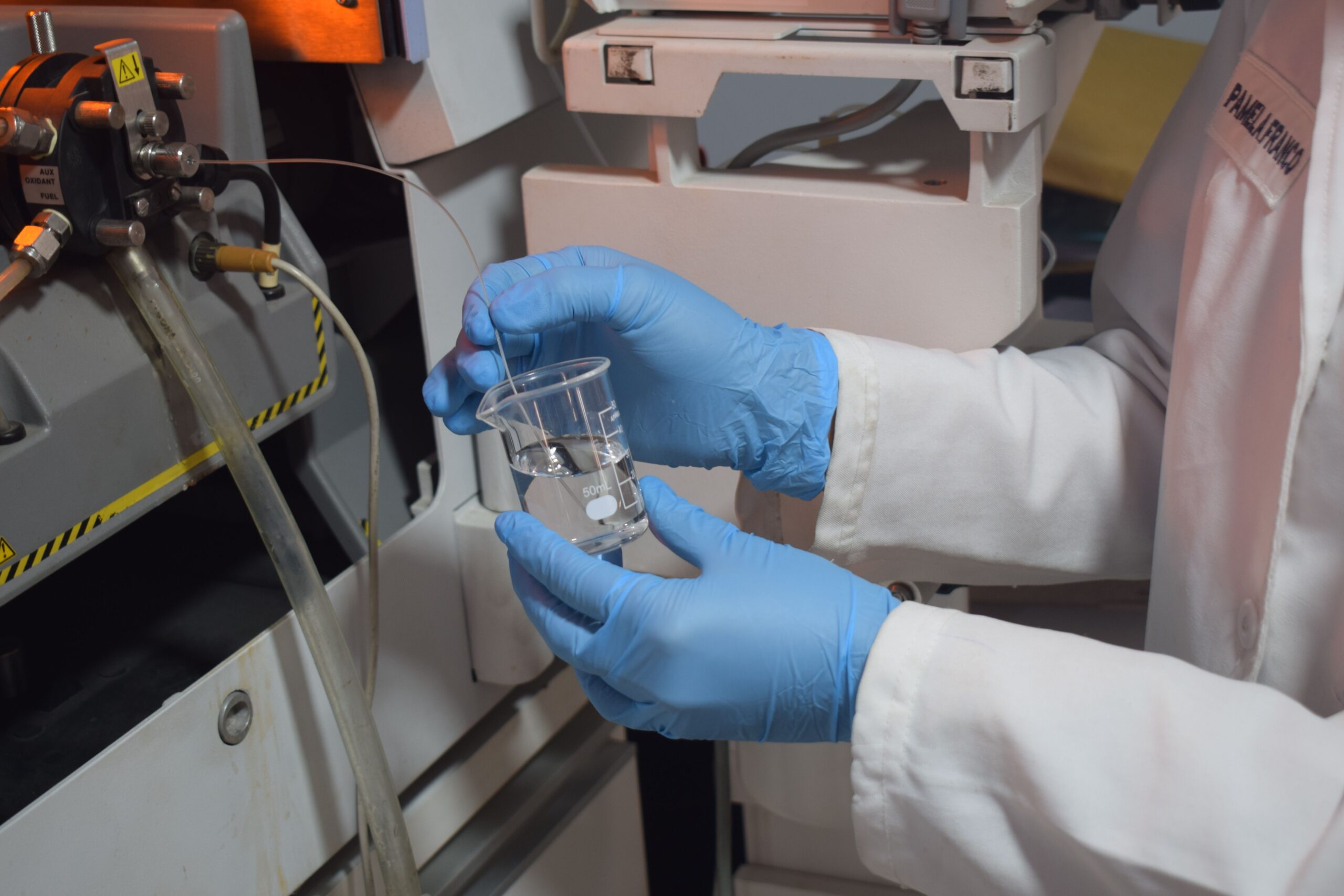
This is one reason conductivity meters are useful in field and laboratory work. They cannot tell exactly which ions are present by themselves, but they can quickly show whether dissolved ions are unusually high or low. A sudden change in a river’s conductivity might point investigators toward road salt runoff, wastewater, mine drainage, seawater intrusion, or another source of dissolved material that deserves closer testing.
Common Misconceptions About Water and Electricity
The simplest misconception is that water itself is the conductor. Very pure water contains only tiny amounts of ions from the natural self-ionization of water molecules, so it conducts poorly. Real-world water is rarely pure. It picks up minerals from rocks, salts from soil, chemicals from plumbing, and other dissolved substances from the environment. Those dissolved ions make the difference.
Another misconception is that anything dissolved in water must help it conduct. Dissolving only means particles spread through the water. Conducting requires charged particles that can move. Salt and sugar both disappear into water, but salt separates into ions while sugar remains as neutral molecules. A clear solution can therefore hide very different chemistry.
It is also easy to mix up electrolyte chemistry with nutrition. Sports drinks contain dissolved ions such as sodium and potassium because the body uses ions in nerve signals, muscle function, and fluid balance. That nutritional use is real, but it is not the whole meaning of electrolyte. In chemistry, any substance that provides mobile ions in solution can be an electrolyte, even if it has nothing to do with a drink label.
The Big Idea: Charge Must Be Free to Move
Electrolytes conduct electricity in water because they create mobile charged particles. A solid ionic compound may already contain charged ions, but if those ions are trapped in place, current cannot move through the material easily. Water can free many of those ions by surrounding and separating them. Once positive and negative ions can travel through the solution, they can carry charge from one side to the other.
That single idea connects many parts of chemistry. It explains why salt water conducts better than distilled water, why acids and bases often conduct, why sugar water is a poor conductor, and why conductivity can reveal something about dissolved minerals in natural water. The details can become sophisticated, but the foundation is simple: electricity in a solution needs charge, and electrolytes provide charge that can move.