 Akshay Dinesh
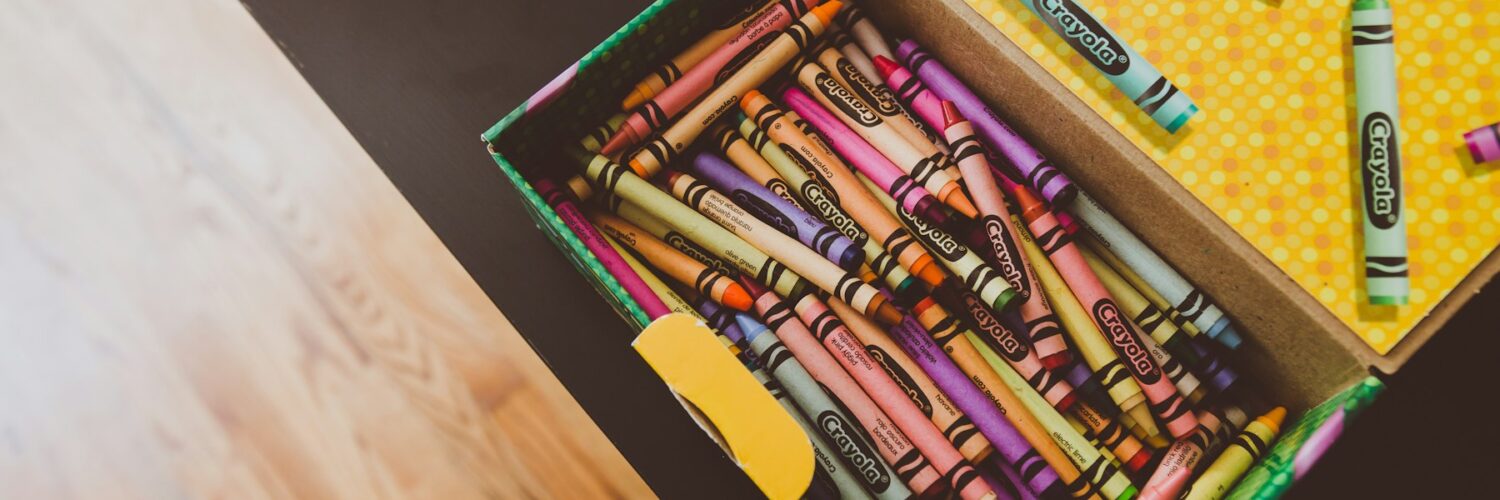
A crayon looks simple because it does not need a cap, a cartridge, a brush, or a bottle of ink. Press it across paper, and color appears. Press harder, and the mark grows darker and shinier. Use the side instead of the point, and the same crayon can shade a wide patch instead of drawing a sharp line.
That familiar mark comes from a quiet piece of materials science. A crayon is not releasing liquid ink into the page. It is leaving behind tiny amounts of colored wax, scraped from the solid stick by the rough surface of the paper. The result depends on the crayon’s ingredients, the paper’s texture, the pressure of the hand, and the way light bounces from pigment particles trapped in wax.
A crayon is color held inside wax
Most ordinary classroom crayons are built from wax and pigment. Crayola, describing its basic manufacturing process, says its crayons are made by melting paraffin wax, mixing in measured color pigments, and pouring the hot mixture into molds until it cools into solid sticks. The exact recipe can vary by brand and crayon type, but the main idea is the same: a solid wax body carries particles of color.
Paraffin wax is useful because it is firm at room temperature but not rock-hard. It can be shaped into a stick, wrapped in paper, and held by a child without flowing like paint. At the same time, it is soft enough that pressure against paper can remove a thin layer from the tip. That balance is why a crayon can survive in a backpack and still mark a page when it is rubbed across a surface.
The pigment does the color work. Pigments are tiny solid particles that absorb some wavelengths of light and reflect others. A red crayon looks red because its pigment reflects more red light back to the eye while absorbing much of the rest. The wax holds those particles together and carries them onto the page, a little like a solid version of paint binder.
Museum conservation sources, including the Museum of Fine Arts Boston’s CAMEO materials database, describe wax crayons broadly as wax mixed with a colorant, with some formulas also using fillers or other ingredients to adjust hardness, smoothness, and handling. Those extra ingredients matter because a crayon has to do several jobs at once. It must be strong enough not to crumble, soft enough to draw, bright enough to show color, and safe enough for ordinary classroom use.
Paper scrapes off a thin layer of wax
Paper feels smooth from a distance, but under magnification it is a landscape of fibers, pores, hills, and tiny rough spots. When a crayon moves across that surface, the paper acts a bit like an extremely gentle file. It catches the wax, scrapes off microscopic bits, and holds them between the paper fibers.
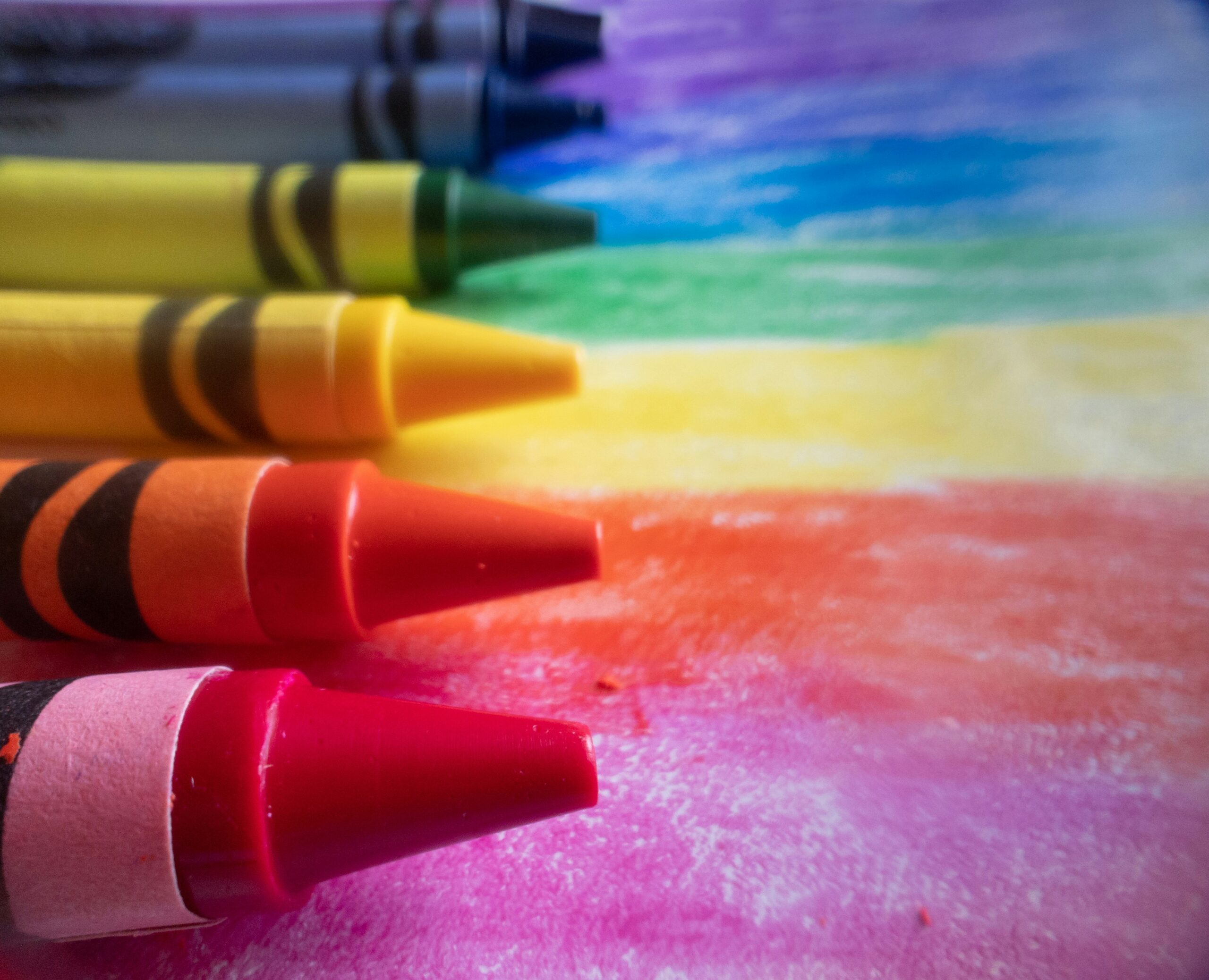
This is why crayons usually look richer on paper with some tooth, meaning a surface with enough texture to grab the material. Very slick paper gives the wax fewer places to catch, so the color may look faint or streaky. Rougher paper can hold more wax, but it may also make the mark grainier because the crayon colors the high points first and leaves small valleys lighter.
The white flecks that appear in a quick crayon stroke are a clue to this process. The crayon has not failed; it has simply touched some parts of the paper more than others. Pressing harder, changing the angle, or coloring over the same area again fills more of those spaces with wax. That is why a pale first layer can become a smoother, heavier color after repeated passes.
The point of the crayon changes the mark as well. A sharpened or freshly molded tip concentrates pressure into a smaller area, so it can make a narrower, darker line. The side of a crayon spreads pressure over a larger area, which deposits color more lightly and broadly. The material is the same, but the contact between wax and paper changes the effect.
Pressure, friction, and heat change the mark
Coloring is not only a matter of rubbing harder. Pressure, friction, and heat work together. As the crayon slides, friction slightly warms and softens the wax at the contact point. The wax does not need to fully melt for this to matter. Even a small amount of softening helps the crayon smear, transfer, and settle into the paper’s surface.
That is why a crayon can feel smoother after a few strokes. The edge has worn down, the contact area has changed, and the warmed surface layer moves more easily. A cold crayon on cold paper may feel harder and leave a lighter mark. A warm crayon or warm page can make the wax softer, sometimes so soft that it smears or builds up too quickly.
Full melting creates a much more dramatic change. When crayon wax is heated enough, it turns from a solid drawing material into a liquid that can flow, soak, drip, and pool. Melted-crayon art uses this change on purpose. In ordinary coloring, though, the crayon works best in the middle: solid enough to control, soft enough to transfer.
Pressure also changes how much pigment reaches the page. A light stroke leaves a thin wax film with less pigment per area, so the paper still shows through. A heavy stroke deposits a thicker layer, making the color look stronger and sometimes glossier. The shine comes from the waxy surface reflecting light more smoothly than bare paper does.
Layering colors is different from mixing paint
Crayon colors can be layered, but they do not mix exactly like wet paint. Paint pigments can swirl together while the binder is still liquid. Crayon pigments are locked inside solid wax, so one color usually sits on top of or beside another. The eye blends the result from a distance, especially when the strokes are small or repeated.
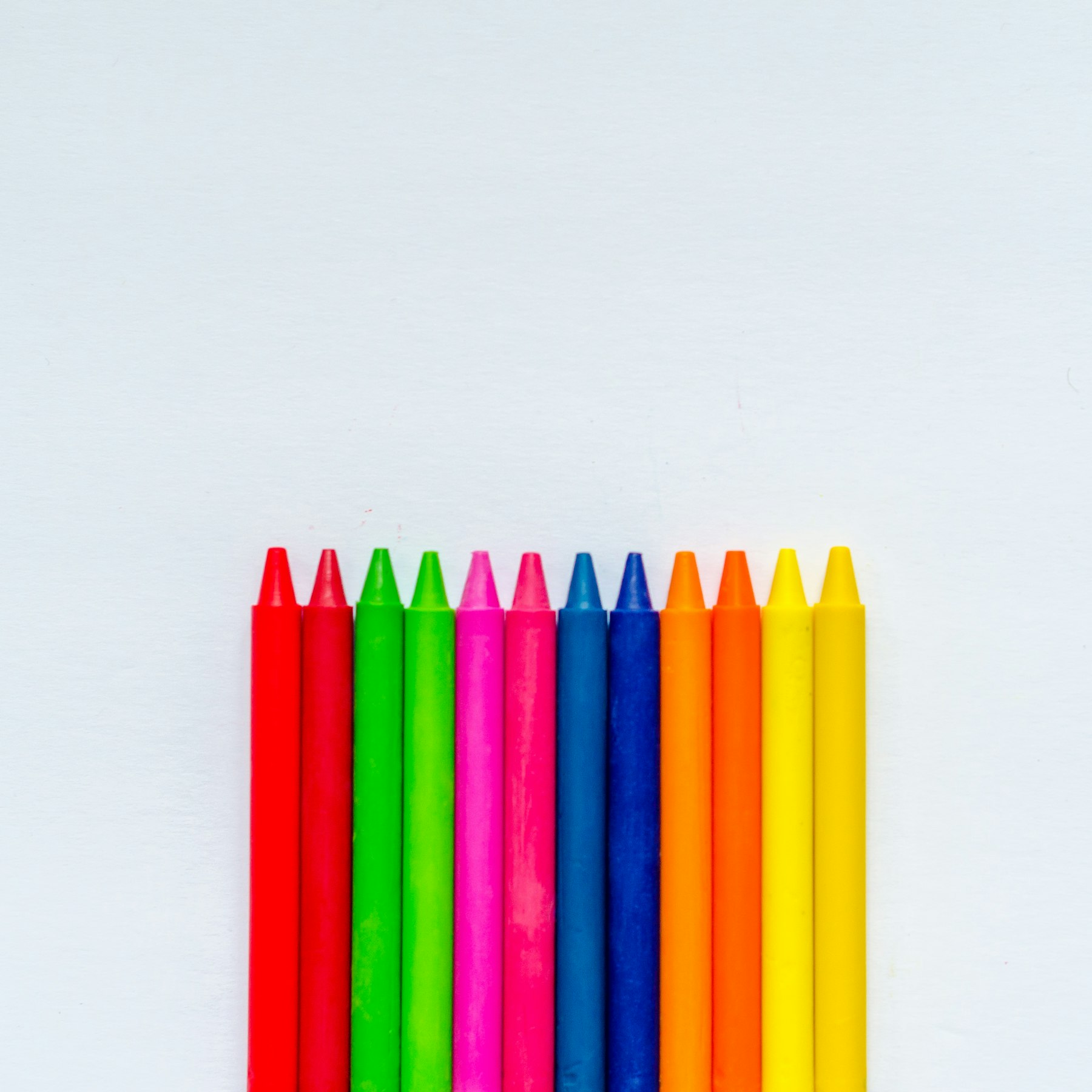
Coloring yellow over blue, for example, may suggest green in places, but it often keeps a patchy texture. Some yellow wax sits over blue wax, some blue still shows through, and some paper remains partly uncovered. The effect can be lively and useful, but it is not the same as stirring yellow and blue paint into one uniform green mixture.
The order of layers matters. A dark crayon laid down first can fill much of the paper’s tooth, making it harder for a lighter crayon to catch afterward. A light color placed first may accept darker strokes more easily. Artists sometimes use this behavior deliberately, building a base layer, adding darker lines, then burnishing with a lighter or colorless waxy tool to press layers together.
Crayons also have a natural limit. Once the paper is packed with wax, new layers may slide over the surface instead of grabbing firmly. The page can become slick, shiny, and resistant to more color. That is not a problem with the pigment; it is a sign that the paper’s rough places are already filled.
Wax resists water because it does not behave like paper
One of the easiest crayon experiments is to draw on paper and then brush watercolor paint over the drawing. The paint beads up or slides away from the crayon marks while soaking into the bare paper around them. The reason is that wax and water do not attract each other very well.
Paper fibers can absorb water because cellulose has chemical groups that interact with water molecules. Paraffin wax is different. It is made mostly of hydrocarbon chains, which are nonpolar and hydrophobic. Water prefers to cling to itself rather than spread smoothly across that waxy surface. The crayon line becomes a small barrier.
This wax-resist effect makes crayon useful beyond simple coloring. A white crayon can hide a pattern on white paper until watercolor reveals it. A dark crayon outline can help keep wet paint inside shapes. The same property also explains why crayon marks can be stubborn on walls, desks, or fabric. The waxy binder grips the surface and does not rinse away like a water-based mark.
Cleaning crayon marks often means dealing with wax first, not just color. Gentle heat, mild cleaners, or materials that can lift oily residue may work better than plain water, depending on the surface. That everyday cleanup problem is really the same chemistry seen in wax-resist art: the pigment rides inside a water-resistant binder.
A simple tool with a lot happening at the surface
A crayon mark is a meeting place between two materials. The crayon brings wax, pigment, hardness, and color. The paper brings fibers, roughness, absorbency, and empty spaces. The hand adds pressure, speed, angle, and repeated motion. Change any one of those, and the line changes too.
That is why crayons can make pale shading, heavy outlines, rough texture, smooth layers, wax-resist drawings, and melted color pools even though the tool itself has no moving parts. The science is not hidden deep inside a machine. It happens right where the crayon touches the page.
Once that becomes visible, coloring starts to look less like a simple childhood habit and more like a small experiment in materials. Every streak shows how a solid can rub away, how a surface can hold particles, how light creates color, and how wax can both carry pigment and resist water. A crayon is ordinary because it is familiar, not because it is simple.