

 Akshay Dinesh
The sound of cicadas can make a hot afternoon feel even hotter. It rises from trees, power lines, fence posts, and hidden branches until the whole neighborhood seems to buzz. The noise can be so steady that it fades into the background, then suddenly becomes impossible to ignore. For many people, that rough electric hum is the sound of summer itself.
Cicadas are not calling at random, and they are not rubbing their legs together like crickets. Their sound comes from specialized body parts, careful timing, warm weather, and a short adult life focused on finding a mate. What seems like a wall of noise is actually a biological signal, built by insects that spent years underground before getting only a few weeks in the open air.
The Body Part That Makes the Buzz
Most of the loud cicadas people hear are males. They produce their calls with structures called tymbals, thin ridged membranes located on the abdomen. When a cicada contracts small muscles attached to these membranes, the tymbals buckle inward. When the muscles relax, they snap back. That buckling and snapping happens so quickly that separate clicks blend into a buzzing, whining, or rattling song.
Colorado State University Extension describes the tymbal as the main sound-producing structure in most cicadas, with the clicks resonating through chambers in the body. That resonance matters. A cicada is small compared with the volume of sound it can make, but its body works a little like a natural amplifier. Air spaces inside the abdomen help enlarge the sound, turning rapid mechanical clicks into a call that can travel through trees.
This is different from the way many familiar insects make sound. Crickets and katydids often produce noise by rubbing one body part against another, a process called stridulation. Cicadas rely on rapid deformation of the tymbal membranes instead. The result is a sharper, more powerful sound, especially in larger species often called dog-day cicadas because they are common during the hottest stretch of summer.
Why the Calls Get Louder in Warm Weather
Cicadas are closely tied to heat. Their muscles work best when temperatures are warm enough, and many species become especially active during the heat of the day. That is one reason the sound often seems strongest on bright summer afternoons, when sidewalks shimmer and tree leaves barely move. Warm weather helps the insects move, fly, and call with enough energy to be noticed.
Heat also shapes the timing of emergence. Illinois Extension notes that periodical cicadas begin emerging when the soil warms enough in spring, often around late May or early June in areas where they occur. Annual cicadas, which do not emerge in one giant synchronized brood, are more likely to be heard later in summer. Either way, temperature helps set the stage: underground nymphs wait, adults emerge, and warm air becomes the setting for their brief aboveground season.
The loudness is not a side effect. It is the point. A male cicada calling from a branch needs to reach females of the same species while competing with wind, leaves, other insects, birds, traffic, lawn equipment, and neighboring cicadas. A quiet call would disappear. A loud, repeating call has a better chance of cutting through the clutter.
A Chorus Is More Than Noise
When many cicadas call at once, the sound can feel almost mechanical, as if one large machine has started somewhere in the trees. In reality, each insect is producing its own signal. Males of the same species may gather in loose groups called choruses. Their combined sound can attract females from farther away than a single male could manage alone.
Chorusing can also make the signal harder for predators to use. If dozens or hundreds of insects are calling from the same area, it becomes harder to pick out one exact target. This does not make cicadas safe; birds, mammals, reptiles, and other animals eat them in large numbers. But when many emerge or call together, the risk is spread out. UConn’s periodical cicada information pages describe these synchronized emergences as one reason periodical cicadas can overwhelm predators for a short time.
Female cicadas are not simply passive listeners. In some species, females respond with wing flicks or softer sounds, helping males locate them after the louder calling song has done its work. The public soundscape is loud, but the close-range conversation can be more precise. A male may call loudly to draw attention, then adjust behavior once a female is nearby.
Why Different Cicadas Sound Different
Not all cicada songs are the same. Some produce a long electrical whine. Others sound like a pulsing buzz, a rattle, a clicking rhythm, or a rising and falling drone. Species differ in body size, tymbal structure, rhythm, pitch, and calling behavior. To human ears, the differences may blur together, but to cicadas they matter. A call helps an insect find the right species, not just any insect in the same tree.
Arizona State University’s Ask A Biologist notes that cicadas are known for loud summer choruses, but the details of their calls vary. That variation is useful because summer habitats can hold several cicada species at once. If their signals were identical, mating would become more confusing. Sound works like an identification system, shaped by anatomy and behavior.
There are also annual and periodical patterns to understand. Annual cicadas are heard every year because their life cycles are staggered; some individuals mature each season. Periodical cicadas, famous in parts of eastern North America, spend 13 or 17 years underground and then emerge in huge numbers. Their adults are active for only a few weeks, which makes their mass calls feel sudden and intense when a brood appears.
The Shells Tell the Rest of the Story
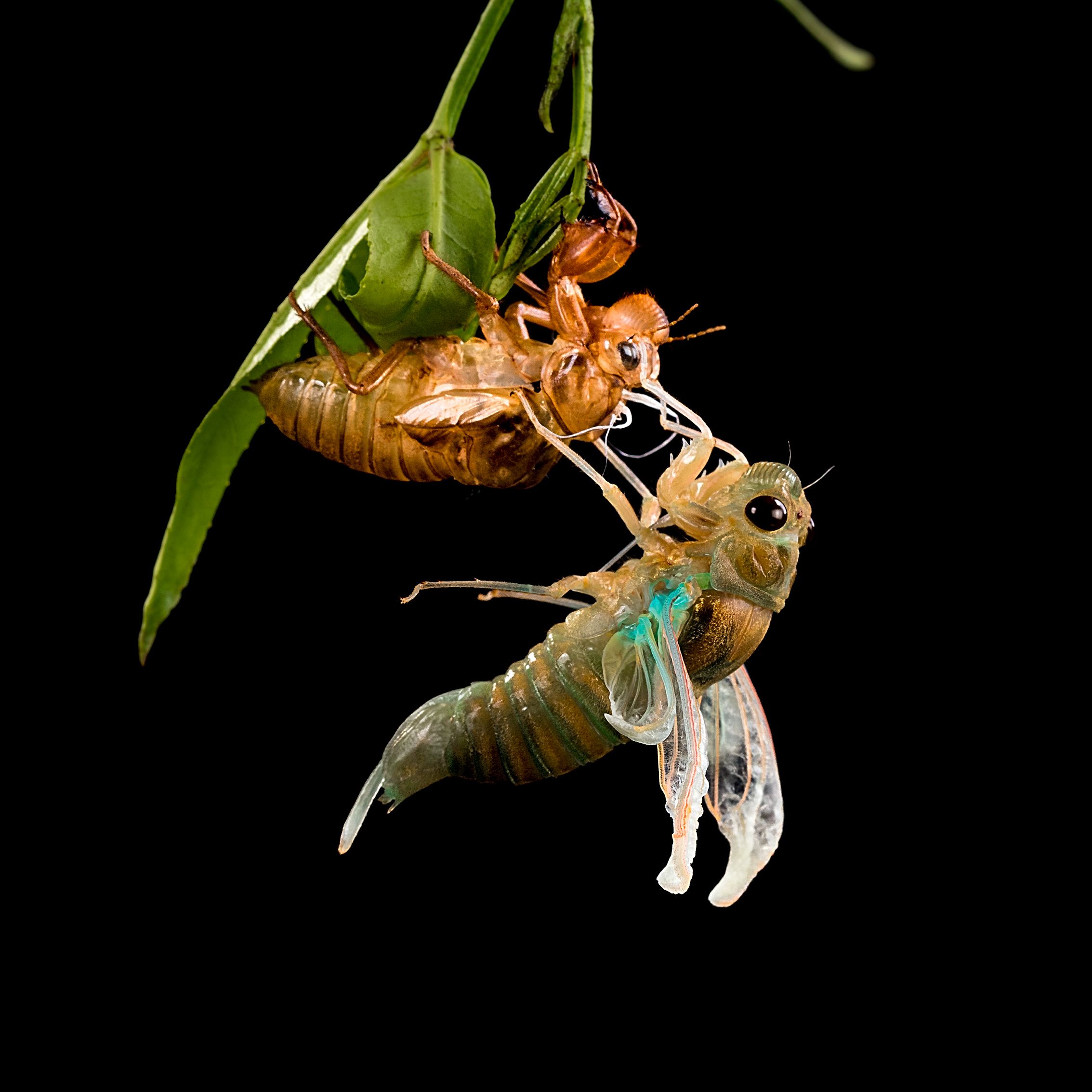
The empty brown shells stuck to tree bark are not dead adult cicadas. They are the shed skins of nymphs. Before cicadas can fly and call, they live underground, feeding on fluid from plant roots. When a nymph is ready to become an adult, it crawls out of the soil, climbs onto a tree, wall, plant stem, or other surface, and molts. The outer shell splits, and the soft new adult slowly pulls free.
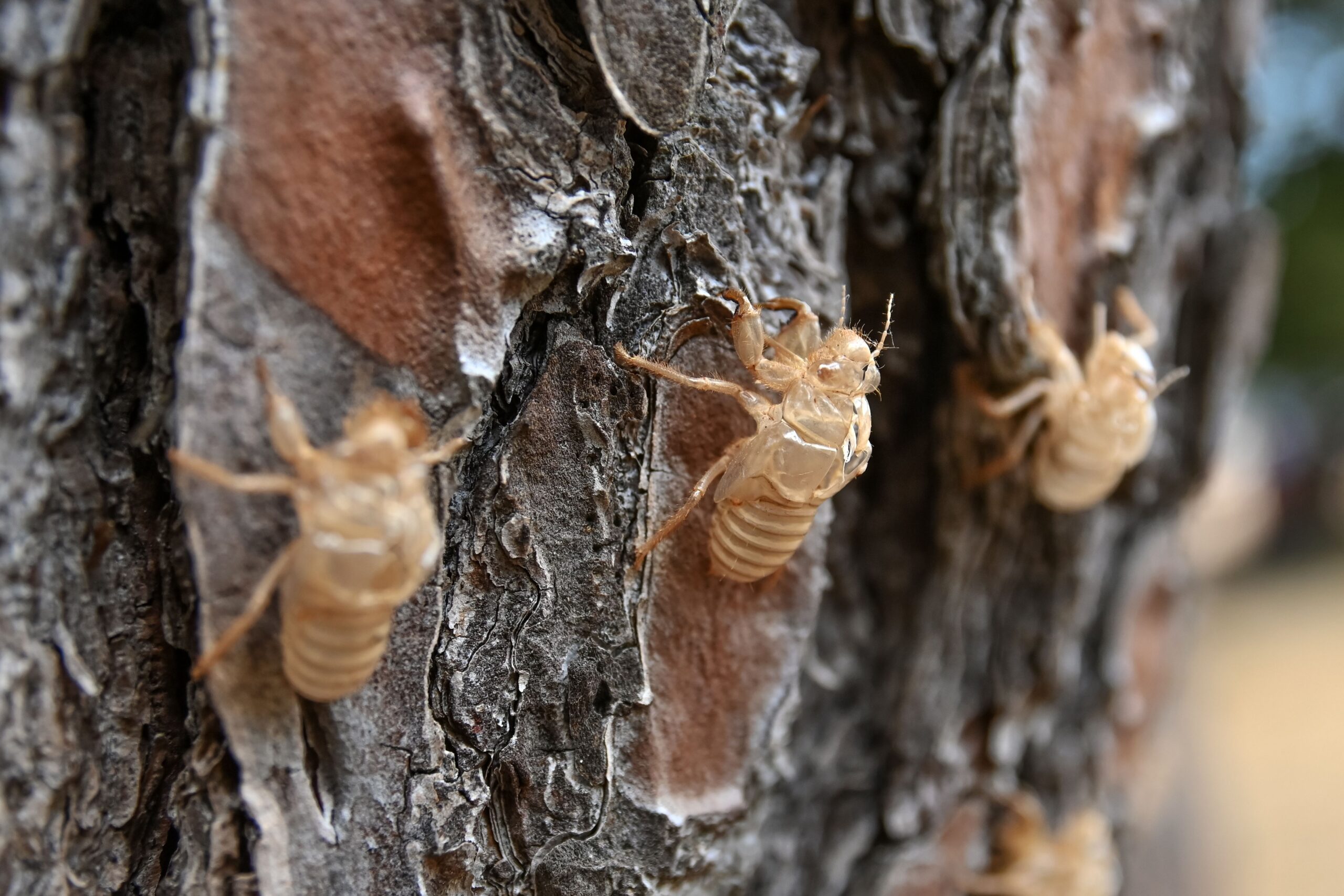
At first, the adult is pale and delicate. Its wings expand, its outer body hardens, and its color darkens. Once it is ready, it flies off, leaving the old nymph shell behind. Those shells are a visible clue to an invisible life. For years, the insect was below the surface. The noise begins only after that long hidden stage ends.
Cicadas are often called locusts, but that name is misleading. True locusts are certain grasshoppers that can form traveling swarms. Cicadas belong to a different group of insects and do not chew leaves the way grasshoppers do. Adults and nymphs use piercing mouthparts to drink plant fluids. They can cause twig damage when females cut small slits to lay eggs, especially during heavy periodical emergences, but they are not leaf-stripping locusts.
What the Summer Sound Really Means
The loudness of cicadas can be annoying, fascinating, or oddly comforting depending on where you are standing. It can interrupt a quiet porch, drown out smaller insects, and make a line of trees sound alive. Yet the sound is also a sign of a short, urgent adult stage. The insects are not trying to bother people. They are using sound to solve a biological problem: how to find one another quickly in a large, noisy world.
The next time cicadas fill the afternoon air, the sound may feel less like background noise and more like a signal with structure. Hidden muscles are snapping tiny membranes. Hollow body spaces are amplifying the clicks. Warm weather is helping the calls carry. Nearby insects may be joining the chorus, answering, shifting position, or trying not to become lunch.
That is why cicadas can seem so loud for creatures so small. Their bodies are built for sound, their timing is shaped by heat, and their adult lives depend on being heard. Summer gives them the stage, and for a few weeks, they make themselves impossible to miss.






Add comment