

 Akshay Dinesh
Measles can feel like a disease from another era until it appears in a school, a neighborhood, a summer camp, or a traveler’s route through an airport. The reason it still demands attention is not mystery. Measles is one of the most contagious infections humans face, and it takes advantage of even small gaps in protection. A single case can expose many people before anyone realizes what is happening, especially when vaccination levels have slipped below the threshold needed to slow the virus down.
That is why measles is more than a story about one sick person. It is a lesson in biology, probability, and public health all at once. The virus spreads through air, waits in shared indoor spaces, and finds people whose immune systems have not learned to recognize it. When enough people are protected, the chain usually breaks. When protection is uneven, the chain can lengthen quickly.
Measles Is Built for Airborne Spread
Many infections need close contact, contaminated surfaces, or a direct exchange of fluids to spread efficiently. Measles is different. It travels through tiny respiratory particles released when an infected person coughs, sneezes, breathes, or talks. Those particles can linger in the air or remain contagious on surfaces for up to two hours, according to the World Health Organization. That means someone can enter a room after an infected person has left and still face exposure.
This gives measles a head start over diseases that require more direct contact. The virus can move through classrooms, waiting rooms, buses, homes, and crowded gatherings without every exposed person remembering a clear moment of contact. It also spreads before the rash appears. A person with measles can be contagious from about four days before the rash through four days afterward, so the most recognizable sign often arrives after the virus has already had chances to move on.
Contagiousness is often described with a number called the reproductive number, or how many people one infected person may infect in a fully susceptible group. WHO notes that one person with measles can generate up to 18 secondary infections. That does not mean every case infects 18 people in real life, because vaccination, isolation, and public health action change the outcome. It does show why measles behaves so differently from slower-moving infections. If the virus enters a group with many unprotected people, the math becomes unforgiving.
Why One Case Can Become an Outbreak
An outbreak begins when one infection becomes a connected chain. For measles, the chain can begin with a traveler who was infected abroad, a person exposed in another state, or someone who did not know they were contagious yet. The first case is not always the biggest problem. The bigger question is what kind of community the virus enters.
Imagine sparks landing on two different fields. One field is damp, broken by paths, and hard to burn across. The other is dry and continuous. Measles behaves in a similar way. In a highly vaccinated community, many possible paths end quickly because exposed people are already immune. In a community with clusters of unvaccinated or under-vaccinated people, the virus finds a more continuous path from person to person.
The Centers for Disease Control and Prevention reported 2,073 confirmed measles cases in the United States in 2026 as of June 11, with most cases connected to outbreaks. The same CDC update noted that the country had 2,288 confirmed cases during all of 2025. Those numbers matter because measles was declared eliminated from the United States in 2000, meaning the virus was no longer spreading continuously within the country. Elimination does not mean zero risk. It means cases can still be imported and outbreaks can still happen if immunity gaps allow them to grow.
Public health workers often describe these gaps as pockets of susceptibility. A state or country can have a decent overall vaccination rate while a particular school, religious group, neighborhood, or social network has much lower coverage. Measles does not spread through averages. It spreads through the real contacts people have: siblings, classmates, teammates, relatives, fellow travelers, and people waiting in the same indoor spaces.
Community Immunity Is a Network, Not a Wall
Community immunity, often called herd immunity, does not mean every person is protected equally. It means enough people are immune that the virus has trouble finding the next susceptible host. For measles, the bar is unusually high because the virus spreads so efficiently. CDC explains that when more than 95 percent of people in a community are vaccinated, most people are protected through community immunity.
The word community is doing important work there. A national rate can hide local risk. If one county, school, or social group has vaccination coverage far below the recommended level, measles can still move inside that group even if the wider region looks safer on paper. This is why school-entry vaccination data can be so useful. Schools gather children into dense daily networks, and children can bring infections home to younger siblings, older relatives, and others who may be medically vulnerable.
Community immunity also protects people who cannot simply solve the problem for themselves. Infants are too young for routine MMR vaccination during their first year. Some people cannot receive certain vaccines because of specific medical conditions. Others may be vaccinated but not develop a strong immune response. When the surrounding community is well protected, these people benefit from fewer chances for exposure. When coverage falls, their risk rises even if they made no individual choice to be unprotected.
CDC’s 2026 measles data page points to a worrying trend: U.S. kindergarten MMR coverage decreased from 95.2 percent in the 2019-2020 school year to 92.5 percent in the 2024-2025 school year, leaving about 286,000 kindergartners at risk that year. A few percentage points may sound small, but with measles the margin matters. A virus that can spread through the air and infect many susceptible people does not need a large opening.
What the MMR Vaccine Changes
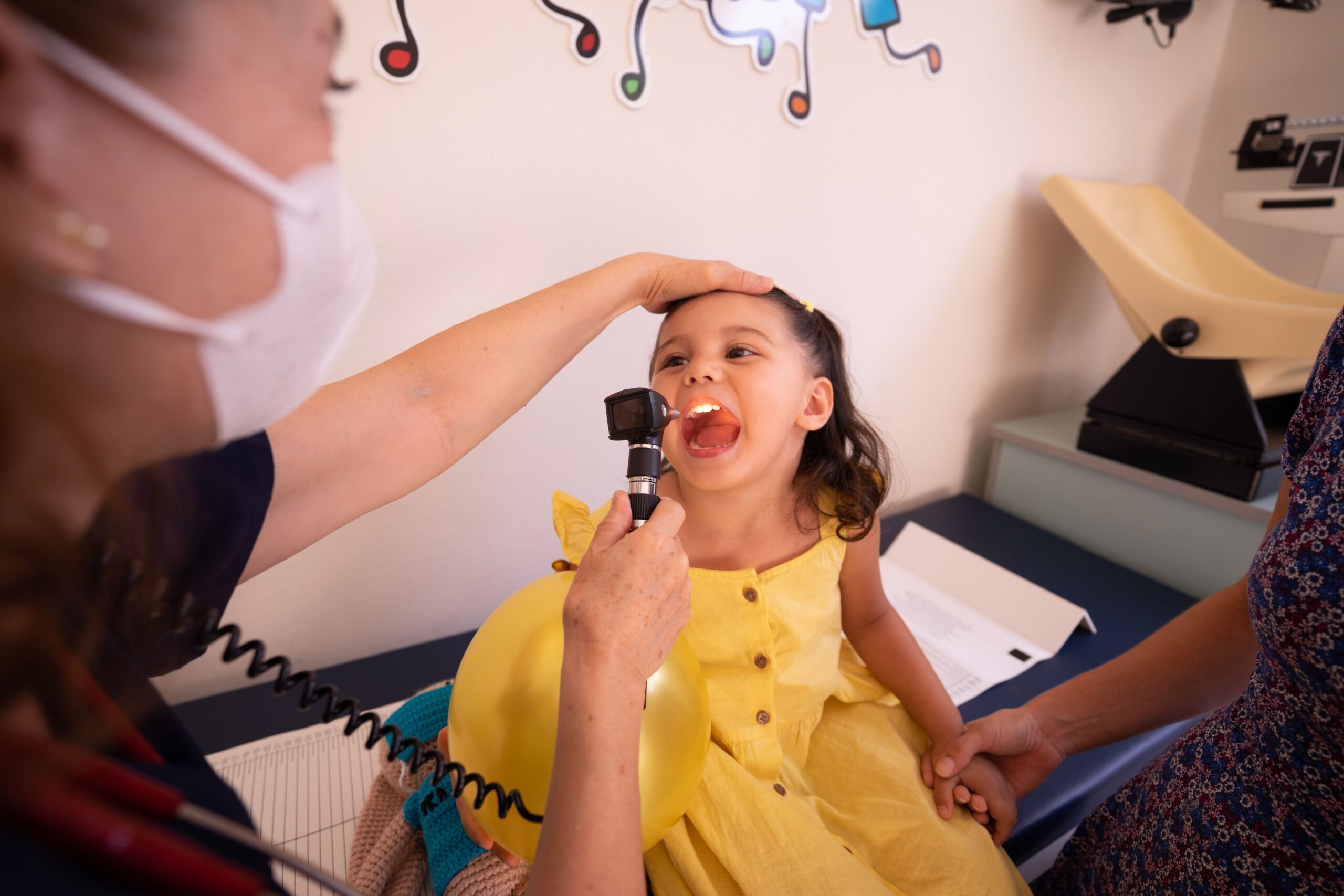
The measles vaccine used in the United States is part of the MMR vaccine, which protects against measles, mumps, and rubella. CDC recommends two routine doses for children: the first at 12 through 15 months and the second at 4 through 6 years, before school entry. The second dose is not a sign that the first one failed for everyone. It is there because a small number of people do not respond fully to the first dose, and a second dose raises the level of protection across the group.
CDC estimates that one dose of measles vaccine is 93 percent effective at preventing measles, while two doses are 97 percent effective. No vaccine makes risk disappear entirely. Breakthrough infections can happen, especially during outbreaks where the amount of circulating virus is high. But the difference between a mostly unprotected group and a highly vaccinated group is enormous. In one, the virus can find one susceptible person after another. In the other, it repeatedly hits dead ends.
This is where individual and community protection meet. A vaccinated person is less likely to become infected after exposure. If that person does not become infected, the virus also loses a chance to reach someone else. Across thousands of contacts, those blocked transmissions change the shape of an outbreak. Instead of branching wider, the chain slows, stutters, or stops.
Vaccination timing matters because measles moves faster than paperwork, memories, and last-minute decisions. Once an exposure has happened, health departments may recommend specific next steps for people who lack evidence of immunity, but outbreak response is harder than routine prevention. Routine vaccination builds protection before the virus appears.
Why Outbreaks Often Reveal Hidden Weak Spots
Measles outbreaks expose how connected daily life really is. A child may attend school, visit relatives, play on a team, sit in a clinic waiting room, and travel with family in the same week. Adults may work in health care, child care, schools, airports, restaurants, or other places where many people pass through. The virus can use those ordinary patterns before anyone sees a rash or hears an official warning.
CDC’s 2025-2026 South Carolina scenario assessment modeled how outbreaks can spread when vaccination coverage is low. In scenarios where MMR coverage was below 90 percent in connected populations, an outbreak in one population was highly likely to lead to cases and sustained transmission in another. The model also showed that as MMR coverage increased, the probability of an outbreak with more than 100 cases decreased. That is the practical meaning of community immunity: it does not just protect one person at a time. It changes what is likely to happen across a whole network.
Outbreaks also show why misinformation can have biological consequences. If enough families delay or skip vaccination because they underestimate measles, distrust reliable guidance, or assume other people’s immunity will cover the risk, the local network changes. A virus does not need to persuade anyone. It only needs openings.
There is also a travel lesson here. Measles remains common in many parts of the world, and global outbreaks create more chances for the virus to cross borders. CDC notes that measles often spreads around times of high travel, including spring break, summer, and holidays, or in close-quarter settings such as camps. A case that begins somewhere else can become a local problem when it arrives in a community with enough susceptible people.
Reading Measles News With Better Questions
When measles appears in the news, case counts are only the first layer. Better questions reveal the actual risk. How many cases are linked to outbreaks? Are most cases occurring among people who are unvaccinated or whose status is unknown? Is transmission happening in a school, a close-knit community, a health care setting, or across several places? What is the local vaccination coverage, not just the statewide average?
Those questions help explain why two measles reports with similar numbers can mean different things. A few unrelated travel-associated cases in highly vaccinated communities may end quickly. A smaller number of cases in a low-coverage network can be more concerning because each case has more paths forward. Context turns numbers into understanding.
Measles is sometimes described as a test of a community’s immune defenses. That is not just a metaphor. The virus is so contagious that it quickly finds places where protection is thin. Strong vaccination coverage does not make measles impossible, but it makes sustained spread much harder. When coverage falls, the virus gets more chances to do what it does best: move through the air, find susceptible hosts, and turn one infection into many.
The main lesson is simple but not small. Measles spreads fast because its biology is efficient, but outbreaks grow when human networks give the virus room. Vaccination narrows that room. Community immunity narrows it further. In a connected world, those layers of protection are what keep an old disease from becoming a familiar one again.





Add comment