
 Akshay Dinesh
A government can become dangerous when too much power gathers in one place. The framers of the United States Constitution knew that problem from history, from their complaints against British rule, and from their own debates after independence. They did not want a national government so weak that it could not act, but they also did not want one official or one institution to control everything. Their answer was separation of powers: a structure that gives different kinds of authority to different branches of government.
Separation of powers is not just a diagram with three boxes. It is a practical design for slowing power down, forcing public decisions through more than one institution, and making government action easier to question. Congress writes laws, the president carries them out, and the courts interpret law in cases that come before them. The system is often frustrating because it can delay decisions, produce conflict, and require compromise. That friction is part of the design.
Why the Framers Divided Power
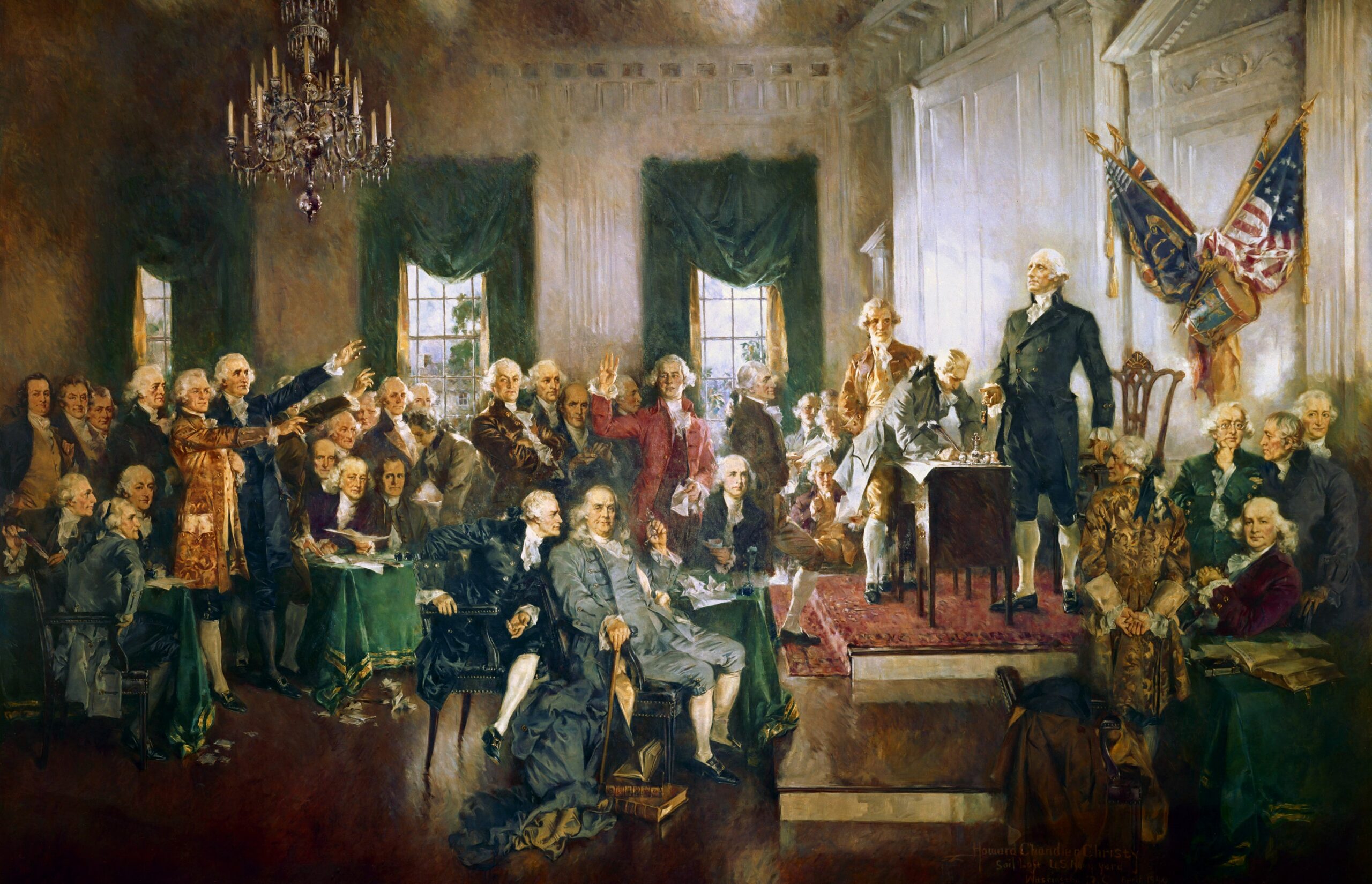
The Constitution was written after Americans had already tried a much looser national government under the Articles of Confederation. That earlier system left Congress with limited power and no independent executive or national judiciary strong enough to handle many national problems. By 1787, many delegates agreed that the country needed a stronger federal government. The harder question was how to make it stronger without making it too concentrated.
The National Archives explains the basic logic clearly: dividing power among branches was meant to guard against tyranny by allowing each branch to check the other two. The fear was not simply that a bad person might hold office. The deeper fear was structural. If the same hands could make the law, enforce the law, and judge disputes about the law, ordinary people would have little protection when power was abused.
James Madison made that point in Federalist No. 47 while defending the proposed Constitution during the ratification debate. He argued that the accumulation of legislative, executive, and judicial powers in the same hands could fairly be called tyranny. Madison was responding to critics who worried that the new Constitution still mixed powers too much. His answer was subtle: the powers had to be separated, but not sealed off from one another completely.
What Each Branch Is Supposed to Do
The first three articles of the Constitution place the main powers of the federal government in three branches. Article I gives legislative power to Congress, made up of the House of Representatives and the Senate. Congress can pass bills, raise revenue, declare war, regulate interstate and foreign commerce, approve spending, and create many of the rules that federal agencies later carry out.
Article II gives executive power to the president. The president does not write statutes alone, but the executive branch enforces federal law, manages departments and agencies, conducts diplomacy, commands the armed forces, and appoints many federal officials with Senate approval. The president also has a legislative role through the veto, which means a bill passed by Congress usually cannot become law if the president rejects it unless Congress overrides that veto by the required supermajority.
Article III establishes the federal judicial branch, with the Supreme Court and lower federal courts created by Congress. Courts do not decide every political argument. They decide legal disputes that properly come before them. Over time, judicial review became a central part of the system, allowing courts to refuse to enforce government actions that conflict with the Constitution. That power is why a court case can sometimes reshape how a law or executive action works in practice.
These roles are easier to understand with a simple example. Suppose Congress passes a law about clean water standards. The president may sign or veto it. If it becomes law, executive agencies write rules, inspect problems, and enforce penalties under that law. If a dispute arises over whether the law or enforcement action violates the Constitution or another legal rule, courts may be asked to decide the case. The same policy moves through different institutions rather than staying under one hand from beginning to end.
Checks and Balances Make the Separation Work
Separation of powers answers the question of who has which job. Checks and balances answer a related question: how can one branch stop another branch from going too far? The two ideas are often mentioned together because the Constitution does both. It separates authority, then gives each branch selected tools to resist or influence the others.
Congress can check the president by controlling federal spending, confirming or rejecting many nominees, holding oversight hearings, and, in extreme cases, using impeachment. The president can check Congress through the veto, public leadership, and control over how laws are administered within constitutional limits. The courts can check both elected branches by deciding constitutional cases, while judges themselves are nominated by the president and confirmed by the Senate.
USAGov describes this as a system in which each branch can change or limit acts of the others. That does not mean every disagreement becomes a constitutional crisis. Most checks are ordinary parts of governing: a nominee waits for confirmation, a bill changes to avoid a veto, a court interprets a statute more narrowly than an agency expected, or Congress rewrites a law after a court decision. The system works through routine pressure as much as through dramatic confrontations.

Why the Branches Are Not Completely Separate
A common misunderstanding is that separation of powers means each branch acts alone in its own lane. The Constitution is more complicated than that. It separates the main powers, but it also overlaps them on purpose. A bill passed by Congress usually needs the president’s signature. A president’s treaty usually needs Senate approval. Federal judges are part of the judicial branch, but they are chosen through action by both the executive and legislative branches.
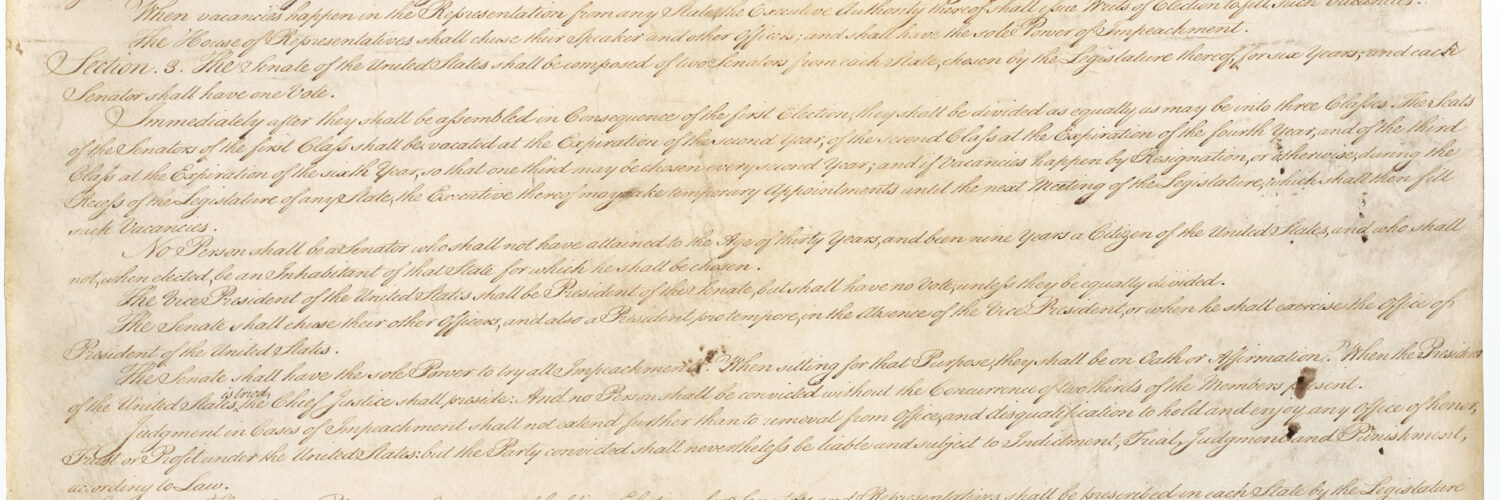
The Congressional Research Service’s Constitution Annotated explains that separation of powers comes from the text and structure of the Constitution, not from one sentence that states the whole doctrine. The first three articles begin with vesting clauses that place legislative, executive, and judicial power in different institutions. From there, the Constitution gives each branch particular powers and selected ways to interact with the others.
Madison’s defense in Federalist No. 47 helps explain why the overlap matters. He did not argue that the branches should have no connection at all. He argued against total accumulation of power. A government with no overlap might become rigid and unable to respond. A government with no separation might become oppressive. The constitutional design sits between those dangers: separate enough to prevent domination, connected enough to govern.
That balance is why arguments about separation of powers can be difficult. People may agree that no branch should become too powerful, yet disagree about where the line is. Is an executive order a lawful use of presidential authority or an attempt to make policy without Congress? Is congressional oversight a necessary check or an intrusion into executive work? Is a court enforcing the Constitution or stepping too far into political decisions? The questions are hard because the system deliberately creates shared borders.
How the System Shows Up in Real Life
Separation of powers affects everyday news more often than it first appears. When Congress debates a spending bill, it is using its lawmaking and budget powers. When a president vetoes a bill, signs an executive order, appoints officials, or directs agencies, executive power is at work. When a federal court blocks, upholds, or interprets a government action, judicial power enters the picture.
The process can feel slow, especially when urgent problems need attention. A law may take months to pass. A regulation may face public comments and lawsuits. A court decision may settle one legal question while leaving others open. But speed was not the only value the framers cared about. They also cared about accountability, evidence, debate, and the ability to correct mistakes before power hardens into habit.
The system also gives citizens more than one place to pay attention. Voters can judge members of Congress, presidents, governors, and state legislators. People can follow court cases, public hearings, agency rules, and local impacts. Civic knowledge becomes more powerful when people understand which branch is acting and what authority it is claiming. Blaming or praising “the government” as one single actor often hides the real structure of responsibility.

The Lasting Value of Divided Authority
Separation of powers has never made American government simple. It was not meant to. It creates argument, delay, negotiation, and legal testing because power is easier to abuse when it moves without resistance. The system assumes that ambition, disagreement, and institutional pride will always exist, then tries to arrange them so no single branch can easily swallow the rest.
That design is one reason constitutional debates often return to structure rather than personality alone. The question is not only whether a particular leader, Congress, or court is popular. The deeper question is whether each branch is staying within its proper role while respecting the roles of the others. A healthy constitutional system depends on rules, habits, and public expectations that outlast any one election or court case.
The phrase separation of powers can sound abstract, but its purpose is concrete. Laws should not be made, enforced, and judged by the same authority. Public power should have to explain itself. When one branch reaches too far, another should have a lawful way to push back. That tension is not a flaw in the system. It is one of the main protections the Constitution was built to provide.





Add comment