

 Akshay Dinesh
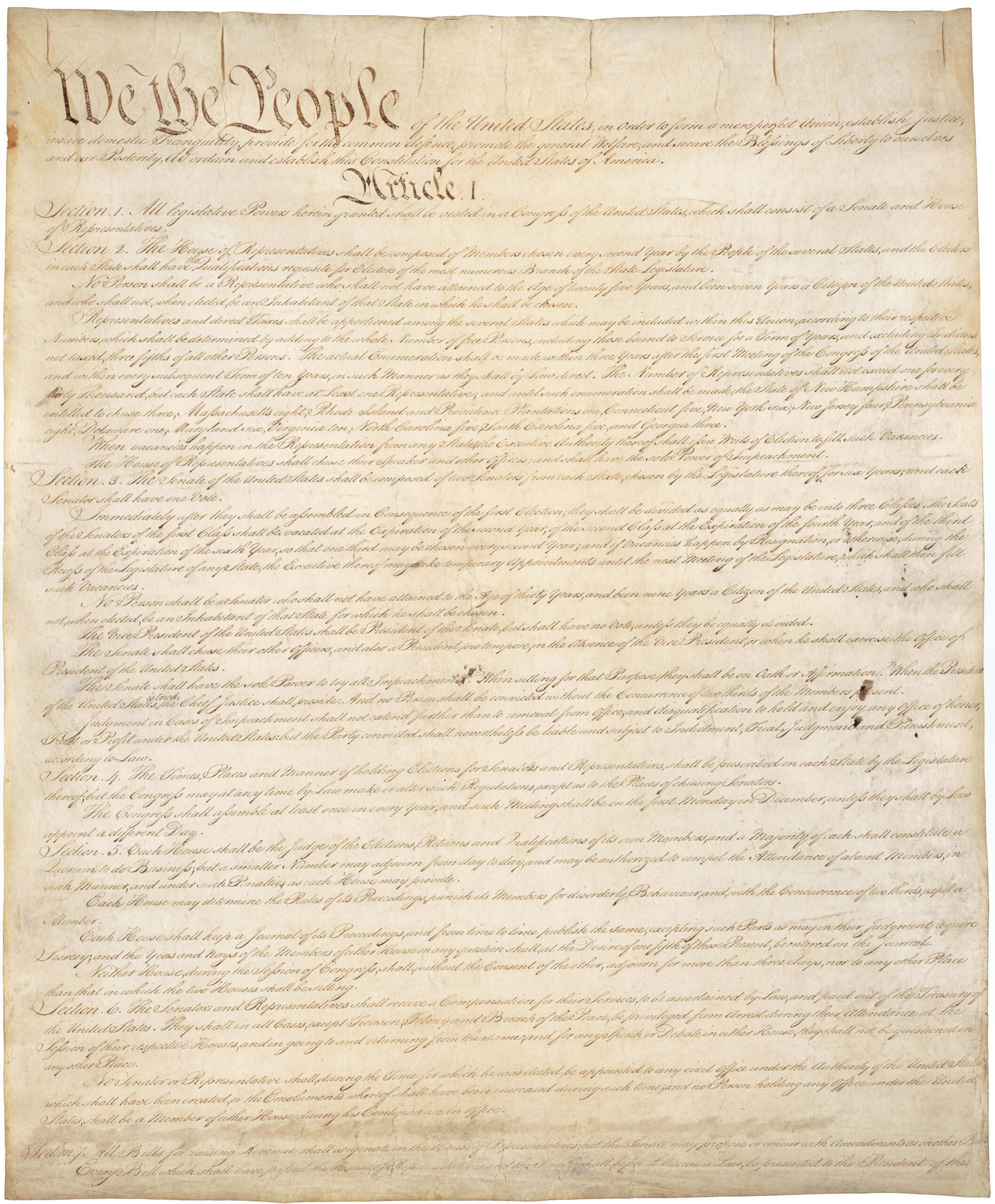
In a U.S. presidential election, voters do something that can feel simple on the ballot but complicated afterward: they choose a president through a state-by-state constitutional process. The person who wins is not elected by one nationwide popular vote total. Instead, each state’s result helps choose a slate of electors, and those electors cast the formal votes for president and vice president.
That process is the Electoral College. The National Archives describes it as a process rather than a physical place, and that distinction matters. No single national hall fills with all 538 electors. Electors meet in their own states, cast official votes, and send records forward so Congress can count them. The system is old, often debated, and sometimes misunderstood, but its basic logic can be followed step by step.
Why voters are really choosing electors
When a person votes for president, the vote is counted in that state. In most states, the candidate who receives the most votes statewide wins all of that state’s electoral votes. The voter is therefore helping select the electors pledged to that candidate, not directly adding one vote to a national presidential total that decides the winner by itself.
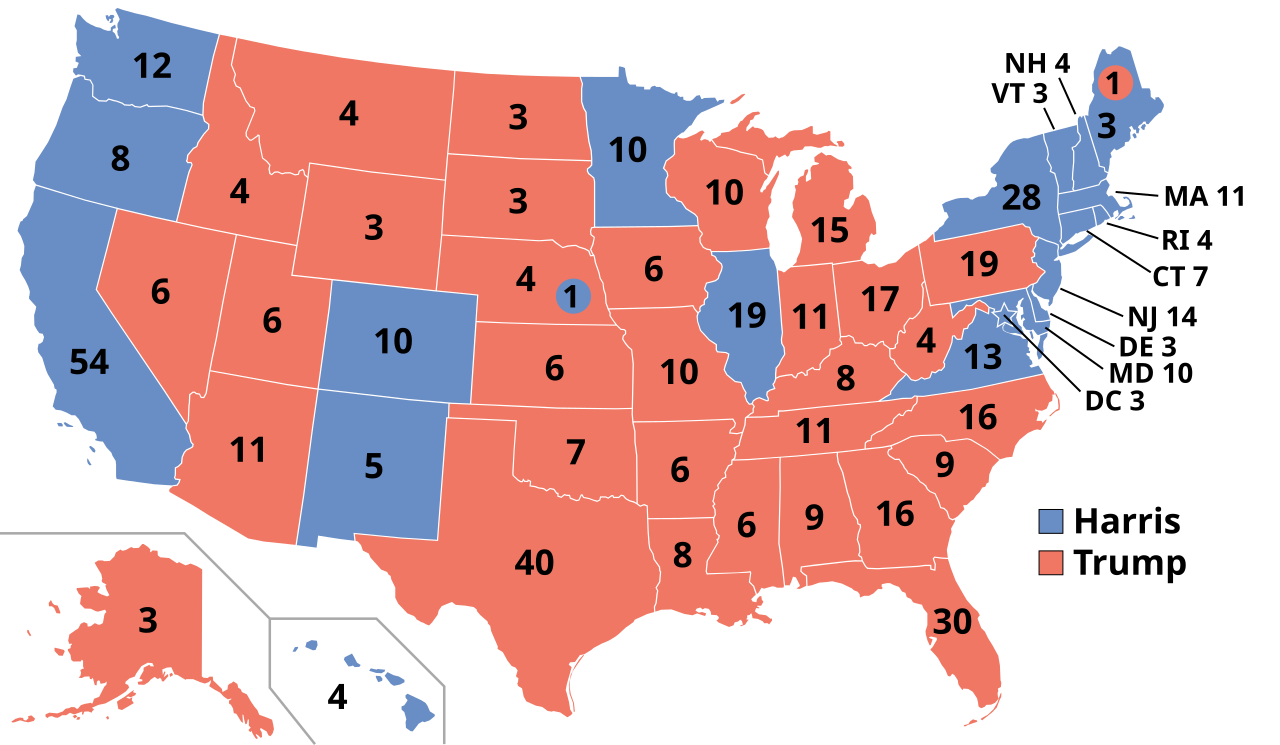
Each state has as many electors as it has members of Congress: two for its senators plus a number equal to its seats in the House of Representatives. The District of Columbia has three electors under the 23rd Amendment. Together, those state and district totals add up to 538 electors, so a candidate needs at least 270 electoral votes to win.
This is why small and large states both matter in the system, though not in the same way. A large state has more electoral votes because it has more House seats. A small state still has at least three electoral votes because every state has two senators and at least one representative. The result is a map-based contest in which winning a state can matter more than adding extra votes in a state a candidate has already won comfortably.
How winner-take-all changes the meaning of a close state
The most important modern rule is not found in a single national voting method. It comes from state practice. In 48 states and the District of Columbia, the statewide popular-vote winner receives all of that state’s electoral votes. The National Conference of State Legislatures summarizes this as the winner-take-all system, and it explains why a narrow state victory can produce a large electoral reward.
Imagine a state with 16 electoral votes. If one candidate wins that state by a very small margin, that candidate normally receives all 16 electoral votes. The losing candidate receives none from that state, even if nearly half the voters chose that ticket. This does not erase those voters from the state’s popular-vote count, but it does mean the formal presidential count moves in blocks rather than by individual ballots.
Maine and Nebraska are the major exceptions. They use a district system: one electoral vote goes to the winner of each congressional district, and two statewide electoral votes go to the state’s overall popular-vote winner. That makes it possible for those states to split their electoral votes. For students, this is one of the clearest ways to see that the Electoral College is not only about the Constitution; state laws and state choices shape how the constitutional framework works in practice.
What happens after Election Day
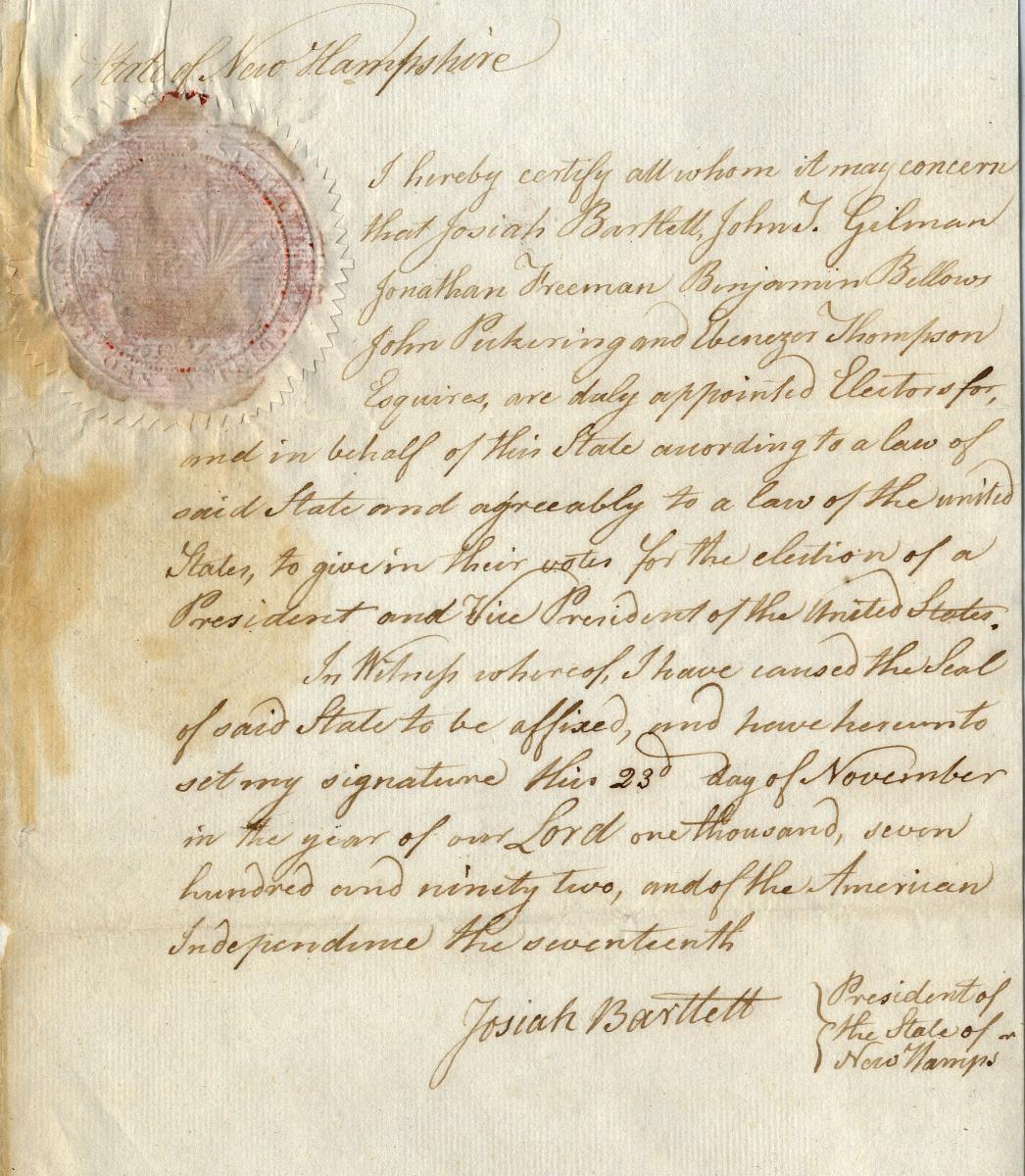
Election night projections can make the process seem finished, but the legal process continues for weeks. After the popular vote is counted and certified, each state prepares documents naming the appointed electors. The National Archives calls one of these records the Certificate of Ascertainment. It lists the electors chosen in the state and becomes part of the official record of the presidential election.
The electors then meet in December, not as one national body but in their own states. They vote separately for president and vice president. Those votes are recorded on Certificates of Vote and sent to officials including Congress and the National Archives. The Office of the Federal Register, part of the National Archives, plays a nonpartisan administrative role in receiving and reviewing those official records.
Congress counts the electoral votes in a joint session in January. The vice president, acting as president of the Senate, presides over the count in a ministerial role. If one presidential candidate has a majority of electoral votes, that person is formally recognized as president-elect. The inauguration then follows on January 20.
Why the popular vote and electoral vote can differ
The national popular vote is an important measure of how many people voted for each candidate across the country, but it is not the constitutional mechanism that elects the president. Because votes are filtered through state results, a candidate can win the Electoral College while losing the national popular vote. USAGov notes that this has happened in 2016, 2000, and three times in the 1800s.
The reason is not mysterious once the state-by-state structure is visible. A candidate may win several closely divided states and receive all of their electoral votes, while the other candidate may win some states by much larger popular-vote margins. The second candidate can build a larger national vote total without winning the right combination of states. The Electoral College rewards where votes are located, not only how many votes exist nationwide.
This also explains why campaigns pay so much attention to competitive states. If a state is strongly likely to support one party, a campaign may decide that extra votes there are less likely to change the electoral outcome. A closely divided state with many electoral votes can become much more valuable. That strategic focus is one reason the system shapes campaign travel, advertising, and voter outreach long before Election Day.
What happens if the system does not produce a majority
The Electoral College is designed around a majority, not merely a plurality. A candidate needs more than half of all electoral votes. If no presidential candidate receives that majority, the decision moves to the House of Representatives under the 12th Amendment. The House chooses from the top presidential electoral-vote recipients, but each state delegation gets one vote rather than each representative voting individually.
This kind of contingent election is rare, but it has happened. After the election of 1800, the House chose Thomas Jefferson. After the election of 1824, the House selected John Quincy Adams. These examples show that the Electoral College was not built only as a counting shortcut. It is part of a broader constitutional structure that gives states, Congress, and formal procedures a role in presidential selection.
Faithless electors raise another unusual possibility. These are electors who do not vote as pledged. In modern elections they are rare, and the House of Representatives notes that they have never determined the outcome of a presidential election. Many states also bind electors through laws, penalties, replacement rules, or other requirements. Still, the idea reminds readers that electors are legal actors in the process, not just symbols on a map.
Why the Electoral College remains debated
Debate over the Electoral College usually begins with a real tension. Supporters often argue that the system protects the role of states, forces campaigns to build geographically broad coalitions, and preserves a federal structure rather than turning the presidency into a single national vote. Critics argue that it can separate the winner from the national popular-vote leader, give unusual weight to closely divided states, and make many voters feel politically sidelined if their state is not competitive.
Reform proposals have taken several forms. Some people favor a constitutional amendment to replace the Electoral College with a direct popular vote. Others support state-level changes, such as awarding electoral votes by district. The National Conference of State Legislatures also tracks the National Popular Vote Interstate Compact, an agreement under which participating states would award their electoral votes to the winner of the national popular vote once enough states join to control 270 electoral votes.
None of these debates changes the basic lesson: the Electoral College turns a presidential election into a sequence of state decisions, formal elector meetings, official certificates, and a congressional count. Understanding that sequence makes election results easier to read. It also helps explain why the same election can produce several different numbers: state popular votes, a national popular vote, electoral votes, and finally the constitutional result that determines who becomes president.




Add comment