
 Akshay Dinesh
Judicial review is one of the main reasons the Supreme Court matters beyond the cases it decides each term. It means that courts can examine laws and government actions and decide whether they fit within the Constitution. If a law crosses that boundary, a court can refuse to enforce it. That power sounds simple when stated in one sentence, but it changed the practical meaning of American government: written constitutional limits became rules that judges could apply, not just ideals for politicians to remember.
The idea is especially useful for students because it connects several civic concepts that often get taught separately. The Constitution divides power among Congress, the president, and the courts. Checks and balances explain how each branch can limit the others. Judicial review shows one of those limits in action. It is the tool that lets courts say, in a real dispute, that even an elected branch has gone beyond what the Constitution allows.
The problem judicial review tries to solve
A written constitution creates an obvious question: what happens when ordinary government action conflicts with the higher law? Congress can pass statutes. Presidents and executive agencies can enforce policies. States can make their own laws within their authority. But if a constitution is meant to be supreme, someone must decide what to do when those actions collide with it.
Without judicial review, constitutional limits could depend mostly on the judgment of the same officials being limited. Congress might decide for itself whether its own law went too far. A president might defend an action simply because the executive branch believed it was necessary. Elections provide an important check, but they do not settle every constitutional question, especially when an individual person or unpopular group claims that the government has violated a protected right.
Judicial review gives courts a role in that conflict. It does not mean judges write laws or run the government. It means that when a legal case properly comes before them, judges must decide which rule controls. If a statute and the Constitution point in different directions, the Constitution wins. That may sound expected now, but early in the republic it had to be explained, defended, and accepted.
How Marbury v. Madison made the principle famous
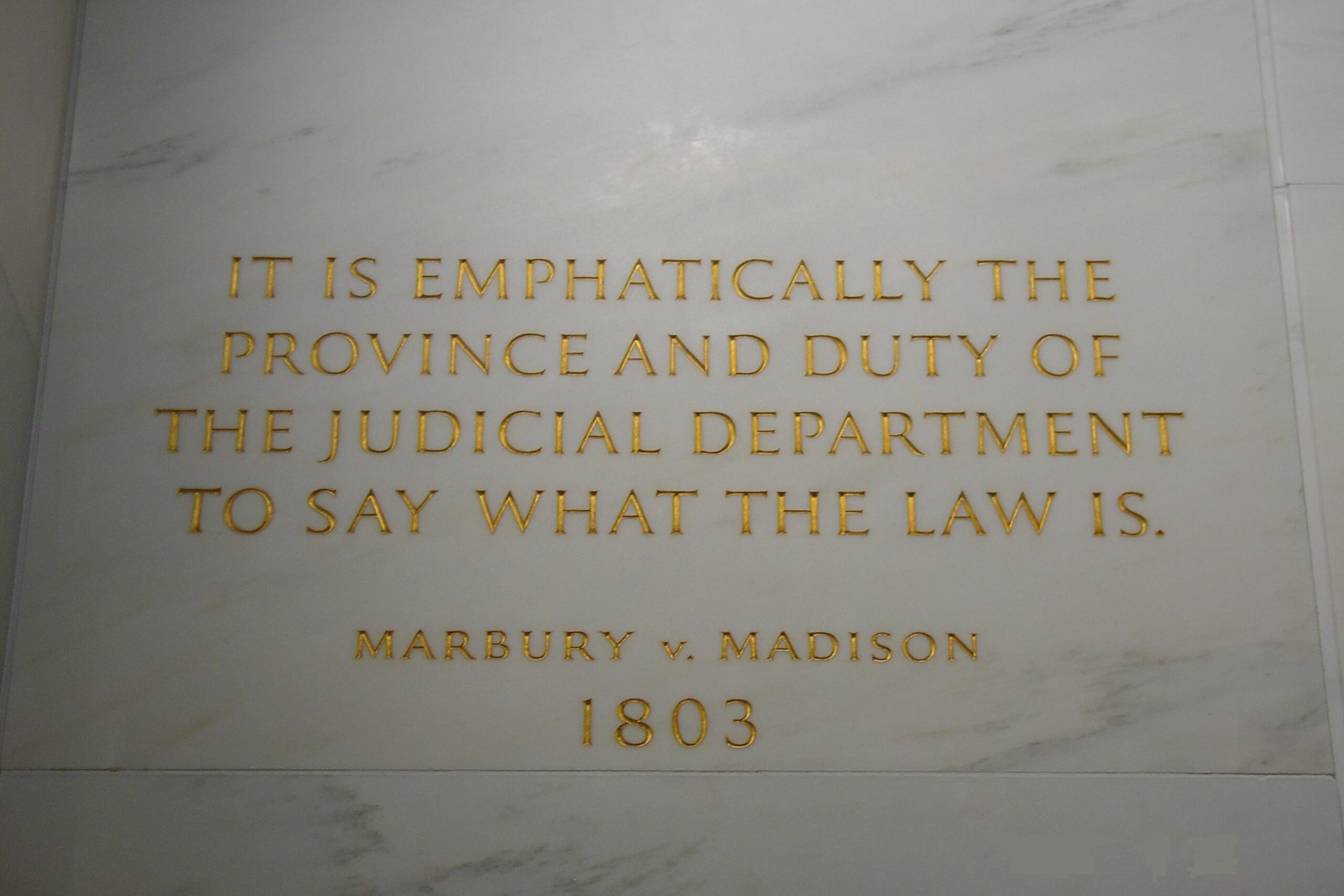
The case most closely linked to judicial review is Marbury v. Madison, decided by the Supreme Court in 1803. The dispute began during the transfer of power from President John Adams to President Thomas Jefferson. In the final days of Adams’s administration, several judicial commissions were prepared for new appointees. William Marbury, one of those appointees, did not receive his commission before Jefferson took office. Jefferson’s secretary of state, James Madison, did not deliver it.
Marbury asked the Supreme Court to order Madison to hand over the commission. The case put Chief Justice John Marshall and the Court in a difficult position. If the Court ordered Madison to act and the Jefferson administration ignored the order, the Court might look weak. If the Court did nothing, it might seem to surrender its role. Marshall’s opinion found a third path that became far more important than Marbury’s job.
The Court said Marbury had a right to the commission, but it also said the Court could not give him the remedy he requested. The reason was jurisdiction, which means a court’s legal authority to hear and decide a kind of case. Part of the Judiciary Act of 1789 appeared to give the Supreme Court power to issue the kind of order Marbury wanted in an original case. Marshall concluded that Congress had tried to expand the Court’s original jurisdiction beyond what Article III of the Constitution allowed.
That produced the central move. If a statute conflicts with the Constitution, Marshall argued, judges cannot apply the statute as if both rules are equal. The Federal Judicial Center describes Marbury as the first case in which the Supreme Court invalidated a federal law passed by Congress. United States Courts educational materials make the same basic point: judicial review is now the Court’s best-known power, even though the exact phrase does not appear in the constitutional text.
Why the Constitution still controls the question
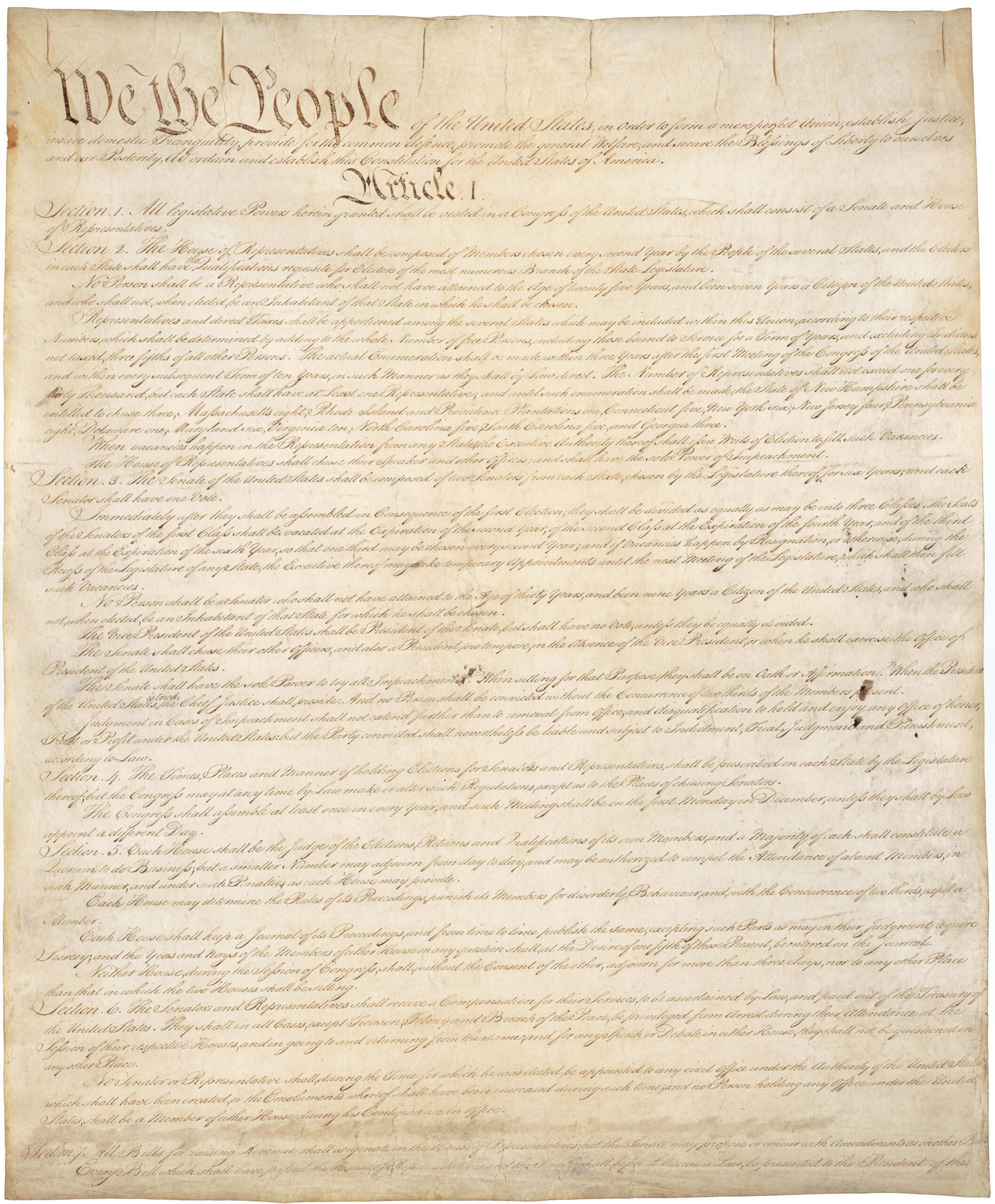
Judicial review is sometimes described as something the Supreme Court simply invented. That is too simple. The phrase is not written into Article III, but several parts of the constitutional design point toward a judiciary that decides legal conflicts. Article III gives federal courts the judicial power. Article VI says the Constitution is the supreme law of the land. Judges also take an oath to support the Constitution. When those pieces are put together, the argument is that courts must treat the Constitution as binding law when deciding cases.
The National Constitution Center summarizes Marbury as confirming the principle that the Court can declare laws unconstitutional. Annenberg Classroom notes that many constitutional experts see judicial review as implied by the structure of Articles III and VI. That does not mean every use of the power is easy or uncontroversial. It means the basic idea has become part of how American constitutional government works.
The power also fits the logic of checks and balances. Congress can shape the federal courts by creating lower courts, setting jurisdiction within constitutional limits, approving judicial budgets, and confirming judges through the Senate. The president nominates federal judges. Courts, in turn, can decide that an act of Congress, an executive action, or a state law conflicts with the Constitution. No branch is completely alone.
That balance is tense by design. A court that can invalidate laws has serious authority, but it normally must wait for an actual case. It cannot simply announce opinions about every political dispute. It also depends on the public and the other branches to respect judgments. Judicial review is powerful, but it is not the same thing as unlimited control over government.
What judicial review can and cannot do
Judicial review can block government action when a court finds a constitutional violation. That might involve free speech, equal protection, criminal procedure, federal power, voting rules, property rights, or many other areas. In classroom terms, it turns a constitutional claim into a practical legal question: did the government have the authority to do what it did?
But judicial review does not mean courts decide whether every law is wise, fair, or popular. A law can be clumsy and still constitutional. A policy can be controversial and still fall within the authority of the branch that adopted it. Courts usually ask legal questions, not broad political questions. They look at constitutional text, precedent, history, structure, and the facts of the case before them.
That difference matters because people often confuse disagreement with unconstitutionality. A citizen may dislike a tax, a school rule, a regulation, or a spending decision. That dislike may be reasonable. But for judicial review to matter, the challenge must connect to a constitutional limit or legal rule that a court can apply. The court’s job is not to replace every political choice with a judicial choice.
Judicial review also does not always produce one obvious answer. Supreme Court cases often involve competing readings of constitutional language, precedent, and historical practice. That is why decisions can include dissents. A dissent does not erase the ruling, but it shows that constitutional interpretation can be difficult even for trained judges. Over time, dissenting views can influence later courts, lawmakers, and public debate.
Why the power remains controversial
The strongest argument for judicial review is that constitutional rights and limits need protection even when they are politically inconvenient. Courts can protect individuals and minorities from government action that a temporary majority supports. They can also prevent one branch from expanding its power beyond the constitutional design. In that sense, judicial review helps make a written constitution more than a symbol.
The strongest concern is democratic. Federal judges are not elected, and Supreme Court justices serve during good behavior, which usually means life tenure unless they retire, resign, or are removed through impeachment. When courts strike down laws passed by elected representatives, critics may see the judiciary as overriding the people’s choices. That concern is not new. Debates over the proper reach of judicial power have followed the Court for much of American history.
The answer has never been to make the courts powerless or all-powerful. The American system instead keeps the branches in conversation and conflict. Congress can revise laws. Presidents can change policies within legal limits. States can test different approaches when federal law allows. Courts can decide cases, explain constitutional boundaries, and sometimes change direction when later cases expose weaknesses in older reasoning.
That is why judicial review is best understood as part of a larger system rather than a single magic switch. It gives courts the authority to say when government has crossed a constitutional line. It also forces everyone else to take the Constitution seriously as law. The result can be frustrating, slow, and contested, but the central idea remains clear: in a constitutional government, power is real, and so are limits.




Add comment