
 Akshay Dinesh
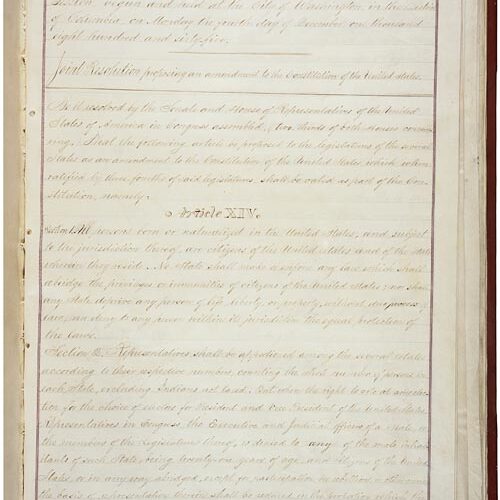
The Fourteenth Amendment is only a few sections long, but it changed the meaning of American citizenship more deeply than almost any other part of the Constitution. Written after the Civil War, it answered a question the country had avoided since its founding: who belongs as a citizen, and what must states respect once a person has that status? Its most famous words define national and state citizenship, require due process of law, and promise equal protection of the laws.
Those phrases can sound abstract because they now appear in court cases, textbooks, and public debates. In 1866 and 1868, however, they were tied to urgent problems on the ground. Millions of formerly enslaved people were no longer legally enslaved after the Thirteenth Amendment, but freedom without enforceable citizenship could be fragile. Southern states passed Black Codes that tried to limit movement, labor, property ownership, testimony in court, and other basic rights. The Fourteenth Amendment was designed to make freedom harder for states to narrow or ignore.
Why Reconstruction Needed More Than Emancipation
The Civil War ended slavery as a legal institution, but it did not automatically settle the rights of formerly enslaved people. The Thirteenth Amendment abolished slavery and involuntary servitude except as punishment for crime. That was a massive constitutional change, yet many former Confederate states quickly tested how much control they could keep over Black life. Black Codes varied by state, but their general purpose was clear: to preserve a racial labor order and deny Black people the practical meaning of freedom.
Congress first responded with the Civil Rights Act of 1866. That law declared that people born in the United States, except certain people subject to foreign power and Native Americans not then taxed, were citizens. It also named civil rights such as making contracts, owning property, suing, giving evidence, and receiving equal benefit of the law. President Andrew Johnson vetoed the bill, but Congress overrode him, making it the first major federal law enacted over a presidential veto.
The veto fight exposed a larger problem. A statute could be changed by a future Congress, weakened by courts, or resisted by states. Congressional Republicans wanted stronger protection written into the Constitution itself. The Fourteenth Amendment moved the argument from ordinary law to constitutional law. It did not merely announce that slavery was over. It tried to define what freedom required in a rebuilt Union.
Citizenship Became National, Not Just Local
Section 1 begins with a citizenship rule: all persons born or naturalized in the United States, and subject to its jurisdiction, are citizens of the United States and of the state where they live. That sentence mattered because of the Supreme Court’s 1857 Dred Scott decision, which had said that Black people descended from enslaved Africans could not be citizens of the United States. The Fourteenth Amendment rejected that idea at the constitutional level.
Before the amendment, citizenship could be treated as something states shaped unevenly. A state might recognize a person in one way while another state or the federal government denied a fuller legal status. The new language created a national floor. A person who met the amendment’s rule was not only a citizen of a state but also a citizen of the United States.
Birthright citizenship later became central in cases far beyond the immediate aftermath of slavery. In 1898, the Supreme Court decided United States v. Wong Kim Ark, holding that a man born in San Francisco to Chinese parents who were not U.S. citizens was a U.S. citizen under the Fourteenth Amendment. The case showed that the citizenship clause was not a narrow temporary rule for one generation. It became a lasting constitutional principle.
Due Process and Equal Protection Gave Rights a Federal Anchor
The same section also says that no state may deprive any person of life, liberty, or property without due process of law. At its most basic, due process means government must follow fair legal procedures before taking away protected interests. A hearing, notice, evidence, and an impartial decision-maker can all matter because power is less dangerous when it must move through rules rather than personal command.
The Equal Protection Clause works differently. It requires states to give people within their jurisdiction equal protection of the laws. In Reconstruction, that promise spoke directly to state systems that punished or protected people differently based on race. Courts and lawmakers did not fulfill that promise consistently, and many early decisions left Black citizens exposed to violence and discrimination. Still, the constitutional language gave later generations a powerful tool for challenging unequal laws.
One reason the amendment remains so important is that it applies to states. The original Bill of Rights limited the federal government, but state governments controlled many everyday questions: schools, policing, marriage law, property rules, jury service, and public facilities. Over time, courts used the Fourteenth Amendment to apply many federal rights against the states. That development, often called incorporation, helped make constitutional rights part of ordinary state and local government, not only federal action.
The Amendment Reworked Representation and Loyalty After War
Section 1 receives the most attention, but the rest of the amendment also responded to the broken politics of the Civil War. Section 2 changed how representation would be counted after slavery. The old three-fifths compromise had counted enslaved people for representation while denying them political rights. After emancipation, the amendment counted the whole number of persons in each state, while also creating a penalty if states denied voting rights to eligible male citizens.
Section 3 addressed former Confederates who had sworn to support the Constitution and then joined rebellion. It barred certain people from holding office unless Congress removed the disability by a two-thirds vote. The point was not only punishment. It was a way to ask whether people who had tried to destroy the constitutional order should immediately regain power inside it.
Section 4 protected the validity of U.S. public debt from the war while rejecting Confederate debts and claims for compensation for emancipation. That language may seem technical, but it settled a real postwar danger. If former Confederate political power returned quickly, lawmakers might have tried to shift financial burdens or reward those who had supported rebellion. The amendment closed that door.
Its Promise Took Generations to Enforce
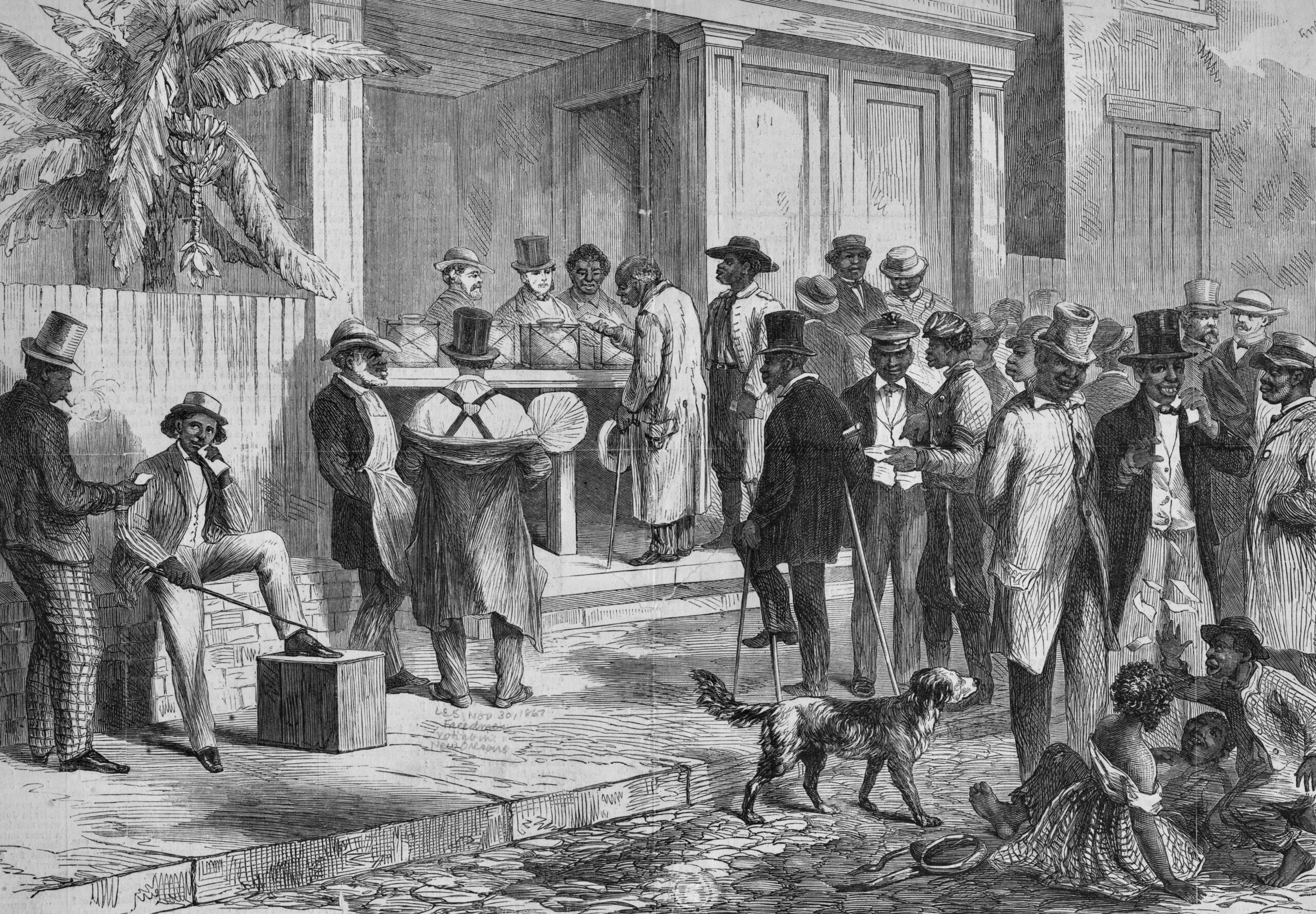
The Fourteenth Amendment did not make equality real by itself. During Reconstruction, Black citizens voted, held office, built schools, formed churches, reunited families, and demanded the rights that freedom should have carried. They also faced intimidation, economic pressure, racial terror, and state resistance. Constitutional text could open a door, but people still had to push institutions through it.
After Reconstruction ended, courts often read the amendment narrowly. Segregation, disfranchisement, and racial violence spread across the South, and the promise of equal citizenship was denied in daily life. The Supreme Court’s 1896 decision in Plessy v. Ferguson allowed state-mandated segregation under the separate-but-equal doctrine, even though that doctrine sat uneasily beside equal protection. For many Americans, the amendment’s words remained stronger than the country’s willingness to enforce them.
The amendment gained new force in the twentieth century. Brown v. Board of Education in 1954 used equal protection to reject racial segregation in public schools. Later cases drew on due process and equal protection in disputes over voting, criminal procedure, marriage, privacy, and education. People still disagree fiercely about how far some doctrines should reach, but the amendment’s central role is not in doubt. It made state power answerable to a national constitutional promise of citizenship, fairness, and equal legal protection.
Why It Still Matters
The Fourteenth Amendment matters because it changed the Constitution from a framework that tolerated slavery and uncertain citizenship into one that could be used to challenge unequal state power. It did not erase conflict, and it did not guarantee that courts or lawmakers would always act justly. Its early history proves the opposite: rights written on paper can be narrowed, delayed, or ignored when political will collapses.
Yet the amendment gave later generations constitutional language strong enough to keep returning to. Citizenship, due process, and equal protection are not small technical ideas. They ask whether a government may treat belonging as conditional, whether power must follow fair procedures, and whether law protects people evenly or only selectively. Those questions began in the crisis of Reconstruction, but they did not stay there.
That is why the Fourteenth Amendment is more than a Reconstruction document. It is one of the main places where the Constitution tries to repair its own failures. Its promise has never enforced itself, but it gave Americans a way to argue that freedom after the Civil War had to mean more than the absence of slavery. It had to mean citizenship with rights that states were bound to respect.





Add comment