
 Akshay Dinesh
The U.S. federal government does not run its budget on the same calendar most people use for school years, holidays, and tax filing reminders. Its fiscal year begins on October 1 and ends on September 30. That means fiscal year 2027 starts on October 1, 2026, even though most of 2027 still lies ahead.
At first, that can feel like a strange piece of bookkeeping trivia. January feels like the natural starting line for a year. But a government budget is not only a calendar; it is a working plan for how agencies can hire people, sign contracts, send grants, run inspections, support research, operate courts, maintain parks, and pay for thousands of public responsibilities. The October date gives Congress and federal agencies a separate budget clock, one shaped by lawmaking, planning, and accounting rather than by New Year’s Day.
A fiscal year is a budget year, not a calendar year
A fiscal year is any 12-month period used for accounting and financial planning. Businesses, schools, states, nonprofits, and governments often choose fiscal years that match their own work rhythms. A university might prefer a fiscal year that follows the academic calendar. A retailer might want its fiscal year to end after the holiday shopping season, when the busiest sales period has already been counted.
The federal government’s fiscal year works the same way in principle, though on a much larger scale. It gives federal budget documents a clear label. When people talk about fiscal year 2027, they mean the period from October 1, 2026, through September 30, 2027. The year is named for the calendar year in which it ends, not the calendar year in which it begins.
That naming habit prevents a lot of confusion once people learn it. A program funded for fiscal year 2027 does not wait until January 1, 2027, to become part of the annual budget cycle. Its budget year begins three months earlier. Agencies plan around that date because it determines when annual appropriations normally become available, when old annual funding expires, and when reports begin measuring a new budget period.

Why October 1 became the federal starting line
The federal fiscal year was not always arranged this way. Earlier in U.S. history, the federal budget year began on July 1. The modern October 1 start came from the Congressional Budget and Impoundment Control Act of 1974, a major reform law that reshaped how Congress handles the budget. The law created the House and Senate Budget Committees, established the Congressional Budget Office, and changed the fiscal-year calendar.
The calendar change had a practical purpose. Congress needed more time between the president’s budget proposal, committee work, budget resolutions, and the many appropriations bills that fund federal agencies. Moving the start of the fiscal year from July to October gave lawmakers several extra months to review priorities and write spending bills before the new budget year began.
The change first required a short transition period in 1976. After that adjustment, fiscal year 1977 became the first full federal fiscal year to begin on October 1. The new date did not make budgeting simple, but it did place the deadline later in the legislative year. In theory, Congress could use winter and spring to debate the broad budget picture, then use summer to finish the detailed spending bills.
The basic reason, then, is not that October has a special economic meaning by itself. October 1 is a legal and administrative starting line created to make room for a complicated budget process. It separates the federal government’s annual money cycle from the calendar year and gives elected officials more time to decide how public funds should be used.
What actually changes when a new fiscal year begins
The start of a new fiscal year matters because much federal spending depends on budget authority. Budget authority is legal permission for an agency to enter obligations, such as hiring staff, awarding grants, signing contracts, or ordering equipment. An agency cannot simply spend because it wants to. It needs authority provided by law, often through annual appropriations.
Some federal spending is mandatory, meaning it continues under existing laws unless Congress changes those laws. Social Security benefits, Medicare, and certain other programs do not depend on the same annual appropriations schedule in the same way. Discretionary spending is different. Defense programs, many education grants, environmental work, scientific agencies, national parks, federal courts, and many other activities often depend on yearly appropriations.
That is why October 1 receives so much attention in budget discussions. If regular appropriations are in place, agencies begin the fiscal year with clearer instructions and spending authority. They know more about staffing, grants, contracts, travel, program levels, and purchasing. If appropriations are missing, agencies may have to operate under temporary rules or prepare for a funding lapse.
The date also affects comparison. Budget tables, agency reports, and deficit measurements are often organized by fiscal year. A student looking at federal spending numbers needs to know that fiscal year 2027 is not the same as calendar year 2027. Three months of the fiscal year happen in late 2026, and nine months happen in 2027. Without that detail, charts and headlines can seem to disagree when they are simply using different calendars.
Why continuing resolutions happen
The October deadline is clear, but Congress does not always finish all regular appropriations bills before the fiscal year begins. When final spending bills are not ready, lawmakers may pass a continuing resolution. A continuing resolution is a temporary funding law that keeps covered agencies operating for a limited time, often by extending funding near earlier levels while negotiations continue.
Continuing resolutions can prevent an immediate shutdown, but they are not the same as a full-year budget plan. They can make long-term decisions harder because agencies may not know whether future funding will rise, fall, or shift. A science agency may delay a new grant competition. A department may postpone hiring. A contractor may wait for clearer instructions before expanding work. Even when a temporary measure keeps the lights on, uncertainty has real administrative costs.
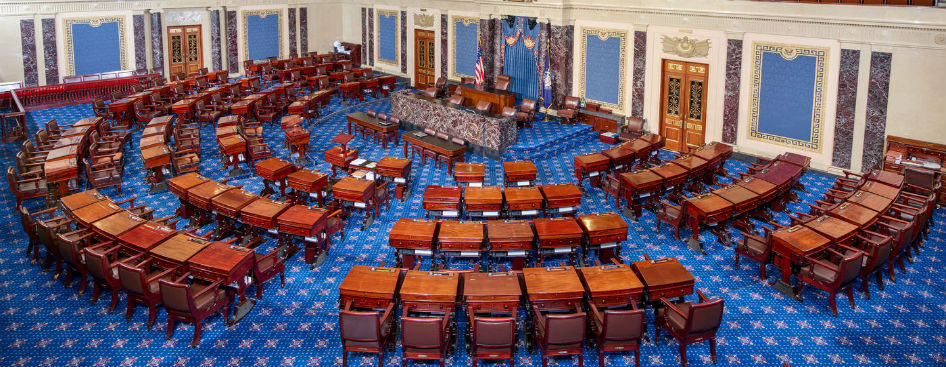
If Congress and the president do not enact either regular appropriations or a continuing resolution for an agency that needs annual funding, a funding lapse can occur. Under federal budget rules, affected agencies must limit many activities until funding is restored. That is the budget-process reason behind partial government shutdowns. The shutdown debate may sound political on the surface, but underneath it sits a basic legal question: does the agency have current authority to obligate money?
This is also why the phrase “the government runs out of money” can be misleading. The issue is not exactly the same as an empty bank account. It is usually a question of legal spending authority for particular activities during a specific fiscal year. The federal government may still collect revenue, make some required payments, and continue activities funded outside the lapsed appropriation. The visible effects depend on which agencies and programs lack authority.
Why the timing matters outside Washington
The federal fiscal year can feel distant until it touches a school, city, research lab, airport, hospital, farm, courthouse, or small business. Federal money flows through grants, contracts, reimbursements, loans, salaries, inspections, and services. When the budget year begins smoothly, many organizations can plan with more confidence. When the budget year begins under uncertainty, that uncertainty spreads.
A school district waiting on a federal grant may need to plan staff time before every dollar is final. A university research team may watch agency funding notices to see when competitions open. A business that works with the federal government may care about when contracts can be awarded. A family visiting a national park may notice whether services are fully staffed. Budget calendars turn into real-world schedules.
The date also helps citizens read public debates more carefully. When a headline says Congress is trying to avoid a shutdown by October 1, it is pointing to the start of the fiscal year. When a report says a deficit figure belongs to fiscal year 2026, it covers October 1, 2025, through September 30, 2026. When lawmakers argue over appropriations, they are usually arguing over specific legal authority for agencies to operate during the budget year.
Understanding the fiscal year makes federal budgeting less mysterious. October 1 is not just a date on an accounting calendar. It is the point where plans, laws, deadlines, and public services meet. The government chose that starting line to give the budget process more room than a January calendar would provide. Whether the process runs neatly is a separate question, but the reason for the October start is practical: a large public budget needs a year built around the work of governing.