Akshay Dinesh
When an economy is hit by a shock, policymakers face a problem that sounds simple but is not: should they encourage people to spend, try to cool demand, or wait for the disturbance to pass? A wrong move can deepen a recession or allow inflation to become harder to control. The 2026 Sveriges Riksbank Prize in Economic Sciences recognized Robert E. Hall and Michael Woodford for rebuilding the models used to think through those choices. Their key move was to connect the economy’s large swings to the smaller decisions made by households and businesses.
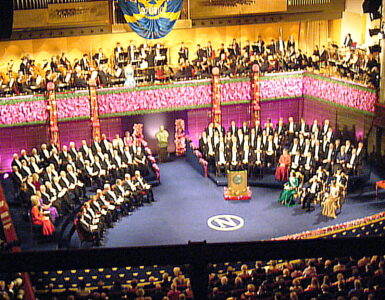
The Royal Swedish Academy of Sciences awarded Hall and Woodford the prize “for microeconomic foundations of macroeconomic stabilisation.” That compact phrase describes a major change in economics. Instead of treating inflation, unemployment, consumption, and production as lines that simply moved together, their work asked what people were trying to do when they saved, spent, hired, worked, or changed a price. Modern central-bank models grew from that approach, and so did a clearer understanding of why expectations about tomorrow can change the economy today.
Why the old policy rules stopped working
After the Great Depression, governments increasingly used ideas associated with John Maynard Keynes to soften recessions. When private spending fell, lower interest rates, tax reductions, or higher public spending could support demand. When an economy ran too hot, policy could move in the other direction. For a time, policymakers also appeared to face a fairly dependable tradeoff between inflation and unemployment: stronger demand might raise prices but support jobs, while weaker demand might restrain prices at the cost of employment.
The 1970s exposed the weakness of treating those relationships as fixed rules. Oil-price shocks helped produce stagflation, a combination of high inflation, weak growth, and high unemployment. Efforts to stimulate demand could worsen inflation without restoring the expected level of employment. Statistical patterns seen in earlier data were changing because households and businesses were adapting their behavior. A policy that had worked yesterday could produce a different result once people anticipated it.
This failure did not prove that governments and central banks were powerless. It showed that a useful model had to explain where economy-wide patterns came from. If inflation rose, the model needed to connect that movement to decisions about wages, prices, purchases, production, and saving. If unemployment climbed, it needed to show why employers and workers were not adjusting instantly. Hall and Woodford helped supply those foundations.

Hall connected national swings to household choices
Robert Hall’s research helped economists model consumption, saving, work, and production as purposeful decisions made over time. A household does not usually base every purchase only on this week’s income. It also considers future earnings, savings, debt, interest rates, and the risk of losing work. A business deciding whether to hire or invest makes a similar comparison between costs now and expected returns later.
That forward-looking view changes how economists interpret a drop in spending. Suppose households receive a one-time payment but believe their long-term income has not changed. Many may save much of it rather than immediately spend it. A permanent improvement in expected income may produce a stronger response. The size and timing of a policy therefore depend on what people think it means for their future, not merely on the amount of money that appears in the current month.
Hall’s work on consumption made those expectations measurable and testable. It also helped establish the broader practice of building macroeconomic models from clearly stated household and business behavior. These models impose discipline: the people inside them must face budgets, make tradeoffs, and respond consistently when prices or policy change. The assumptions can be debated, but they cannot remain hidden inside a historical correlation.
Woodford showed why prices and promises matter
Michael Woodford developed a framework in which many businesses cannot or do not change prices instantly. Printing new menus, renegotiating contracts, updating systems, and risking customer reactions all create friction. Some companies also wait because they are uncertain about competitors or demand. Economists call this price stickiness, and it gives monetary policy room to affect real activity in the short run.
If every price and wage adjusted immediately, a change in the money supply or a policy interest rate would mainly alter prices. With sticky prices, higher interest rates can reduce borrowing and spending before all prices have caught up. Lower demand may then cause firms to cut production or hiring. Lower rates can work in reverse, although their effect depends on credit conditions and on whether households and businesses feel confident enough to act.

Woodford also placed expectations at the center of policy. A central bank’s announcement can influence longer-term interest rates, business plans, and wage bargaining before its next decision takes effect. If people believe inflation will remain high, workers may seek larger raises and companies may raise prices sooner. If the bank makes a credible commitment to price stability, expectations can reduce that feedback. Communication is not decorative; it is one of the channels through which policy works.
Different shocks call for different responses
The models become especially useful when the economy is pushed away from normal conditions. A collapse in household demand, for example, can leave businesses with unsold goods and fewer reasons to hire. Lower interest rates or temporary fiscal support may help replace some missing demand. The aim is not to erase every fluctuation but to prevent a self-reinforcing fall in spending, employment, and income.
A supply shock is more difficult. Imagine that an energy disruption makes transportation, heating, and production more expensive. Prices rise even as households have less purchasing power and businesses face weaker sales. Stimulating demand aggressively may add inflation to an economy that cannot quickly produce more. Tightening policy sharply may suppress inflation but worsen the slowdown. Woodford’s framework helps policymakers trace those competing effects rather than apply the same response to every downturn.

Timing matters too. Interest-rate changes reach mortgages, business loans, exchange rates, and hiring plans at different speeds. Fiscal measures may support incomes quickly or arrive after conditions have shifted. Because households and companies anticipate future policy, even a delayed action can affect current behavior if it is credible. Stabilization is therefore a problem of sequencing, expectations, and uncertainty as much as choosing whether a rate should move up or down.
What the models can and cannot do
The Hall-Woodford approach became part of the foundation for New Keynesian models used by central banks and finance ministries. Such models combine forward-looking decisions with real-world frictions, then test how an economy might respond to interest rates, government spending, supply disruptions, or changes in confidence. The Academy noted that this framework has improved responses to crises including the pandemic downturn and recent energy shocks.
No model turns the economy into a machine with a reliable control panel. Real households differ in wealth, debt, age, and access to credit. Businesses differ in market power and in how easily they can change prices. Financial stress, global trade, political choices, and unexpected events can break assumptions that worked in calmer periods. Economists therefore compare models, update them with new data, and examine several possible paths rather than trust a single forecast.
The deeper achievement is a better way to ask policy questions. When officials consider a rate change or a spending program, they must ask how people will interpret it, who can respond, how quickly prices can adjust, and what expectations it will create. Those questions bring the scale of national policy back to the decisions taking place in kitchens, shops, offices, and factories.
Why the 2026 prize reaches everyday life
Macroeconomic stabilization can sound remote until a shock reaches a grocery bill, a mortgage payment, or a job search. Hall’s work explains why families may save a temporary windfall or cut spending when the future looks uncertain. Woodford’s work explains why a central bank’s words can move borrowing costs and why inflation does not vanish the moment demand changes. Together, their research links individual choices to the booms and recessions visible in national data.
The goal of stabilization is not a perfectly flat economy. Innovation, changing preferences, and global events will always create movement. The practical goal is to keep a manageable disturbance from becoming a long collapse or an inflationary spiral. By showing how expectations, spending, and sticky prices interact, Hall and Woodford gave policymakers a stronger map. The map is incomplete, as every economic model is, but it is far better than steering by yesterday’s correlations alone.