

 Akshay Dinesh
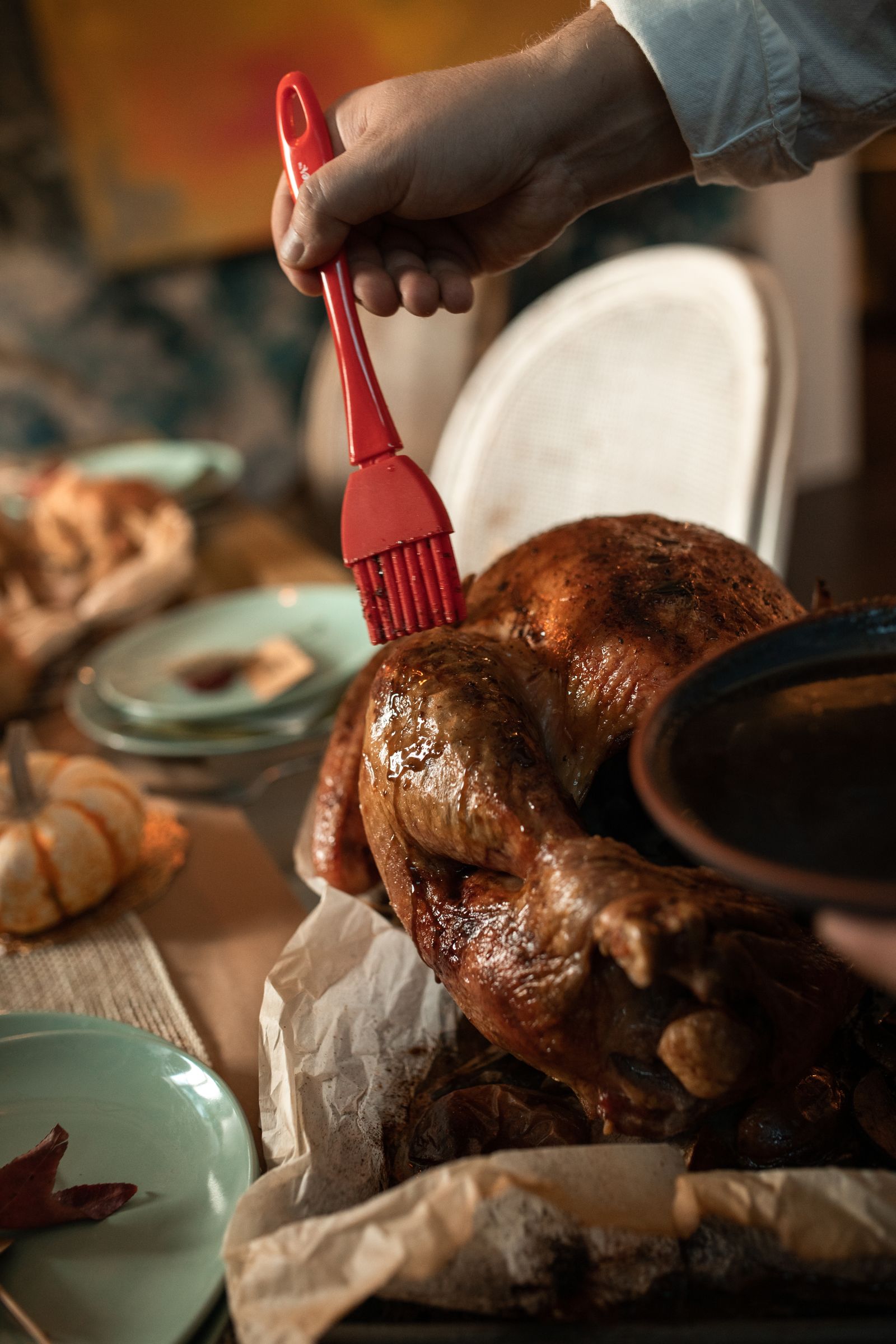
A roast can leave the oven with its center at one temperature and reach a higher one several minutes later. That rise is called carryover cooking. The oven is no longer adding heat, but the hotter outer layers are still transferring energy toward the cooler center. At the same time, the surface is losing heat to the room.
That distinction solves an apparent contradiction: the center can get hotter while the roast as a whole is cooling. Understanding it helps explain why cooking times are estimates, why a thermometer reading can change during a rest, and why a guessed temperature rise is no substitute for checking food safety.
Heat keeps moving after the oven stops
Imagine a thick roast near the end of its time in the oven. Its exterior has been exposed to hot air and the roasting pan, while its center has warmed more slowly. Between those locations is a temperature gradient: a difference in temperature across the food. Heat travels through the meat by conduction, from warmer regions toward cooler ones.
Removing the roast changes the conditions at its surface, but it does not instantly erase that gradient. For a while, heat can still arrive at the center faster than the center loses it to cooler surroundings. A thermometer in that spot therefore rises, even though no new heat is being supplied by the oven. Eventually the temperature at the center reaches a peak and begins to fall as the roast continues to cool.
This is not the creation of extra heat. Energy is being redistributed within the food while energy also escapes into the air, the board, and anything touching it. A thermometer measures a particular location, not the average temperature of the entire roast.
Why the rise is different from one roast to another
There is no dependable number of degrees to add to every thermometer reading. Thickness and shape affect how far heat must travel; cooking temperature and method affect how much hotter the outside becomes than the center. A large roast cooked in a hot oven can retain a substantial temperature difference between its surface and interior. A thin piece, or food warmed slowly and evenly, may show a smaller rise or little noticeable rise.
The conditions after cooking matter too. Leaving a roast in a hot pan, covering it tightly, or moving it to a cooler surface can change the way it loses heat. Even the place where the thermometer tip sits changes the number you see. A reading taken near the surface is not interchangeable with one at the center, and a probe touching bone or a pan can be misleading.
Consider two equally thick pieces cooked by different methods. If one develops a much hotter exterior while its center remains relatively cool, more heat can flow inward after removal. The other may have a more even temperature throughout and less room for its center to rise. These are tendencies, not a formula for predicting the finish temperature of a particular meal.
Resting, doneness, and food safety
Resting gives temperatures time to change and can make carving easier, but it is not a universal permission to take food off the heat below its recommended minimum. The amount of carryover varies, and a prediction cannot establish that every required part of the food has reached a safe temperature. Check with a food thermometer and follow the guidance for the specific food.
For example, the USDA says a whole turkey must reach 165°F (73.9°C) throughout, measured in the innermost parts of the thigh and wing and the thickest part of the breast. Stuffing must also reach 165°F. The outside looking brown, or juices appearing clear, cannot tell you reliably whether those places have reached the required temperature.
Other foods have different standards. The USDA recommends 145°F (62.8°C) for whole cuts of beef, pork, lamb, and veal before removal from heat, followed by at least a three-minute rest. Ground meats and poultry have different minimums. A required safety rest is part of that specific guidance, not a general rule that any food can finish safely on the counter.
Getting a useful thermometer reading
Use a clean food thermometer suited to the food and follow its instructions. For a thick cut, check the thickest part, keeping the sensing area away from bone, fat, gristle, and the cooking vessel. FoodSafety.gov recommends this placement in its four steps to food safety. An irregularly shaped roast or whole bird needs checks in more than one place: the warmest reading is not proof that the coldest part is ready.
Give the thermometer time to settle according to its instructions, and clean it between contacts with raw and cooked foods. If a required location has not reached the appropriate minimum, continue cooking and check again. A leave-in probe can help show the changing temperature at one point, but it does not eliminate the need to check other relevant spots.
Once food is safely cooked, a short rest for carving is different from leaving it out indefinitely. FoodSafety.gov advises refrigerating perishable leftovers within two hours, or within one hour when the surrounding temperature is above 90°F (32°C). Divide large quantities into shallow containers so they cool promptly.
The same idea beyond a roast
Carryover is easiest to picture in a large piece of meat, but the underlying movement of heat is not limited to roasts. A baked dish can remain hot after it leaves the oven, and a microwave meal may have hot and cold areas. When a package calls for standing time, follow it: FoodSafety.gov notes that colder areas can absorb heat from hotter ones during that interval. Stirring when directed also helps distribute heat.
The useful habit is to think in locations rather than a single magic number for the whole dish. The outside and center do not always heat or cool together. Give heat time to move, measure where the food is most likely to be coolest, and let the actual reading guide the next step.




Add comment