

 Akshay Dinesh
On a cold winter morning, a lake can look solid from shore to shore while fish continue to swim beneath it. Most freshwater lakes freeze at the surface first because water behaves unusually as it cools: it is densest at about 4°C (39°F), not at its freezing point. Colder water stays above the denser water, allowing a surface layer to reach 0°C (32°F) and form ice.
That floating cover changes what happens next. Ice and any snow on it slow heat loss from the water below, although they do not stop it altogether. The result is a winter lake with a frozen ceiling, liquid water underneath, and living things adapting to an environment that is cold, dark and sometimes short of oxygen.
The surprising turn at 4°C
Imagine an autumn lake losing heat to the air. At first, the surface water cools and becomes denser than the warmer water below. It sinks, while other water rises to take its place. Wind helps stir the lake, and this circulation can carry heat from deeper water toward the surface, where it is lost to the atmosphere.
Fresh water reaches its greatest density at approximately 4°C. Once surface water cools below that point, the pattern changes: further cooling makes it less dense, so it tends to remain above the slightly warmer water. A relatively thin surface layer can then cool toward freezing without the whole lake having to reach 0°C. NOAA describes this sequence in its account of how ice forms on fresh water.
The temperatures are a useful model, not a promise that every lake has a perfectly uniform 4°C bottom. Wind, currents, depth, inflowing water and the lake’s shape all affect mixing. Large lakes can cool and freeze unevenly, and a windy surface may resist forming a continuous ice cover even when sheltered bays begin to freeze.
Why the ice stays on top
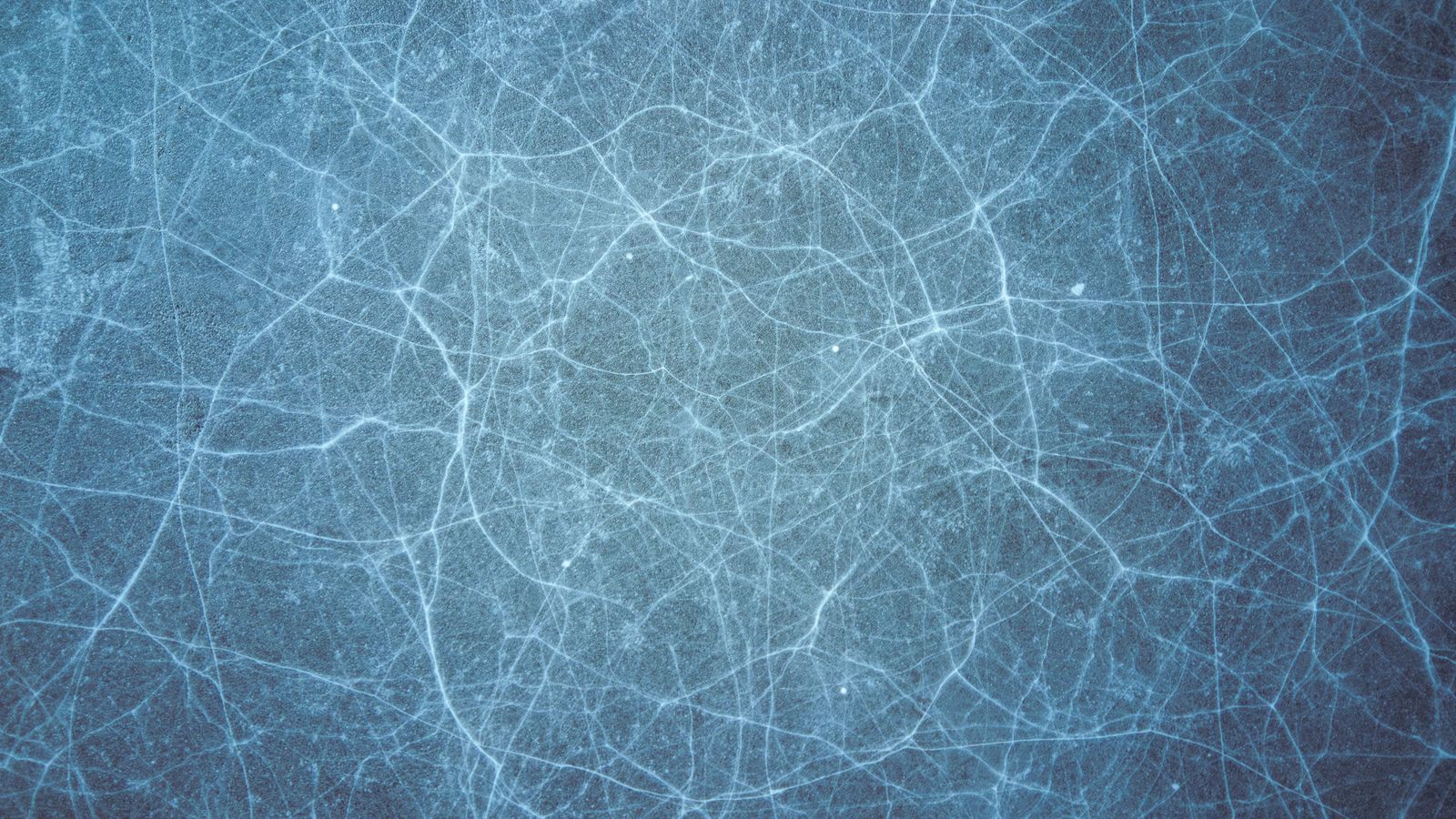
As water freezes, its molecules arrange into a crystal structure that holds them farther apart on average than in liquid water. The same mass therefore occupies more space as ice. Ice is less dense than the liquid beneath it, so it floats instead of sinking and piling up on the lake bed.
Both parts of the story matter. Cold liquid water remains near the surface as it approaches freezing, and the ice that forms there floats. Saying only “ice floats” explains why a piece of ice stays up, but it leaves out why the surface water was able to reach the freezing point in the first place.
Once an ice sheet forms, more ice generally grows at its underside as heat moves through the existing layer to the colder air. Snow can insulate the sheet further, slowing that heat transfer and the growth of ice below. The Minnesota Sea Grant guide to lake ice explains why calm conditions, snow and changing weather produce different kinds of ice.
Insulation slows freezing; it does not make the water immune to it. A shallow pond can freeze to the bottom during a sufficiently long, severe cold period. Ice can also vary greatly in thickness across a single lake, especially near currents, inlets, outlets and areas with snow cover. Its appearance alone is not a reliable safety test; check local ice-safety guidance before going onto it.
What happens to life underneath?
In a sufficiently deep lake, liquid water can persist beneath the ice through winter. Many fish are adapted to cold water and become less active as temperatures fall. Their surroundings are not simply a comfortable warm refuge, though: water near 4°C is still cold, and survival depends on the species and the conditions in that particular lake.
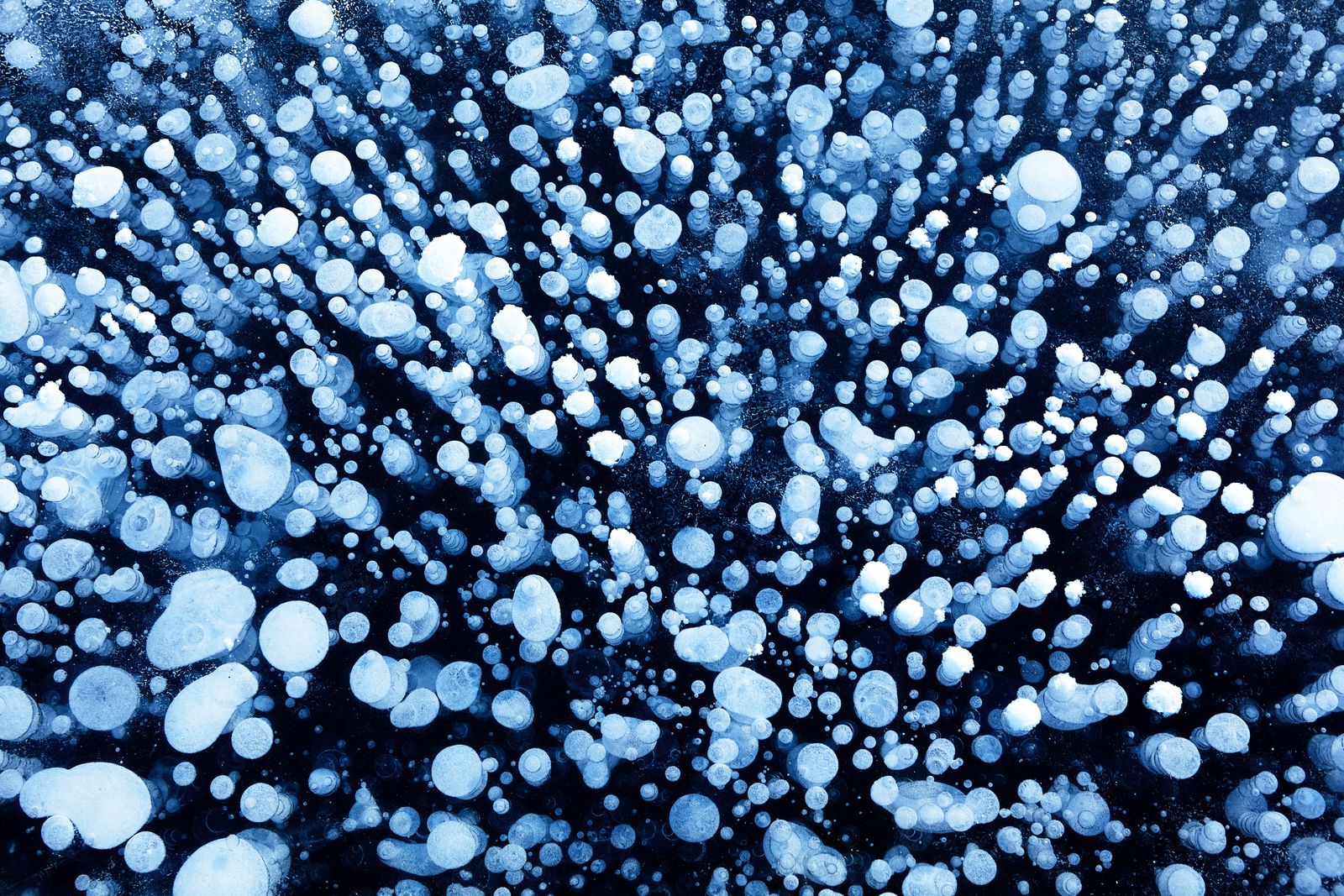
Oxygen can become a problem. Ice reduces exchange with the atmosphere, and snow on top limits the light reaching aquatic plants and algae. With less light, photosynthesis may supply less oxygen, while fish, microbes and other organisms continue to use it. The University of Illinois Extension notes that oxygen can decline as winter progresses, especially in smaller or shallower ponds.
If oxygen falls far enough, fish can die in an event called winterkill. The risk depends on factors such as depth, snow cover, the length of ice cover and how much oxygen is consumed as organic material decomposes. Liquid water beneath the ice is therefore a condition that can help aquatic life survive, not a guarantee that every animal will make it through winter.
From winter layers to spring mixing
Beneath stable ice, the coldest liquid water is usually just below the surface, with denser, somewhat warmer water deeper down. Scientists call this winter stratification: layers persist because their densities differ. It is the reverse of the familiar summer pattern in which warm, lighter water can lie above cooler, denser water.
In spring, melting ice and warming surface water change that arrangement. As surface water approaches the temperature of the deeper water, the density difference weakens and wind can mix the lake more readily. This spring turnover can redistribute oxygen and nutrients, though its timing and completeness vary with the lake and its weather.
The frozen surface is thus only one part of a much larger seasonal cycle. Water’s density gives the lake a way to retain liquid below the ice, while wind, snow, depth and living organisms determine what that winter actually looks like.



Add comment