

 Akshay Dinesh
Salt can draw moisture out of food, so why do cooks use it to make turkey or chicken juicier? The answer is that brining changes more than the amount of water on the surface. As salt moves into meat, it changes how muscle proteins interact with water. Depending on the method, the meat may take up water before cooking, hold on to more of its own moisture during cooking, or both.
That distinction helps explain the difference between a bird soaked in salt water and one salted in advance without a bath. It also explains why a stronger brine is not automatically a better one, and why a brined turkey still needs careful cooking.
What happens when meat sits in a brine?
A wet brine is a solution of salt and water. When a piece of meat is immersed, salt starts moving from the more concentrated liquid at the surface toward the less salty interior. This movement is called diffusion. It takes time: a thin chicken cutlet has a much shorter distance to season than the center of a whole turkey breast.
Water moves too, but the direction and amount are not fixed by a single rule. Osmosis describes water movement across a selectively permeable barrier in response to differences in dissolved substances. Meat is a complex tissue, however, with damaged cell membranes, proteins and spaces between fibers. Brine strength, time, temperature, and the meat itself all influence the final result. It is misleading to say that osmosis simply pushes salt water into every piece of meat.
In a 2006 Journal of Food Engineering study, N. Graiver and colleagues immersed small samples of pork tissue in solutions with different salt concentrations. At lower concentrations, they observed fiber swelling and greater water-holding capacity; at higher concentrations, the tissue lost water and the structure changed. The experiment was not a kitchen recipe for turkey, but it shows why concentration matters.
Why salt can help meat hold water
Muscle contains bundles of fibers made in part from proteins such as myosin and actin. Salt ions interact with these proteins and can alter the way they pack together. Under suitable conditions the structure can swell and retain more water within and around the fibers. Food scientists call this property water-holding capacity.
Heat changes that structure again. As meat cooks, its proteins change shape and contract, squeezing out liquid. Salt cannot prevent this, but its earlier effects on the proteins can reduce cooking losses under appropriate conditions. That is one reason salted meat can taste juicier even when the dry method has added no water.
Juiciness is not just a measurement of water, either. Fat, texture, saltiness, and how easily liquid is released as you chew all affect the experience. A very strong or prolonged treatment can make meat too salty or give it an unpleasant texture. More salt and more time are not guaranteed improvements.
Wet brining and dry brining are different
With a wet brine, the meat sits in a prepared salt solution. It can take up some of that liquid as well as salt, although the outcome depends on the solution and the cut. The extra liquid may help offset moisture lost in the oven, but wet-brined meat can also be difficult to brown if its surface remains damp. Water at the surface must evaporate before the surface can heat efficiently enough for browning.
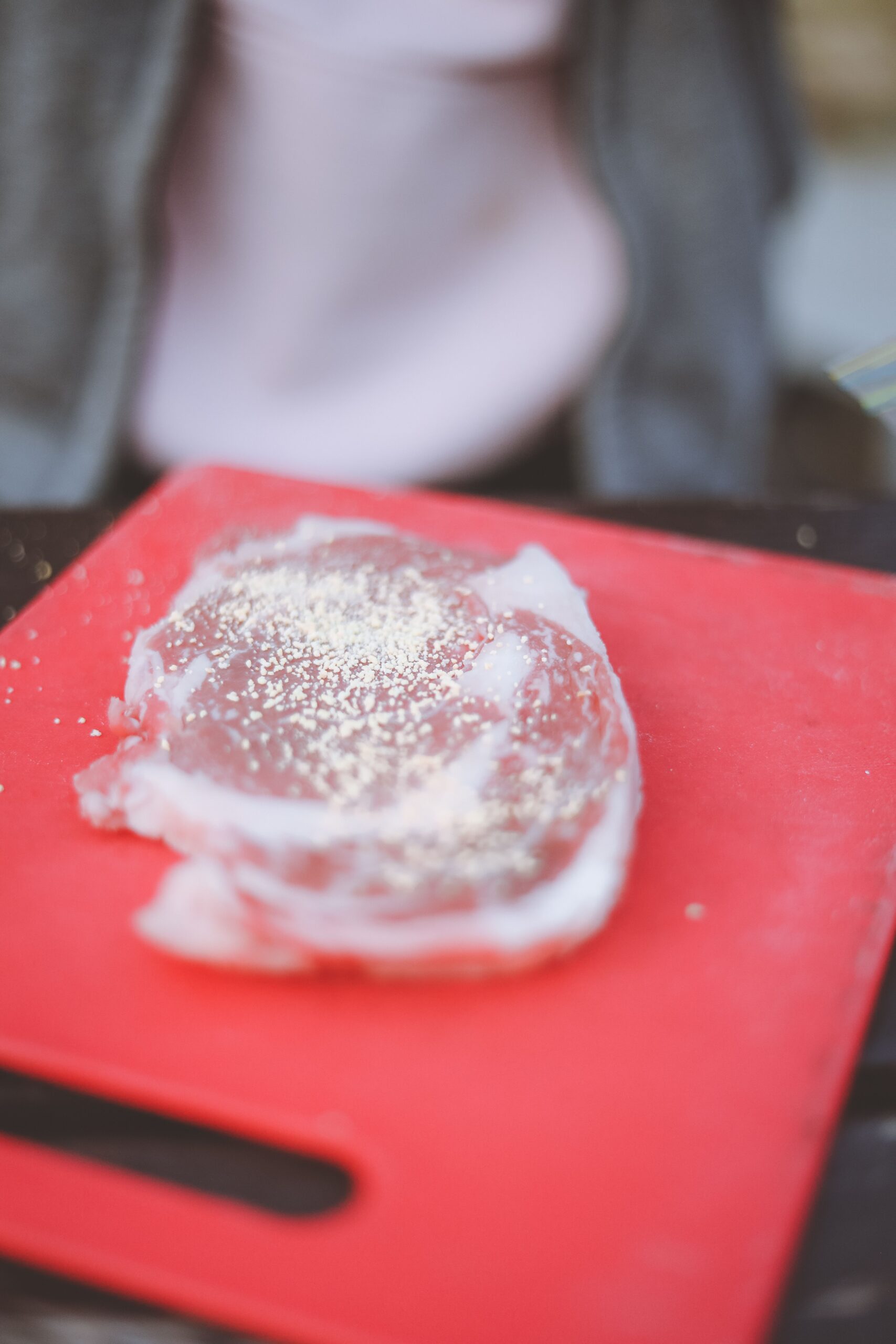
Dry brining is a kitchen term for salting food ahead of cooking without immersing it. Salt first dissolves in moisture at the surface, forming a concentrated liquid. Salt then diffuses inward over time, while water redistributes in the tissue. A dry-brined piece does not absorb a bath of water; its potential advantage comes from seasoning and changes in how its proteins retain moisture. The visible surface can become less wet during a refrigerated rest, depending on how it is stored.
Neither method guarantees an evenly seasoned center immediately. A large bird needs more time than a small cut, and recipes vary in salt concentration and timing. Salt crystal sizes also vary: a spoonful of coarse salt can contain a different mass of salt from the same volume of fine salt. Follow a tested recipe that identifies the salt it uses, or weigh the salt when a recipe provides a weight.
Check the label before adding salt
Some poultry is sold with a salt solution already added. Look for wording on the package describing an added solution or an enhanced product and check the ingredients. A bird that has already been salted may not need another brine; treating it like an untreated bird can make the finished meat overly salty. The label and the recipe together give a better starting point than appearance alone.
Herbs, spices, sugar, and aromatics can contribute flavor, particularly near the surface or in pan juices, but they do not all move through meat at the same rate as salt. Brining is not a shortcut to filling the center of a large bird with every flavor in the container. Seasoning the accompanying sauce or serving the meat with flavorful sides can make those flavors more noticeable.
Brining does not replace food safety
A kitchen brine is a seasoning technique, not a reliable way to make raw poultry safe at room temperature. The USDA’s poultry-brining guidance calls for a food-grade plastic, stainless-steel, or glass container and refrigeration while the poultry is in the solution. Keep raw poultry and its liquid away from foods that will not be cooked, and clean hands, equipment, and surfaces after contact. Discard used raw-poultry brine rather than treating it as a ready-to-eat sauce.
Cook poultry to a safe internal temperature even when it has been brined. The USDA recommends 165°F (74°C) for turkey, checked with a food thermometer in the thickest part of the breast and the innermost parts of the wing and thigh. If stuffing is cooked inside the bird, its center must also reach 165°F. Color and clear-looking juices are not dependable substitutes for the thermometer.
Brining is best understood as a head start, not insurance against overcooking. Salt can season the interior and help the muscle retain moisture, but it cannot stop heat from eventually squeezing out water. Pair a suitable method with careful temperature checks, and the chemistry has a much better chance of showing up on the plate.




Add comment