 Akshay Dinesh
On October 31, 2026, four people stepped out of a habitat at NASA’s Johnson Space Center after spending 378 days inside. They had not traveled to Mars. Their home was a 3D-printed building in a Houston hangar, and help was physically close if a real emergency occurred. Yet for more than a year, the crew worked under rules designed to reproduce some of the hardest parts of a Mars surface mission: isolation, limited supplies, demanding schedules, delayed messages, equipment problems, and life with the same small team.
The project is called CHAPEA, short for Crew Health and Performance Exploration Analog. Its value does not depend on pretending Houston is Mars. It comes from deciding which pressures can be recreated faithfully on Earth, measuring how people and systems respond, and being equally clear about the dangers that a simulation leaves out.
A Mars mission built inside a Houston hangar
CHAPEA Mission 2 began on October 19, 2025. Commander Ross Elder, medical officer Ellen Ellis, flight engineer James Spicer, and science officer Matthew Montgomery lived in Mars Dune Alpha, a roughly 1,700-square-foot habitat with private crew quarters, work areas, medical and fitness spaces, food-production stations, and an airlock leading to a covered outdoor simulation area. NASA selected them through an astronaut-like process that included educational, professional, medical, and performance requirements.
The crew followed a full mission schedule rather than simply enduring confinement. They exercised, maintained the habitat, grew plants, carried out research, and performed simulated excursions in spacesuits. Planned equipment failures and other complications forced them to diagnose problems while staying on schedule. Biological samples, health checks, task results, surveys, and written reports created a record of how performance changed across an unusually long study.
Length is one of the experiment’s most important features. A difficult week can show how a team handles a short burst of pressure; 378 days can reveal how routines hold up after novelty disappears. Food preferences may shift, minor irritations may accumulate, and a procedure that looked manageable during training may become burdensome when repeated for months. NASA is interested in those slow effects because a crew traveling to Mars cannot solve every problem by waiting for a resupply vehicle or an early trip home.
Delay changes who gets to make decisions
Astronauts on the International Space Station can speak with flight controllers almost in real time. Mars is different. Depending on the positions of the two planets, a radio message can take roughly four to 24 minutes to travel one way. A question and its answer might therefore require close to 48 minutes even before anyone spends time analyzing the problem.
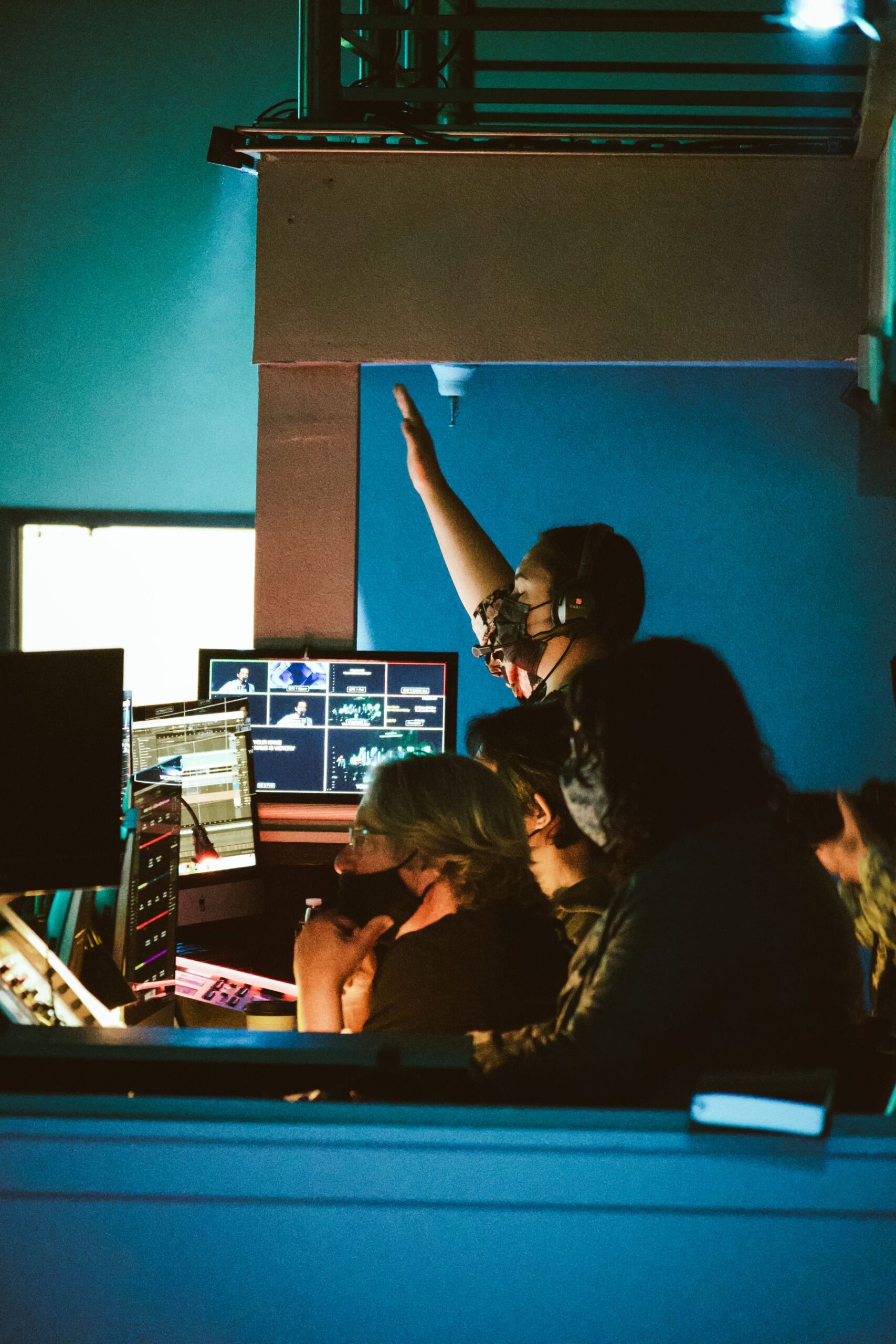
CHAPEA builds delay into daily communication so the crew cannot rely on a voice from mission control to guide every step. Mission 2 also included a simulated two-week loss of signal. Work continued, but contact with family and ground teams stopped, and data accumulated. When the link returned, the backlog did not vanish instantly. The crew and controllers had to decide which messages, files, and system updates deserved the limited bandwidth first.
That turns communication into an operational design problem. Instructions must contain enough context to remain useful when a quick follow-up is impossible. Crews need training and onboard references that let them make time-sensitive choices independently. Ground teams must decide which decisions they can delegate and how to monitor a mission without interrupting it.
A 2025 NASA technical review led by Lauren Landon examined two decades of communication-delay research and found that major gaps remain. Studies have not yet reproduced enough high-stakes tasks such as emergency response, complex maintenance, and system-failure recovery with realistic fidelity. CHAPEA can test procedures and tools under sustained delay, but it cannot by itself prove that every procedure would work during a true spacecraft emergency.
Scarcity is both an engineering and a human problem
Every kilogram sent into deep space consumes launch capacity. Food, spare parts, medical equipment, exercise devices, water-processing hardware, and personal comforts compete for mass, volume, and power. Bringing more of one item may mean bringing less of another. The question is not simply what people would like to have, but which combination best protects health and keeps the mission productive.
That is why CHAPEA restricts resources instead of providing an ordinary home behind a sealed door. NASA can study how the food system affects satisfaction and nutrition, how much time maintenance consumes, and whether a tool earns the space it occupies. The crew’s everyday improvisations matter too. During Mission 2, familiar objects such as wrenches, needles and thread, and a drain snake became part of keeping the habitat and equipment working. A small, versatile item can be more valuable than a specialized device that solves only one problem.
Scarcity also changes relationships. If a repair takes longer than expected, other tasks must move. If communications are slow, waiting for instructions can waste hours. If food becomes monotonous, the effect may appear in mood and motivation as well as nutrition. Mission planners therefore study resources and human performance together. A technically efficient system is not truly efficient if it creates so much workload or frustration that the crew uses it poorly.
Why a full year of isolation matters
Isolation is not just the absence of other people. It is life with very little privacy, a narrow social circle, repeated routines, no spontaneous trip outdoors, and limited contact with home. The CHAPEA crew knew they were being studied and knew that support existed beyond the habitat walls, but the duration still allowed researchers to observe patterns that short trials cannot capture.
Repeated measurements can show whether sleep, exercise, workload, mood, teamwork, or task accuracy changes at particular stages. Researchers can compare a demanding period with quieter weeks, examine how recovery occurs, and look for warning signs that appear before a visible performance problem. Post-mission interviews add another layer because crew members can describe experiences that were difficult to explain through delayed written messages.
NASA does not treat one successful crew as a universal answer. CHAPEA missions are designed to be broadly repeatable so researchers can compare different groups living under similar conditions. Mission 1 ended in July 2024, and Mission 2 now provides a second complete data set. Principal investigator Grace Douglas has emphasized that comparisons across crews are essential: a pattern seen once may belong to those four people, while a repeated pattern is more likely to inform mission design.
The finished mission also does not mean finished science. End-of-mission health measurements and debriefs must be collected, then researchers need time to analyze the data. Until results are published, observations from crew audio logs are useful examples, not proof of a general psychological effect.
What an Earth analog cannot reproduce
Mars Dune Alpha can imitate a schedule, a communications delay, a small living space, and constrained supplies. It cannot reproduce Martian gravity, dangerous radiation, abrasive dust entering a real pressure habitat, or the physical consequences of a failed life-support system millions of kilometers from Earth. The participants also know that a door to ordinary life exists nearby, even though opening it would end their mission.
The sample is small by design. Four carefully selected, highly capable volunteers are closer to a future astronaut crew than a random group would be, but they do not represent every person or every team. Their awareness of observation may shape behavior, and NASA’s safety obligations limit how severe a simulated emergency can become. Those are not flaws to hide; they define the questions the study can answer responsibly.
An analog is strongest when it tests operations before the stakes become real. It can expose a confusing checklist, show that a maintenance task needs two people instead of one, reveal an information bottleneck, or identify a food and exercise plan worth refining. It can also show researchers where confidence is premature. No single habitat can certify that humans are ready for Mars, but a series of careful trials can remove avoidable surprises one procedure at a time.
That is the deeper achievement of 378 days in a Houston hangar. The crew did not prove what living on Mars will feel like. They gave engineers, doctors, psychologists, and mission planners a long, detailed test of the systems that must support people when distance makes quick rescue, instant advice, and unlimited supplies impossible.