
 Akshay Dinesh
A pile of autumn leaves looks harmless, and on a forest floor it usually is. Leaves return carbon and nutrients to soil, shelter small animals, and become food for fungi and other decomposers. The problem changes when those leaves land on streets, driveways, and sidewalks. Rain can wash dissolved nutrients out of them, carry fragments toward a storm drain, and deliver the mixture to a stream or lake with little chance for soil to filter it.
This is why a curb piled with leaves is more than a drainage nuisance. It can become a short-lived but concentrated source of phosphorus and nitrogen just when fall storms begin moving water through urban drainage systems. The effect is strongest in tree-lined neighborhoods with plenty of pavement and storm sewers that empty directly into local waterways. Understanding that route makes a small seasonal chore look less like tidying and more like watershed care.
Leaves Behave Differently on Pavement
In a woodland, fallen leaves settle onto a rough, absorbent surface. Water moves slowly through the litter and soil, while roots, microbes, fungi, and soil particles capture or reuse much of what the leaves release. The layer also protects soil from erosion and helps regulate moisture and temperature. Decomposition is part of a local nutrient cycle: material falls near the tree, breaks down gradually, and feeds the same ecosystem.
Pavement interrupts that cycle. Asphalt and concrete cannot absorb much water, so rainfall travels sideways as runoff instead of soaking downward. Curbs funnel the moving water, and smooth surfaces let leaves collect in dense piles. A leaf that would have decomposed slowly across a patch of soil may instead sit in a wet gutter where water repeatedly passes through it. The location, not the leaf itself, creates the pollution risk.
What Rain Takes From a Leaf
Leaves contain phosphorus, nitrogen, carbon compounds, and many other substances that a living tree used to build cells and run chemical reactions. Before dropping a leaf, a deciduous tree retrieves some valuable nutrients, but it does not recover everything. Once the leaf is detached, its cell membranes weaken, physical abrasion opens the tissue, and decomposers begin breaking large molecules into smaller ones. Wetting, drying, and freezing can speed the release of soluble material.
Rain does not need to carry an entire leaf away to move its nutrients. Water flowing over and through wet leaf piles can leach dissolved phosphorus and nitrogen, much as hot water draws soluble compounds from tea leaves. Small fragments and particles can travel with the flow as well. Scientists therefore distinguish dissolved nutrients from nutrients attached to particles. That distinction matters because a street sweeper may collect visible debris, but dissolved material that has already entered the water is much harder to intercept.
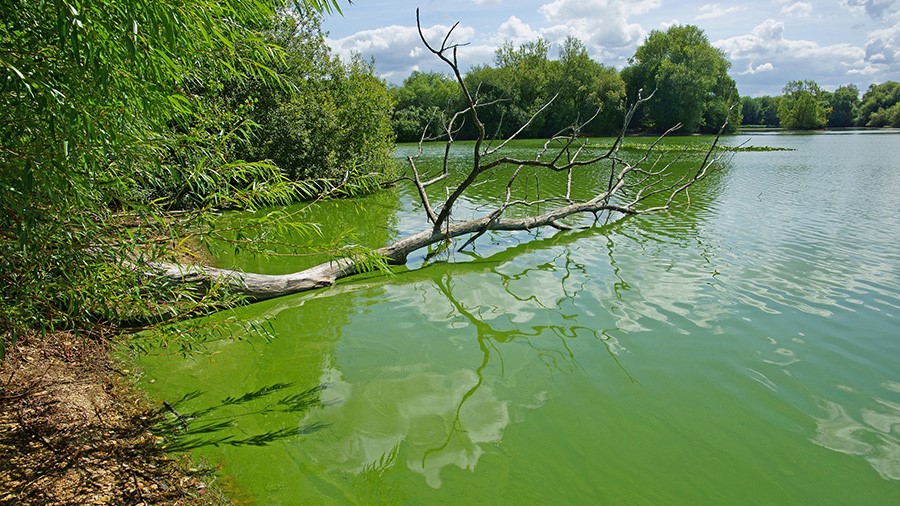
Phosphorus deserves special attention because it often limits plant and algal growth in freshwater. Adding more can act like fertilizer. Algae and aquatic plants may grow rapidly, and the microbes that later decompose that organic matter consume dissolved oxygen. Severe nutrient enrichment, called eutrophication, can produce murky water, unpleasant odors, habitat changes, and oxygen shortages that stress fish and other aquatic life. Not every nutrient pulse creates a visible bloom, but repeated runoff adds to the larger load a water body must absorb.
Storm Drains Shorten the Route to Water
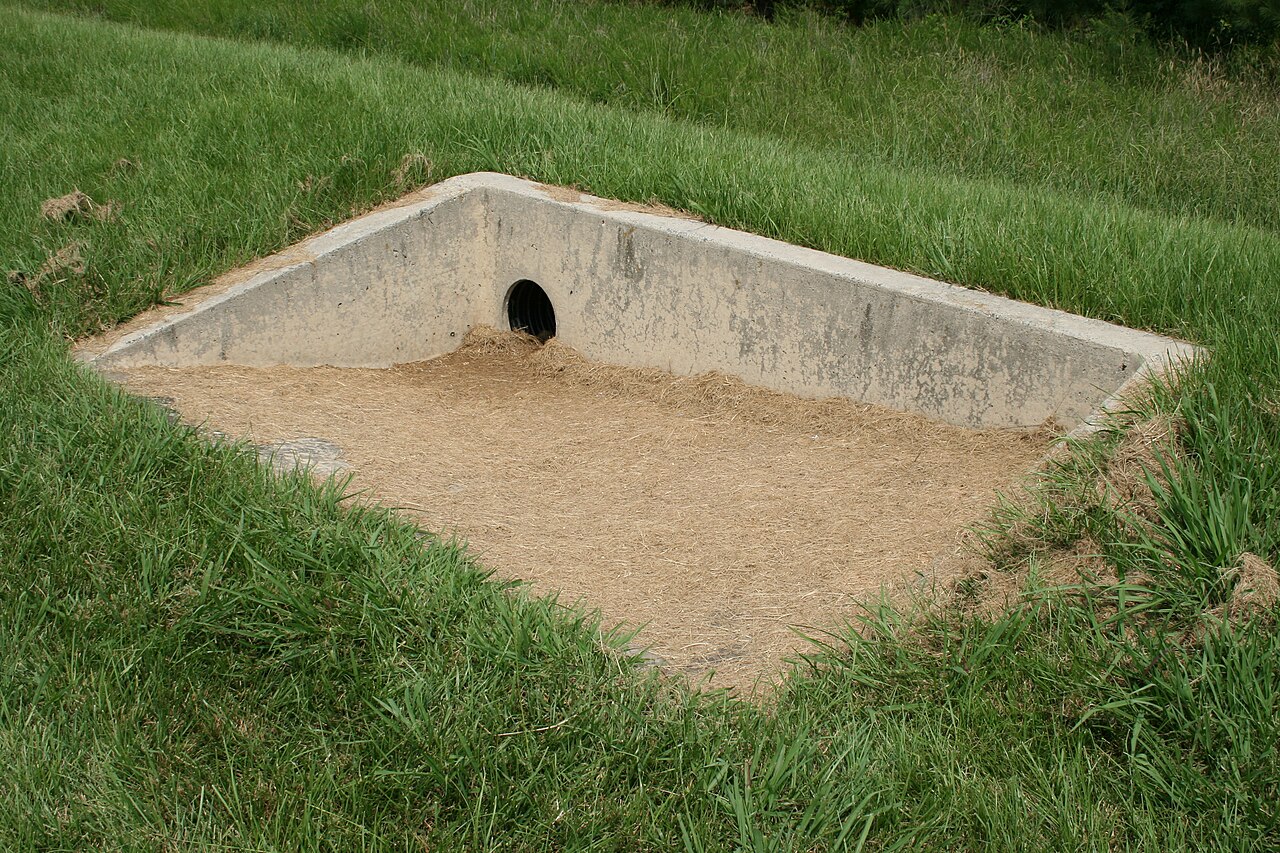
Many people assume that anything entering a street drain goes to a treatment plant. In a separate storm sewer system, that is usually not what happens. Storm drains move rain and snowmelt away from roads, then discharge it to a nearby stream, river, pond, lake, wetland, or coastal water. The system is designed to move large volumes quickly, not to remove dissolved nutrients. Leaves swept into the gutter may therefore be much closer to open water than they appear.
Combined sewer systems work differently because they carry stormwater and sewage in the same pipes, often toward a treatment facility. Yet even those systems can overflow during heavy rain, and their design varies by city. The useful rule is simpler than memorizing sewer maps: a storm drain should be treated as a direct connection to the local watershed unless local authorities say otherwise. Keeping organic debris out of the gutter reduces both nutrient transport and the chance that a drain opening becomes clogged during a storm.
What Field Studies Have Measured
The U.S. Geological Survey tested this process in residential catchments in Madison, Wisconsin. Researchers compared a control area with a test area where crews used leaf collection, street cleaning, and leaf blowers to remove organic debris. Across 71 paired stormwater samples, fall leaf litter accounted for 56 percent of the annual total phosphorus yield in the area without removal, excluding winter. With active removal, the fall share dropped to 16 percent. Total and dissolved phosphorus loads fell by 84 and 83 percent, while total and dissolved nitrogen loads fell by 74 and 71 percent.
Those numbers do not mean every neighborhood will achieve the same result. Tree canopy, pavement, rainfall, cleaning equipment, timing, and the way a drainage network is built all change the outcome. A later USGS study in Madison used biweekly leaf collection and weekly mechanical street cleaning and estimated reductions of 46 percent for total phosphorus and 51 percent for dissolved phosphorus. The difference between studies is useful: leaf management is not a magic switch, but well-timed removal can make a substantial, measurable difference.
Timing is especially important because nutrients begin leaching before leaves disappear. Removing a pile after several soaking rains cannot recover material that has already dissolved and moved downstream. USGS work in Wisconsin and the Lake Champlain drainage area has therefore emphasized cleaning during the leaf-fall window and before predicted rain. The goal is not a permanently leafless landscape. It is to keep concentrated leaf piles from sitting on connected pavement at the moments when runoff is most likely to carry them away.
Keeping Leaves Useful and Out of the Drain
The best destination depends on where the leaves fall. A light layer on a lawn can often be chopped with a mower and left to break down among the grass, where soil organisms can recycle the nutrients. Leaves can also become compost or be used as mulch in garden beds, provided they are kept away from curbs and drainage channels. Thick mats should not be left smothering turf, and diseased or regulated plant material may need different handling under local guidance.
Municipal collection is another good option, but placement rules matter. Some communities ask residents to use paper bags or bins; others collect loose leaves from a designated verge. Piling leaves in the street too early can turn a collection program into a runoff problem, especially if rain arrives before the crew. Following the pickup schedule, keeping piles above the curb when required, and checking the nearest drain before a storm all help the system work as intended.
A few practical habits carry most of the benefit:
- Keep leaves, grass clippings, and other yard debris out of streets, gutters, streams, and storm drains.
- Move curbside piles only when and where the local collection program allows.
- Mulch, compost, or bag leaves before rain when feasible.
- Clear loose debris from the surface around a drain without entering the drain or lifting its grate.
- Use a lawn or planted area for leaf recycling when the leaves are healthy and local rules permit it.
Fallen leaves are not waste by definition, and they are not pollutants everywhere they land. On soil, they are part of a living cycle. On connected pavement, they can become a fast route for nutrients to reach water. The most effective response preserves the first role while interrupting the second: let leaves feed soil where they can, and keep them out of the runoff path before the next rain begins.