 Akshay Dinesh
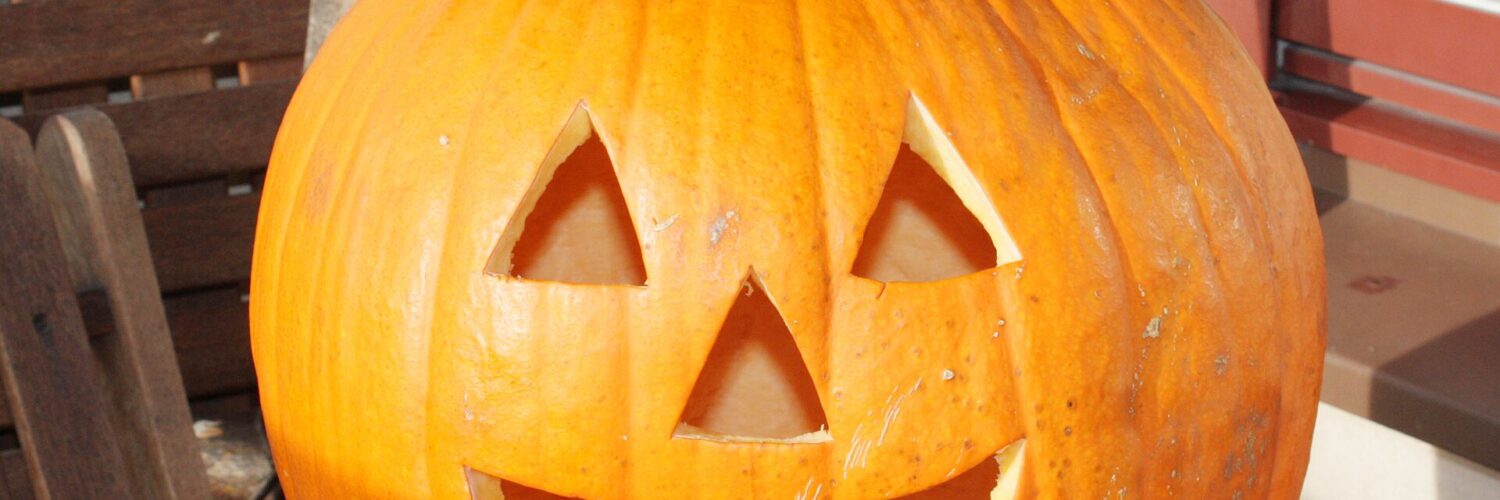
A whole pumpkin can sit on a porch for weeks, yet the same pumpkin may slump, spot, and grow fuzz only days after it becomes a jack-o’-lantern. The difference is not mysterious: carving turns a well-sealed fruit into exposed plant tissue. Cuts break the protective rind, release moisture, and create broad surfaces where fungi and bacteria can feed. Warm afternoons, damp nights, dirty tools, and the heat from a candle can push the process along even faster. What looks like sudden collapse is really decomposition gaining access to a rich source of water and nutrients.
A whole pumpkin is built to protect itself
A pumpkin is a fruit, and its outer wall does more than hold the familiar orange shape. As the fruit matures, the rind hardens and develops a waxy surface that slows water loss and makes it harder for microorganisms to enter. The stem scar and any bruises are weak points, which is why an intact stem and an uninjured rind are useful signs when choosing a pumpkin. Iowa State University Extension recommends avoiding pumpkins with cuts, holes, bruises, or soft spots because those defects give decay an early foothold. A firm, mature pumpkin kept cool and dry can therefore last far longer than one that has already been damaged.
The inside is quite different from the outside. Pumpkin flesh is made of living plant cells filled with water, carbohydrates, minerals, and other compounds that microbes can use. Cell walls and pectin help keep those cells arranged in firm tissue, while the intact rind separates them from most of the organisms in the surrounding air and soil. That protective arrangement works only while the barrier remains mostly closed. A carving knife changes the pumpkin from a sealed container into a collection of open wounds.
Carving creates ideal entry points for decay
Every eye, tooth, and curved edge increases the amount of cut tissue exposed to air. Scooping removes seeds and stringy pulp, but it also scrapes and bruises the inner wall. Pumpkin juice coats the fresh surfaces, supplying moisture and dissolved nutrients exactly where airborne spores or microbes from hands and tools can land. A large, intricate design may look impressive, yet its many narrow cuts also create more edges that can dry, soften, and become colonized. The carved lid adds another damaged surface and can trap humid air inside the cavity.
Water loss begins at the same time. The rind normally limits evaporation, but a cut edge has no waxy shield. Moisture escaping from exposed cells makes the face wrinkle and the carved details curl inward. That shriveling is not identical to rot, although the two processes often happen together. A jack-o’-lantern can lose firmness from dehydration while microorganisms weaken it from within.
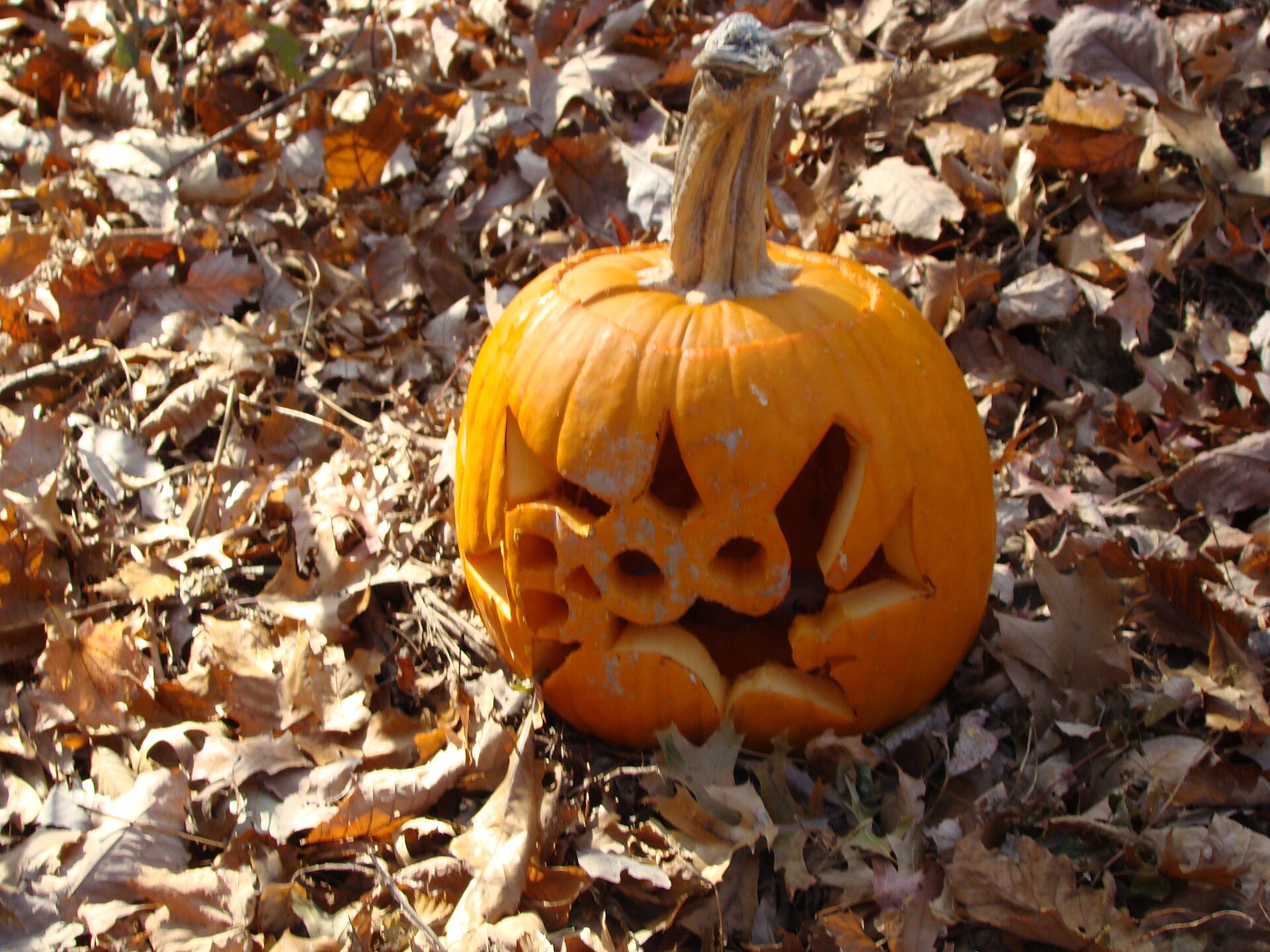
Location matters as well. A pumpkin sitting directly on wet soil, grass, or leaves stays damp along its lower surface and receives less airflow. Rain can collect inside, while condensation forms when humid air cools at night. Those conditions keep cut tissue wet long enough for spores to germinate. A dry porch with air moving around the pumpkin is a much less inviting setting for rapid decay than a warm, shaded patch of damp ground.
Fungi and bacteria dismantle the flesh
Mold spores are already common in outdoor and indoor air, so keeping a carved pumpkin completely free of them is unrealistic. Utah State University Extension names Cladosporium, Penicillium, Aspergillus, and Alternaria among molds that can grow inside carved pumpkins. Once a spore reaches moist, exposed flesh, it can germinate and produce threadlike hyphae. Those filaments release enzymes that break complex plant material into smaller molecules the fungus can absorb. The fuzzy patch that becomes visible is only the most obvious part of a network growing through weakened tissue.
Bacteria contribute a different kind of damage. Some cause soft rot by breaking down pectin, one of the materials that helps bind plant cells together. As those connections fail, firm flesh becomes watery, slimy, and easy to collapse. The University of Wisconsin-Madison Extension notes that bacterial soft rots can affect cucurbits, the plant family that includes pumpkins, and that decay is especially severe in warm conditions. An unpleasant odor, leaking fluid, or a rapidly spreading mushy area points to advanced breakdown rather than simple drying.
The pumpkin also has its own enzymes, and wounded cells no longer regulate their chemistry as effectively. Oxygen reaches compounds that were previously separated inside intact cells, contributing to browning and other changes at cut edges. Microbes, water loss, and the pumpkin’s wound response therefore overlap. There is rarely one single organism or reaction responsible for the entire decline. Rot is a small ecosystem developing on tissue that can no longer defend itself.
Heat and moisture decide how fast the change happens
Temperature strongly affects both microbial growth and evaporation. Warm conditions generally speed the chemical reactions and biological activity involved in decay. Wisconsin Extension reports that bacterial soft rot can occur across a broad temperature range but is worst around 70 to 80 degrees Fahrenheit. Direct sun also warms the rind and pulls water from carved edges, so the same pumpkin can soften in one area while shriveling in another. Cool weather slows many of these processes, but freezing is not a preservation trick: ice crystals rupture cells, leaving watery, damaged tissue after thawing.
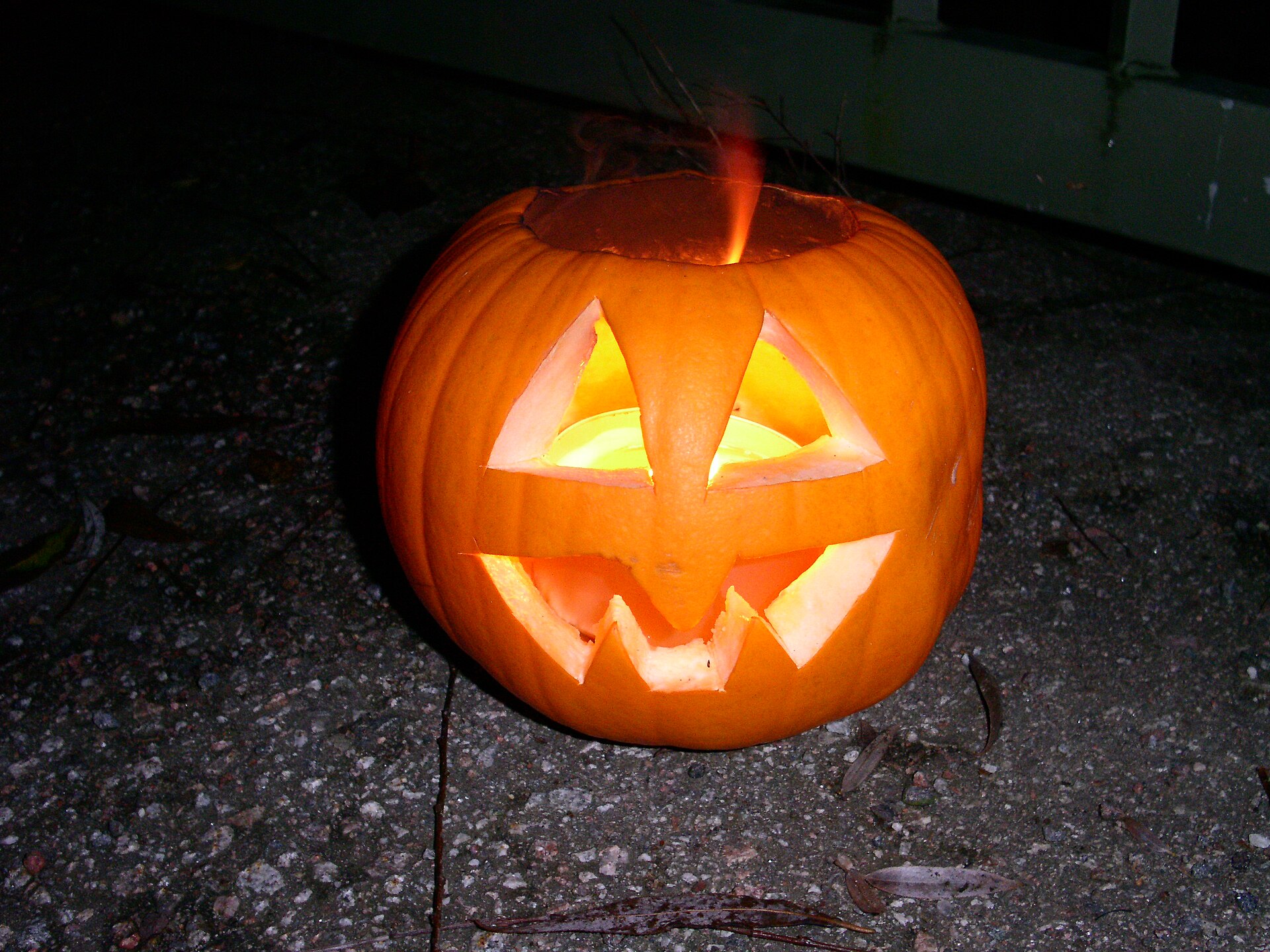
A candle adds a concentrated heat source inside the cavity. The flame warms and partly cooks nearby flesh, dries thin carved edges, and can create a humid pocket as water evaporates and then condenses. Kansas State University Research and Extension specifically recommends avoiding a real candle when the goal is to extend a carved pumpkin’s life. A battery-powered light produces far less heat and removes an open-flame hazard at the same time. The effect may seem small over one evening, but repeated hours of warming can be enough to shorten an already brief display life.
Humidity creates a tradeoff. Very dry air speeds shriveling, while persistent dampness favors microbial growth. The most useful environment is cool, shaded, reasonably dry, and well ventilated. That is why a carved pumpkin may last longer when it is displayed for a few evening hours and kept in a cool protected place during warm or rainy periods. No storage method can restore the rind once it has been cut, but slowing heat gain and preventing standing moisture can buy time.
How to slow decay without expecting a permanent pumpkin
The best preservation work starts before carving. Choose a mature pumpkin with a hard rind, an attached stem, and no soft spots, deep scratches, or bruises. Carry it from the bottom instead of lifting it by the stem, since a broken stem leaves another opening. Wash the exterior and let it dry, then carve with clean hands and clean tools. Remove loose pulp and seeds thoroughly because damp strands supply extra surface area for microbial growth.
After carving, keep the jack-o’-lantern out of direct sun and rain, raise it above wet ground, and use an electric light. University extension services sometimes recommend a properly diluted sanitizing solution to reduce microorganisms on the surface. Anyone using household bleach should follow the product label and local extension guidance, protect skin and eyes, provide ventilation, and never mix bleach with other cleaners. A carved pumpkin treated or displayed this way should be regarded as decoration, not food. Nebraska Extension advises against cooking or eating a pumpkin after it has been carved and put on display.
A little surface wrinkling does not mean the pumpkin must immediately be discarded, but spreading mold, a sour odor, leaking liquid, or collapsing flesh means its display is over. Keep visibly moldy material away from children and pets, and wash hands after handling it. Composting may be appropriate for an otherwise ordinary spent jack-o’-lantern where local rules allow, but a diseased pumpkin from a garden may need different disposal so plant pathogens are not returned to the soil. A carved pumpkin was always going to be temporary. Its quick transformation simply makes the biology of barriers, microbes, moisture, and temperature unusually easy to see.