 Akshay Dinesh
A cool September morning can make it seem as if spiders appeared overnight. A broad web stretches across the porch, silk shines between shrubs, and a large spider that went unnoticed all summer suddenly occupies the center of a nearly perfect circle. The change is real, but it usually is not a sudden population explosion. Many familiar outdoor spiders have spent months growing, and fall is when their size, webs, and reproductive behavior become easiest for people to notice.
Fall changes what we can see
Spiders live around homes, gardens, fields, and forests throughout the growing season. Early in the year, however, many are tiny enough to hide among leaves and stems. Their webs may also be too small or too fine to catch a person’s attention. By late summer and early fall, the survivors are mature or close to maturity, so both their bodies and their hunting structures are much larger.
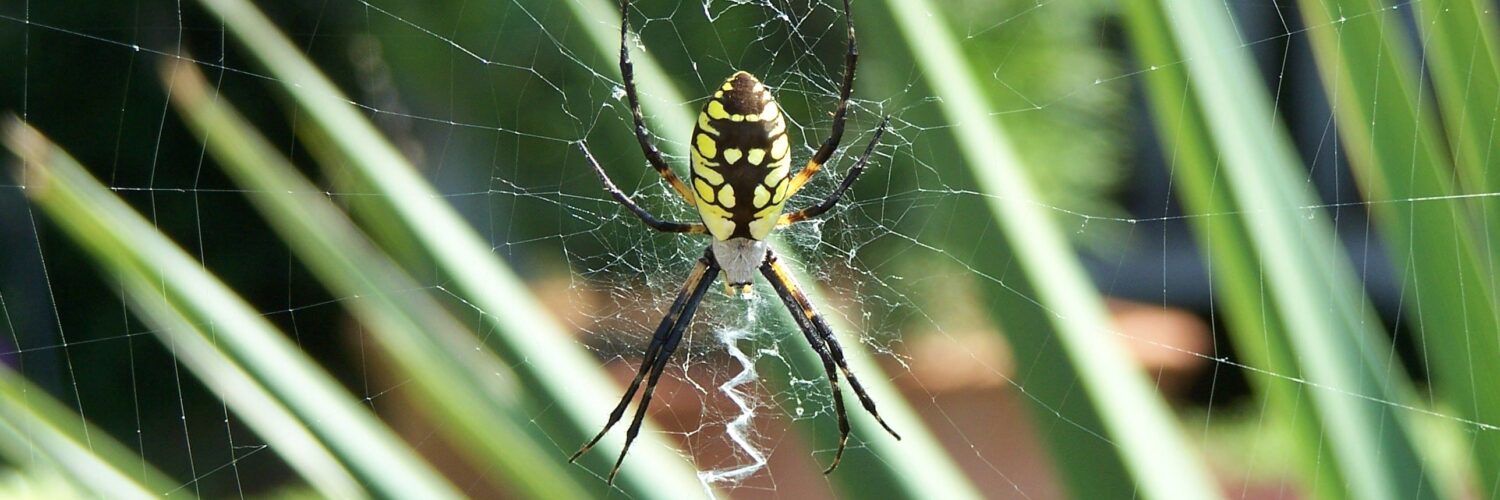
That pattern is especially noticeable among orb weavers, the spiders that build wheel-shaped webs with spokes and a spiral of capture silk. Familiar examples include yellow garden spiders, spotted orb weavers, marbled orb weavers, and European garden spiders. Kentucky entomologists explain that many common orb weavers have one generation each year: they hatch in spring, grow through summer, and mate and produce egg sacs in fall. A spider that seems newly arrived may have occupied the same patch of vegetation for months while it was much smaller.
Not every spider follows that calendar. Some species live for more than one year, some mature at other times, and regional climate changes the schedule. “Spider season” is therefore a useful description of what people observe, not a universal biological deadline. What ties many fall sightings together is conspicuousness: larger animals, larger webs, more movement, and light and moisture that make silk stand out.
Large orb webs turn hidden hunters into landmarks
An orb web is more than a trap. It extends a spider’s senses into the surrounding air. Orb weavers generally do not depend on sharp vision to inspect every insect. Instead, vibrations moving through silk tell the spider that something has struck the web, where it landed, and sometimes whether the disturbance is prey, wind, or debris. Radial threads carry those signals toward the center or toward a nearby retreat.
Web construction also helps explain the autumn spectacle. As an orb weaver grows, it can span a wider opening and capture larger flying insects. A mature female needs energy and protein to maintain her body and produce eggs, so a well-placed web matters. Some species rebuild much of the orb regularly, often at night, replacing damaged or dirty capture threads. A web across yesterday’s empty walkway may truly be new even when the spider is not.
Different spiders use silk in different ways. Orb webs have a circular geometry, funnel weavers spread a sheet of silk that narrows into a retreat, and cobweb spiders make irregular tangles. Hunting spiders such as many wolf spiders chase prey without using a capture web. Seeing more webs in fall does not mean every spider nearby is an orb weaver, but the large, open structure of an orb web makes its builder especially hard to miss.
Dew and low sunlight reveal silk that was already there
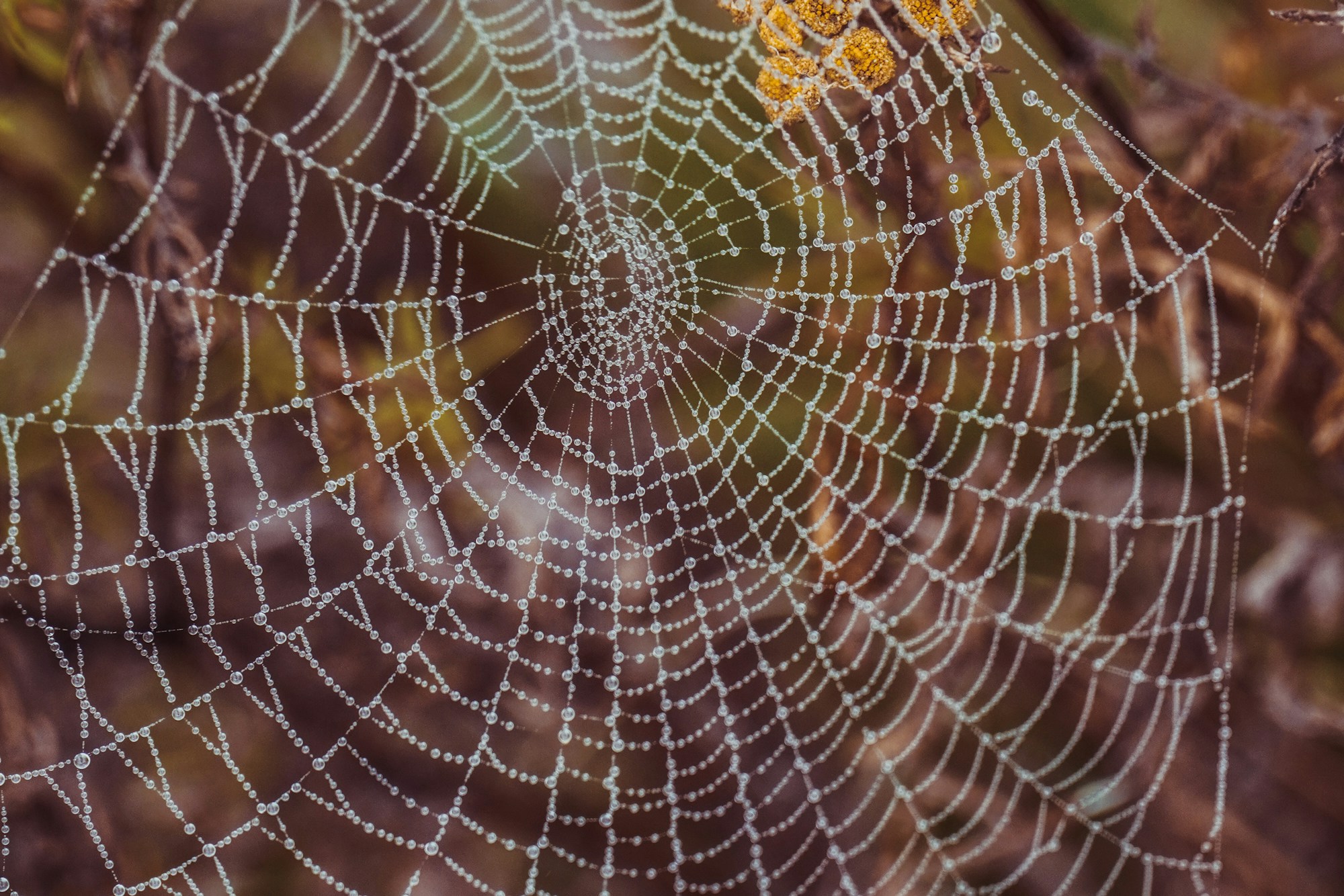
Silk threads can disappear against a bright or cluttered background. Add a film of water, and the same web becomes a silver pattern. Tiny dew droplets collect along the strands, scatter light, and add enough contrast for the eye to trace the web from one anchor point to another. Penn State Extension notes that grass-spider funnel webs become particularly visible on mornings with heavy dew, even though the webs were present before the moisture arrived.
Fall often supplies the right viewing conditions. Longer nights give surfaces more time to cool. When a web becomes cool enough for water vapor to condense on it, droplets form along the silk. A low morning sun can then light the droplets from the side, revealing webs in lawns, hedges, and railings that would fade from view later in the day as the water evaporates.
This is a useful reminder about observation: a rise in sightings is not automatically a rise in abundance. Scientists studying wildlife must separate changes in the number of organisms from changes in the chance of detecting them. Bigger spiders, moisture-coated webs, open sight lines after some plants begin to thin, and more time spent outdoors in pleasant weather can all raise the detection rate without multiplying the local spider population overnight.
Mating season puts some spiders on the move
Webs explain many outdoor sightings, while reproduction explains much of the wandering. Mature males of several species leave their usual hiding places and travel in search of females. Their movement across walls, floors, patios, and garages makes them more visible than spiders that remain close to a web or retreat. The University of Nebraska-Lincoln notes that fall house-spider sightings are often males following silk and chemical cues in search of a mate, rather than spiders deliberately moving indoors to escape cold weather.
That distinction matters because a wandering spider does not necessarily signal an indoor infestation. Doors, foundation gaps, firewood, boxes, and ordinary chance can bring a traveler inside. A male may keep moving because the room is not its destination at all. Meanwhile, many mature females stay near productive webs, invest energy in eggs, and place egg sacs in protected locations.
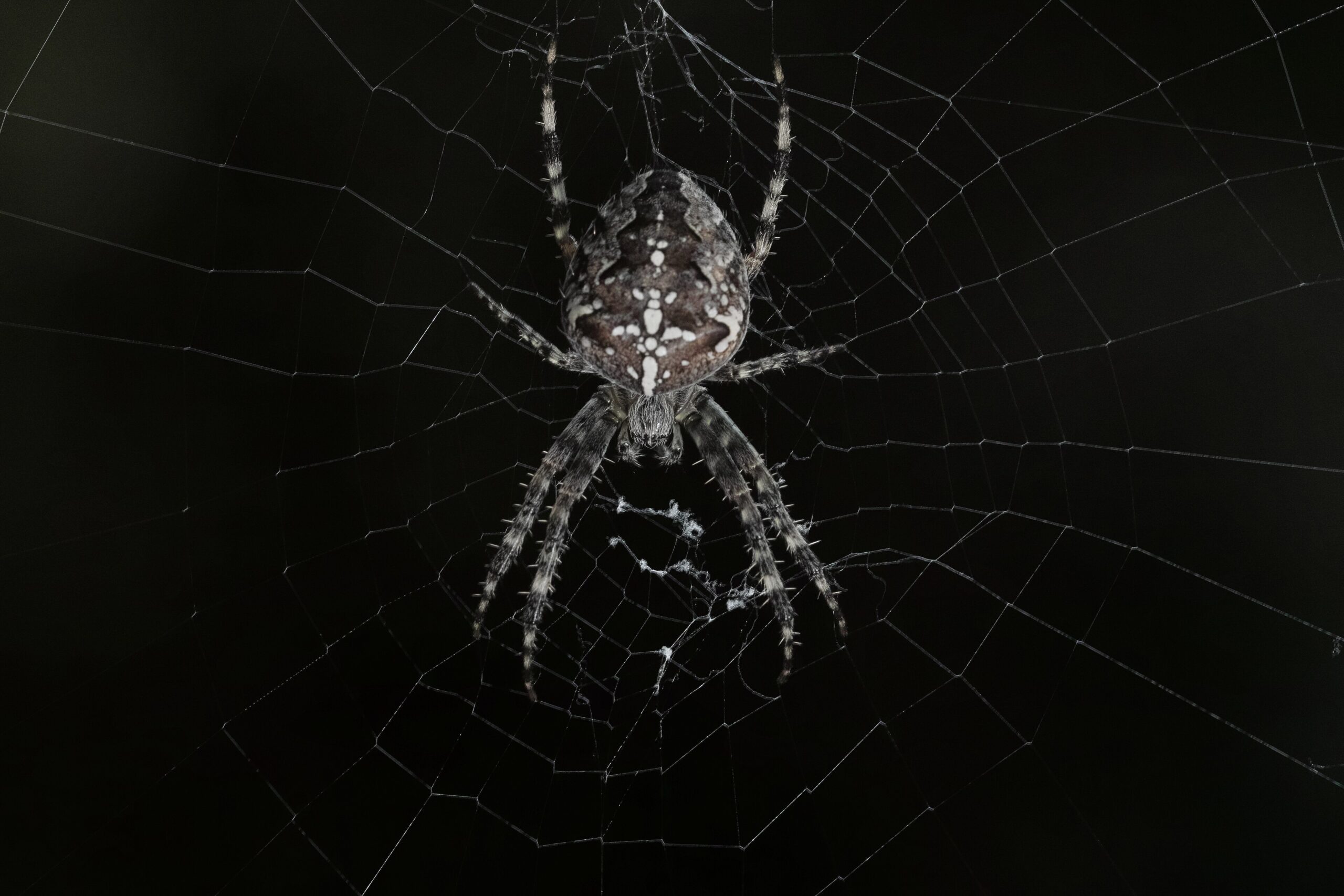
For numerous temperate orb weavers, the adults will not survive the winter. Their life cycle continues through eggs sheltered in silk among vegetation, bark, or other protected surfaces. Spiderlings emerge when conditions become suitable, disperse, and begin the quiet months of growth that lead to the next fall’s large adults. Other spiders overwinter as juveniles or adults, which is why it is safer to describe a species’ life cycle than to assume every spider follows the same plan.
A fall web is usually useful, not threatening
The size and sudden visibility of an orb weaver can make it look alarming, yet the common garden species described by university extension programs are generally reluctant to bite people. Their main work is catching insects and other arthropods. UC Integrated Pest Management describes orb weavers as predators of insects that fly, fall, or blow into their webs. In a garden, that makes the web part of a small food network rather than a warning that the space has become unsafe.
Location still matters. A web stretched across a door, stair, or frequently used path can be moved without treating the entire yard. Illinois Extension recommends gently encouraging the spider away and removing a web that is in an unwanted spot. Reducing bright outdoor lighting near entrances can also make those locations less attractive to flying insects, which in turn can make them less profitable web sites.
It is wise to look rather than handle. Spider identification varies by region, and a photograph taken from a comfortable distance is more useful than guessing from color alone. The broad autumn pattern is less mysterious than it first appears: spring’s small spiders have become fall’s adults, mature orb weavers are building their most visible webs, males are traveling to find mates, and cool, dewy mornings are outlining silk that was easy to overlook. What feels like an invasion is often a seasonal change in scale, behavior, and visibility.