 Akshay Dinesh
Look west shortly after sunset on September 18, 2026, and the brightest point in the evening sky will not be a star. NASA’s September skywatching guide marks that date as the peak brilliance of Venus during its current evening appearance. The planet will be low over the western horizon, bright enough to stand out before many stars become visible.
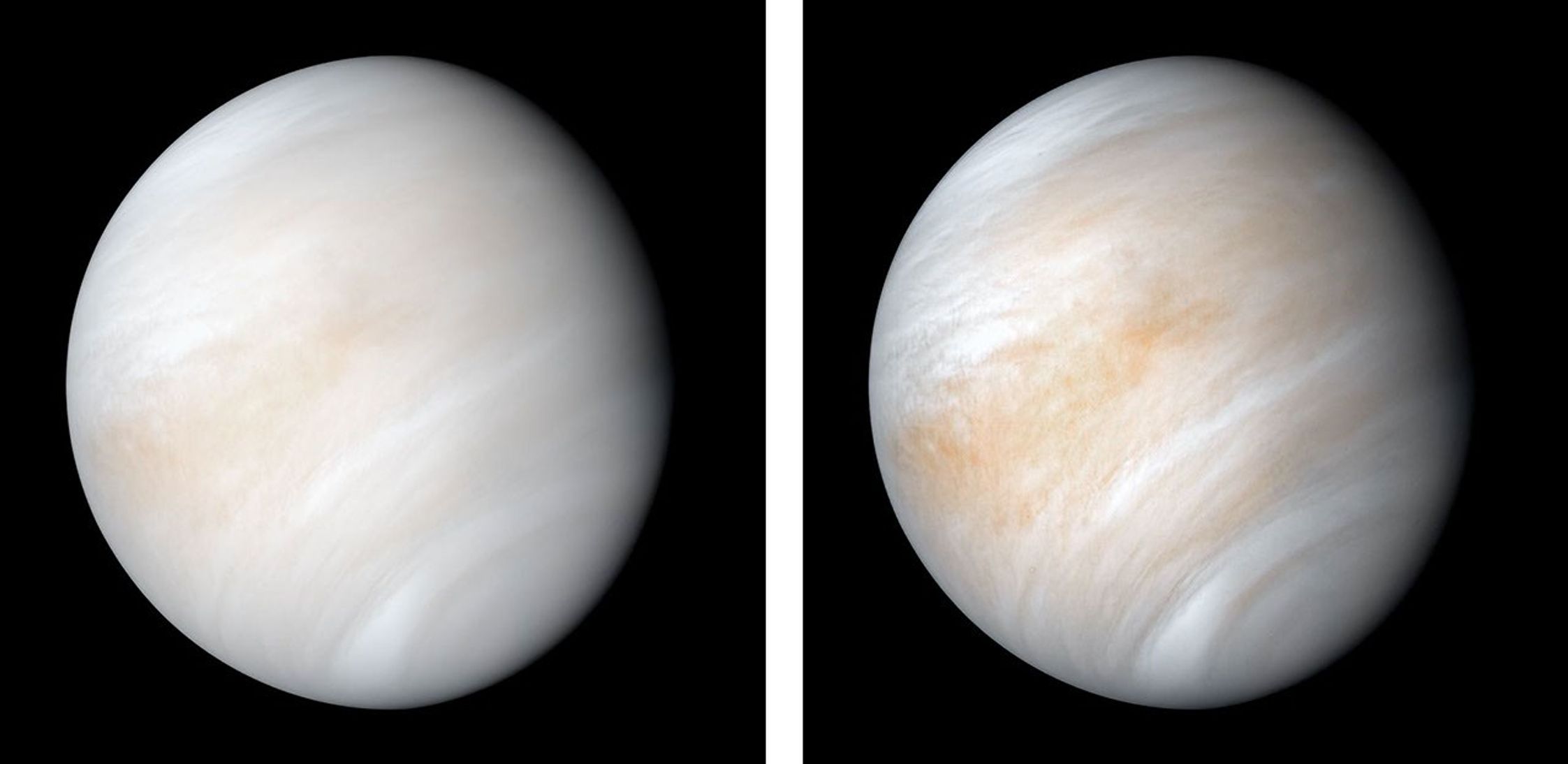
A telescope reveals the surprise. Venus is not brightest when its sunlit face looks full. Near peak brilliance, it appears as a broad crescent. The explanation is a moving compromise among phase, distance, apparent size, and the unusual clouds that send so much sunlight back toward space.
A Full Venus Can Be Dimmer Than a Crescent
Venus orbits closer to the Sun than Earth does. As the two planets move around the Sun, observers on Earth see different fractions of Venus’s illuminated half. The result is a set of phases much like the Moon’s: nearly full, gibbous, half-lit, crescent, and nearly new.
When Venus is on the far side of the Sun, it presents an almost fully illuminated face toward Earth. Yet it is also far away and looks small. NASA gives the changing Earth-Venus distance as roughly 24 million miles at the closest end of the range and as much as about 162 million miles at the farthest. A nearly full disk at the distant end covers much less area in our sky than a nearer crescent.
At the other extreme, Venus passes between Earth and the Sun at inferior conjunction. The planet is then near its largest apparent size, but most of the sunlit half faces away from us. Venus looks like a very thin crescent before conjunction and after it, and it becomes nearly invisible at conjunction because its dark hemisphere is turned toward Earth and the planet is lost in the Sun’s glare.
The maximum arrives between those extremes. Venus is close enough to look large, yet enough of its daylight side remains visible to produce a large illuminated area in the sky. It can therefore send more light toward our eyes as a crescent than it does as a small, nearly full disk.
Brightness Is a Balance of Four Effects
The phase is only one part of what we see. Four effects work together as Venus moves along its orbit:
- Illuminated fraction: a gibbous Venus shows more of its daylight side than a crescent Venus.
- Apparent size: the planet’s disk grows as Venus approaches Earth. If an object moves to half the distance, its angular width roughly doubles and its apparent disk covers about four times as much sky.
- Reflectivity: Venus is wrapped in bright clouds. They reflect a large share of incoming sunlight, helping make the planet the brightest object in the night sky after the Moon.
- Scattering direction: cloud droplets do not return light equally in every direction. The geometry among the Sun, Venus, and Earth changes how effectively the clouds scatter sunlight toward us.
A useful mental model is to imagine counting bright pixels in a telescope image. A faraway, almost-full Venus has a high illuminated fraction but a small disk. A nearby, razor-thin crescent has a large disk but very few bright pixels. Peak brilliance occurs when the widening disk and shrinking sunlit fraction produce the greatest total glow.
Astronomers describe that glow with apparent magnitude. The scale runs backward: a more negative number means a brighter object. Venus can approach magnitude -4.6 at its best, bright enough to cast a faint shadow under very dark conditions. The number measures how bright the planet looks from Earth, not how much light Venus produces. Like the Moon, Venus shines by reflected sunlight.
Why Venus Stays Near Sunrise or Sunset
Because the orbit of Venus lies inside Earth’s orbit, Venus never appears on the opposite side of our sky from the Sun. It can pull only about 47 degrees away from the Sun as seen from Earth. That limit is called greatest elongation.
When Venus appears east of the Sun, it sets after the Sun and becomes the familiar evening star. When it lies west of the Sun, it rises before sunrise and becomes the morning star. These are not two objects; ancient skywatchers were seeing the same planet at different parts of its orbit.
Peak brightness does not occur at greatest elongation or at closest approach. Around elongation, Venus often looks roughly half-lit, but it has not yet grown to its largest apparent size. Closer to inferior conjunction, the disk grows while the phase thins. Greatest illuminated extent comes later in an evening appearance, or earlier in a morning appearance, when those trends strike their best balance.
This geometry also explains why Venus is never a midnight object. Even at its widest separation from the Sun, it remains tied to twilight. A clear horizon matters because haze, buildings, hills, and trees can hide the planet soon after sunset or shortly before sunrise.
How to Watch the 2026 Peak Safely
For the September 2026 evening appearance, start looking west after the Sun has completely set. NASA places peak brilliance on September 18. Venus should look like an exceptionally bright white point low in the western sky, easily distinguished from nearby stars by its intensity. Thin clouds may make the light appear larger or give it a halo, but that glow belongs to Earth’s atmosphere rather than to the true size of the planet.
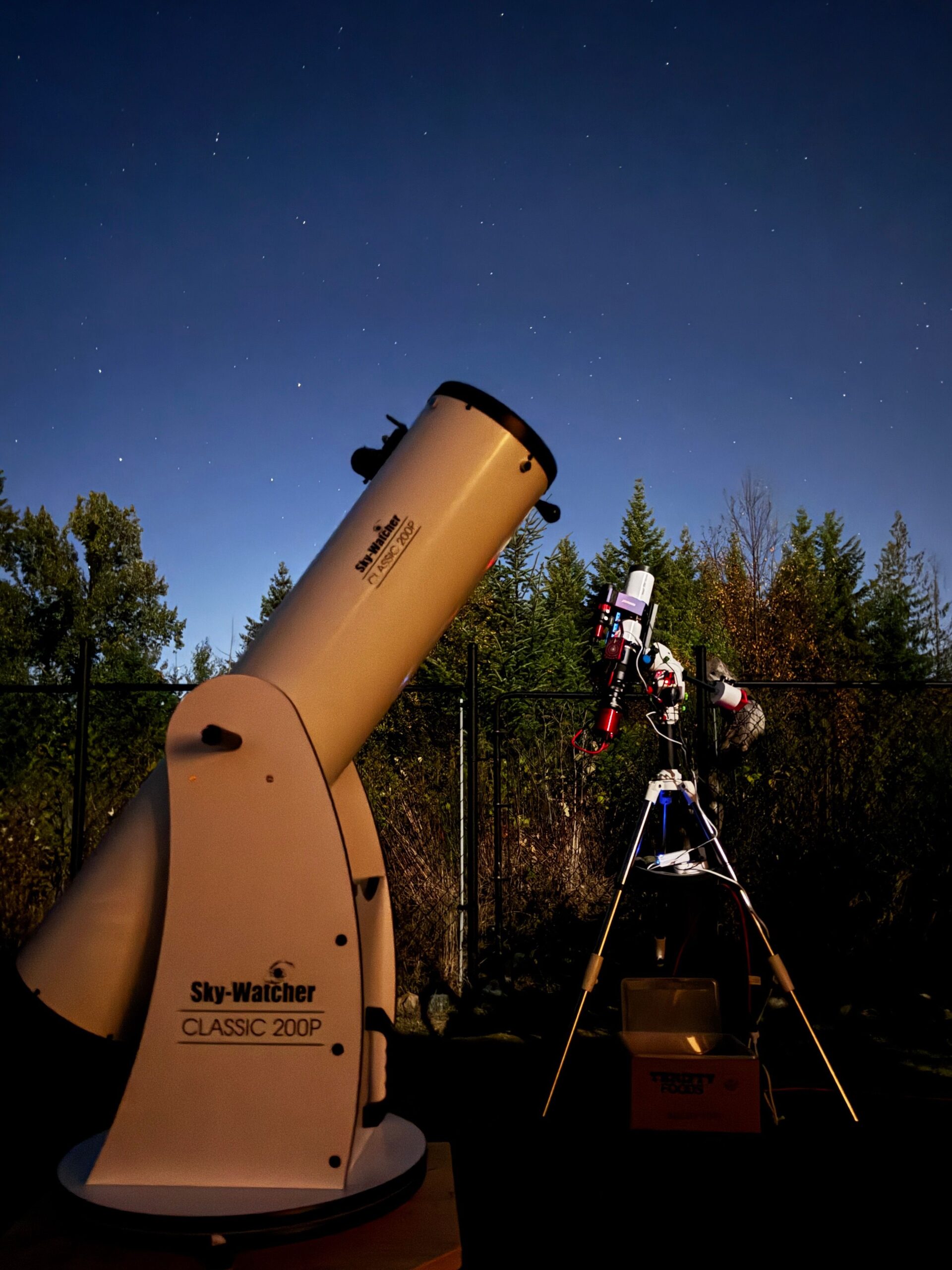
No equipment is needed to see Venus. Binoculars can help in bright twilight, but they should be used only after sunset; never sweep for Venus while the Sun is above the horizon. A small telescope can show the crescent clearly. High magnification is not essential, and a steadier view at modest magnification often reveals the shape better than a shaky enlarged image.
The phase and size change from week to week. During an evening appearance, Venus generally becomes larger and more crescent-shaped as it approaches Earth. Eventually it sinks closer to the sunset glow and disappears near inferior conjunction. It then returns on the other side of the Sun as a morning object, with its crescent reversed.
The naked-eye point and the telescopic crescent can feel like two different sights. They are the same measurement at two scales. The eye adds all the light into a brilliant point; the telescope spreads that light across a disk and makes the orbital geometry visible.
The Crescent That Changed Astronomy
The phases of Venus once carried more than observational interest. After turning a telescope toward Venus in the early seventeenth century, Galileo observed that the planet passes through a broad range of phases. A nearly full Venus cannot occur in the old Ptolemaic arrangement in which Venus circles Earth on a path that always keeps it between Earth and the Sun.
The observation showed that Venus travels around the Sun. It strongly supported a Sun-centered understanding of planetary motion, although the phases alone did not prove that Earth moves; the hybrid system proposed by Tycho Brahe could also place Venus around the Sun while keeping Earth fixed. Even with that historical caveat, the changing disk helped dismantle a long-standing picture of the heavens.
The same evidence is available through a small modern telescope. Over several months, the planet changes from a small gibbous disk to a larger half-lit disk and then a still larger crescent. Its brightest moment sits in the middle of that transformation, where losing daylight is more than offset by growing apparent size.
Venus looks brightest not because one factor reaches its maximum, but because several competing factors briefly reach their most effective combination. That is why a crescent can beat a full disk, why the evening star eventually becomes the morning star, and why one brilliant point of light can reveal the shape of the solar system.