 Akshay Dinesh
Price floors set a legal or official minimum price, and that simple rule can reshape an entire market. When the floor sits below the price buyers and sellers would already agree on, almost nothing changes. When it sits above that balance point, the market has to adjust around a price that cannot legally fall. That is why price floors show up in economics classes, minimum wage debates, agricultural policy, and discussions about how governments try to support income without creating new problems.
The idea sounds mechanical at first: draw supply, draw demand, add a line, and label the result. Real markets are less tidy, especially when the price is a wage paid to people rather than a number on a shelf. Still, the basic model gives learners a useful way to ask sharper questions. Who receives the higher price? Who pays it? Who changes behavior? What happens to the extra supply that appears when the legal minimum is above the market-clearing price?
What a Price Floor Does
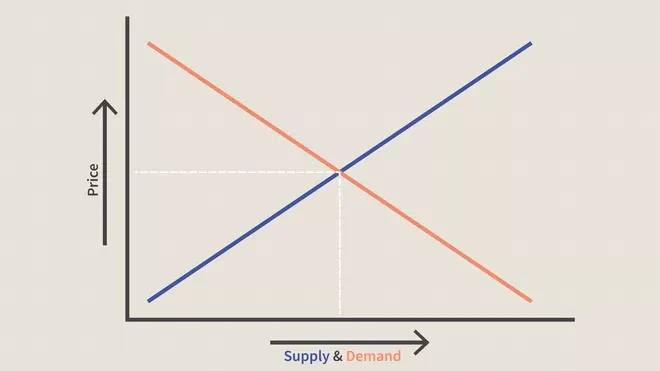
A price floor is the lowest price allowed for a good, service, or type of labor. The floor only matters when it is above the equilibrium price, the price where the quantity buyers want matches the quantity sellers want to provide. If a market would naturally settle at $12 and the floor is $10, the rule does not bind because the market price is already higher. If the floor is $15, buyers and sellers cannot legally move down to the old balance point.
OpenStax economics materials use minimum wage as the classic example because a wage is the price of labor. A government can say that covered workers must be paid at least a certain hourly rate. That rule may raise pay for workers whose jobs continue at the higher wage, but it also changes the decision facing employers. A business that could profitably hire ten workers at one wage might hire fewer at a higher one, use more technology, reduce hours, raise prices, or accept lower profit depending on its costs and customers.
The same logic can appear outside labor markets. Agricultural price supports may try to keep farm income from falling when crop prices are low. A minimum price for a product can protect sellers from a collapse in revenue. In each case, the floor is a policy choice that says society wants something other than the price that would appear through ordinary bargaining alone.
Why Surpluses Appear Above Equilibrium
A binding price floor creates pressure in two directions at once. Sellers usually want to provide more at the higher price because the reward for selling has increased. Buyers usually want less because the cost of buying has increased. Put those together, and quantity supplied becomes larger than quantity demanded. Economists call that gap excess supply, or a surplus.
In a product market, a surplus may be visible as unsold goods. Imagine a crop that consumers would buy in large amounts at a lower price. If a support program keeps the price higher, farmers may be willing to produce more while buyers purchase less. Unless something else absorbs the difference, some of the crop has no willing buyer at the supported price. Governments sometimes respond by buying surplus goods, limiting production, or changing the support program, which shows that a price floor often creates follow-up decisions rather than ending the problem neatly.
In a labor market, the surplus takes a different form. Workers are not boxes of goods left on a shelf, so the human meaning is more serious. At a higher wage, more people may want jobs or more hours, while some employers may offer fewer positions than before. In the simple model, that gap is unemployment or reduced hours among workers who would like to work at the legal wage but cannot find enough employers willing to hire them.
The model is useful because it makes the tradeoff visible. It does not automatically prove that every minimum wage increase causes large job losses, nor does it prove that higher wages are cost-free. It shows why economists look for evidence about how strongly workers, employers, customers, and firms respond when wages change.
Why Minimum Wage Is More Complicated Than a Graph
Minimum wage is the price-floor example students hear most often, but it is also one of the easiest to oversimplify. Labor markets are full of frictions that do not fit into a clean classroom diagram. Workers may not know about every job opening. Employers may have some wage-setting power, especially when workers have few nearby alternatives. Businesses may react to a higher wage by reducing turnover, improving training, raising prices slightly, or changing schedules before cutting jobs outright.
That complexity is why serious evidence often finds mixed effects rather than one dramatic answer. The Congressional Budget Office has analyzed federal minimum wage proposals by estimating both gains for many low-wage workers and possible employment reductions for some workers. The point is not that one side of the tradeoff disappears. It is that the size of each effect depends on the wage level, local labor markets, business costs, consumer demand, and the policy details.
Current data also remind readers to ask which workers are being discussed. The Bureau of Labor Statistics reported that in 2024 about 80.3 million U.S. workers were paid hourly rates, and about 1.0 percent of those hourly workers earned the prevailing federal minimum wage or less. That does not mean minimum wage laws are irrelevant. Many states and cities set higher minimums, and wage floors can affect workers earning somewhat above the legal minimum. It does mean that a national headline rarely captures the whole labor market.
How Buyers and Sellers Adjust
Markets respond through behavior, not just through labels on a graph. Buyers facing a higher price may buy less, switch to substitutes, wait longer before purchasing, or look for cheaper versions. Sellers receiving a higher price may produce more, enter the market, advertise more aggressively, or hold out for the supported price instead of accepting less. The floor changes the incentives on both sides.
Consider a grocery example. If a minimum price were placed on a crop above the usual market level, shoppers might buy less of that crop and more of something similar. Farmers might plant more because the supported price looks attractive. The gap between these choices is where surplus comes from. The policy may help some producers earn steadier income, but it may also push costs toward consumers or taxpayers if a public program buys excess supply.

Labor markets adjust in their own ways. An employer facing a higher wage floor might raise prices, reduce openings, shorten hours, assign more tasks to each worker, invest in equipment, or accept a smaller margin. A worker earning more per hour might stay longer, work with less financial stress, or spend more in the local economy. Those reactions pull in different directions, which is why the real result can vary from one place to another.
How to Read a Price Floor Argument Carefully
Price floors often appear in public arguments where people talk past one another. One person may focus on workers or producers who receive higher income. Another may focus on consumers, employers, taxpayers, or people left out of the market. Both questions belong in the analysis. A strong economic argument asks who benefits, who bears costs, how large the effects are, and whether another policy could reach the same goal with fewer side effects.
The first question is whether the floor is binding. A minimum price below the market price is mostly symbolic. The second is how far above equilibrium the floor sits. A small increase may create a modest adjustment, while a much higher floor can produce a larger surplus. The third is how flexible the market is. If buyers can easily switch away or employers can easily automate, the response may be stronger. If demand is steady and workers are hard to replace, the response may be weaker.
It also helps to separate fairness goals from efficiency questions. A price floor may be defended because people believe workers need a livable wage or farmers need protection from volatile prices. Those are value judgments about what society owes people. Economics cannot settle those values by itself, but it can clarify the likely tradeoffs. Good policy reasoning needs both parts: the goal and the evidence about consequences.
The Main Lesson From Price Floors
A price floor is not just a line on a graph. It is a rule that changes the choices available to buyers, sellers, workers, employers, and policymakers. When the floor is above equilibrium, it tends to raise the price received by those who still sell or work at that price, while also creating pressure for excess supply. In product markets, that may mean unsold goods. In labor markets, it may mean more people wanting work than employers are ready to hire at the legal wage.
The most useful way to understand price floors is to hold two ideas together. They can support income for some people, and they can create side effects that need to be measured honestly. The balance depends on the market, the height of the floor, and how people respond. Once those pieces are visible, debates about minimum wages, agricultural supports, and other price floors become less like slogans and more like careful economic reasoning.