 Akshay Dinesh
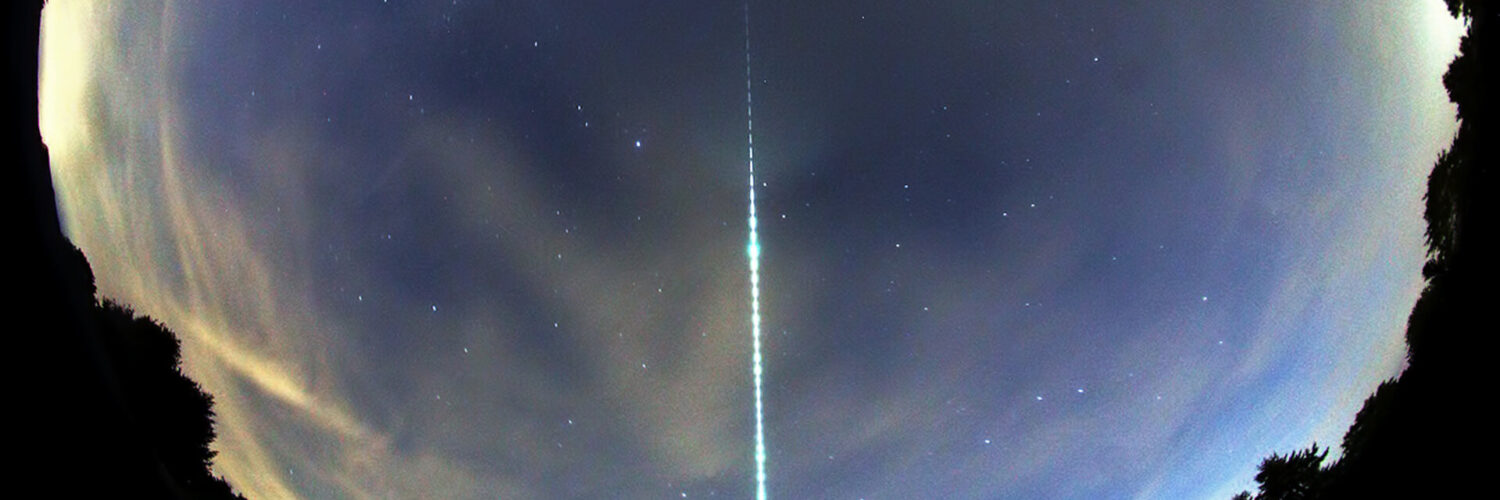
A meteor looks like a tiny spark racing across the night, but the streak is not a star falling and it is not usually the small rock itself glowing like a coal. Most of what the eye sees is air high above Earth heating, shining, and briefly changing as a fast piece of space debris slams into the atmosphere. That is why a grain-sized particle can make a streak visible from the ground, and why the flash can disappear before a person has time to point.
The question becomes especially natural during a major meteor shower such as the Perseids, when many people step outside and see quick lines of light over and over. The display feels delicate, but the physics is intense. A meteoroid can enter the atmosphere tens of kilometers per second, compressing and heating the air in front of it while its own surface sheds material. For a moment, a quiet piece of old comet dust becomes a moving source of light.
The Streak Is Mostly Glowing Air
NASA Space Place explains the basic surprise clearly: the bright streak called a meteor is not mainly the space rock itself. It is the glowing hot air around the object as it rushes through the atmosphere. The object before it enters the atmosphere is a meteoroid. The visible streak is the meteor. If a surviving fragment reaches the ground, that fragment is a meteorite.
That distinction matters because many meteors begin with particles far too small to seem impressive. Some are about the size of grains of sand. Others are closer to pebbles. Their speed is what makes them dramatic. Air cannot move out of the way instantly, so gas piles up and compresses ahead of the incoming particle. The compressed air heats rapidly, and material from the meteoroid begins to vaporize and mix into the glowing path.
This is also why the phrase burning up is useful but incomplete. A meteor is not simply a tiny campfire in the sky. The process includes heating from atmospheric compression, friction-like drag, vaporization of material, and excited atoms and molecules giving off light. The visible streak is a brief atmospheric event created by motion, speed, and energy.
Why Speed Changes Everything
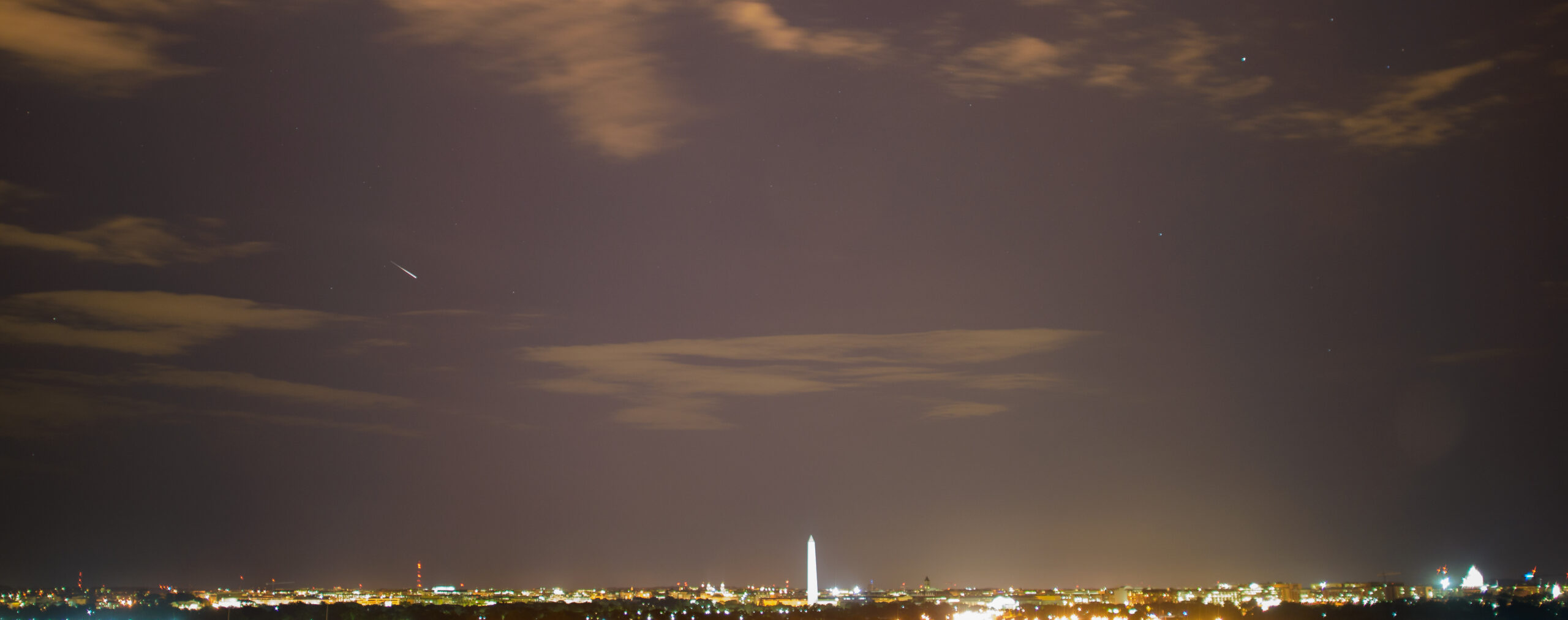
A falling object from a tree branch may move fast enough to startle someone, but it does not make the air glow. Meteoroids arrive at a completely different scale. The American Meteor Society lists the Perseids at about 59 kilometers per second, or roughly 37 miles per second. At that speed, even a very small particle carries enough kinetic energy to create a flash when the atmosphere slows it down.
The heating happens high above ordinary weather, often roughly 80 to 120 kilometers above the surface for many visible meteors. At those heights, the atmosphere is thin compared with the air people breathe, but it is still thick enough to matter. A fast meteoroid meets gas molecules one after another, and the energy of those collisions turns into heat, light, and motion in the surrounding air.
Speed also helps explain why meteors are so short-lived. The particle is losing energy quickly as it plows through the atmosphere. Small meteoroids may vaporize completely in a fraction of a second. Larger ones can brighten, fragment, flare, or survive longer, but even a bright fireball is usually a short event. The atmosphere is not just a stage for the light show. It is the reason the light show happens.
Where the Colors Come From
Some meteors look white. Others flash green, orange, yellow, blue, or red. The colors are not decorative in a simple sense; they come from the materials involved and from the temperatures reached along the path. Atoms and molecules can absorb energy during the meteor’s passage and then release light at particular wavelengths. Different elements and atmospheric gases can contribute different colors.
For example, sodium can produce yellow-orange light, magnesium can contribute greenish light, and ionized atmospheric gases can add their own colors. The exact color seen from the ground also depends on brightness, camera exposure, sky conditions, and human vision in low light. A photograph may show more color than a quick naked-eye glance because a camera can collect light over time and record faint hues more strongly.
Color is one reason bright fireballs are so memorable. A large or fast object can create enough light for the eye to notice not only the streak but also a tint, a flare, or a changing trail. The color does not mean the meteor is close. It usually means the event is energetic enough, and the path clear enough, for those emissions to stand out.
Why Some Meteors Leave Trails Behind
Many meteors vanish instantly, but some leave a short glowing line that lingers after the main flash. The American Meteor Society calls one kind of lingering glow a train: a trail of ionized and excited air molecules left behind by the meteor. In simple terms, the meteor’s passage has disturbed the air so strongly that part of the path keeps emitting light for a little while after the particle is gone.
Very bright meteors can leave persistent trains that twist, spread, or drift as high-altitude winds move the glowing material. Some last only a second or two. Rare ones can remain visible much longer, especially when the meteor was bright enough to create a stronger column of ionized air and vaporized material. Observers may see the streak fade unevenly instead of switching off all at once.
Not every trail is the same. A glowing train comes from excited or ionized air and vapor along the meteor path. A smoke-like trail can involve material left after a very bright event. From the ground, the difference may be hard to judge without cameras or instruments, but both remind us that the meteor is interacting with the atmosphere rather than simply passing through empty space.
How Showers Turn Dust Into Many Flashes
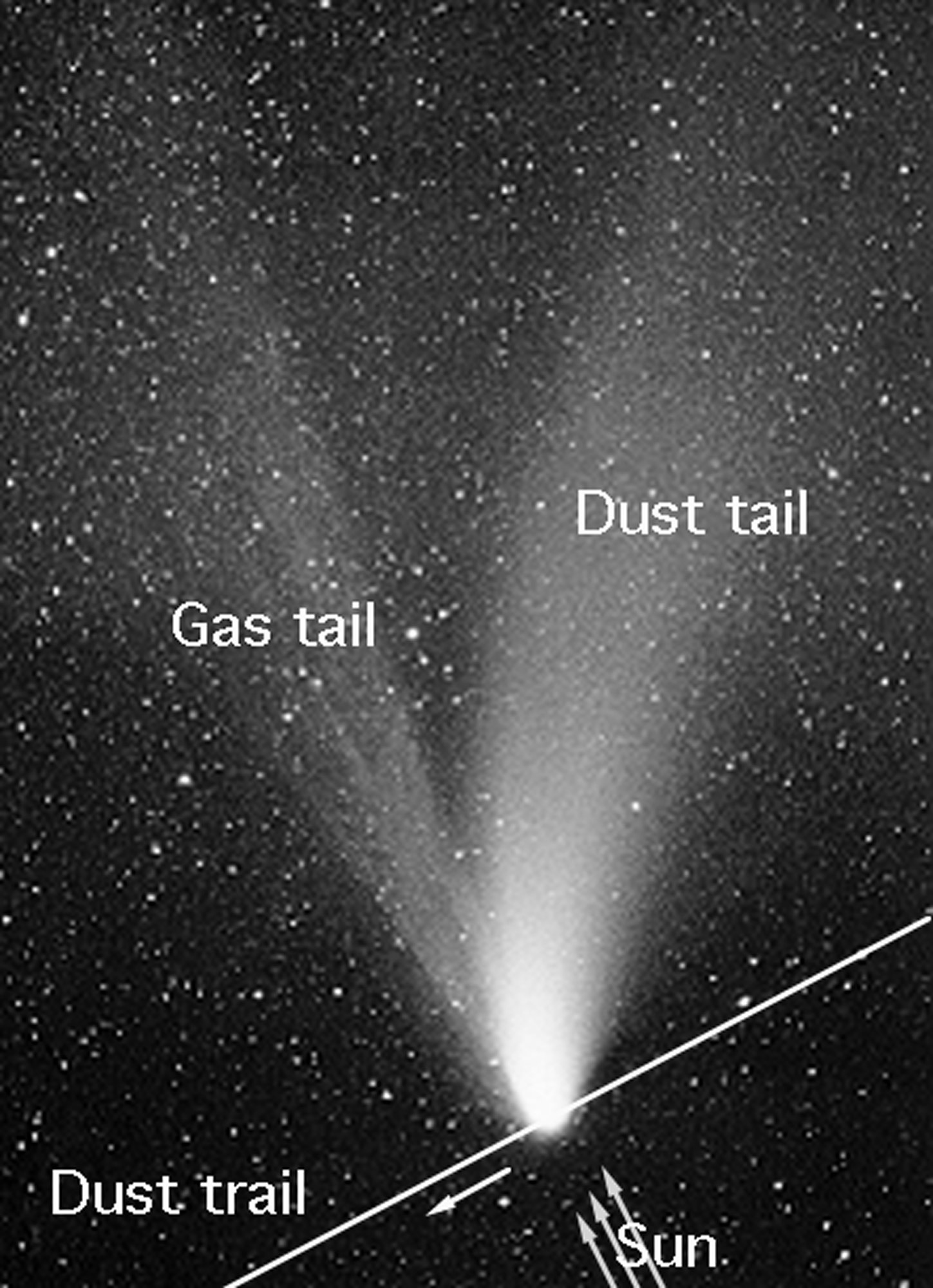
A single meteor can happen on almost any clear night, but a meteor shower happens when Earth crosses a stream of debris. Many well-known showers come from comet dust. As a comet travels near the Sun, it sheds tiny particles that gradually spread along its orbit. When Earth later passes through that trail, the particles enter the atmosphere in large numbers and seem to arrive from the same direction in the sky.
The Perseids are linked to Comet 109P/Swift-Tuttle. The shower returns each year because Earth crosses the comet’s debris stream during its yearly orbit around the Sun. That timing explains the seasonal pattern, but it does not mean every meteor is identical. The stream contains particles of different sizes and ages, spread across space in uneven bands. Some create faint streaks. A few become bright fireballs.
The apparent source point of a shower is called the radiant. Perseid meteors appear to radiate from the direction of Perseus, though they can streak across many parts of the sky. The radiant is a perspective effect, much like parallel railroad tracks appearing to meet in the distance. The real particles are traveling along related paths through space, and Earth is moving into them.
Why Most Meteors Never Reach the Ground
Because meteors are so bright, it is tempting to imagine large rocks falling nearby. Most of the time, nothing reaches the ground at all. Small meteoroids lose mass rapidly as they heat and shed material. They can create a visible meteor high in the atmosphere and still disappear completely long before they reach lower air.
Meteorites are the exceptions, not the usual result of a shower. They generally come from larger, sturdier pieces that survive the violent heating, pressure, and breakup of atmospheric entry. A meteor shower is usually made of fragile dust and small grains from a comet trail, so it is a beautiful sky event rather than a source of collectible rocks.
That makes ordinary meteors easier to appreciate on their own terms. Their value is not in what they deliver to the surface. It is in the brief conversion of motion into light. A particle that may have traveled through space for years, centuries, or longer meets Earth’s atmosphere at high speed, and the air itself records the encounter as a streak.
A Quick Flash With a Long Story
A meteor can last less than a second, but it connects several scales of nature at once. There is the old dust trail of a comet, the steady orbit of Earth, the thin upper atmosphere, the chemistry of glowing atoms, and the human eye catching a flash before it fades. The streak looks simple because it is so fast. The explanation is richer than the moment suggests.
That is what makes watching meteors satisfying even after the science is clear. Knowing that the glow is mostly heated and excited air does not make the sight less beautiful. It makes the event more precise. A shooting star is not a star and usually not a falling rock anyone will find later. It is the atmosphere briefly lighting up around a tiny visitor from space, bright enough for people on the ground to notice, then gone.