
 Akshay Dinesh
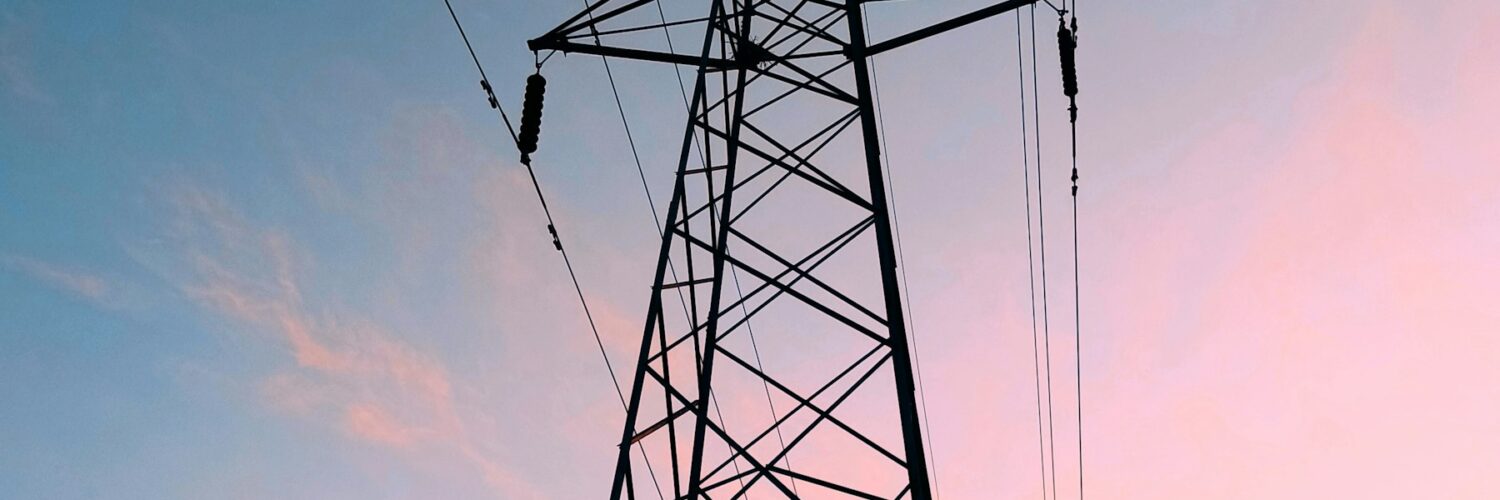
A strong solar storm can make the sky glow, but the same disturbance can also reach into a much less poetic part of daily life: the electric grid. The danger is not that sunlight suddenly becomes stronger or that electricity from the Sun pours straight into a wall outlet. The problem begins when charged particles and magnetic fields from the Sun disturb Earth’s magnetic environment, causing slow electrical currents to form in long conductors on the ground. High-voltage transmission lines are long, grounded, and spread across wide regions, which makes them one of the places where space weather can matter most.
Most geomagnetic storms pass with little effect on daily life. Some bring auroras farther from the poles, small satellite problems, or radio disruptions. But grid operators pay close attention because the power system is designed for alternating current that changes direction many times per second, not for extra, slow currents pushed in by a restless magnetic field. When those currents enter transformers, the grid can behave in ways that are harder to control.
The Solar Storm Starts Long Before the Grid Feels It
The chain begins at the Sun. Solar flares can send out bursts of radiation, while coronal mass ejections can launch huge clouds of plasma and magnetic field into space. If one of those eruptions is aimed toward Earth, it may reach the planet after hours or days, depending on its speed. NASA describes coronal mass ejections as one of the major ways the Sun can disturb Earth’s magnetic surroundings, especially when the incoming magnetic field connects efficiently with Earth’s own field.
Earth is not unprotected. Its magnetosphere usually guides much of the solar wind around the planet. During a strong disturbance, though, that magnetic shield can be compressed, stretched, and shaken. Currents in the upper atmosphere and magnetosphere change as energy moves through the system. Those changing currents alter Earth’s magnetic field at the surface, and that is where the connection to power lines begins.
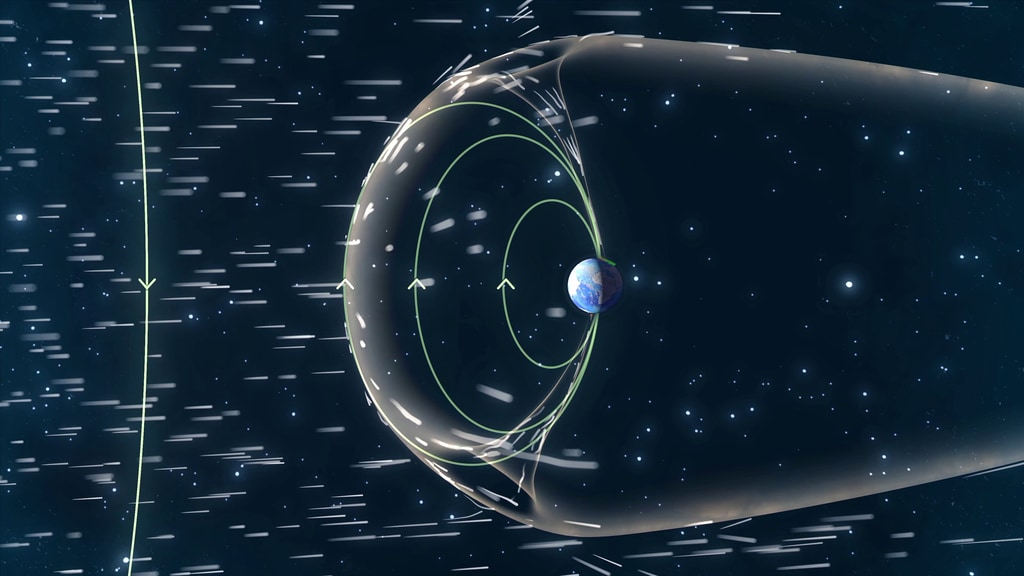
The key idea is electromagnetic induction. When a magnetic field changes, it can create an electric field. That electric field can then push current through any available conducting path. In a classroom, this is the same basic principle behind generators: moving or changing magnetic fields can produce electrical effects. During a geomagnetic storm, the generator is not a spinning machine. It is the changing magnetic environment around Earth.
The induced electric fields are usually small when measured across a short distance. Across hundreds of miles of transmission line, however, small effects can add up. The longer and better-connected the path, the more opportunity there is for a geomagnetically induced current, often shortened to GIC, to flow through power lines, transformer windings, and grounding points.
Why Long Power Lines Act Like Unwanted Antennas
High-voltage transmission lines are built to move large amounts of electricity efficiently over long distances. They connect power plants, substations, cities, and regions. That scale is useful during ordinary operation, but it also means the grid can provide a path for induced currents during a geomagnetic disturbance. A line stretching across resistive ground can sit inside a changing geoelectric field, especially in areas where the ground’s conductivity makes currents harder to spread out naturally.
NOAA’s Space Weather Prediction Center explains that these geomagnetically induced currents behave almost like direct current compared with the grid’s normal alternating current. They can vary over periods of seconds to many minutes, which is slow from the point of view of a power transformer. That matters because transformers are carefully designed around the expected rhythm of alternating current. A slow extra current can bias the magnetic core of a transformer, pushing it toward saturation.
Transformer saturation is not a dramatic spark at first. It is a shift away from normal behavior. A transformer core that is partly saturated draws more magnetizing current, produces extra heating, and can create harmonic distortion that interferes with protective equipment and voltage control. Operators may see voltage instability, reactive power demand, alarms, or equipment stress before any customer notices a problem.
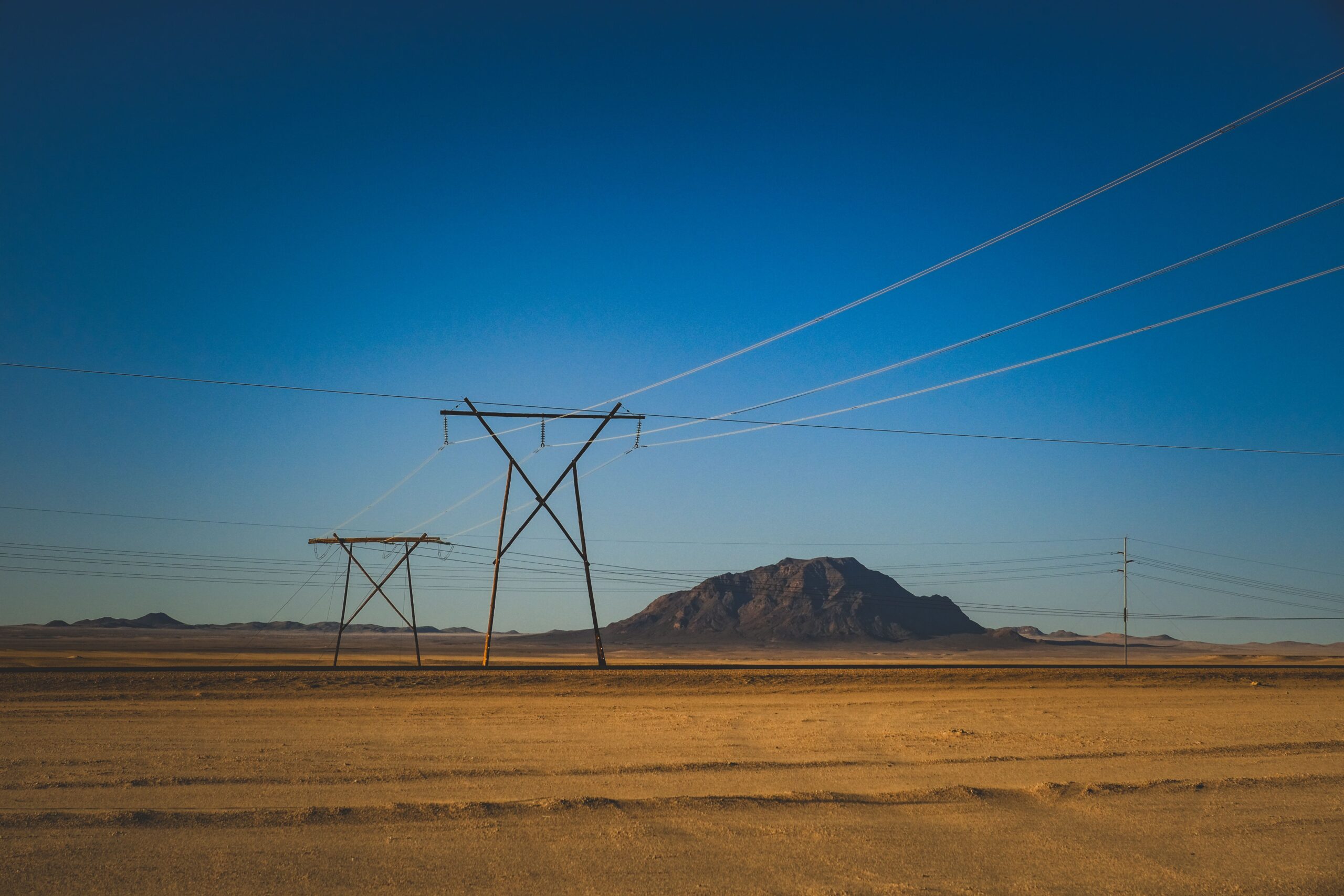
The highest concern is not usually a neighborhood power pole. It is the bulk power system: large transformers, long transmission lines, and the high-voltage network that moves electricity across regions. Extra-high-voltage transformers are expensive, heavy, custom-built pieces of equipment. If one is damaged, replacement can be slow. That is why even a low-probability extreme event receives serious attention from grid planners.
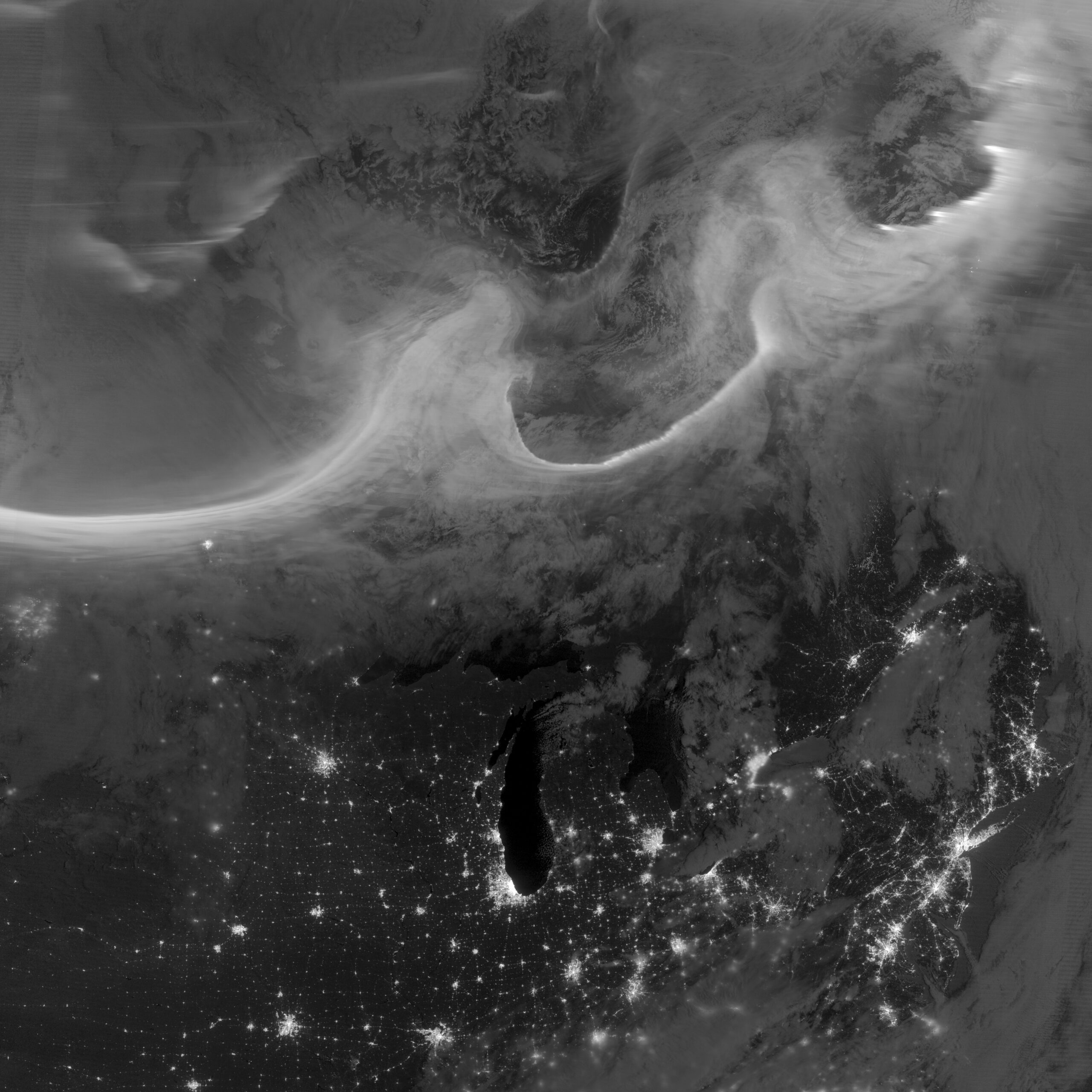
Geography also matters. High-latitude areas tend to experience stronger geomagnetic effects because they sit closer to the regions where space-weather energy enters the upper atmosphere. Ground geology matters too. Some rock types conduct electricity poorly, forcing more current into man-made conductors such as power lines and pipelines. A storm of the same strength can therefore pose different grid risks in different places.
What Operators Watch During Space Weather
Space-weather alerts give utilities time to prepare. NOAA rates geomagnetic storms on a G scale from G1 to G5, based largely on the Kp index, a measure of global geomagnetic activity. A G1 storm is minor. A G5 storm is extreme. NOAA’s scale notes that high-latitude power systems can experience voltage alarms during moderate storms, while severe and extreme storms can create broader voltage-control problems and possible transformer damage.
Forecasting is not simple because the most important part of an incoming solar eruption is often its magnetic orientation. A coronal mass ejection may be large, but if its magnetic field is oriented in a way that couples weakly with Earth’s magnetic field, the storm may be less intense. If the orientation is favorable for energy transfer, the disturbance can grow stronger. Spacecraft between Earth and the Sun help forecasters measure the solar wind before it arrives, but the warning window for the final details can still be short.
Grid operators do not wait for a blackout to improvise. The North American Electric Reliability Corporation has reliability standards for geomagnetic disturbance operations and planning. Those standards require certain operators to receive space-weather information, develop operating procedures, and evaluate how vulnerable parts of the transmission system may respond to severe geomagnetic disturbances. The goal is not to make the grid immune to the Sun. It is to give operators a practiced way to reduce stress when conditions worsen.
During a watch or warning, operators may postpone maintenance, adjust power flows, bring extra reactive power support online, or monitor transformer heating and voltage behavior more closely. Some actions are local because grid vulnerability depends on transmission paths, transformer design, ground conductivity, and how power is moving at that moment. A useful response is rarely as simple as shutting everything off. The grid has to keep serving customers while reducing unnecessary risk.
The Big Historical Warning Is Rare, Not Imaginary
The most famous example of extreme space weather is the Carrington Event of 1859. Telegraph systems, the long electrical networks of their day, experienced strange currents, shocks, and equipment problems while auroras appeared in unusually low-latitude skies. The modern grid is far more complex than a telegraph network, but the lesson is similar: long conductors can respond to disturbances in Earth’s magnetic field.
A more modern warning came in March 1989, when a geomagnetic storm contributed to the collapse of Hydro-Quebec’s power system, leaving millions of customers without power for hours. The event is often studied because it showed that space weather could create real grid consequences in a technologically advanced system. It did not mean every strong aurora will cause a blackout. It did show why power-grid operators treat major geomagnetic storms as an infrastructure risk rather than a skywatching curiosity.
The risk also changes as society becomes more electricity-dependent. Hospitals, communications, water systems, transportation, refrigeration, payment networks, and home heating or cooling all depend on reliable power. A grid disruption caused by space weather would not be a problem about astronomy alone. It would be an infrastructure problem with social consequences.
At the same time, it is easy to exaggerate the danger. Ordinary geomagnetic storms do not destroy the grid. Many watches and alerts pass with no noticeable effect for most people. The better way to understand the issue is as a resilience challenge. Space weather is one of many stresses a grid must be ready for, alongside heat waves, ice storms, wildfires, equipment failures, and changing electricity demand.
Why Preparedness Matters More Than Panic
Power-grid protection against geomagnetic storms is partly a science problem and partly an engineering problem. Scientists improve solar observations, solar-wind measurements, and geoelectric-field models. Engineers study how particular transformers and transmission networks respond to induced currents. Operators turn that information into procedures they can use during real events.
Better modeling is especially important because a national forecast is not enough for a local grid. NOAA has worked on geoelectric-field modeling for the United States and Canada so that grid operators can understand where surface electric fields may be stronger during severe storms. A storm’s effect depends on the sky above, the ground below, and the network in between.
For readers, the practical takeaway is simple: geomagnetic storms are not science fiction, but they are also not a reason to expect disaster every time auroras appear. They are a reminder that Earth and technology are connected in subtle ways. A disturbance that begins as magnetic energy near the Sun can become a current in a wire on Earth, and a current in the wrong place can make a transformer work harder than it should.
The electric grid is often described as a human-built system, but it still operates inside a planet with weather, geology, and a magnetic field. Space weather makes that connection visible. When the Sun shakes Earth’s magnetic environment, the effect can show up both as light in the night sky and as a quiet engineering problem inside the machines that keep electricity moving.



Add comment