
 Akshay Dinesh
A fan can make a hot room feel better almost immediately, even when a thermometer on the wall barely moves. That difference is the key to understanding what fans actually do. They are not miniature air conditioners. They do not remove heat from the house, chill a coil, or pump warmth outdoors. Their main job is simpler: they push air across people, and moving air changes how the body loses heat.
That is why a fan left running in an empty room usually wastes electricity. The room does not need to feel cooler, because no one is there to feel anything. A person does. When the breeze reaches skin, it helps carry away warm air that has collected around the body and can make sweat evaporate faster. The result is real comfort, but it is a personal cooling effect more than a room-cooling effect.
The room temperature and the body temperature are different problems
Air temperature is only one part of comfort. A room at 78 degrees Fahrenheit can feel pleasant with a gentle breeze and sticky without one. A room at the same temperature can also feel different depending on humidity, sunlight, clothing, activity level, and how much air is moving. The thermometer gives one useful number, but the body is responding to several conditions at once.
The human body is constantly producing heat. Even when someone is sitting still, muscles, organs, and cells are turning food energy into body heat. To stay near a stable internal temperature, that heat has to leave through the skin, breath, and evaporation of sweat. If heat leaves easily, the room feels comfortable. If heat gets trapped near the body, the same room can feel heavy and uncomfortable.
A fan changes the air near the skin. Without moving air, a thin layer of warmer, more humid air can build up around the body. That layer acts like a small insulating blanket. A breeze disrupts it and replaces it with surrounding room air. The room itself may still be warm, but the body has an easier path for releasing heat.
Moving air speeds up convection
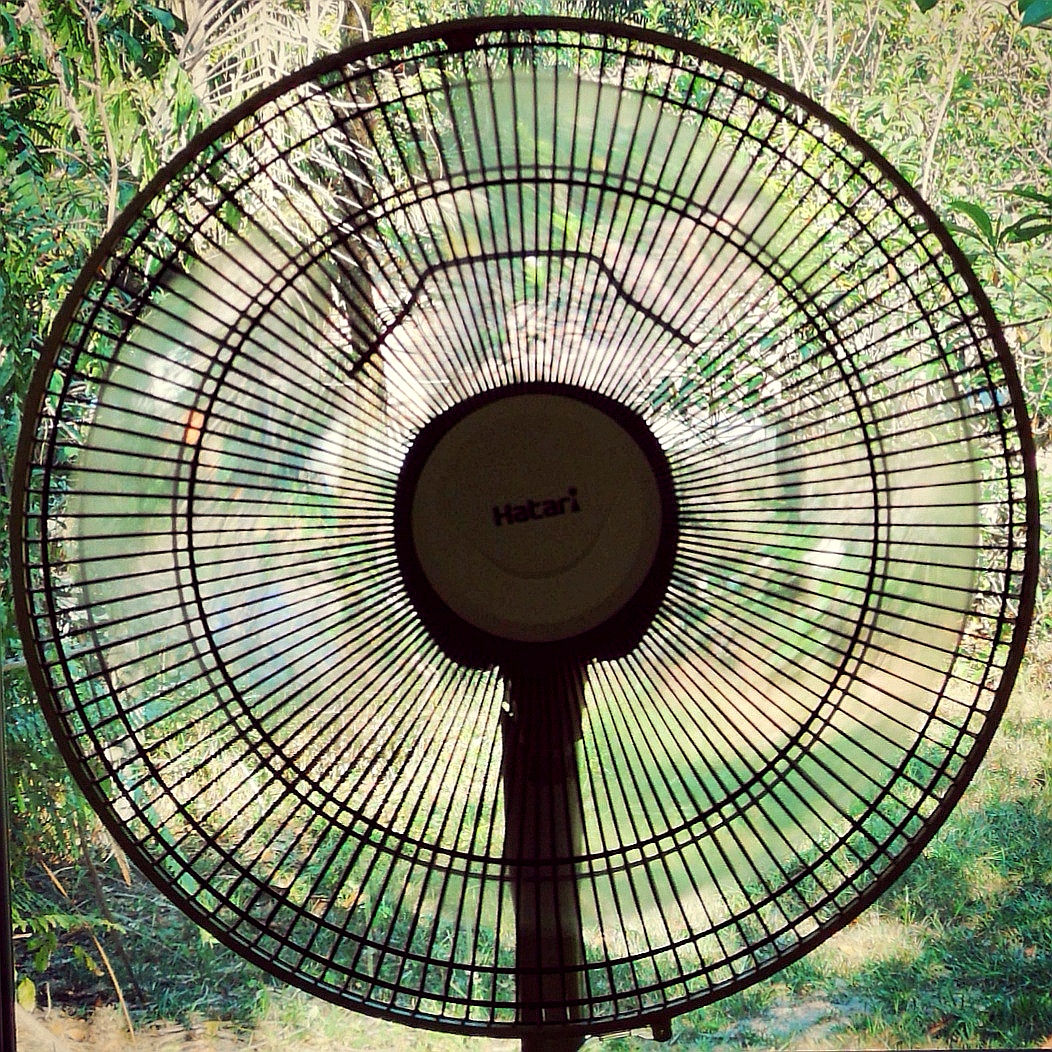
One way the body loses heat is convection. In everyday terms, convection means heat moving between a surface and a fluid such as air or water. Skin warms the air touching it. If that warmed air stays in place, heat leaves the body more slowly. If the air keeps moving, the warmed air is swept away and replaced by cooler or less-warmed air.
This is the same basic reason a breeze can make a mild day feel cooler. The air itself may not have changed temperature, but its motion changes heat transfer at the skin. A fan creates a controlled indoor breeze. The faster the air moves across the body, the more effectively it can carry away some of the heat that would otherwise linger close to the skin.
That effect has limits. If the room air is cooler than the body, moving air tends to help the body lose heat. If the air is extremely hot, especially in a closed room, the same airflow can become much less helpful and may even add heat stress. The direction of heat flow matters. A breeze is useful when it helps carry heat away; it is not magic cooling when the air around a person is already dangerously hot.
Sweat evaporation is the bigger cooling trick
Fans often feel most helpful because they speed evaporation. Sweat cools the body when liquid water on the skin changes into water vapor. That phase change takes energy. Some of that energy comes from heat at the skin, so evaporation can cool the body even when the air temperature has not fallen.
Still air slows that process because the air right next to the skin can become humid. Once that nearby air is carrying a lot of water vapor, sweat evaporates more slowly. A fan replaces that humid layer with drier surrounding air, allowing more sweat to evaporate. This is why a fan can feel especially good after walking indoors from heat or after light activity.
Humidity explains why fans do not feel the same everywhere. In dry air, sweat can evaporate readily, so moving air may feel very cooling. In humid air, evaporation is harder because the air already contains more water vapor. A fan may still help by moving heat away through convection, but the evaporative boost is weaker. This is one reason hot, humid nights can feel stubbornly uncomfortable even with air moving.
Building-comfort researchers treat air speed as a real part of thermal comfort, not just a minor preference. ASHRAE, the professional organization behind widely used indoor comfort standards, has recognized that elevated air speed can help cool people indoors under certain conditions. That does not mean any fan setting is always ideal. It means comfort depends on the combined effect of temperature, humidity, clothing, activity, and air movement.
Why empty rooms do not benefit much
An empty room has no skin, no sweat, and no comfort level. A fan can stir the air, but it usually cannot remove enough heat from the room to matter. In fact, the fan motor uses electricity, and nearly all of that energy eventually becomes a small amount of heat indoors. The heat from one fan is usually modest, but it is still the opposite of refrigeration.
This is why the common advice to turn off fans in empty rooms is physically sound. If a fan is running only to make the room temperature lower, it is doing the wrong job. The air may be more mixed, and temperature differences between floor and ceiling may shrink a bit, but the total heat inside the room has not disappeared. For most ordinary rooms, the useful cooling happens when moving air reaches people.
There are a few special cases. A window fan can help if it pulls cooler outdoor air in or pushes hotter indoor air out at the right time of day. A whole-house fan can flush warm air from a building when outdoor conditions are favorable. A ceiling fan can mix air in a room with a high ceiling, especially in winter when warm air collects above. Those uses involve ventilation or air mixing. They are different from expecting a closed-room fan to chill the air.
Fans and air conditioning work best as partners
Fans can save energy when they let people stay comfortable at a warmer thermostat setting. Air conditioning cools and dehumidifies indoor air, which costs much more energy than spinning fan blades. A fan uses moving air to make that cooled space feel more comfortable to the people in it. The pairing works because each tool is doing a different job.
Energy.gov explains a related principle about cooling bills: the smaller the difference between indoor and outdoor temperature, the lower the cooling load tends to be. If a fan allows someone to set the thermostat a little warmer while still feeling comfortable, the air conditioner may run less. But the fan has to be part of a real change in thermostat behavior. Running a fan while leaving the air conditioner set exactly the same may add a little electricity use without much savings.
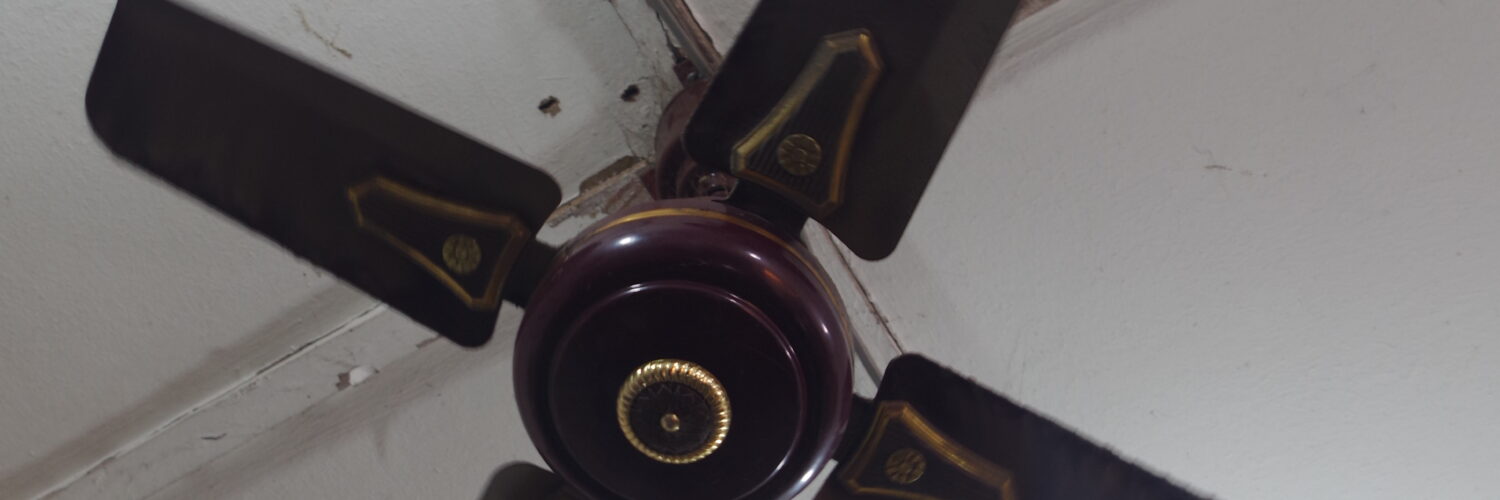
Ceiling fans make this especially visible. In summer, the familiar downward breeze helps people feel cooler. The exact direction depends on the fan design, but the goal is usually to create noticeable air movement in the occupied part of the room. In winter, some ceiling fans are reversed and run gently to mix warmer air near the ceiling back downward without creating a strong cooling draft. In both seasons, the fan is managing air movement, not creating hot or cold air.
When a fan is not enough
Fans are useful, but they should not be treated as complete heat protection during dangerous indoor heat. The EPA notes that portable electric fans do not cool air; they move air and help sweat evaporate. The same agency warns against using electric fans for cooling when room temperatures are in the mid-90s Fahrenheit or higher, because they will not prevent heat-related illness at those conditions. The CDC gives a similarly cautious threshold, advising fan use indoors only when temperatures are below 90 degrees Fahrenheit and warning that higher temperatures can increase body temperature.
Those cautions may sound surprising because fans usually feel helpful. The problem is that comfort can be misleading during extreme heat. If the air is very hot, blowing more of it across the body may not remove heat effectively. If humidity is high, sweat may not evaporate fast enough. If someone is older, ill, very young, working hard, dehydrated, or without access to cooler spaces, the risk rises further.
That is why a fan is best understood as a comfort tool within safe conditions, not as a substitute for cooling during serious heat events. Shading windows, opening windows only when outdoor air is cooler, using air conditioning when available, and going to a cooler location during dangerous heat all solve different parts of the problem. A fan can help, but it cannot rewrite the physics of heat moving from warmer places to cooler ones.
The simple rule is this: fans cool people by improving heat loss from the body. They do not cool empty rooms in the way an air conditioner does. Used in an occupied space, a fan can make a warm room feel more livable and may help reduce cooling energy when paired with a sensible thermostat setting. Left alone in a closed, empty room, it is mostly just moving air in circles.





Add comment