
 Akshay Dinesh
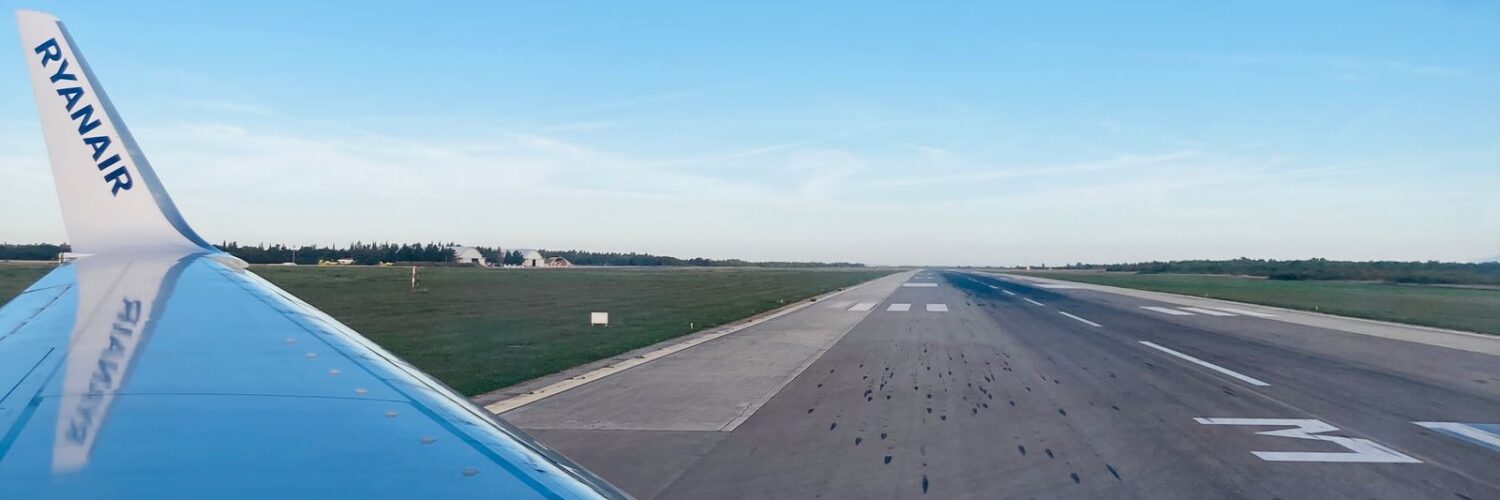
A large airplane does not leave the runway behind as neatly as it seems. Even after the wheels lift off, the air behind the wings is still moving, twisting, and sinking. That invisible trail is called wake turbulence, and it is one reason airplanes cannot simply line up nose to tail like cars at a traffic light.
For passengers, wake turbulence may sound like another name for a bumpy flight. For pilots and air traffic controllers, it has a more specific meaning. It refers to the disturbed air left by an aircraft as it produces lift, especially the strong rotating vortices that trail from the wingtips. Those vortices can last long enough to matter to the next aircraft, especially near the ground where there is little room to recover from an unexpected roll.
Lift Leaves a Trail in the Air
An airplane wing works by pushing air downward as the aircraft moves forward. The air pressure below the wing is higher than the pressure above it, and the wing shape and angle of attack help redirect the flow. Lift is useful, but it is not free. As high-pressure air from below the wing curls around toward the lower-pressure region above the wing, it forms rotating trails of air near the wingtips.
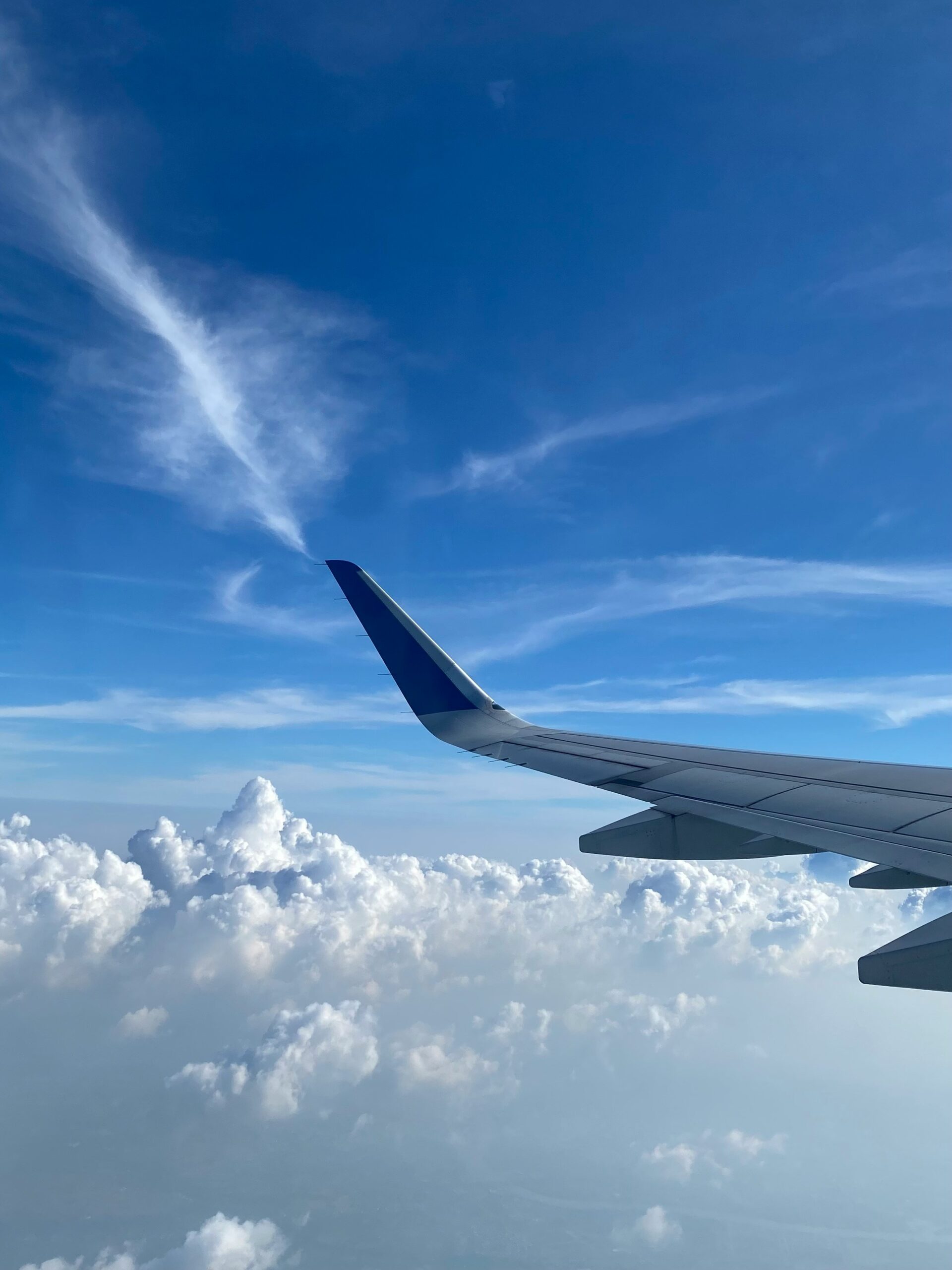
These trails are called wingtip vortices. A simple way to picture one is to imagine a horizontal tornado lying behind each wing, with the two vortices rotating in opposite directions. The pair usually sinks behind the aircraft and can drift sideways with the wind. Most of the time, they are invisible, though humid air can sometimes condense in the low-pressure core and briefly reveal a white spiral.
The same physics that makes a wing useful also makes a wake. A paper airplane, a small training plane, and a wide-body jet all disturb the air as they fly. The difference is scale. A heavier aircraft has to produce more lift, so it generally creates a stronger wake than a lighter aircraft. A slower aircraft at a higher angle of attack can also create stronger vortices because the wing is working harder to keep the airplane flying.
Why Takeoff and Landing Are the Critical Moments
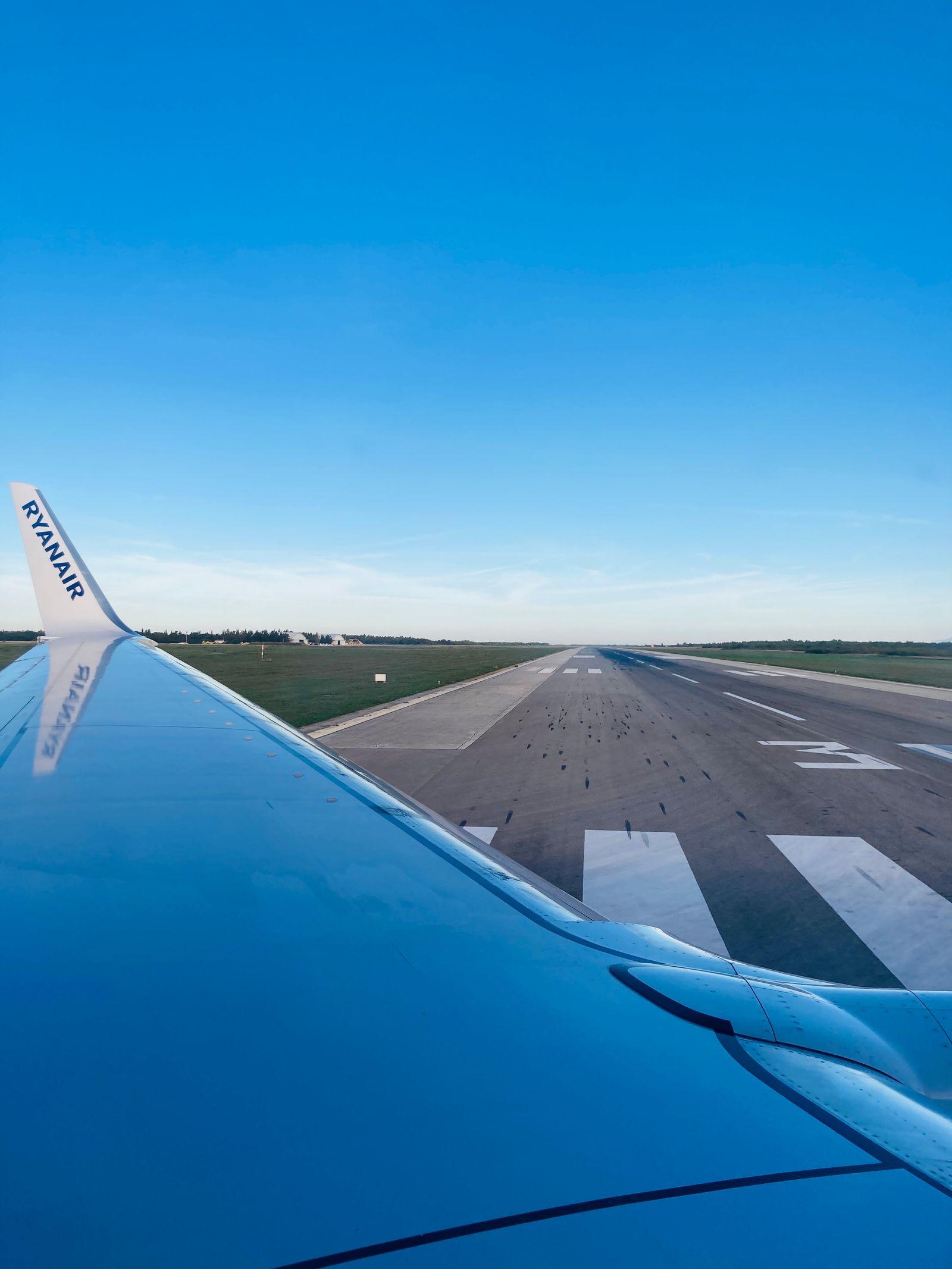
Wake turbulence can exist anywhere an aircraft is flying, but airports are where the risk becomes most practical. During takeoff and landing, airplanes are low, close together in traffic flows, and often flying slowly with wings producing high lift. If a following aircraft flies into a strong wake at low altitude, the rotating air can try to roll it to one side before the pilot has much height to spare.
This is why the runway spacing that looks conservative from a terminal window is not wasted time. Air traffic controllers apply wake-turbulence separation rules so a smaller or following aircraft is not placed too close behind a larger one. Pilots also think about where the wake will go. On takeoff, a preceding airplane’s vortices begin near the point where it lifts off. On landing, they follow the descending flight path toward the runway.
Wind changes the picture. A crosswind can push a wake toward another runway or across the path of another aircraft. A light wind can keep one vortex lingering near the runway instead of moving it safely away. Calm air can also allow a wake to remain organized for longer. The danger is not that every wake is severe, but that a strong one in the wrong place can arrive at exactly the moment an aircraft has the least margin.
What Makes One Wake Stronger Than Another
The Federal Aviation Administration teaches pilots to pay attention to aircraft weight, speed, and configuration when thinking about wake turbulence. A heavy aircraft flying slowly can create powerful vortices because its wings must generate a large amount of lift at a lower speed. Clean configuration matters too. When an airplane has fewer high-lift devices disrupting the airflow, the vortices can be more concentrated.
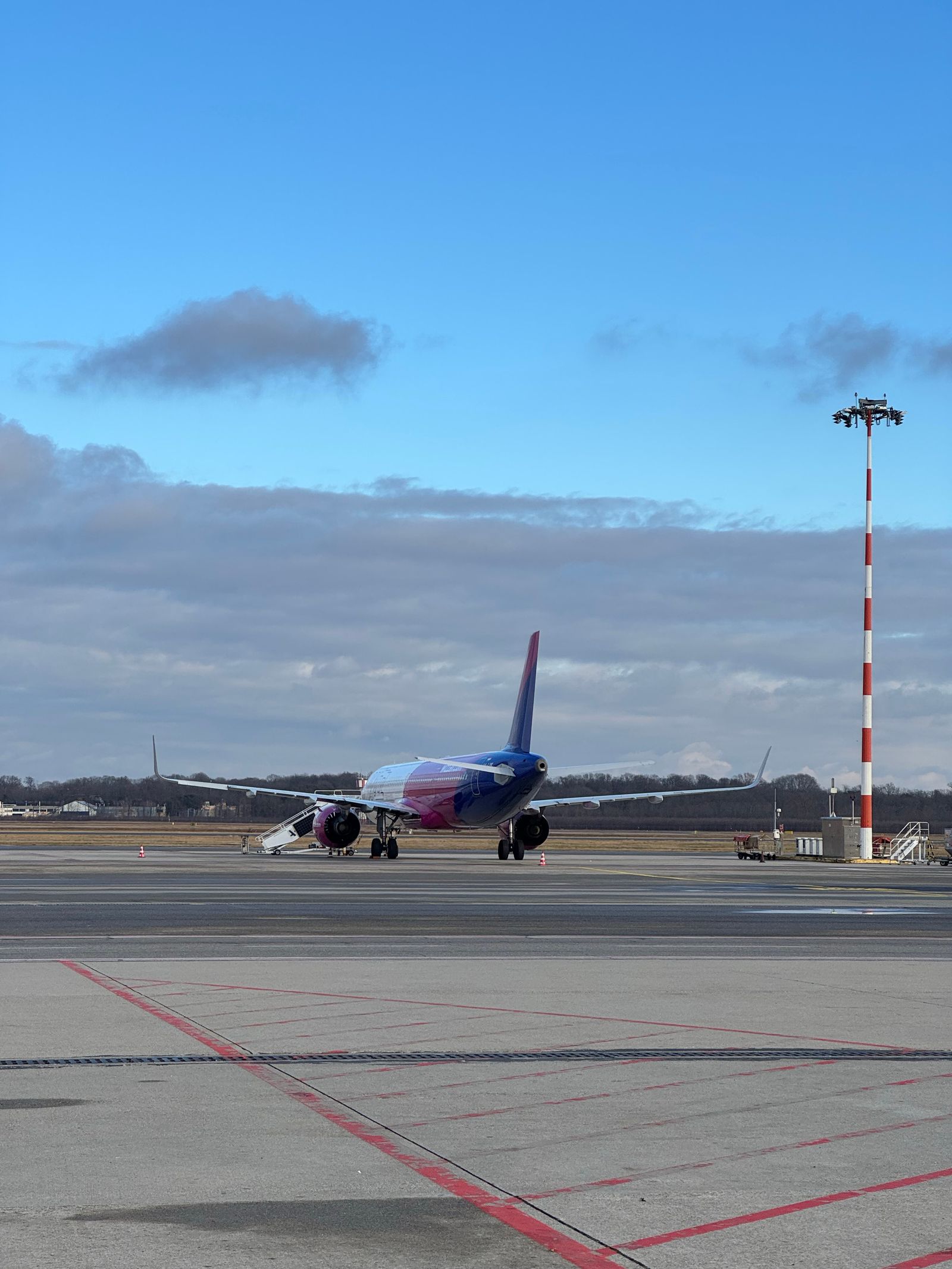
That combination explains why a large jet can affect a smaller aircraft even after the larger jet has already moved on. The wake is not engine exhaust, and it is not just ordinary choppy air. It is organized rotation left by the lifting wing. If a small aircraft encounters the core of a strong vortex, the rolling force may be greater than the pilot’s ability to counter it with ailerons, especially if the aircraft is close to the runway.
Helicopters can create hazardous wakes too. Their rotor systems push and swirl air in powerful ways, especially during hover, slow taxi, approach, or departure. The shape is different from a fixed-wing airplane’s trailing pair of wingtip vortices, but the lesson is similar: a flying machine leaves moving air behind it, and the aircraft following it must respect that disturbed space.
Large airports manage this with procedures, categories, and timing. Aircraft are grouped by wake characteristics so controllers can choose appropriate spacing. At some airports, updated wake recategorization systems use more detailed aircraft groupings than the older broad categories, allowing traffic to move efficiently while still protecting aircraft that are more vulnerable to another plane’s wake.
How Pilots Avoid the Invisible Wake
Because wake turbulence is usually invisible, pilots avoid it by predicting where the vortices are likely to be. A common rule of thumb on landing is to stay above the preceding aircraft’s flight path and touch down beyond its touchdown point when appropriate. That helps keep the following aircraft out of the sinking wake. On departure, pilots think about lifting off before the preceding aircraft’s rotation point and staying away from the expected drift of its vortices.
Controllers help by issuing instructions, warnings, and spacing, but pilots remain responsible for avoiding wake encounters when visual separation or certain operations place that judgment in their hands. The decision is not only about distance. Time, wind, runway layout, aircraft size, and flight path all matter. A wake that has drifted across a parallel runway may matter more than one that is directly behind but already below and away from the route.
Wake turbulence also explains some everyday airport delays. A small aircraft may wait after a heavy jet departs. A plane may be cleared to land with spacing that seems larger than expected. Departures on crossing or parallel runways may be sequenced carefully because the air over the airport is not empty simply because the previous airplane is gone.
Why Wake Turbulence Is a Useful Physics Lesson
Wake turbulence is not just an aviation rule. It is a visible doorway into fluid dynamics, the study of how liquids and gases move. Air may feel weightless in ordinary life, but around an aircraft it behaves like a real fluid with pressure, rotation, momentum, and energy. A wing does not simply slide through the sky; it rearranges the air around it.
The topic also shows why engineering problems rarely end at the object itself. A wing is designed to lift one aircraft, but its effects extend into the space behind it. Airports then have to manage that shared airspace. Safety depends on physics, flight training, weather awareness, aircraft design, and traffic control all working together.
Modern aircraft can reduce some unwanted drag with winglets and other design choices, but they cannot erase the basic fact that lift creates a wake. The goal is to understand it, predict it, and give it enough room to weaken. The quiet pause between one airplane leaving and the next one moving is part of that invisible safety system. What looks like empty air may still be turning.






Add comment