 Akshay Dinesh
The Milky Way is not suddenly brighter during a new moon. The galaxy is always there, arching across the sky as Earth turns beneath it. What changes is the background: the sky gets darker when the Moon is not shining above the horizon. That darker background gives faint stars, dusty star clouds, and the pale glow of our galaxy a better chance to stand out.
That is why skywatchers often circle new-moon dates before planning a trip away from city lights. In July 2026, for example, The Planetary Society lists the new moon on July 14 and the full moon on July 29. The exact date matters less than the pattern: the nights around new moon are usually better for seeing dim deep-sky objects, while the nights around full moon are better for admiring the Moon itself. The same sky can feel completely different depending on which one is lighting it.
The Milky Way is faint light spread across a wide sky
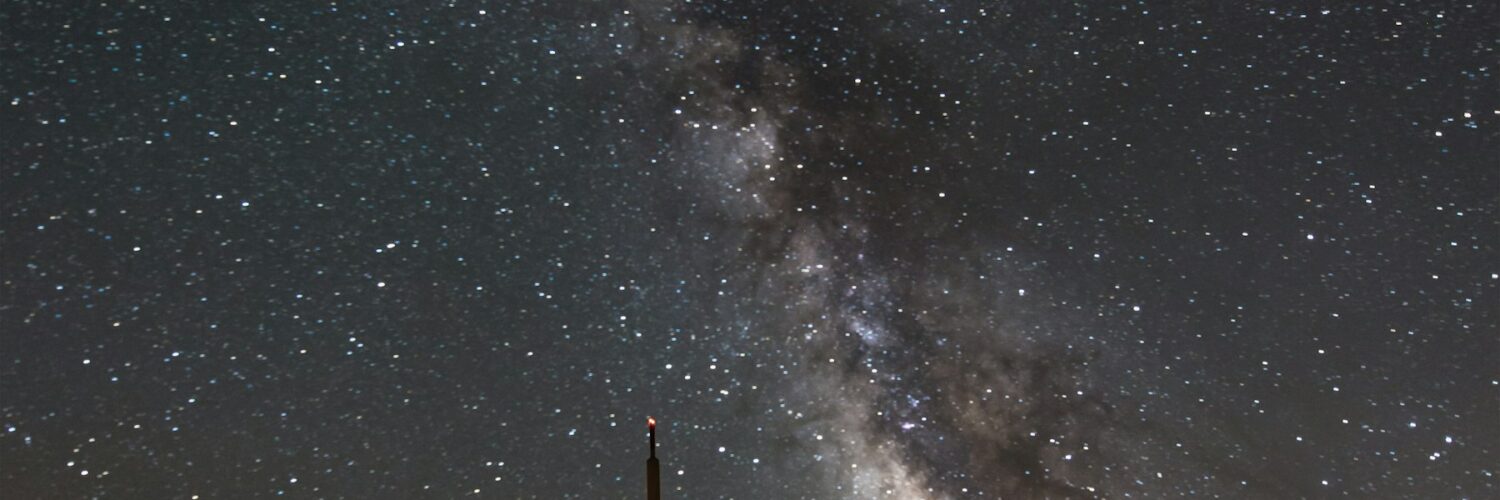
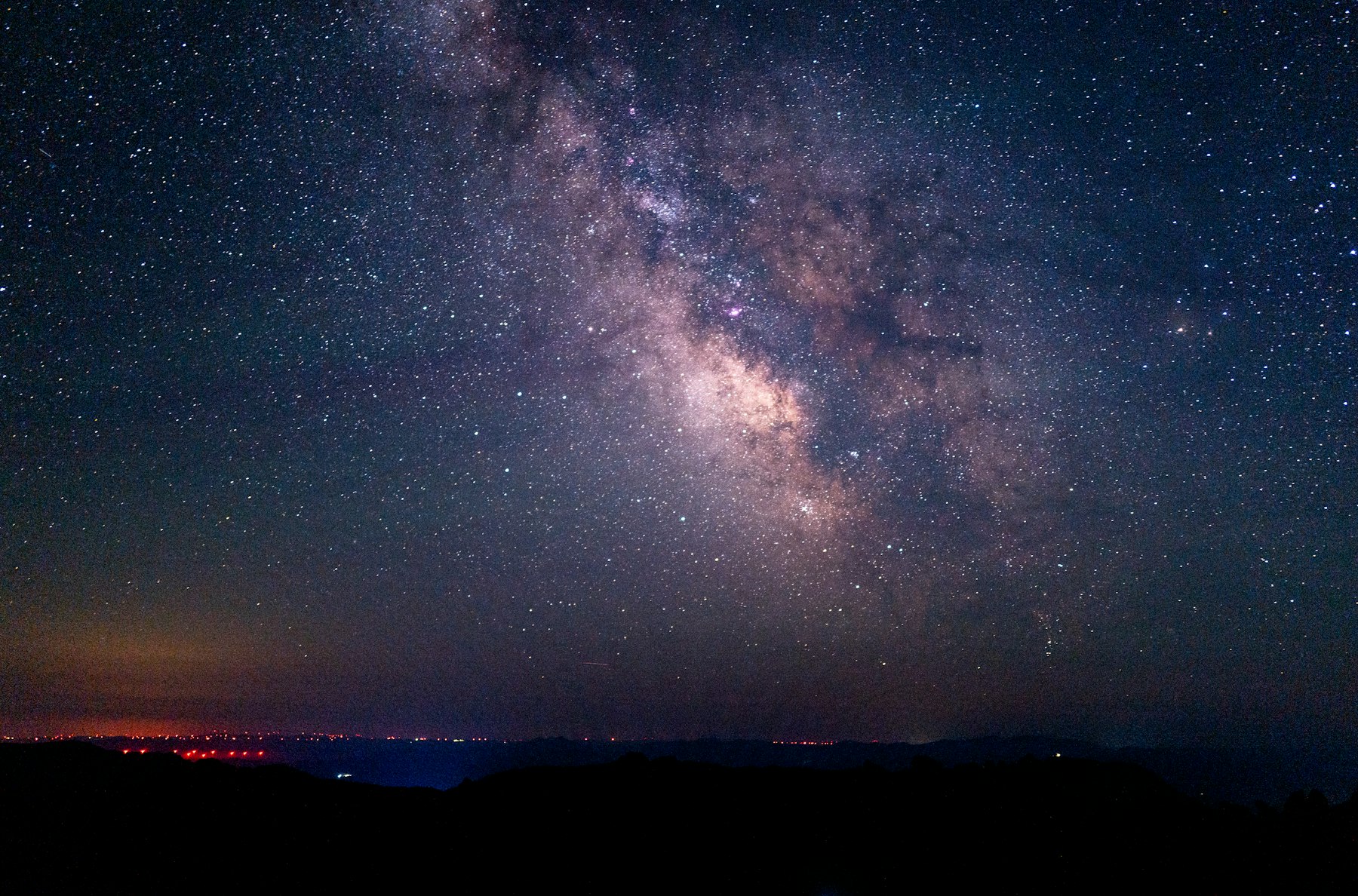
When people say they can see the Milky Way, they usually mean they can see the hazy band of our home galaxy from the inside. Earth sits inside the Milky Way’s disk, so looking along that disk is like looking through a crowded city street instead of across an empty field. More stars, gas, and dust lie in that direction, creating a soft, uneven glow that stretches across the night.
The glow is beautiful, but it is not bright in the way a planet, streetlight, or full Moon is bright. It is low-contrast light. Many of its details are not single stars at all, but the combined light of countless distant stars, interrupted by dark dust lanes that block some of the background. To see that structure, your eyes need contrast between the Milky Way and the sky around it.
Contrast is the quiet hero of stargazing. A white chalk mark is easy to see on a blackboard and harder to see on a pale gray wall. The same idea applies overhead. If the sky background is dark, faint celestial features stand apart. If the sky background is washed with moonlight, artificial light, haze, or smoke, the faint glow blends into the background and disappears from view.
Moonlight works like natural light pollution
The Moon is bright because it reflects sunlight. Even though its surface is not especially reflective compared with fresh snow or white paint, it is close enough and large enough in our sky to light up landscapes, clouds, dust, and particles in the air. Around full moon, that reflected sunlight scatters through the atmosphere and raises the brightness of the whole sky.
NASA’s stargazing guidance treats a bright Moon as one of the main reasons to skip a night when the goal is seeing meteor showers or the Milky Way. The reason is simple: moonlight creates skyglow. It does not have to cover the Milky Way directly. Once the Moon is bright and above the horizon, scattered light can lower the contrast across much of the sky.
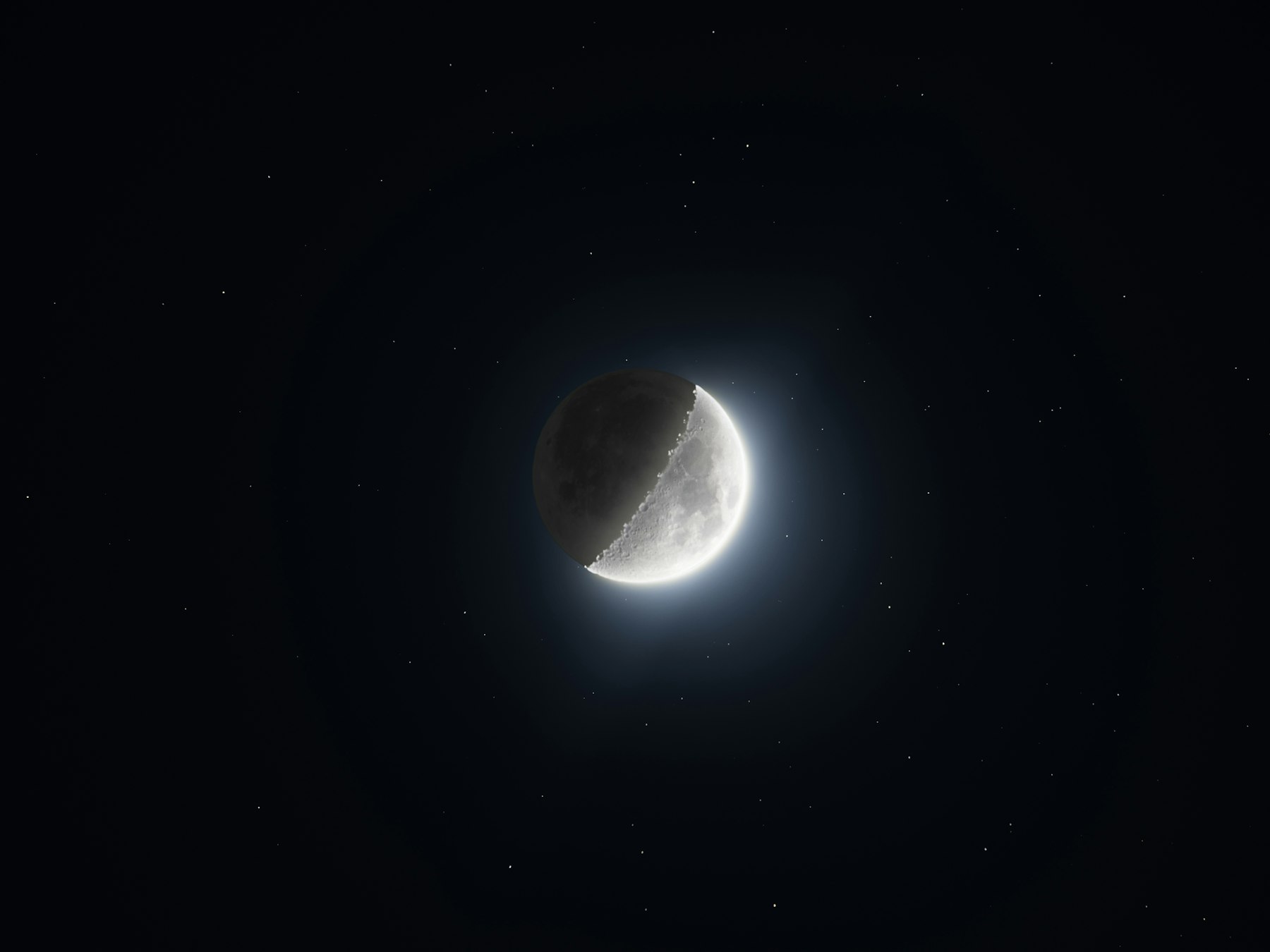
That does not make moonlit nights useless. A full Moon can be wonderful for seeing craters, maria, bright rays, and the rough line between lunar day and night when the phase is not completely full. Moonlight can also make landscapes visible in night photographs. But it is a poor partner for faint targets. The same light that makes a trail easier to walk can make the Milky Way harder to detect.
The new moon is different because the Moon is near the Sun in the sky. Its sunlit side faces mostly away from Earth, and it rises and sets close to the Sun. On many new-moon nights, the Moon is not lighting the nighttime sky at all. A thin crescent may appear before or after the exact new moon, but it sets early or rises late enough that observers can often find hours of truly dark sky.
Dark skies still depend on where you stand
A new moon helps, but it cannot erase city lights. Artificial lighting can brighten the sky every night of the month, especially near large metro areas, shopping districts, sports fields, highways, and industrial zones. DarkSky International describes the Milky Way as a sight that becomes visible to the unaided eye as observers move away from the veil of light pollution. That phrase captures what many people experience: the galaxy does not pop into view all at once. It slowly emerges as the sky grows darker.
This is why a moonless night in a city may still show only a handful of stars, while a moonless night in a rural or protected dark-sky area can reveal the Milky Way as a broad, textured band. The difference is not the galaxy. The difference is the brightness of the air above the observer.
Astronomers and skywatchers often describe this with the Bortle Dark-Sky Scale, a nine-class scale introduced by amateur astronomer John E. Bortle. Class 1 skies are exceptionally dark, with rich Milky Way detail and faint naked-eye objects. Class 9 skies are inner-city skies, where only the brightest stars and planets may be visible. Most people do not need to memorize the scale, but the basic idea is useful: darker locations reveal more of the sky’s faint structure.
Weather matters too. Haze, humidity, smoke, high clouds, and dust scatter light and soften contrast. A clear, dry, moonless night usually beats a hazy moonless night. Transparency matters more than many beginners expect, because the Milky Way’s glow is delicate. Even when the forecast says the sky is technically clear, a milky haze near the horizon can hide the galaxy’s brightest central regions.
Summer gives northern observers a good view of the galaxy’s center
Moon phase is only one part of the calendar. The Milky Way’s position changes through the year because Earth orbits the Sun and the nighttime side of the planet faces different directions in space. In Northern Hemisphere summer, evening and late-night views look toward the richer central regions of the galaxy. That is why June, July, and August are popular months for Milky Way watching, especially from dark rural locations.
The Summer Triangle helps many beginners find the right part of the sky. Its three bright stars, Vega, Deneb, and Altair, form a large triangle that climbs high during summer nights. The Milky Way passes through that region, especially near Deneb in Cygnus, then stretches down toward Sagittarius and Scorpius in the southern sky. The brightest central bulge sits low for many northern observers, so a clear southern horizon can make a noticeable difference.
Timing within the night also matters. If the Milky Way’s brightest parts are still low after sunset, waiting until later may help. If the Moon rises after midnight, the best dark window may come earlier. If the Moon sets before dawn, early morning may be better. A good Milky Way plan is really a meeting of three schedules: moon phase, moonrise or moonset, and the galaxy’s position in the sky.
How to plan a better Milky Way night
The strongest plan begins with the new moon, but it does not end there. Check the lunar calendar first, then look at moonrise and moonset times for the exact location. A night several days before or after new moon can still be excellent if the Moon sets early or rises late. A calendar date alone can be misleading because the Moon’s position in the sky changes from hour to hour.
Next, choose a darker location than your everyday surroundings. A rural park, coastline, desert overlook, mountain road, or certified dark-sky place can make an enormous difference. Try to put bright towns or cities behind you rather than in the direction you plan to observe. For many observers in the Northern Hemisphere, that means paying special attention to light domes near the southern horizon during Milky Way season.
Give your eyes time. The earlier dark-adaptation process can take roughly 20 to 30 minutes for noticeable improvement, and bright phone screens can undo part of that progress quickly. A dim red light helps preserve night vision better than a bright white flashlight. Binoculars can also help, not because they are required, but because they reveal star fields, clusters, and dusty gaps that the unaided eye may miss.
- Best Moon phase: near new moon, or any night when the Moon is below the horizon during viewing time.
- Best location: away from city lights, with a dark southern horizon in Northern Hemisphere summer.
- Best weather: clear, dry air with little haze, smoke, or high cloud cover.
- Best habit: arrive early, let your eyes adjust, and keep bright screens dim or put away.
The Moon is not the enemy; it is a different show
It is easy to talk about the Moon as if it ruins stargazing, but that is only true for certain goals. The Moon is one of the most rewarding objects in the sky. Its changing phases reveal mountains, plains, craters, and shadows that shift from night to night. A bright Moon can turn an ordinary landscape silver and make a night outdoors feel less empty.
The key is matching the night to the target. If the goal is lunar detail, choose a night when the Moon is present and interesting. If the goal is the Milky Way, meteor showers, nebulae, or faint star clouds, choose a moonless window and a darker place. The sky rewards both choices, but not in the same way.
A new moon makes the Milky Way easier to see because it removes one of the brightest sources of natural skyglow. Away from artificial light, under clear air, the night can become dark enough for the galaxy’s faint band to separate from the background. Nothing about the Milky Way has changed. The difference is that the rest of the sky has finally stepped back.