

 Akshay Dinesh
Some star patterns work like landmarks. Once you learn them, the night sky stops looking like a scatter of unrelated lights and starts to feel organized. The Summer Triangle is one of the best examples because it is large, bright, and easy to find from much of the Northern Hemisphere during warm evenings. Its three corner stars, Vega, Deneb, and Altair, belong to three different constellations, but together they make a simple shape that helps new skywatchers get oriented.
The name can be a little misleading. The Summer Triangle is not an official constellation, and it does not vanish when summer ends. It is an asterism, which means a recognizable star pattern inside or across official constellations. In June, July, and August it rises into convenient evening view, but it can remain visible well into autumn. That makes it more than a seasonal decoration. It is a reusable map key for reading a busy part of the sky.
Start With the Three Bright Corners
The easiest way to find the Summer Triangle is to look east after dusk on a clear summer night. The first star many observers notice is Vega, a bright blue-white star in Lyra, the Harp. Vega often appears high and brilliant, especially once twilight fades. From Vega, look down and to one side for Altair, the brightest star in Aquila, the Eagle. Then look for Deneb, the bright star marking the tail of Cygnus, the Swan.
The triangle is wider than many beginners expect. It is not a tiny pattern like a classroom triangle drawn on a page; it spans a broad area of sky. Holding a hand or ruler at arm’s length can help estimate the distances, but the main trick is patience. Let your eyes settle, avoid staring at phone screens, and look for the three brightest stars that seem to frame a large patch of the eastern or overhead sky.
Vega and Altair are both relatively close by on the scale of stars, while Deneb is far more distant and intrinsically luminous. That contrast is a useful reminder that brightness in the sky is not the same thing as closeness. A nearby star can look bright because it is close, while a distant supergiant can look bright because it produces enormous amounts of light. The triangle looks flat from Earth, but its stars sit at very different depths in space.
An Asterism Is a Shortcut, Not a Constellation
Constellations are official regions of the sky, with boundaries set by the International Astronomical Union. Every point in the sky belongs to one official constellation, just as every spot on a map belongs to some country, state, or region. Asterisms are different. They are memorable patterns people use because they are easier to recognize than full constellation outlines.
The Big Dipper is a familiar asterism inside Ursa Major. The Summer Triangle works differently because it crosses three constellations. Vega belongs to Lyra, Deneb to Cygnus, and Altair to Aquila. Learning that distinction prevents a common mistake: calling every star picture a constellation. In practice, both ideas are useful. Official constellations help astronomers divide the sky precisely, while asterisms help ordinary observers find their way around.
That is why the Summer Triangle is so helpful for beginners. Full constellation figures can be hard to see because many of their stars are faint, especially under city lights. Asterisms usually rely on brighter anchor stars. Once you have the anchors, you can build outward. Vega can lead you into Lyra, Deneb into Cygnus, and Altair into Aquila.
Why It Points Toward a Rich Part of the Milky Way
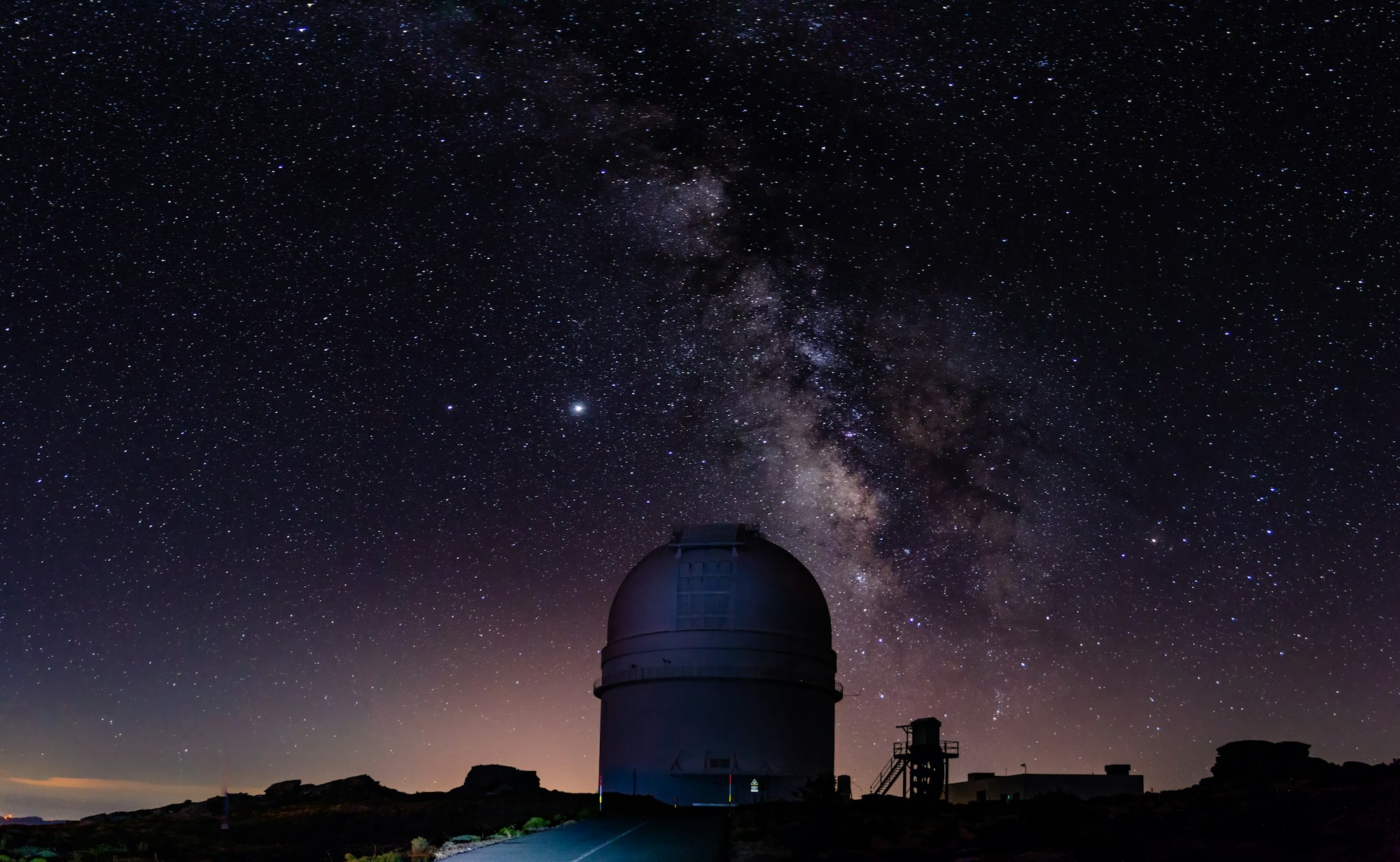
The Summer Triangle frames one of the most rewarding regions of the northern summer sky because the Milky Way runs through and near it. Under dark skies, the Milky Way may look like a pale, uneven band stretching across the triangle’s neighborhood. It is not a cloud in Earth’s atmosphere. It is the combined glow of countless stars in the disk of our own galaxy, seen from inside that disk.
Cygnus is especially useful here. The long shape of the Swan is sometimes called the Northern Cross, and Deneb sits near one end of it. Follow the body of Cygnus and you are looking along a star-rich path of the Milky Way. In a city or suburb, the band may disappear behind light pollution, but the bright corner stars often remain visible. That makes the triangle a bridge between easy naked-eye observing and deeper skywatching.
NASA’s Night Sky Network often points observers toward smaller patterns and deep-sky objects around this area, including Vulpecula, Sagitta, Delphinus, and objects such as the Dumbbell Nebula and Messier 71. These are not all obvious to the unaided eye. Some require binoculars, a telescope, or a dark location. Still, the triangle gives learners a practical starting frame: first find the bright geometry, then search within and around it for fainter details.
How the Triangle Teaches Sky Navigation
Sky navigation begins with reliable anchors. The Summer Triangle gives you three. Once Vega is identified, Lyra becomes easier to locate. Once Deneb is found, Cygnus has a strong starting point. Once Altair is in view, Aquila becomes less abstract. Instead of memorizing a page of star names, a beginner can move from one bright point to a surrounding shape.
The pattern also teaches that the sky changes position through the night. The stars do not actually circle Earth each night; Earth rotates, making stars appear to rise in the east and set in the west. Early in the summer evening, the triangle may be climbing. Later at night, it can stand high overhead. By late summer and early autumn, it is often easier to see earlier in the evening because it has shifted into a more prominent position by nightfall.
There is a good observing habit hidden in that motion. If you look at the triangle at the same time every week, you will notice it slowly changing position. That slow shift reveals how Earth’s orbit around the Sun changes the nighttime view from month to month. A simple triangle becomes a calendar you can watch with your own eyes.
What Each Star Adds to the Story
Vega often gets attention because it is so bright and easy to recognize. It has also played an important role in astronomy because its brightness helped shape the way astronomers compare stellar magnitudes. To the eye, Vega looks like a clean, steady point. To astronomy, it is a reminder that even a single bright star can become a measuring tool.
Altair adds a different lesson. Observations show that it spins rapidly, enough that it is slightly flattened rather than perfectly spherical. That is not something a backyard observer can see directly, but it changes how the star is understood. A point of light in the sky can hide complex physical behavior, including rotation, temperature differences, and shape.
Deneb completes the triangle with scale. It appears bright even though it is much farther away than Vega or Altair, because it is a luminous supergiant. That makes Deneb a good example of why the sky can be deceptive in a productive way. The brightest-looking stars are not simply the nearest ones. Apparent brightness depends on both distance and real luminosity.
A Simple Pattern That Opens a Bigger Sky
The best reason to learn the Summer Triangle is not that it gives you three more star names to memorize. It gives you confidence. With one large pattern, you can find three constellations, notice the path of the Milky Way, track the changing sky through the season, and begin to understand why brightness, distance, and star type are different ideas.
That is what makes the triangle such a good first step for skywatching. It starts with something visible from many backyards and parks, even when the sky is not perfectly dark. Then it invites deeper looking. A few minutes spent finding Vega, Deneb, and Altair can turn a summer evening into a map-reading exercise on the scale of a galaxy.





Add comment