
 Akshay Dinesh
A flight can feel perfectly calm until the airplane suddenly bumps, drops, or shudders even though the sky outside the window looks blue. That surprise is part of what makes clear-air turbulence unsettling: there may be no towering cloud, no rain streaks, and no obvious weather scene for passengers to connect with the motion. The air is still moving in layers, though, and those layers can slide past one another at different speeds or directions. When an aircraft crosses one of those rough boundaries, smooth cruising can turn choppy in seconds.
Clear-air turbulence is not magic, and it is not a sign that the airplane is falling out of the sky. It is a weather problem that happens to be hard to see. Pilots, dispatchers, meteorologists, and aviation weather systems spend a great deal of effort trying to anticipate where rough air may be, but the atmosphere does not always draw neat lines around danger. Understanding the physics behind the bumps makes the experience less mysterious and helps explain why one simple habit, keeping a seat belt fastened while seated, matters so much.
What Turbulence Really Is
Turbulence is irregular motion in the air. Instead of flowing smoothly like a wide, steady river, the air can swirl, ripple, and roll in eddies of different sizes. The National Weather Service describes turbulence as irregular air motion caused by eddies and vertical currents, with effects ranging from light bumps to severe jolts. Passengers feel the airplane respond to those uneven motions because the wings are moving through air that is no longer smoothly arranged around them.
One helpful comparison is a boat crossing choppy water. The boat is still floating, but waves change the forces acting on it from moment to moment. An airplane in turbulent air is also still supported by the air flowing around its wings, yet the airflow is changing quickly enough that the aircraft moves up, down, or sideways in response. Most turbulence is uncomfortable rather than dangerous to the aircraft itself, especially for modern commercial planes built and tested for strong aerodynamic loads. The greater safety concern is usually inside the cabin, where people, carts, laptops, and loose objects can move suddenly if they are not secured.
Turbulence has several common sources. Thunderstorms create powerful rising and sinking currents. Mountains can force air upward and set off waves downwind. Fronts can create sharp boundaries between air masses. Clear-air turbulence is different because it often forms away from visible storms or thick clouds, especially at cruising altitude where fast upper-level winds shape the flight path.
Why Clear Air Can Still Be Rough
The phrase clear-air turbulence can sound contradictory because people naturally associate rough flights with visible bad weather. In aviation, it usually refers to turbulence in cloud-free or mostly cloud-free air, often at medium or high altitude. The key ingredient is wind shear, which means a change in wind speed or direction over a relatively short distance. When one layer of air is racing along while a nearby layer moves more slowly, the boundary between them can become unstable.
That instability is a little like rubbing two moving layers against each other. If the speed difference is gentle, the flow may stay mostly smooth. If the speed difference is sharp enough, the flow can wrinkle, roll, and break into turbulent motion. An airplane crossing that region may go from calm air into a patch of rough air with little warning because the air itself is invisible. Weather radar on an aircraft is excellent for seeing precipitation and storm cells, but clear-air turbulence does not always contain the water droplets or ice particles radar can easily detect.
Clear-air turbulence can also be patchy. Two aircraft on similar routes may not have the same ride if they are separated by altitude, time, or position. One may pass through the stronger part of a shear zone, while another stays just above or below it. That patchiness helps explain why turbulence reports from other aircraft, called pilot reports, are valuable. They give forecasters and crews real observations from the sky, but they are still snapshots of a changing atmosphere.
The Jet Stream Connection
Many clear-air turbulence events are tied to the jet stream, a narrow river of fast wind high in the atmosphere. NOAA’s National Weather Service teaches that jet streams are bands of strong upper-level winds, often near the cruising altitude of long-distance flights. These winds matter because the strongest turbulence risk is often not in the fastest wind itself, but near the edges where wind speed changes sharply with height or distance.
Imagine a fast-moving lane of traffic beside a slower lane. The most complicated motion happens near the boundary, where vehicles are changing speed, drifting, and adjusting. In the atmosphere, a jet stream has similar transition zones. Air near the core can move much faster than air nearby, creating strong shear. Curving jet streams, jet streaks, and nearby temperature contrasts can make that shear stronger, giving clear-air turbulence more room to form.
This is why pilots may change altitude to find a smoother layer. Climbing or descending a few thousand feet can move the aircraft out of the roughest part of a turbulent zone. Sometimes the best option is to slow to a recommended turbulence penetration speed and continue through it. The crew’s decisions depend on forecasts, reports from other aircraft, air traffic control, aircraft performance, and the conditions along the route.
How Crews and Forecasters Try to Avoid It
Clear-air turbulence is difficult, but it is not ignored. Before and during a flight, crews use aviation weather forecasts, dispatch planning, air traffic information, and reports from other pilots. NOAA’s Aviation Weather Center provides turbulence-related forecast products for pilots and dispatchers, and the Federal Aviation Administration describes forecast systems that estimate turbulence at many altitudes. These tools do not make the sky perfectly predictable, but they turn a hidden problem into a managed risk.
Forecasting turbulence is hard because the roughest air can be smaller and shorter-lived than the broad weather patterns shown on a public map. A forecast can identify a region where turbulence is more likely, but the exact boundaries may shift. The atmosphere is three-dimensional, and aircraft are moving quickly through it. Even a useful forecast still leaves room for surprises, especially when the turbulent layer is thin or when conditions evolve faster than expected.
Aircraft crews also share what they experience. A pilot who encounters moderate or severe turbulence can report the altitude, location, time, and intensity so other aircraft can adjust. Those reports work best when many flights are in the area, but remote routes and changing conditions can still leave gaps. The result is a layered safety system: forecast the risk, route around the worst areas when practical, adjust altitude when possible, warn the cabin, and keep people secured for unexpected bumps.
Is Turbulence Getting Worse?
Clear-air turbulence has drawn more attention because researchers are studying how a warming atmosphere may change wind shear near major flight routes. A 2023 study in Geophysical Research Letters, led by Mark Prosser and colleagues, examined four decades of atmospheric data and found increases in clear-air turbulence over several regions. Over the North Atlantic, one of the busiest flight corridors, the study reported that severe clear-air turbulence increased from 17.7 hours in 1979 to 27.4 hours in 2020 for an average point, a rise of 55 percent.
That finding does not mean every flight is becoming dangerously rough, and it does not mean turbulence is new. It does suggest that the background conditions connected to clear-air turbulence deserve close attention. Stronger vertical wind shear can make certain high-altitude routes more prone to rough air, especially near jet streams. Airlines and aviation agencies care about this not only because of passenger comfort, but also because turbulence can injure people, disrupt cabin service, burn extra fuel when routes change, and make flight planning more complicated.
It is also easy to exaggerate what turbulence means. Commercial aircraft are designed to withstand stresses far beyond ordinary bumps, and pilots train for rough-air procedures. The risk passengers can control most directly is not the atmosphere outside; it is what happens to their bodies during a sudden jolt. The FAA has long emphasized that turbulence injuries are most likely when people are not buckled while seated or when crew members are moving through the cabin during rough air.
What Passengers Can Understand From the Bumps
The simplest useful habit is to keep the seat belt fastened low and snug whenever seated, even when the sign is off. That does not mean sitting in fear. It means treating invisible turbulence the way drivers treat an empty-looking road: conditions can change, and a basic restraint helps when they do. Loose objects should be tucked away when the ride gets rough, and hot drinks, open laptops, and aisle movement are worth reconsidering when the seat belt sign turns on.
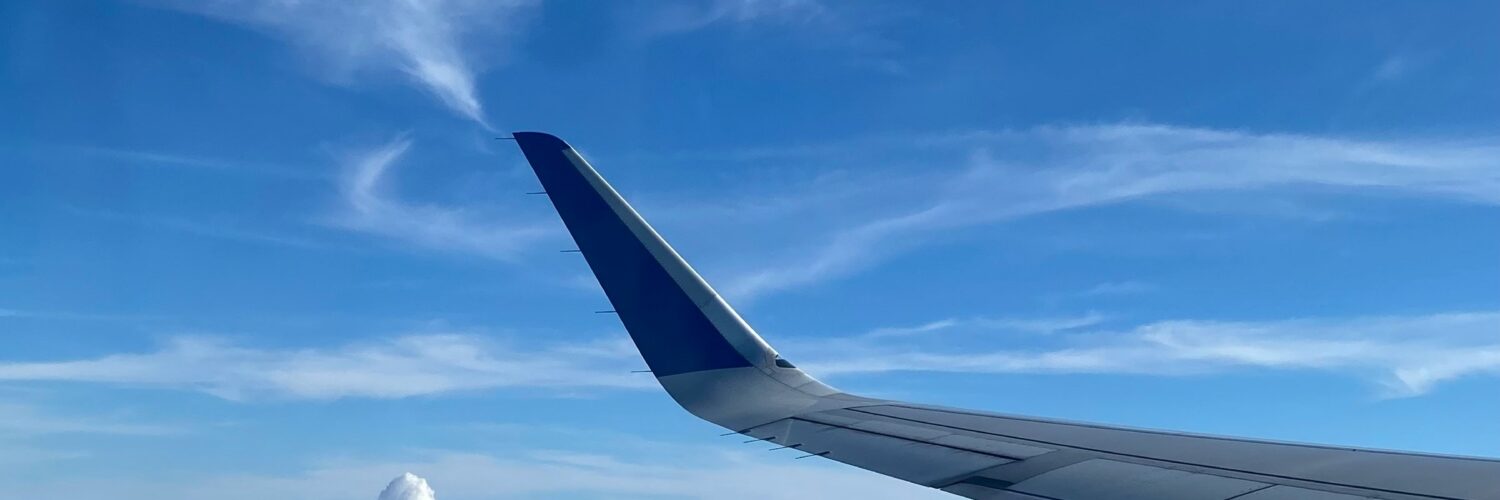
There is also a mental side to turbulence. The sudden motion can feel dramatic because the body is sensitive to drops and changes in acceleration. A quick jolt may feel larger than it is, especially when there is no visible storm outside to explain it. Looking at the wing can even be unnerving because wings are built to flex; that flexing is part of how they absorb forces rather than a sign that something is wrong.
Clear-air turbulence is a reminder that the sky is not empty space. It is a moving, layered fluid with rivers of fast wind, shifting boundaries, and invisible pockets of rough motion. Most of the time, airplanes pass through it safely and uneventfully. When the ride suddenly turns bumpy, the cause is usually not mystery but physics: air moving at different speeds, the aircraft crossing a rough boundary, and the atmosphere briefly reminding everyone that even clear skies can be active.




Add comment