
 Akshay Dinesh
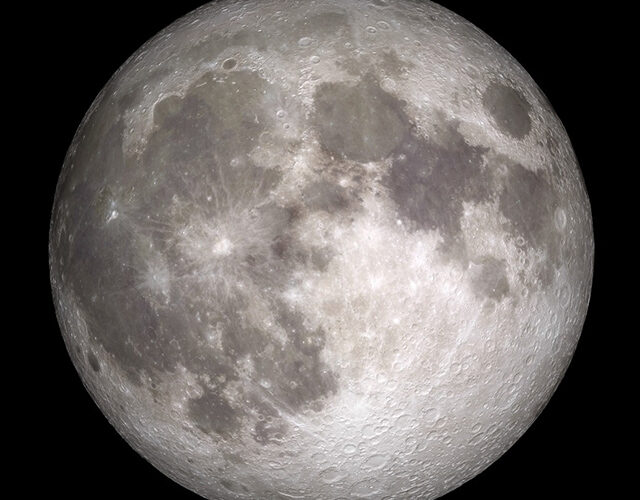
Some nights the Moon hangs in the sky as a bright circle. A week later, it may look like a half-lit coin. On other nights it becomes a thin crescent, or seems to disappear entirely. The Moon is not actually shrinking, growing, or being covered by Earth’s shadow most of the time. Its changing appearance comes from a steady pattern of sunlight, orbit, and point of view.
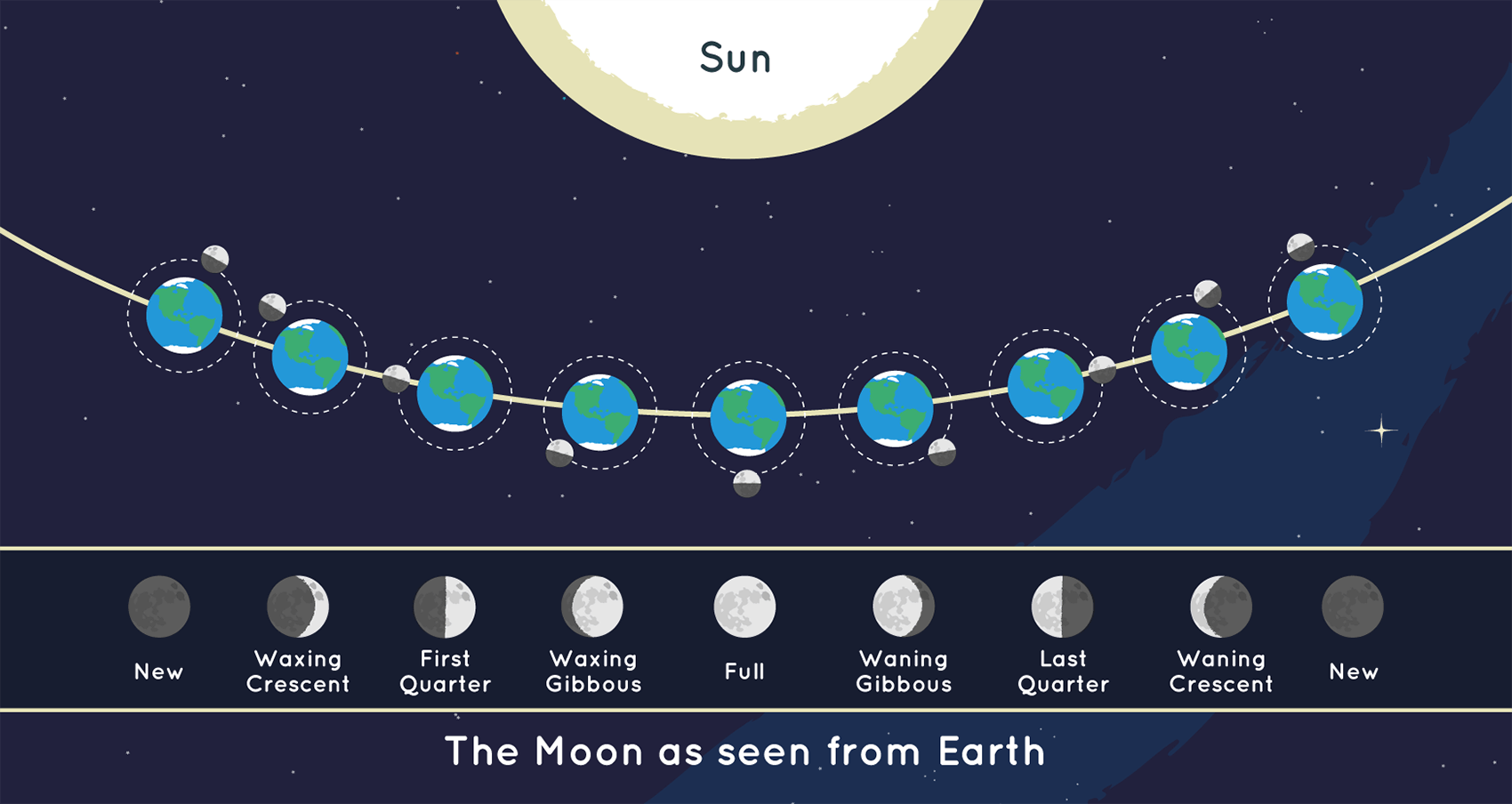
The simple answer is that the Sun always lights half of the Moon, but people on Earth do not always see the same amount of that lit half. As the Moon travels around Earth, the angle between the Sun, Earth, and Moon changes. That changing angle creates the familiar sequence of phases: new Moon, crescent, quarter, gibbous, full Moon, and then the same shapes in reverse. NASA describes the full cycle as taking about 29.5 days, which is why Moon phases repeat roughly once a month.
The Moon is always half lit by the Sun
The Moon does not shine by producing its own light. What looks like moonlight is sunlight reflecting from the Moon’s surface. At any moment, one side of the Moon faces the Sun and is lit, while the opposite side is in darkness. The same thing happens on Earth every day: one half of the planet has daylight while the other half has night.
If someone could look at the Moon from far above the solar system, the pattern would be straightforward. The Sun would illuminate one half of the Moon all the time. The Moon’s round shape would not change. What changes for people on Earth is the viewing angle. Sometimes Earth faces almost all of the Moon’s sunlit side. Sometimes Earth faces only a thin slice of it. Sometimes Earth faces mostly the Moon’s night side.
This is why the word phase is useful. A phase is not a new Moon shape; it is a new view of the same spherical Moon. The Moon’s craters, maria, and mountains are still there during every phase. They are simply harder or easier to see depending on how sunlight falls across the surface and how much of the bright side faces Earth.
How the lunar cycle moves from new Moon to full Moon
The lunar cycle begins with the new Moon. At this point, the Moon is roughly between Earth and the Sun. Its sunlit half faces mostly away from Earth, so the Moon is difficult or impossible to see in the sky. A new Moon is not usually an eclipse because the Moon’s orbit is tilted compared with Earth’s orbit around the Sun. Most months, it passes near the Sun from our view rather than directly across it.
After new Moon, a thin bright edge appears. This is the waxing crescent. Waxing means the visible lit portion is growing. Each evening, the crescent becomes a little wider because the Moon has moved farther along its orbit, letting Earth see more of the sunlit half.
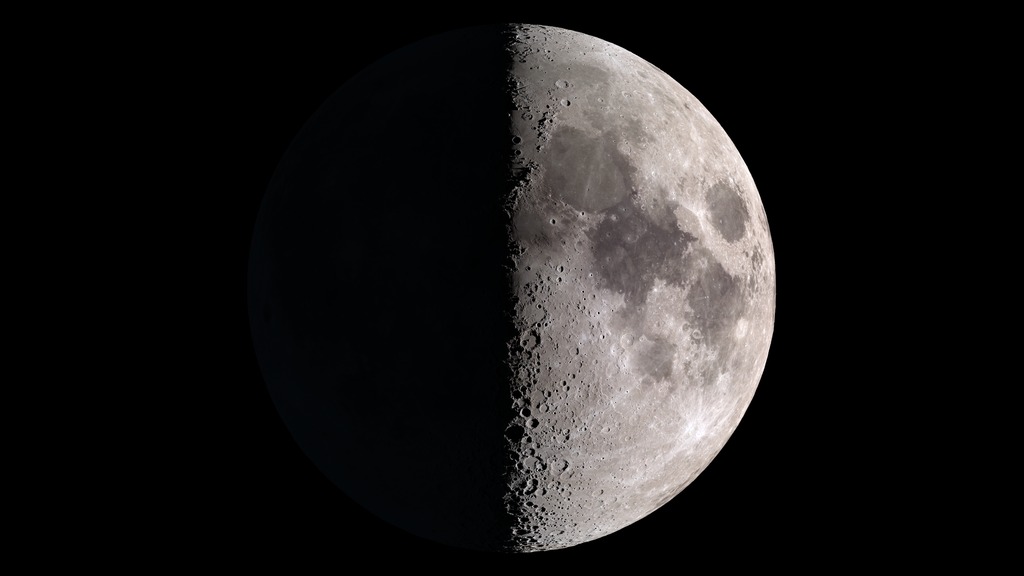
About a week after new Moon comes the first quarter. The name can be confusing because the Moon looks half full. It is called first quarter because the Moon has completed about one quarter of its trip around Earth. People are seeing half of the Moon’s sunlit side, which is only one quarter of the Moon’s whole surface.
After first quarter, the bright portion grows into a waxing gibbous Moon. Gibbous means more than half lit but not completely full. The phase reaches full Moon when the Moon is opposite the Sun in Earth’s sky. Earth then faces the Moon’s sunlit side most directly, so the disk appears round and bright.
Why the Moon shrinks after it is full
After full Moon, the sequence reverses. The lit part begins to shrink, so the Moon is called waning. A waning gibbous Moon still looks mostly bright, but less of the sunlit half faces Earth each night. Then comes the third quarter, also called last quarter, when the Moon again appears half lit. Finally, the Moon becomes a waning crescent before returning to new Moon.
The words waxing and waning help describe direction. Waxing means the lit part is increasing from night to night. Waning means it is decreasing. Crescent describes a thin curved shape, while gibbous describes a shape that is more than half lit. Quarter describes the Moon’s position in its orbit, not the fraction of the visible disk that is bright.
The U.S. Naval Observatory explains the same idea in geometric terms: the Moon is a sphere that is always half illuminated by the Sun, but observers on Earth see more or less of that illuminated half as the Moon orbits. That one sentence clears up one of the most common misunderstandings. The changing phase is not caused by Earth’s shadow except during a lunar eclipse. On ordinary nights, the dark part of the Moon is simply the Moon’s own night side.
Why phases affect when the Moon rises
Moon phases are also connected to when the Moon appears in the sky. A new Moon rises and sets close to the Sun, so it is mostly lost in daylight glare. A first quarter Moon rises around midday and is high in the evening sky. A full Moon rises around sunset and stays visible through much of the night. A last quarter Moon rises around midnight and is often easiest to spot in the morning.
This pattern happens because the phase tells you where the Moon is compared with the Sun. When the Moon is full, it is on the opposite side of Earth’s sky from the Sun. As the Sun sets in the west, the full Moon rises in the east. When the Moon is new, it is near the Sun in the sky, so it rises and sets at about the same time as the Sun.
The Moon also rises later each day, usually by about 50 minutes on average. That extra delay comes from the Moon’s orbit around Earth. While Earth rotates once each day, the Moon keeps moving eastward along its orbit, so Earth has to rotate a bit farther before the Moon appears in the same part of the sky again. The exact delay changes, but the general effect is easy to notice if you watch the Moon for several nights in a row.
Why the same phase can look a little different
The phase names are tidy, but the real Moon is more complicated than a diagram. Its orbit is not a perfect circle. It is slightly tilted, and the Moon’s apparent size changes a little as its distance from Earth changes. NASA’s lunar visualizations also show libration, a gentle apparent wobble that lets observers see slightly more than half of the Moon’s surface over time.
Location matters too. In the Northern Hemisphere, a waxing crescent often appears lit on the right side. In the Southern Hemisphere, the same phase appears rotated, with the bright side on the left. Near the equator, the crescent can look more like a smile or a bowl. The Moon has not changed; the observer’s orientation on Earth has.
Clouds, haze, city lights, and the Moon’s height above the horizon can also change how bright or sharp it appears. A crescent close to the horizon may look large and golden because its light passes through more of Earth’s atmosphere. A high first quarter Moon may show craters especially well along the terminator, the line between lunar day and night, because low-angle sunlight casts long shadows across the surface.
What moon phases tell us beyond the night sky
Moon phases are more than a skywatching pattern. They help organize calendars, guide telescope viewing, and explain part of the rhythm of ocean tides. The Moon’s gravity is the main driver of Earth’s tides, while the Sun adds its own pull. NOAA and NASA both describe how new and full moons line up the Sun, Earth, and Moon in a way that supports larger tidal ranges called spring tides. Around first and third quarter, the Sun and Moon pull at right angles, creating smaller neap tides.
That does not mean every beach has the same tide at the same Moon phase. Coastline shape, ocean depth, seafloor features, weather, and local geography all affect real tide times and heights. Still, the link between phases and tides shows that the Moon’s changing position is not just something visible in the sky. It is part of a larger Earth-Moon-Sun system.
The best way to understand the phases is to watch them patiently. Notice where the Moon is at sunset, how much of it is bright, and whether the lit part is growing or shrinking. A few nights of observation can turn the cycle from a memorized diagram into something familiar. The Moon changes shape in appearance because Earth is seeing a different slice of sunlight on a steady orbiting world, night after night.



Add comment