
 Akshay Dinesh
The Battle of Bunker Hill is one of the strange moments in history where the winner on the battlefield did not get the greater confidence from the fight. British troops took the ground on June 17, 1775, after repeated assaults on American militia positions outside Boston. Yet the victory was so costly that it changed the way both sides understood the war that had just begun.
That is why Bunker Hill still matters. It was not the final word on independence, strategy, or military power. It was a hard early test. The battle showed that the conflict after Lexington and Concord would not be a short disturbance that trained British soldiers could easily sweep aside. It also showed the provincial forces around Boston that courage alone was not enough; they would need discipline, supplies, command structure, and endurance if they hoped to survive a long war.
Boston Was Already Under Pressure
By June 1775, Boston had become the center of a dangerous standoff. British troops held the town, but thousands of colonial militiamen had gathered around it after the fighting at Lexington and Concord in April. The British could move by water and hold strong positions inside Boston, but their land movement was restricted by the forces surrounding them.
The hills around Boston mattered because artillery placed on high ground could threaten ships, streets, and troop positions below. If the British occupied the heights first, they could strengthen their hold on the harbor and make the colonial siege harder to maintain. If the colonial forces fortified the hills first, they could put pressure on the British army and make Boston less secure.
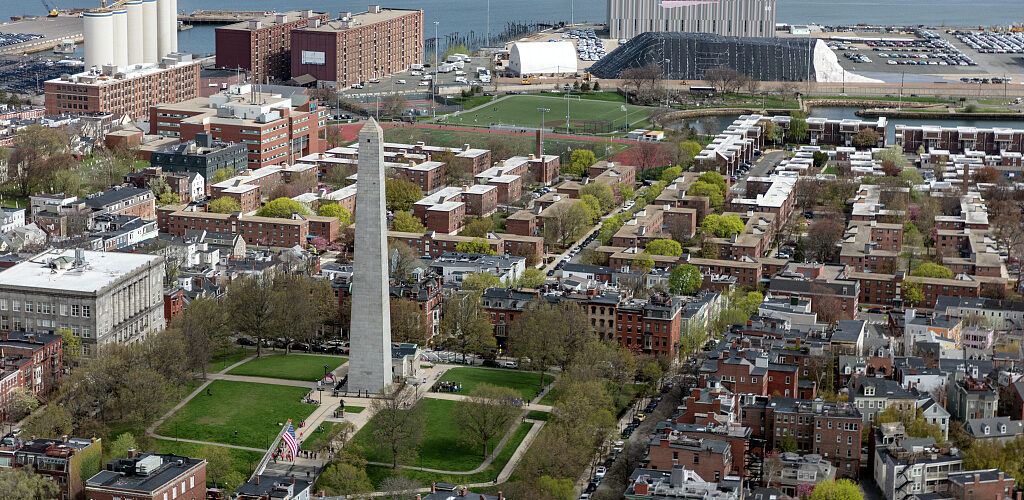
Colonial leaders learned that British commanders were considering action against nearby high ground. In response, militia forces moved onto the Charlestown peninsula on the night of June 16. Their orders involved Bunker Hill, but most of the fortification work ended up on nearby Breed’s Hill, closer to Boston. The name confusion has lasted ever since. The battle remembered as Bunker Hill was fought mostly on Breed’s Hill.
Why Breed’s Hill Became the Battlefield
Breed’s Hill offered a more aggressive position than Bunker Hill. From there, colonial forces could look across the Charles River toward Boston and threaten British control of the area more directly. That advantage also made the position dangerous. It stood exposed on a peninsula where retreat could become difficult if British forces landed behind or beside the militia lines.
The defenders worked through the night to build an earthen redoubt, a square fieldwork of dirt and timber meant to protect soldiers from gunfire. They also extended rough defensive lines across the slope and toward the Mystic River side of the peninsula. These were not polished European fortifications, but they were strong enough to force attackers into a deadly uphill fight.
By morning, British commanders could see the new works. They could not ignore them. Allowing colonial forces to hold fortified high ground so close to Boston would make the British position look weak and possibly threaten their ability to move. General William Howe led the assault, while colonial commanders and militia officers tried to hold together a force made up of men from several New England colonies.
A British Victory Bought at a Terrible Cost
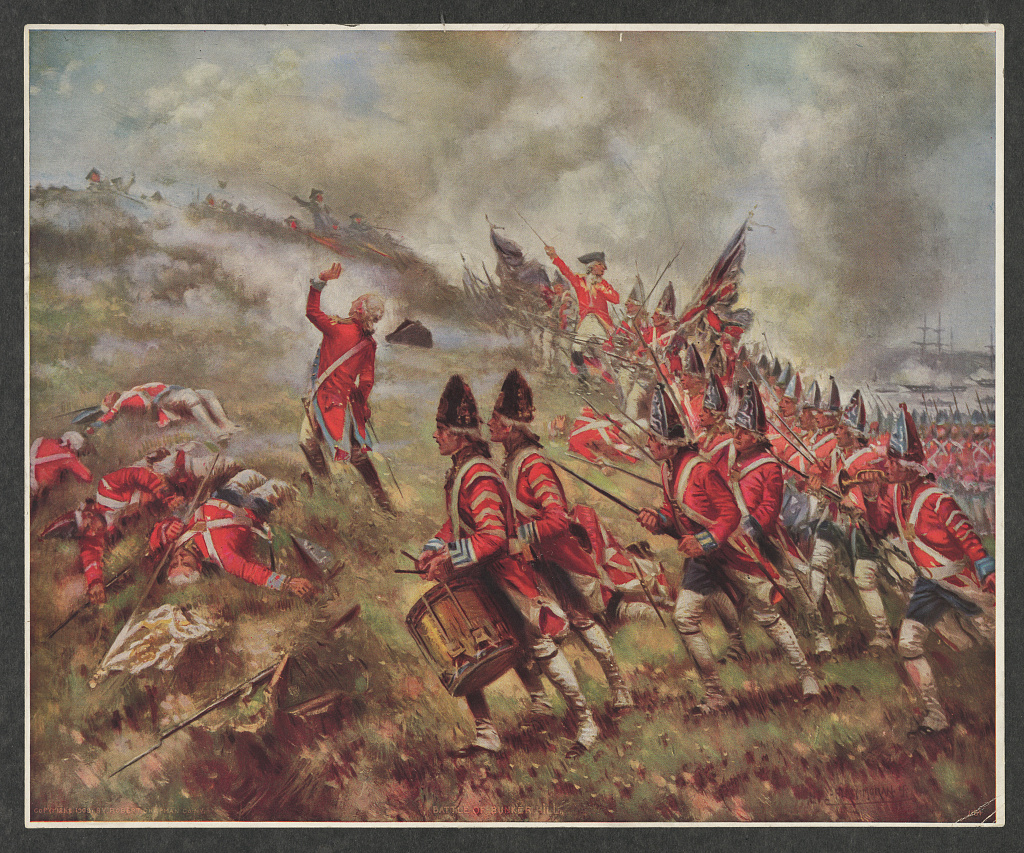
The British attack did not unfold as a simple march over frightened opponents. British troops advanced against men who had chosen their ground, waited behind earthworks and fences, and fired at close range. The first assaults were pushed back with heavy losses. National Park Service accounts describe the musket fire as devastating once the advancing troops came within range.
The battle became especially brutal because the defenders were short on ammunition. Colonial forces could not simply keep firing forever. They had to conserve powder, hold their fire, and make each volley count. The famous command often remembered as “Don’t fire until you see the whites of their eyes” captures that idea, though historians are cautious about treating the exact phrase as a proven battlefield quote.
On the final assault, British troops reached the redoubt. The fighting turned into close combat, where British bayonets gave regular soldiers an advantage over many militiamen who lacked them. The colonial defenders withdrew across the peninsula, and British forces took the ground. In the narrow military sense, Britain won.
The price was shocking. The National Park Service gives British casualties as 1,054, compared with an estimated 450 colonial losses. The American Battlefield Trust similarly lists 1,054 British casualties and 450 American casualties. For an army that expected to restore order, losing so many officers and soldiers in one early battle was a serious blow. It suggested that future victories might be too expensive to repeat casually.
What the Battle Taught Both Sides
For the British, Bunker Hill challenged an assumption. Colonial militia were often dismissed as disorderly amateurs who would break under pressure. Some did. The militia army had supply problems, uncertain command, and uneven training. But at Breed’s Hill, many of those same men stood through artillery fire, smoke, heat, and repeated infantry attacks. They did not defeat the British army, but they proved they could hurt it badly.
For the colonial side, the lesson was more complicated. The battle became a morale boost because the militia had made one of the world’s strongest armies pay dearly. At the same time, the retreat exposed real weaknesses. The defenders ran low on ammunition, command was confusing, and the army around Boston still needed better organization. Courage had carried the day only so far.
That made George Washington’s arrival especially important. The Continental Congress had appointed him commander in chief in June 1775, and he took command of the forces around Boston in early July. Bunker Hill made clear what his job would involve: turning scattered provincial forces into an army that could hold positions, manage supplies, follow orders, and survive defeats without falling apart.
The battle also affected British decision-making around Boston. American Battlefield Trust notes that the heavy losses helped discourage further immediate attempts to seize other heights near the city. The British still occupied Boston, but the fight showed that every move out of the town could become costly. Less than a year later, after colonial forces fortified Dorchester Heights, the British evacuated Boston in March 1776.
Why the Name and Memory Still Matter
The naming confusion is not a minor trivia point. It shows how memory can simplify a messy event. The battle took place across a real landscape of hills, fences, redoubts, shoreline, smoke, and retreat routes. Breed’s Hill saw most of the main fighting, but the broader action became known as Bunker Hill, partly because that was the better-known objective and because early maps and reports helped fix the name in public memory.
The monument deepened that memory. The Bunker Hill Monument, a 221-foot granite obelisk on Breed’s Hill, was dedicated in 1843 after years of fundraising and construction. The National Park Service notes that the site commemorates the Revolution’s first major battle and marks the place where provincial forces built their redoubt before the British attack.
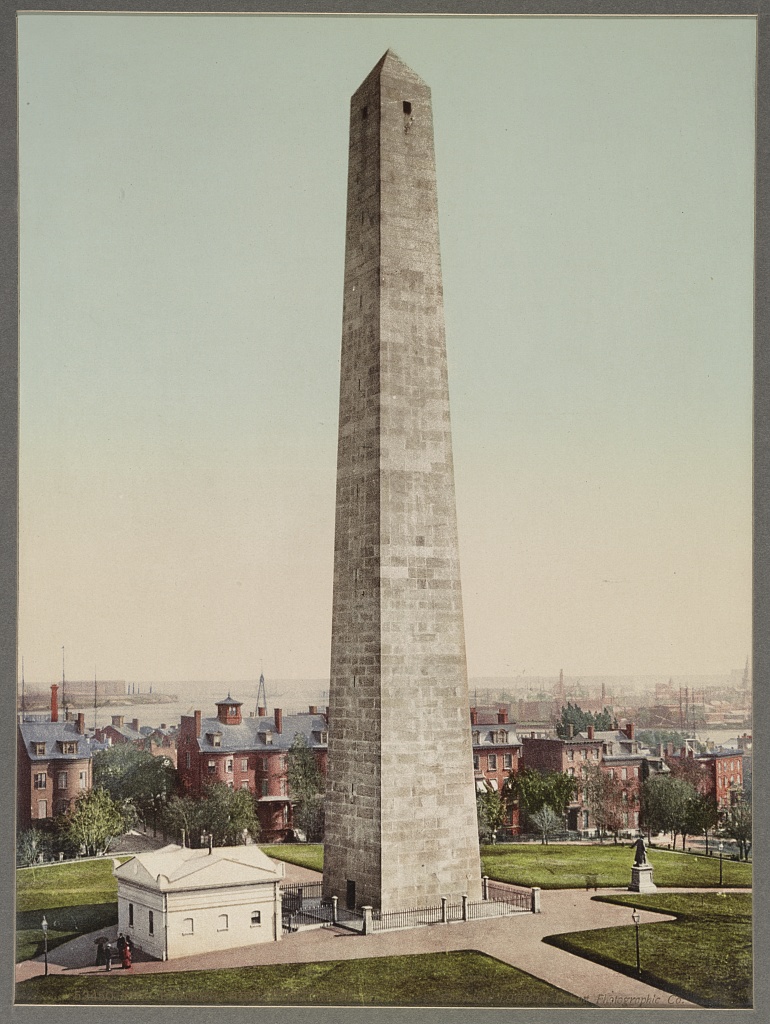
Over time, Bunker Hill became a symbol of sacrifice, resistance, and unfinished ideals. That symbolism was not fixed in one meaning. Later Americans used the battle and monument to talk about liberty, citizenship, abolition, suffrage, labor rights, and civic duty. Like many Revolutionary War memories, it has been claimed and reinterpreted by different generations.
That makes the battle useful to study, not just to commemorate. It asks readers to hold two truths at once. The British won the field, and the colonial forces retreated. But the British victory exposed the cost of trying to subdue a determined rebellion by force. A battle can be a defeat in one column and still become a turning point in confidence, strategy, and political meaning.
The Larger Meaning of an Early Defeat
Bunker Hill did not make independence inevitable. In June 1775, many colonists still disagreed about what the conflict should become. The Declaration of Independence was more than a year away. The Continental Army was still taking shape, and British power remained formidable.
Still, the battle changed the emotional temperature of the war. It told the British that military victory in America would be harder than punishing a crowd or dispersing a local protest. It told the colonial forces that resistance could be costly but possible. It turned a siege into a clearer military contest and made the need for a stronger army impossible to ignore.
That is why Bunker Hill remains memorable even though Britain held the ground at the end of the day. The battle’s meaning lies in the gap between winning a position and achieving a larger goal. Britain captured the hill, but the fight strengthened the revolutionary cause by proving that the road ahead would not be easy for either side. In that sense, Bunker Hill was less an ending than an announcement: the war had become real.





Add comment