
 Akshay Dinesh
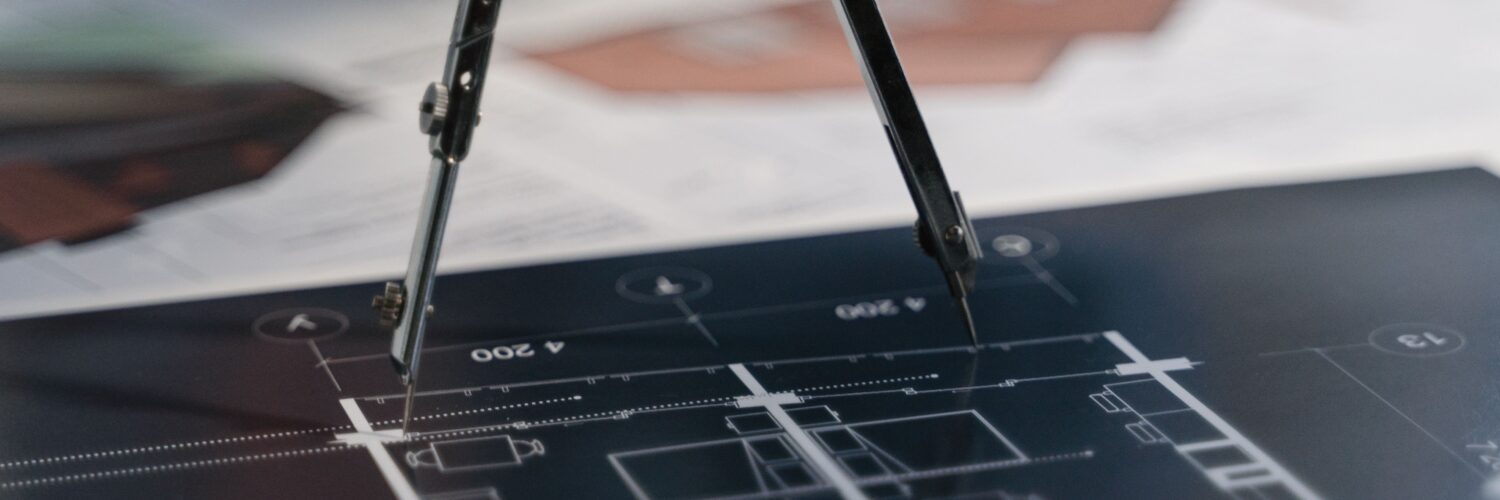
A map of a city, a model of a building, and a small diagram of a large triangle all depend on the same quiet idea: the shape can stay true even when the size changes. A drawing does not need to be life-size to be accurate. It needs every length to shrink or grow by the same amount. When that happens, the drawing preserves the relationships that matter, so a short line on paper can stand for a long wall, a street, a field, or the side of a triangle.
Similar triangles are one of the clearest ways to see why scale drawings work. They show how geometry can connect a classroom diagram to real measurement. Instead of copying exact lengths, similar triangles copy angle relationships and side-length ratios. That is why a small triangle drawn neatly on graph paper can solve a problem about a tall flagpole, a ramp, a roof, or a distance across a river.
What It Means for Triangles to Be Similar
Two triangles are similar when they have the same shape, even if they are not the same size. Their matching angles are equal, and their matching side lengths stay in the same ratio. One triangle might be a smaller version of the other, like a photograph reduced to fit inside a frame. The important point is not that the sides are equal. The important point is that the sides grow or shrink together.
Suppose one triangle has side lengths 3, 4, and 5. Another triangle has side lengths 6, 8, and 10. The second triangle is twice as large in every side length, so the scale factor from the first triangle to the second is 2. The angles do not change. A 3-4-5 triangle and a 6-8-10 triangle have the same shape because each side in the larger triangle matches the smaller one by the same multiplier.
That same idea works even when the numbers are less tidy. If every side in a drawing is one-fiftieth of the real object, the scale factor from the real object to the drawing is \(\frac{1}{50}\). If every side in a model is 20 times larger than a tiny machine part, the scale factor is 20. Similarity is the rule that keeps those changes controlled instead of distorted.
Why Scale Drawings Need Proportions
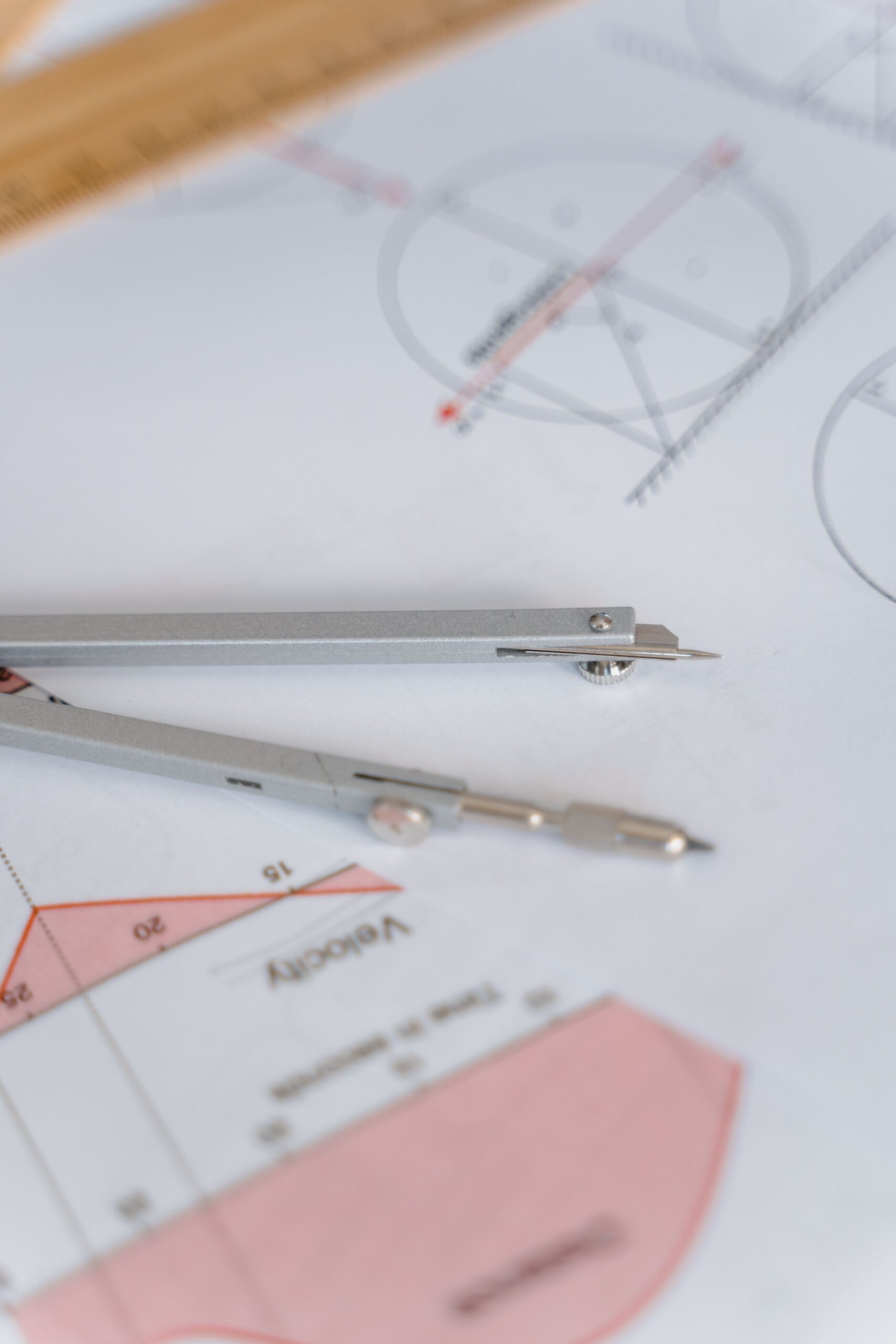
A scale drawing is useful because it keeps measurements proportional. If a room is 12 feet wide and 18 feet long, a drawing might show it as 4 inches wide and 6 inches long. The drawing is much smaller than the real room, but the relationship between width and length is still the same. Both the room and the drawing have a width-to-length ratio of 2 to 3.
This is where proportions become more than a classroom procedure. A proportion says that two ratios are equal. In a scale drawing, the ratio between drawing length and real length should match for every corresponding part. If one wall, window, or path uses a different ratio, the drawing may still look neat, but it no longer represents the real object accurately.
For example, imagine a map where 1 inch represents 5 miles. If two towns are 3 inches apart on the map, the real distance is 15 miles because \(3 \times 5 = 15\). The map works only because all distances follow the same scale. A road that is twice as long on the map should also be twice as long in real life. A triangle drawn on that map keeps its shape because each side follows the same conversion.
Similar triangles make this easier to reason through. When a triangle in a drawing is similar to a triangle in the real object, you can set up a proportion between matching sides. If a small triangle has a side of 2 centimeters matching a real side of 8 meters, the scale factor is 4 meters for every centimeter. A matching small side of 5 centimeters would represent 20 meters. The triangle gives the drawing a reliable measuring system.
How to Match the Right Sides
The hardest part of similar-triangle problems is often not the arithmetic. It is matching the correct sides. Corresponding sides are sides that play the same role in each triangle. They may be opposite equal angles, placed in the same relative position, or marked by the diagram. If you match the wrong sides, the proportion will look mathematical but give the wrong answer.
A careful habit helps: name the angles first. If angle A matches angle D, angle B matches angle E, and angle C matches angle F, then side AB matches side DE, side BC matches side EF, and side AC matches side DF. The letters tell the story. Side AB connects the first two matching angles in the first triangle, so it should match the side that connects the first two matching angles in the second triangle.
Once the matching sides are clear, the proportion can be set up cleanly. If \(\triangle ABC\) is similar to \(\triangle DEF\), then a common relationship is \(\frac{AB}{DE} = \frac{BC}{EF} = \frac{AC}{DF}\). The order matters because the sides must be paired correctly. A good diagram is not decoration in this kind of problem. It is part of the reasoning.
Scale drawings use the same discipline. On an architectural plan, the width of a doorway must match the real doorway, not the length of a hallway. On a map, a trail segment must be compared with the same trail segment in the real landscape. Similar triangles train the eye to ask a practical question before calculating: which pieces actually match?
A Worked Example With a Shadow
One classic use of similar triangles is indirect measurement: finding a height or distance that would be awkward to measure directly. Shadows make a good example because sunlight reaches nearby objects at nearly the same angle. A person, a flagpole, and their shadows can form two right triangles with matching angles. The objects are different sizes, but the triangles are similar.
Suppose a student who is 5 feet tall casts a 4-foot shadow. At the same moment, a flagpole casts a 28-foot shadow. The student and the flagpole both stand upright, so each triangle has a right angle. The sunlight creates the same slant angle for both shadows. That gives two similar triangles: one small triangle from the student and shadow, and one larger triangle from the flagpole and shadow.
The proportion is \(\frac{5}{4} = \frac{x}{28}\), where \(x\) is the height of the flagpole. To solve it, multiply both sides by 28: \(x = 28 \times \frac{5}{4}\). Since \(28 \div 4 = 7\), the height is \(7 \times 5 = 35\) feet. No one had to climb the pole. The similar triangles carried the measurement from something easy to measure to something harder to reach.
This method works because the comparison is fair. The shadows must be measured at the same time, on the same level ground, with objects standing vertically. If the student’s shadow is measured in the morning and the flagpole’s shadow is measured later in the day, the sunlight angle changes and the triangles are no longer guaranteed to match. Geometry is powerful, but it still depends on the conditions that make the model true.
Common Mistakes That Distort the Scale
The most common mistake is mixing units. If a drawing uses centimeters and the real object uses meters, the units must be handled before the final answer is interpreted. A scale of 1 centimeter to 2 meters is perfectly valid, but the result should make sense in real-world units. Leaving centimeters and meters tangled together can produce an answer that is numerically correct in a proportion but confusing in meaning.
Another mistake is using an additive change instead of a multiplicative one. Similar figures do not grow by adding the same length to every side. They grow by multiplying every side by the same scale factor. A triangle with sides 3, 4, and 5 does not become similar to a triangle with sides 5, 6, and 7 just because 2 was added to each side. The ratios changed, so the shape changed.
Students also sometimes assume that a drawing is to scale just because it looks reasonable. A sketch can be helpful without being a scale drawing. To use it for measurement, there must be a stated scale or enough matching measurements to prove a consistent ratio. In real design work, that difference matters. A rough sketch can communicate an idea, but a scale drawing supports decisions about materials, space, and distance.
Where Similar Triangles Show Up Outside Class
Similar triangles appear anywhere people need to connect a manageable representation with a larger or smaller reality. Architects use scaled plans and models to think about buildings before construction. Mapmakers use scale to compress neighborhoods, countries, and continents into readable forms. Surveyors and engineers use angle and distance relationships when direct measurement is difficult or unsafe.
They also appear in photography, art, and computer graphics. When an object moves farther from a camera, its image becomes smaller while its shape remains recognizable. Perspective drawings use related triangles to make flat paper suggest depth. Even a simple enlargement on a copier depends on keeping horizontal and vertical distances proportional so the image grows without stretching awkwardly.
The deeper lesson is that similarity lets geometry travel between sizes. A small triangle can describe a large one because the relationships are preserved. That is why scale drawings are more than smaller pictures. They are mathematical agreements: every matching length follows the same rule, every angle keeps the same measure, and every proportion helps the drawing stay faithful to the object it represents.




Add comment