 Akshay Dinesh
Look closely at a steel bridge, a roof under construction, a radio tower, or even a bicycle frame, and the same shape keeps appearing: the triangle. It is not there because builders simply like the pattern. Triangles solve a practical problem that every structure faces. A structure has to keep its shape while loads push, pull, twist, and shift through it. A square frame may look sturdy at first, but if its corners can move, it can lean into a diamond without any side getting longer. A triangle behaves differently. Once its three side lengths are fixed, its angles are fixed too, which makes the triangle one of the most useful shapes in structural geometry.
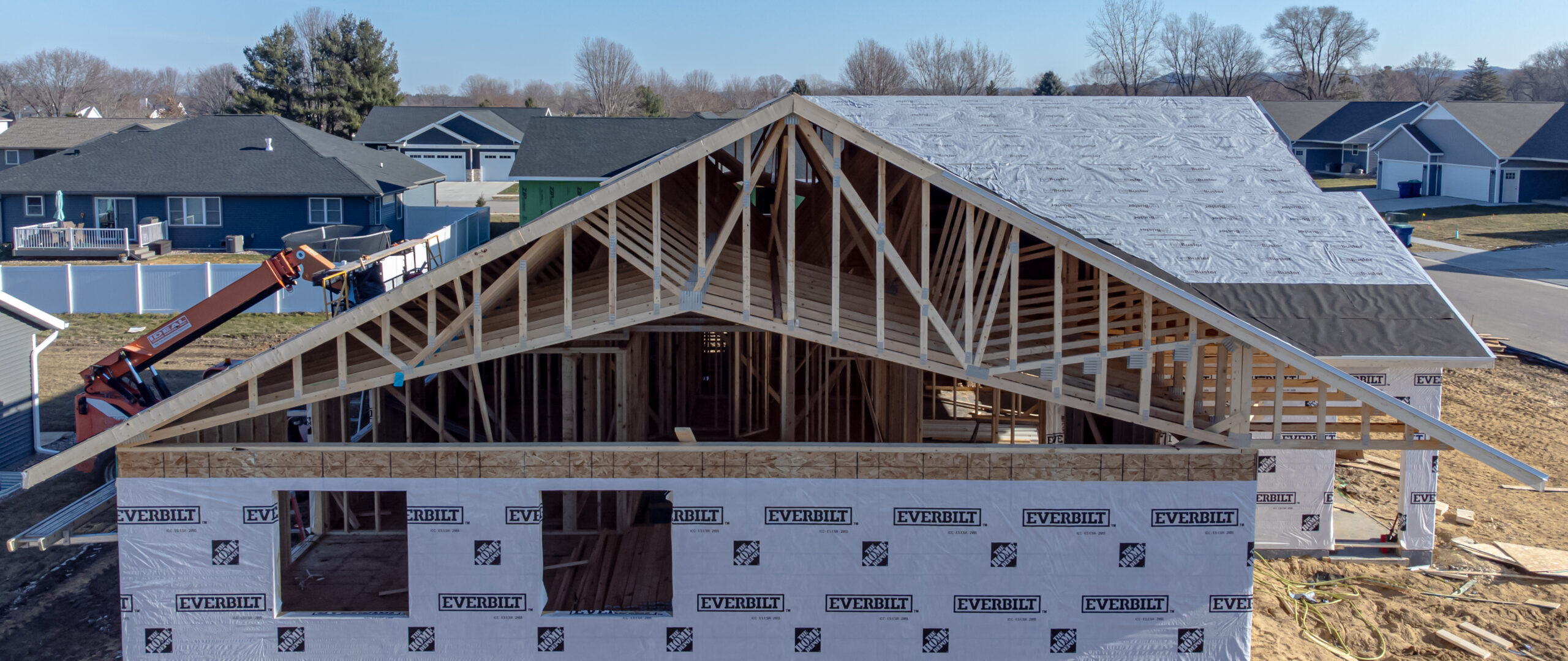
That geometric fact is why trusses often look like rows of connected triangles. A truss is a framework of straight members joined at points, usually arranged so forces move mainly as tension or compression instead of uncontrolled bending. Engineers analyze trusses with more care than a simple drawing can show, but the basic idea is friendly enough to see with craft sticks. Build a square from four sticks and pin the corners loosely, and it can wobble. Add one diagonal stick, and the square becomes two triangles. The frame suddenly feels much harder to distort.
The Geometry Behind a Rigid Triangle
The strength of a triangle begins with a quiet rule from geometry: three side lengths determine one triangle shape. If you know all three sides, the angles cannot freely change while the sides stay the same. This is the same idea behind the side-side-side condition for triangle congruence. A triangle with sides 3, 4, and 5 is not free to become a skinny triangle or a wide triangle unless one of those side lengths changes.
A rectangle does not have that same built-in lock. Four equal side lengths can make a square, but they can also form a leaning rhombus if the corners act like hinges. The side lengths alone do not control the angles. That is why a rectangular gate, shelf, or frame often needs a diagonal brace. The brace cuts the rectangle into two triangles, and those triangles stop the frame from racking sideways.
This is not magic, and it does not mean every triangle is automatically safe under any load. Materials still crack, buckle, stretch, or pull away at joints. A triangle is strong in the specific sense of shape stability: it resists changing form when its sides are held in place. Engineers still have to choose the right materials, member sizes, connections, and load paths. The triangle gives them a dependable geometric starting point.
How Trusses Turn Loads Into Pushes and Pulls
A truss is useful because it breaks a large structural job into smaller pieces. Instead of asking one solid beam to carry everything by bending, a truss spreads the load through connected members. In an ideal truss, each member mainly carries force along its own length. Some members are squeezed; they are in compression. Others are stretched; they are in tension. This division matters because materials often handle pushing, pulling, and bending very differently.
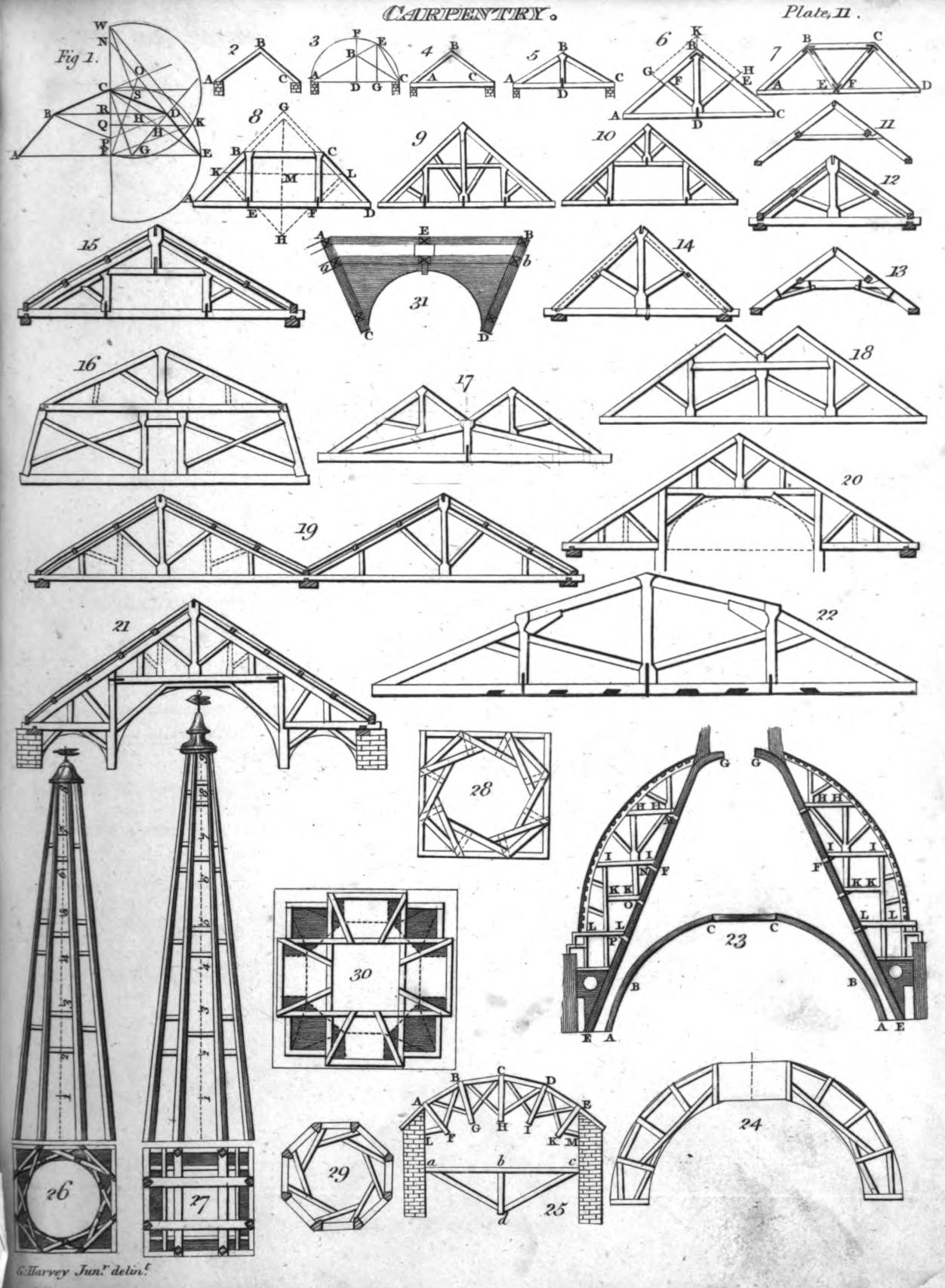
Picture a simple triangular roof frame. Gravity pulls the roof downward. The sloping sides push against one another and carry compression. The bottom member can act like a tie, resisting the outward spread of the roof by carrying tension. The triangle keeps those pieces working together rather than letting the roof flatten or push the walls apart.
Bridge trusses use the same family of ideas, but across longer spans and with moving loads. As a vehicle crosses a truss bridge, the forces inside the members change. A diagonal that is stretched under one loading pattern may be squeezed under another, depending on the truss type and the position of the load. TeachEngineering’s high school truss-bridge lesson describes how students can use the method of joints to calculate tension and compression at truss members by treating each joint as a balance point. That is where geometry begins to meet algebra, vectors, and statics.
Why a Diagonal Brace Changes Everything
The easiest way to see triangulation is to compare two frames. Imagine a square made from four thin strips joined with loose fasteners at the corners. Push gently on one top corner, and the square can skew. It becomes a parallelogram because its sides stay the same length while its angles change. Now add one diagonal strip from one corner to the opposite corner. The square no longer has four sides acting alone. It has two triangles sharing a side.
That one diagonal brace changes the choices available to the shape. For the frame to distort, at least one triangular side would have to lengthen, shorten, buckle, or break. In a well-built structure, those changes are harder than a loose corner rotating. The diagonal has turned an easy motion into a resisted force.
This is why bracing shows up in places that may not look mathematical at first. You can see it in scaffolding, roof frames, towers, transmission structures, folding stands, and temporary supports. A ladder may use cross braces to keep its side rails aligned. A simple wooden gate often sags until someone adds a diagonal board. The board does not make the wood stronger by changing its material. It changes the geometry of the frame, giving the load a better path.
Why Bridges Use Different Triangle Patterns
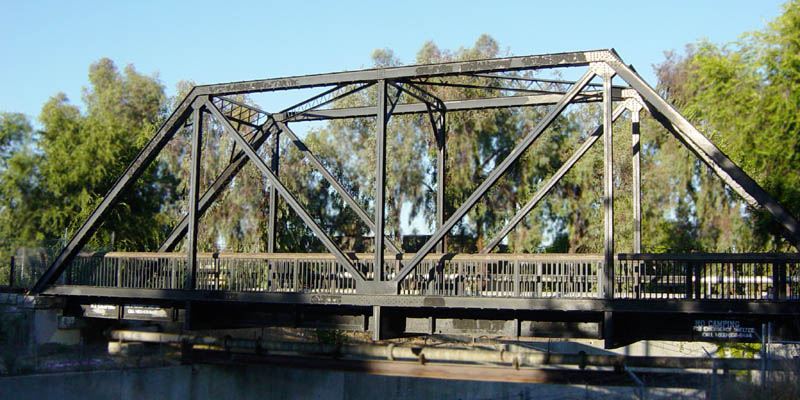
If triangles are so useful, it may seem as if every bridge should use the same triangular pattern. Real bridges are more varied because loads, materials, span lengths, construction methods, and cost all matter. A Warren truss uses repeating triangle shapes that can spread forces in a clean zigzag pattern. A Pratt truss places diagonals so many of them work well in tension under common loading. A Howe truss reverses that diagonal direction, which historically made sense for certain combinations of timber and metal.
Those names are not just decoration. They show that a truss is a design decision, not a single shape stamped everywhere. A bridge carrying trains has different needs from a small pedestrian bridge. A roof truss in a house has different needs from a long steel bridge over water. The triangular pattern is the grammar, but engineers still choose the sentence.
One major tradeoff is material efficiency. A deep truss can span farther with less material than a heavy solid beam of similar reach, because its open triangular web places material where it helps most. The top and bottom chords carry much of the overall bending effect, while diagonals and verticals help pass loads between them. The open spaces are not wasted weakness. They are part of the design, because the frame relies on paths of force rather than one continuous block.
Where the Math Gets More Real
In a classroom sketch, a truss can look perfectly clean: straight lines, tidy joints, and simple arrows for loads. Real structures are less polite. Wind pushes sideways. Snow adds weight unevenly. Vehicles move. Wood contains knots. Steel can corrode. Connections may be bolted, welded, nailed, or plated. A member in compression can buckle sideways long before it is crushed, especially if it is long and slender.
That is why engineers do not stop at saying triangles are strong. They check how force moves through each member and whether the members and joints can handle those forces. A triangular frame may be geometrically stable, but it still needs enough depth, proper connection details, and suitable materials. The shape helps organize the problem. It does not excuse anyone from doing the engineering.
The math can become quite advanced, but the first layer is easy to recognize. A load at a joint can be broken into components along connected members. If the joint is not moving, the pushes and pulls must balance. In a simple truss, that balance can become a system of equations. Each unknown force belongs to a member, and the structure is solved by working from joint to joint. This is one reason trusses are such good teaching examples: they turn visible shapes into solvable math.
The Everyday Lesson Hidden in the Shape
Triangles make bridges and roofs strong because they combine shape stability with efficient force paths. Their side lengths lock their angles, so a triangular frame cannot rack the way a loose rectangle can. When many triangles are joined into a truss, loads can move through straight members as tension and compression. That lets a structure do more with less material while keeping its form.
The deeper lesson is that geometry is not only something drawn on paper. It is built into the objects people trust every day. A bridge does not stay up because it contains triangles as decoration. A roof truss does not work because triangles have a reputation for strength. The pattern matters because it gives forces a disciplined route to follow. Once you notice that, the world starts to look a little more mathematical: braces, towers, frames, and bridges are all quiet reminders that a good shape can make strength easier to achieve.