 Akshay Dinesh
The United States Constitution did not originally include the Bill of Rights. That surprises many readers because the first ten amendments now feel inseparable from the Constitution itself. Freedom of speech, religious liberty, protections in criminal trials, and limits on searches are often treated as the most familiar parts of American constitutional law. Yet in 1787, the delegates who drafted the Constitution chose not to add a separate list of protected rights. The decision became one of the sharpest arguments in the fight over ratification.
The Bill of Rights was added because many Americans feared that the new federal government would become too powerful without clear written limits. Supporters of the Constitution wanted a stronger national government than the Articles of Confederation had provided, but critics worried that stronger power could threaten the liberties won during the Revolution. The first ten amendments grew out of that argument. They were not an afterthought so much as a political promise, a compromise, and a public statement about what the new government could not do.
A Constitution Built for Power, Not a List of Rights
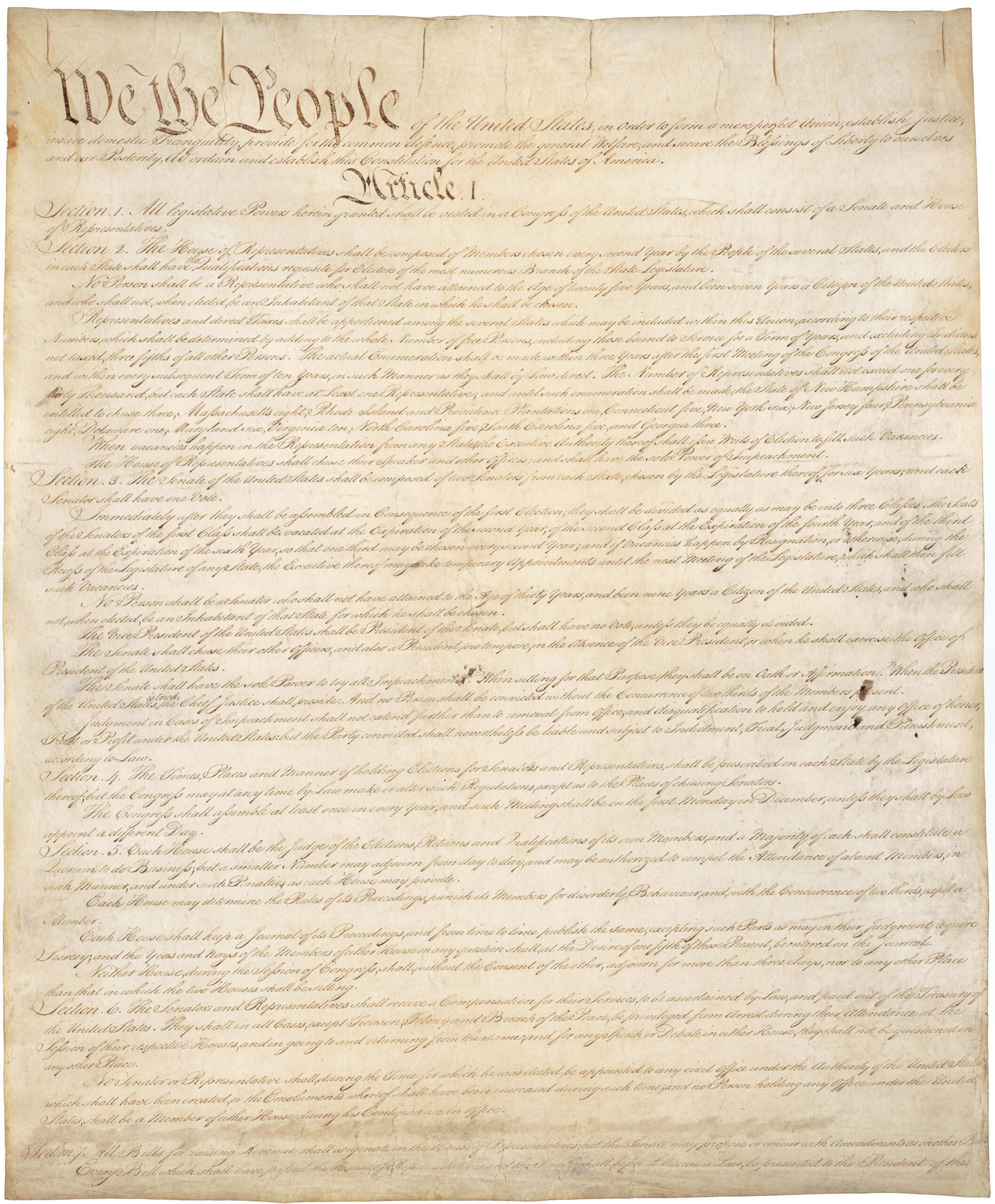
The framers met in Philadelphia in 1787 because the national government under the Articles of Confederation was too weak to handle debt, trade disputes, foreign pressure, and unrest among the states. The Constitution they wrote gave the federal government more authority to tax, regulate commerce, create courts, raise armed forces, and enforce national law. Its structure was designed around separated powers, checks and balances, federalism, and elections. In that design, the main protection for liberty was supposed to come from the way power was divided and limited.
Many Federalists argued that a bill of rights was unnecessary. The federal government, they said, only had the powers the Constitution gave it. If the Constitution did not grant Congress the power to censor newspapers, establish a national church, or conduct unreasonable searches, then listing those rights might be redundant. Some Federalists even thought a list could be dangerous. If certain rights were named, someone might later argue that unlisted rights were not protected.
That concern helps explain the Ninth Amendment, which says that naming certain rights should not be understood to deny others retained by the people. The framers and early lawmakers knew that liberty could not be reduced to a short checklist. Still, for many citizens and state ratifying conventions, structural safeguards were not enough. They wanted plain language that ordinary people could point to when government power came too close.
Anti-Federalist Pressure Changed the Debate
The Constitution had to be ratified by state conventions, and those debates quickly exposed a deep trust problem. Anti-Federalists were not all against union or national government, but they objected to giving the new federal system broad authority without stronger guarantees. They remembered colonial searches, military occupation, religious conflict, and political punishment. For them, written protections were not decorative. They were lessons drawn from experience.
Several state conventions ratified the Constitution while recommending amendments. Massachusetts, Virginia, New York, and other states proposed protections for speech, religion, trial by jury, due process, arms, and powers reserved to the states or people. These proposed amendments did not stop ratification, but they kept pressure on the Constitution’s supporters. The message was clear: the new government might begin, but it would begin under public expectation that rights would be added.
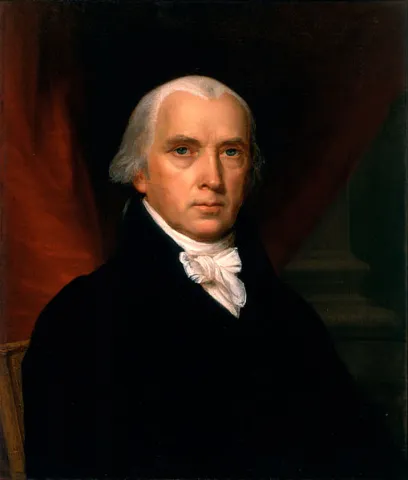
James Madison is central to this story because his position changed. He had initially doubted the need for a bill of rights, partly because he trusted the Constitution’s structure more than paper guarantees. But he also understood politics. Without action on amendments, support for the new government could weaken, and calls for a second constitutional convention might reopen debates that Federalists thought had been settled. In the First Congress, Madison took responsibility for turning scattered state recommendations into a workable set of amendments.
Madison Turned Promises Into Amendments
On June 8, 1789, Madison introduced proposed amendments in the House of Representatives. The National Archives notes that he had once been a strong opponent of a bill of rights, but he pushed Congress to take the issue seriously once the new government began. His proposals drew from state convention recommendations, earlier declarations of rights, and the practical need to reassure people who had accepted the Constitution only with reservations.
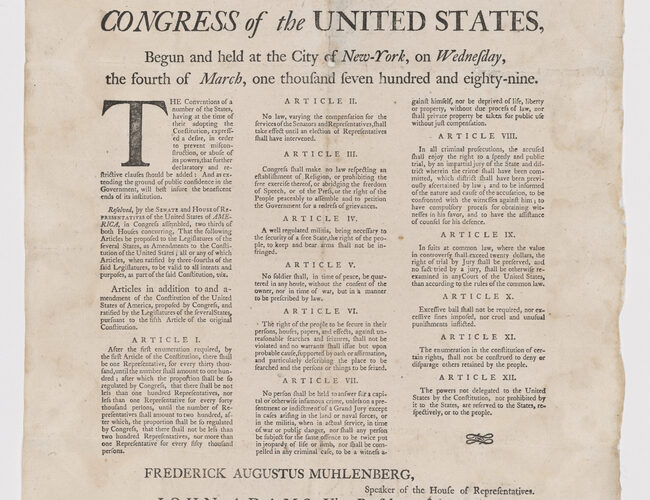
Madison originally suggested placing some protections directly inside the existing Constitution rather than simply attaching amendments at the end. Congress chose a different route. After debate and revision, it approved twelve proposed amendments on September 25, 1789, and sent them to the states. Ten were ratified by the required number of states on December 15, 1791. Those ten became what people now call the Bill of Rights.
The two unratified proposals are a useful reminder that the Bill of Rights was not born fully formed. One dealt with the size of congressional districts and was never adopted. Another concerned congressional pay and eventually became the Twenty-Seventh Amendment in 1992, more than two centuries later. The familiar first ten amendments were part of a larger political process, shaped by negotiation, editing, and state approval.
What the First Ten Amendments Actually Protected
The Bill of Rights begins with freedoms tied to public life: religion, speech, press, assembly, and petition. These protections matter because they guard the ability to worship, argue, criticize, publish, gather, and ask government for change. They do not mean public life will be free from conflict. They mean the federal government faces constitutional limits when it tries to punish or silence those forms of expression.
Other amendments grew from fears of military and police power. The Second Amendment addressed arms and militia concerns in the language of the late eighteenth century. The Third Amendment responded to memories of soldiers being quartered in private homes. The Fourth Amendment limited unreasonable searches and seizures, requiring warrants to rest on probable cause and describe what is being searched or taken. These protections reflected a generation that associated liberty with security against arbitrary force.
The Fifth through Eighth Amendments focused heavily on criminal justice and legal process. They protected against being deprived of life, liberty, or property without due process; against compelled self-incrimination; and against being tried twice for the same offense. They also protected jury trial rights, confrontation of witnesses, assistance of counsel, and limits on excessive bail, excessive fines, and cruel and unusual punishment. The Seventh Amendment preserved jury trials in many civil cases. The Ninth and Tenth Amendments then widened the frame, warning that the people retained other rights and that powers not given to the federal government remained with the states or the people.
Why the Bill of Rights Did Not Work the Same Way at First
Modern readers often assume the Bill of Rights immediately applied to every level of government. It did not. For much of early American history, the first ten amendments mainly limited the federal government. In 1833, the Supreme Court said in Barron v. Baltimore that the Bill of Rights did not apply to state governments. That meant many everyday rights disputes still depended on state constitutions, state laws, and state courts.
The Civil War and the Fourteenth Amendment changed the constitutional landscape, but not all at once. The Fourteenth Amendment declared that states could not deprive people of due process or equal protection, among other guarantees. Beginning in the twentieth century, the Supreme Court gradually used the Fourteenth Amendment to apply many Bill of Rights protections to the states. This process is called incorporation. It is one reason rights such as free speech, protection from unreasonable searches, and access to counsel now shape state and local government as well as federal law.
That long development matters because the Bill of Rights has a history after 1791. It began as a set of promises aimed at limiting the new national government. Over time, courts, lawmakers, movements, and citizens argued over what those promises meant in public schools, police stations, newspapers, courtrooms, prisons, protests, and homes. The document became more powerful partly because later generations kept pressing its words into new situations.
A Compromise That Became a Civic Vocabulary
The Bill of Rights did not end disagreement over rights. In many ways, it gave Americans a shared vocabulary for having those disagreements. People still argue about where free speech ends, how religious liberty should operate in public life, what searches are reasonable, how criminal procedure should protect the accused, and how the Second Amendment should be understood. The amendments do not answer every question automatically. They create constitutional boundaries and principles that later generations must interpret.
That is why the Bill of Rights remains more than a museum document. It shows how a young republic responded to distrust, criticism, and the fear that power would outrun liberty. The Constitution created a stronger government; the Bill of Rights answered the demand that stronger government be visibly restrained. Together, they reveal a central tension in democratic government: people need institutions capable of acting, but they also need protections when those institutions act too aggressively.
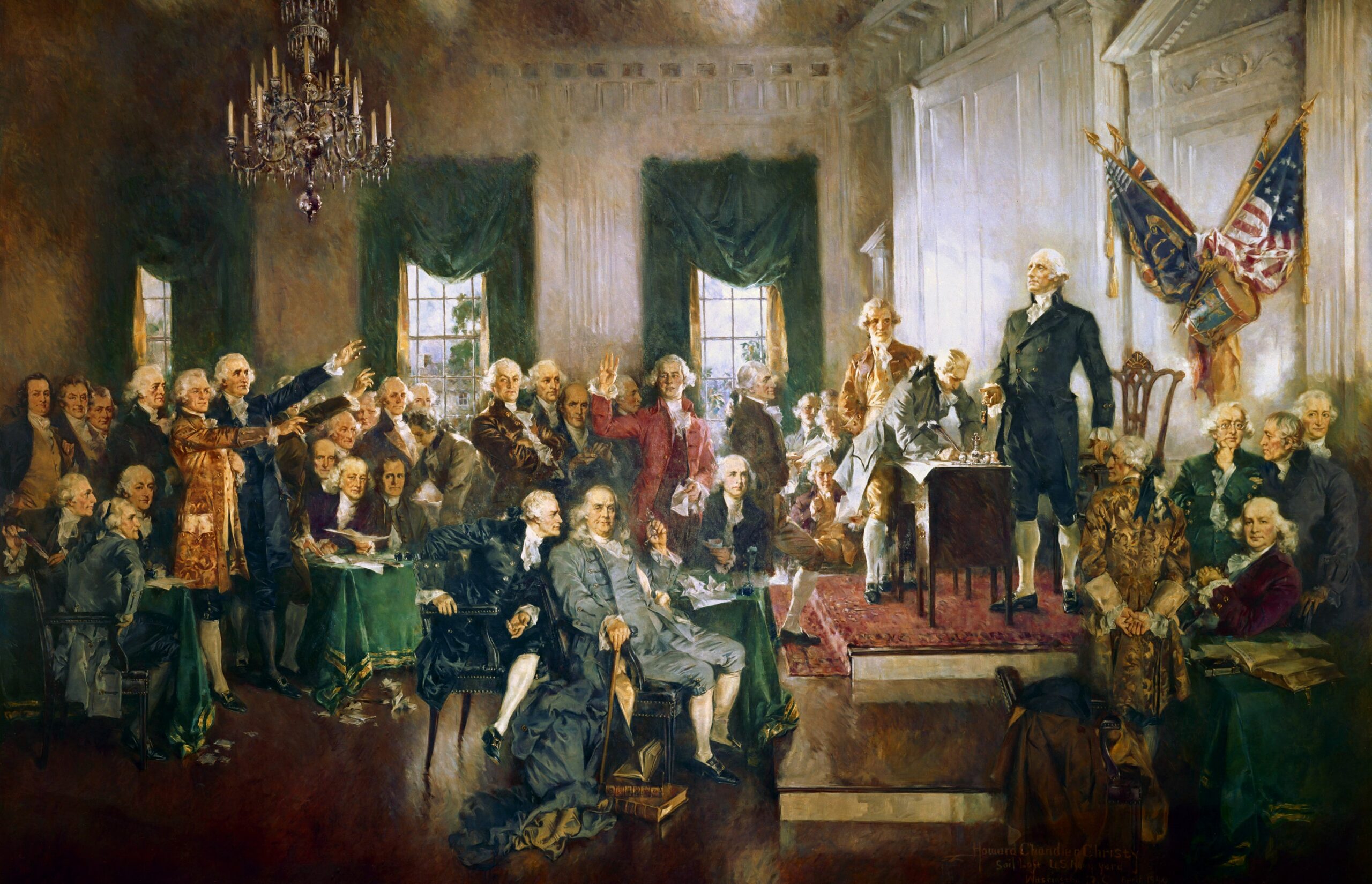
The first ten amendments were added because ratification did not erase public concern. They were the result of argument, compromise, and pressure from citizens and states that wanted clearer protections. Their history is a reminder that rights often become durable not because everyone agrees about them, but because people insist that power must be limited in words strong enough to survive future disputes.