
 Akshay Dinesh
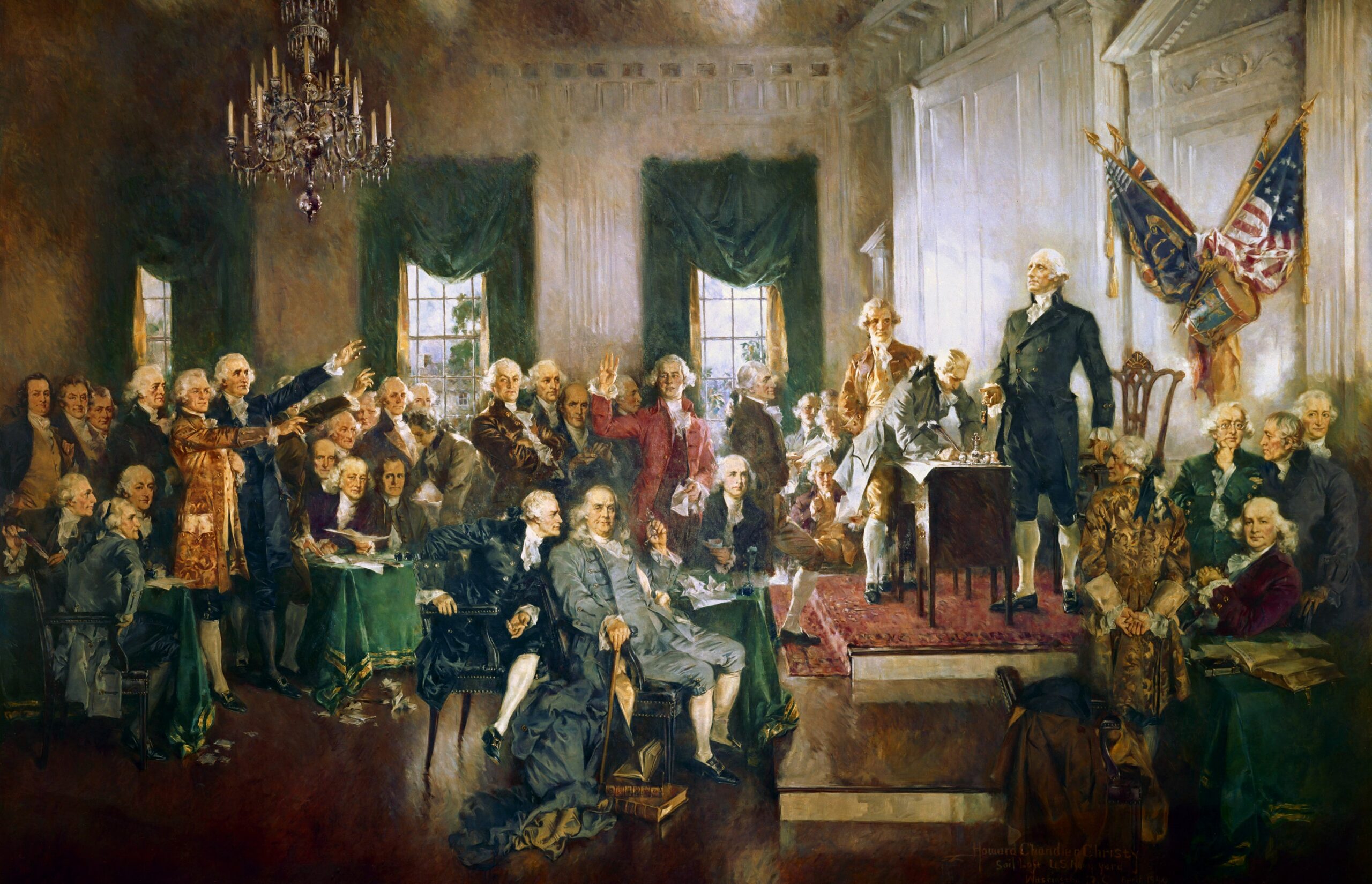
When the Constitutional Convention ended in Philadelphia in September 1787, the new Constitution was not yet the law of the land. It was a proposal, and a risky one. The Articles of Confederation had left the national government too weak to tax effectively, regulate trade, or respond confidently to crises, but many Americans feared that the proposed replacement would swing too far in the other direction. A stronger national government might solve one problem while creating another: distant rulers with too much power over states, communities, and individual rights.
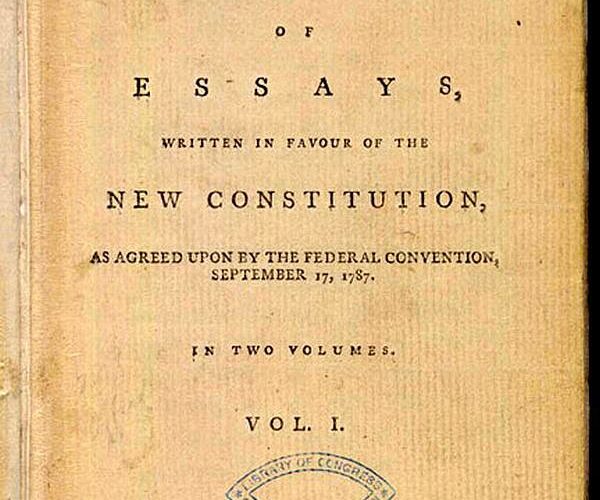
The Federalist Papers entered that tense public debate as a long, careful argument for ratification. Written by Alexander Hamilton, James Madison, and John Jay under the shared pen name Publius, the essays appeared mainly in New York newspapers between 1787 and 1788. The Government Publishing Office’s Ben’s Guide describes the collection as 85 essays written to urge New York delegates to ratify the Constitution, while the Library of Congress preserves the essays as primary documents in American history. They were political persuasion, but they were also unusually detailed civic explanation. Instead of asking readers simply to trust the framers, the writers tried to show how the new system would work.
A Public Debate Over a Proposed Government
Ratification meant formal approval by state conventions. That detail mattered because the Constitution did not take effect merely because delegates signed it in Philadelphia. The National Constitution Center’s educational materials emphasize that the Constitution, signed on September 17, 1787, still had to be accepted by the people acting through state ratifying conventions. Supporters and opponents argued in newspapers, pamphlets, speeches, taverns, churches, and assembly rooms. The debate was not a polite afterthought. It was the moment when Americans had to decide whether the Revolution’s promise could survive under a stronger frame of government.
The Anti-Federalists raised serious objections. They warned that the new government might overpower the states, favor elites, create a standing army that could threaten liberty, and leave basic freedoms exposed because the original Constitution did not include a bill of rights. Some of those concerns were rooted in recent memory. Americans had fought a revolution against what they saw as distant authority, taxation without real representation, and abuse of power. Suspicion of centralized government was not irrational; it was part of the political culture of the 1780s.
Hamilton, Madison, and Jay answered those objections by taking the proposed Constitution apart piece by piece. Their essays discussed union, defense, taxation, commerce, the structure of Congress, the presidency, the courts, and the division of power between the states and the national government. That breadth is one reason the papers still matter. They do not read like a single slogan. They read like an extended attempt to persuade skeptical citizens that the new system was not a betrayal of republican liberty, but a way to preserve it.
Why Union Was the First Argument
The early Federalist essays began with a practical fear: separate states might become rivals instead of partners. Under the Articles of Confederation, Congress had depended heavily on state cooperation. It could request money, but it could not reliably raise revenue on its own. It struggled to manage interstate disputes and foreign relations. Hamilton argued that a loose confederation could leave the United States vulnerable to conflict, commercial jealousy, and pressure from stronger foreign powers.
This was not only a theory. The 1780s had exposed weaknesses in the national system. States sometimes disagreed over trade and currency. The national government had difficulty paying debts from the Revolution. Shays’ Rebellion in Massachusetts, though local in origin, deepened fears that the Confederation lacked the energy to respond to disorder. Federalists used those examples to argue that liberty needed more than suspicion of power. It also needed a government capable of acting when common problems crossed state lines.
That argument can sound simple today, but it was delicate in 1787. The Federalists had to defend national authority without sounding like monarchists. Their solution was to frame union as protection. A stronger government could defend the country, regulate commerce, speak with one voice abroad, and prevent the states from turning against one another. In their view, disunion would not make Americans freer. It could make them weaker, poorer, and more exposed to conflict.
Madison’s Warning About Factions
One of the most famous essays, Federalist No. 10, addressed a problem that still feels recognizable: factions. Madison used the term for groups of citizens united by a shared passion or interest that might work against the rights of others or the public good. He did not imagine that factions could be eliminated. People have different property, opinions, beliefs, ambitions, and loyalties. A free society cannot remove those differences without destroying liberty itself.
Madison’s solution was not to make politics small and uniform, but to enlarge the republic. In a large republic with many regions, occupations, religions, and interests, no single faction would easily dominate the whole. Representatives would filter public views through debate and election, and the size of the union would make it harder for a narrow majority to organize oppression everywhere at once. The argument turned one Anti-Federalist criticism on its head. Critics feared that a large republic could not survive. Madison argued that its size could help protect liberty by multiplying interests.
The point was not that the system would automatically produce wisdom. Madison knew ambition and self-interest were permanent features of politics. His claim was more modest and more durable: a well-designed republic could make harmful domination harder. That idea remains one of the clearest examples of the Federalist style. The essays did not assume people would always behave nobly. They asked how institutions could reduce the damage when they did not.
Checks, Balances, and the Problem of Power
Federalist No. 51, also associated with Madison, gave one of the clearest defenses of separated powers. The Constitution divided authority among legislative, executive, and judicial branches, then gave each branch tools to resist overreach by the others. Congress could make laws, but the president could veto them. The president could nominate judges and officers, but the Senate had a role in confirmation. Courts could decide cases under the Constitution and laws. The system was not designed for perfect harmony. It expected friction.
That friction was a feature, not a flaw. The Federalists believed that written limits alone would not be enough. Officeholders needed constitutional reasons to defend their own branch’s powers. The National Constitution Center summarizes this idea through the relationship between separation of powers and checks and balances: the structure itself was meant to keep ambition from concentrating in one place. Power would be checked by power.
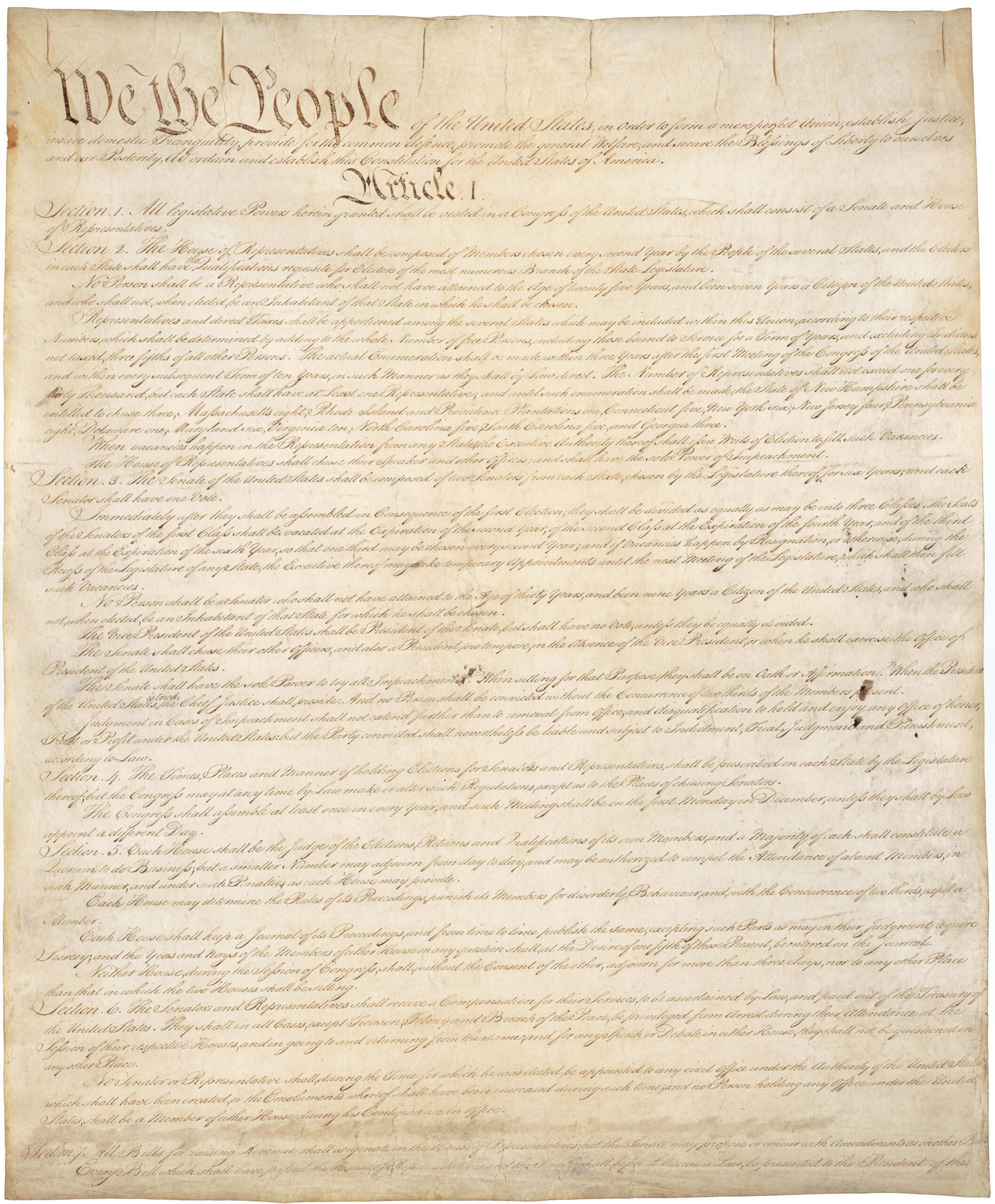
This argument answered a central Anti-Federalist fear. A stronger government did not have to mean an unlimited government. The Federalists pointed to elections, federalism, bicameralism, the veto, impeachment, judicial independence, and the separate responsibilities of each branch. The design was complicated because the problem was complicated. Americans wanted government strong enough to act, but not so strong that it swallowed self-government.
The Bill of Rights Question
The most politically powerful objection to the Constitution was the absence of a bill of rights. Anti-Federalists argued that rights should be stated clearly before the new government began operating. Many Federalists initially answered that the Constitution gave the national government only limited powers, so a separate list of rights was unnecessary and might even imply that unlisted rights were unprotected. Hamilton made that case in Federalist No. 84.
That answer did not satisfy enough critics. Ratification succeeded partly because several state conventions recommended amendments. The Massachusetts compromise became especially important: delegates ratified while calling for changes that would protect rights more explicitly. The National Constitution Center notes that the Bill of Rights was approved by the First Congress and ratified on December 15, 1791. In that sense, the Anti-Federalists lost the immediate battle over ratification but won a lasting constitutional victory.
This part of the story keeps the Federalist Papers from becoming a simple tale of winners and losers. The Constitution survived because supporters defended its structure, but also because critics forced a public reckoning over rights. The finished constitutional order grew from argument, pressure, compromise, and amendment. That is one reason the ratification debate is still useful to study. It shows that constitutional meaning was contested from the beginning.
Why the Essays Still Matter
The Federalist Papers did not single-handedly ratify the Constitution. New York’s vote was close, and by the time New York ratified on July 26, 1788, the Constitution had already reached the nine states required to take effect. The GPO’s Ben’s Guide notes that the essays did not play a decisive role in New York’s ratification, but remain important because they reveal how major supporters explained the Constitution’s design. Their influence grew over time as students, judges, lawyers, historians, and citizens turned to them for insight into the founding debate.
The essays are valuable because they make constitutional design feel like a set of choices rather than a finished monument. Should a republic be large or small? How much power should a national government have? How can liberty survive majority rule? How can institutions restrain ambitious leaders without making government too weak to function? Those questions did not disappear after 1788. They still shape arguments about courts, elections, executive power, federal authority, civil liberties, and the meaning of self-government.
Reading the Federalist Papers also teaches a habit of civic patience. The essays ask readers to slow down and examine structure: who has power, how power moves, where it is limited, and what happens when institutions collide. That kind of thinking is less dramatic than slogans, but it is more useful. The ratification debate reminds us that democracy depends not only on strong opinions, but on careful arguments about how public power should be built, checked, and trusted.
The Constitution became possible because Americans argued intensely over what kind of government could protect both union and liberty. The Federalist Papers were one side of that argument, written with urgency because the outcome was uncertain. Their lasting value is not that they ended disagreement. It is that they preserved a serious explanation of why the new government was designed as it was, and why a free people might choose a system strong enough to govern yet divided enough to be restrained.






Add comment