
 Akshay Dinesh
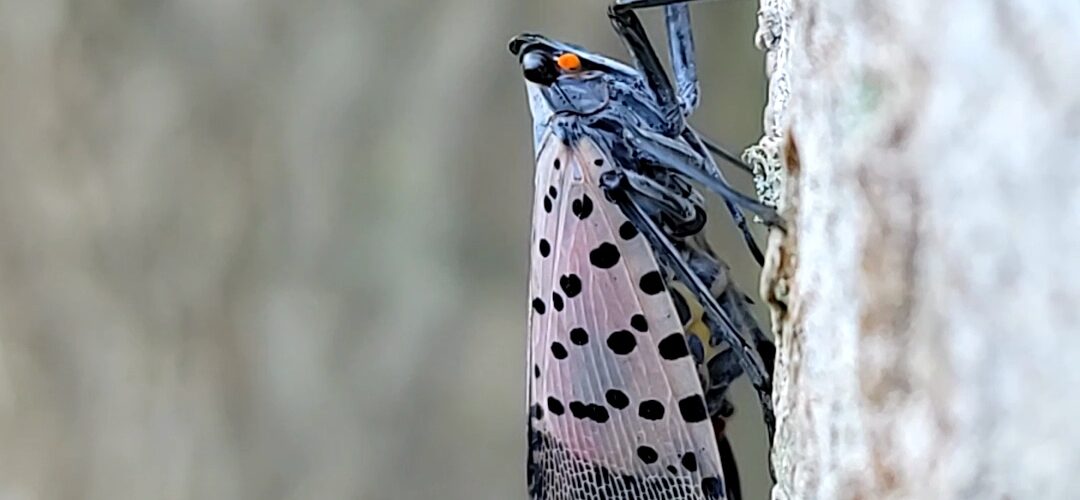
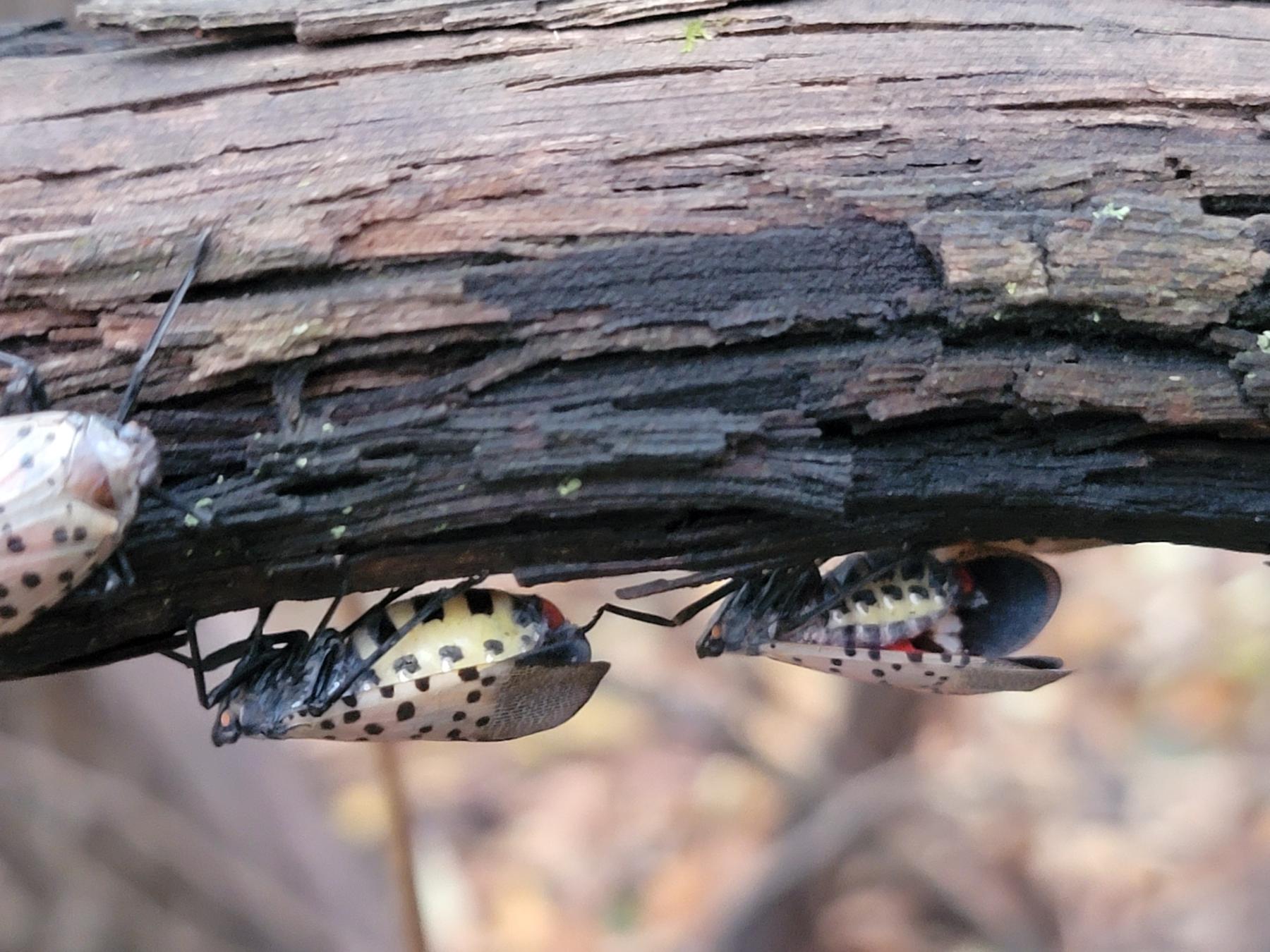
A spotted lanternfly is easy to notice once it becomes an adult: pale gray wings marked with black spots, a sudden flash of red underneath, and a habit of gathering in clusters on trees, vines, walls, and outdoor furniture. The harder part is stopping it. This insect does not spread only by flying from tree to tree. It spreads because its life cycle matches the way people move through the world.
The U.S. Department of Agriculture’s Animal and Plant Health Inspection Service describes the spotted lanternfly, Lycorma delicatula, as an invasive planthopper native to Asia. It was first detected in the United States in Pennsylvania in 2014, and USDA APHIS reported that by 2025 it had some degree of infestation in 19 states and the District of Columbia. That speed is not a mystery. The insect feeds on many plants, lays eggs on hard surfaces, and can ride unnoticed on vehicles, trailers, firewood, outdoor equipment, and patio furniture. By the time adults are obvious, the next generation may already be waiting in egg masses that look like smears of dried mud.
A pest built for accidental travel
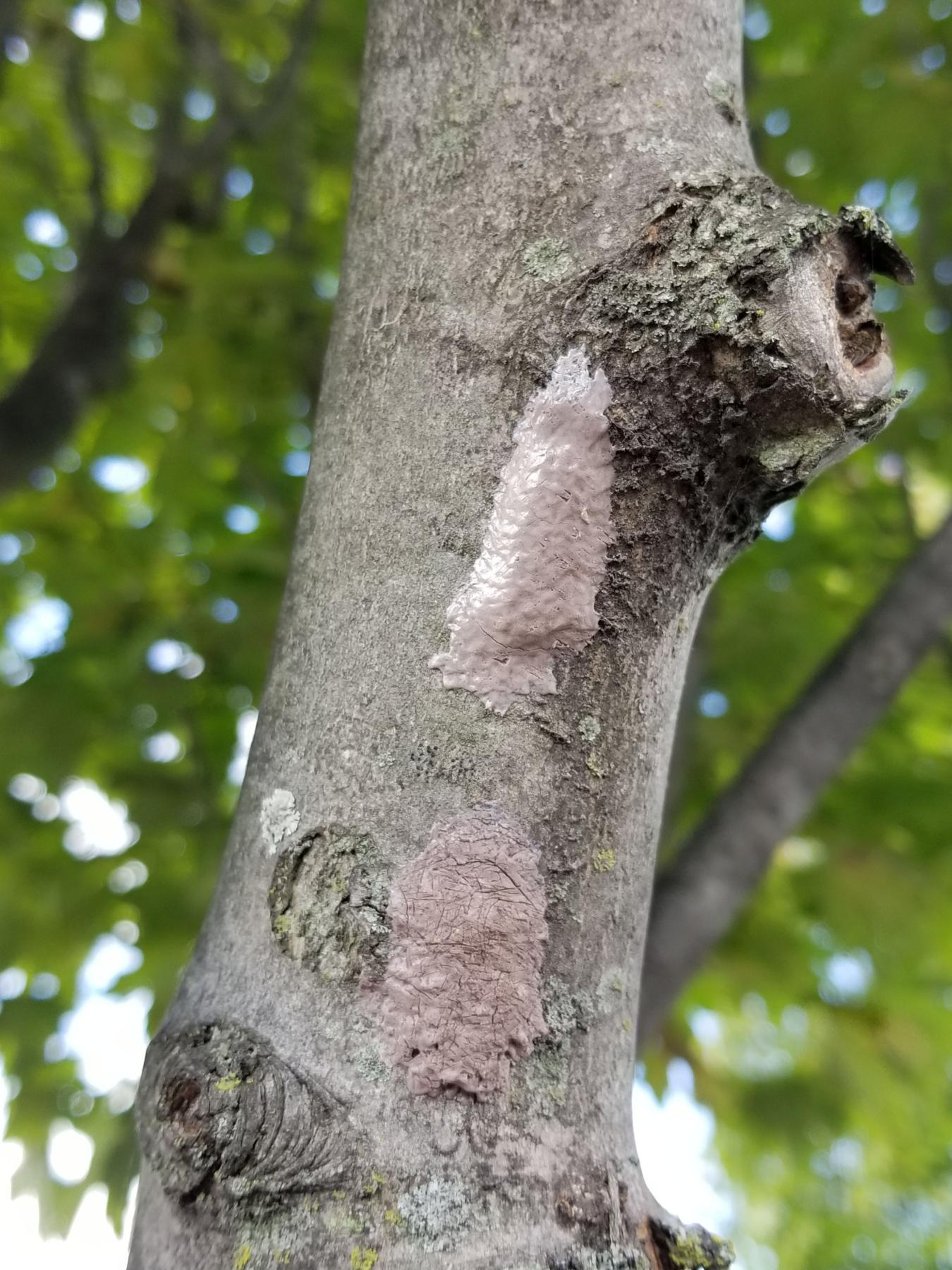
Many insects spread mostly through their own movement. Spotted lanternflies can hop, glide, and fly short distances, but their long-distance spread is closely tied to human transportation. USDA APHIS warns that egg masses can appear on grills, bikes, toys, stones, fences, vehicles, shipping containers, and other smooth surfaces. A single egg mass can hold 30 to 50 eggs, so one unnoticed patch on a trailer or pallet can matter more than a single adult insect in the open.
This is why spotted lanternfly control often sounds less like a dramatic extermination campaign and more like careful inspection. People in quarantine areas are asked to check vehicles and outdoor items before traveling. Businesses that move goods need to inspect containers, pallets, propane tanks, and equipment stored outside. These requests may seem small, but they target the insect’s real advantage: it turns ordinary objects into transportation.
The egg stage also gives the insect a seasonal shield. Adults do not survive winter in cold regions, but egg masses can. They sit quietly on bark, stone, metal, and other surfaces through the months when most people are not thinking about insects. In spring, nymphs emerge and begin feeding. That delay makes the invasion feel sudden even when the next generation has been present for months.
Its diet is broad, but one tree gives it an edge
Spotted lanternflies are sometimes described as plant pests, but that phrase can hide how flexible they are. USDA APHIS lists grapevines, hops, stone fruit trees, hardwood trees, and other plants among their hosts. New Jersey’s agriculture department notes that the insect is known to feed on more than 70 host plant species. A pest that can use many plants is harder to contain than one that depends on a single crop or tree.
Even so, tree of heaven plays a special role. This fast-growing invasive tree, Ailanthus altissima, is a favorite host for spotted lanternflies, especially later in development. Michigan State University Extension calls locating and managing tree of heaven a key part of reducing lanternfly impacts in North America. That connection matters because tree of heaven thrives in disturbed places: roadsides, rail corridors, vacant lots, field edges, and urban spaces. In other words, it often grows near the same transportation routes that help lanternflies spread.
A 2020 field study in Environmental Entomology by Nathan Derstine and colleagues found that spotted lanternflies showed a strong preference for tree of heaven, while also using a wide range of fruit, ornamental, hardwood, vine, and shrub hosts. That combination is frustrating for land managers. Removing or treating tree of heaven can reduce a major gathering point, but it does not erase every possible food source nearby.
There is another problem: tree of heaven itself is easy to underestimate. It can resemble native trees such as staghorn sumac or black walnut to an untrained observer. It grows quickly, resprouts aggressively, and can form dense patches. A lanternfly problem and a tree of heaven problem often reinforce each other, which means control work may need to target both insects and host plants at the same time.
The life cycle keeps changing what people should look for
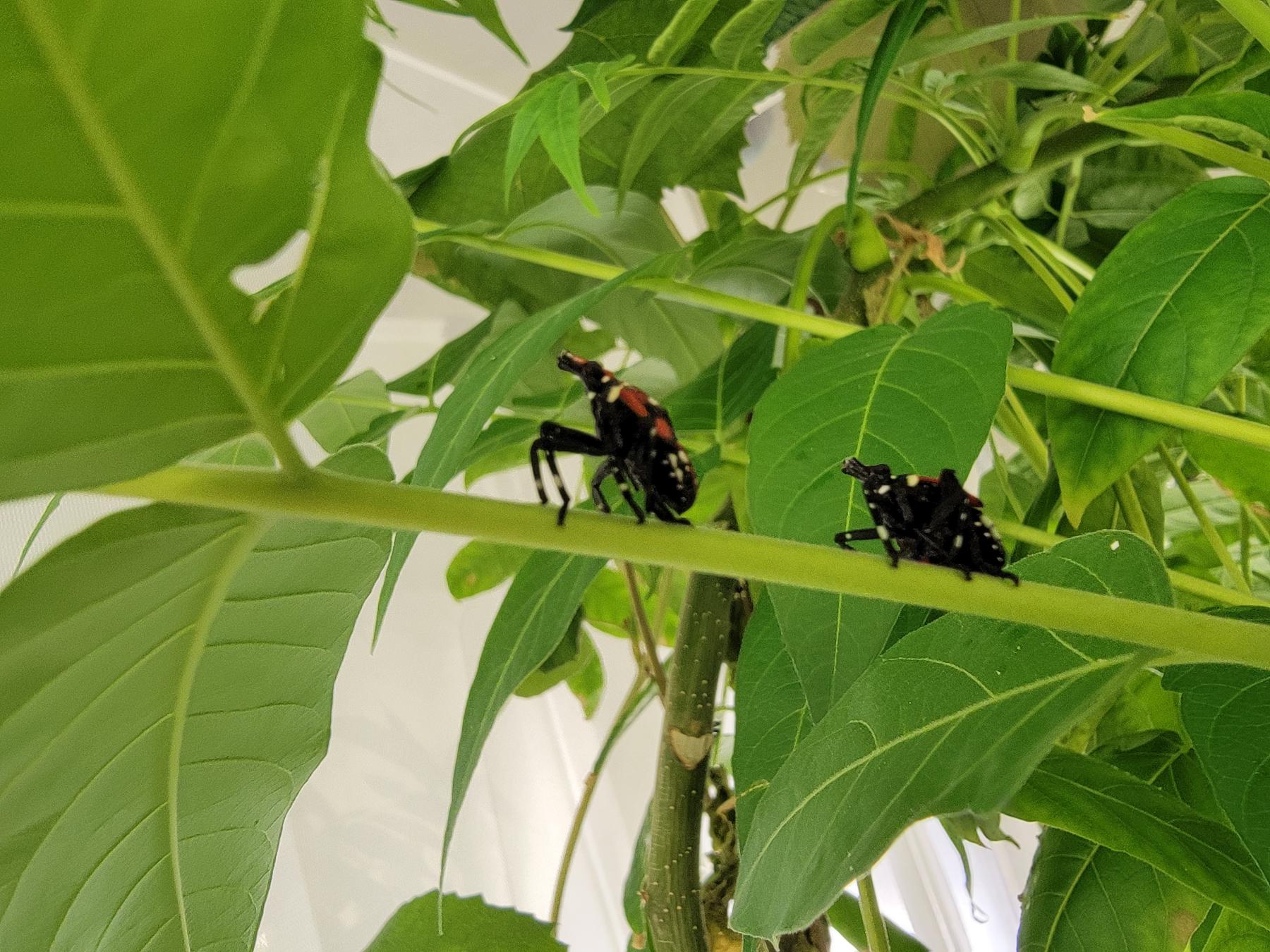
Spotted lanternflies do not look the same all year. In early stages, the nymphs are small, black, and marked with white spots. Later nymphs turn red with black and white markings. Adults appear in summer and fall with spotted wings and a yellow abdomen hidden beneath them. Egg masses appear from fall into spring and may look like gray putty when fresh or cracked mud when older.
That shifting appearance creates a real identification challenge. A person may learn to recognize the adult and still miss the nymphs. Someone who knows the red nymph stage may overlook the egg masses. A homeowner might see sticky residue and wasps before noticing the insects feeding above. Effective observation has to change with the season.
The feeding damage can also be confusing. Spotted lanternflies use piercing mouthparts to suck sap from branches, stems, trunks, and vines. They do not chew large holes in leaves like many caterpillars. Instead, they leave stress behind: dark marks on bark, sticky honeydew, and sooty mold growing on that sugary waste. On patios, cars, and sidewalks, honeydew can make surfaces tacky. In vineyards and orchards, it can create a much more serious agricultural problem.
Vineyards show why the problem is more than a backyard nuisance
For many people, spotted lanternflies first appear as an annoyance: insects clustering on trees, hopping away when approached, and leaving sticky residue behind. But the stakes are higher for crops. Grapevines are especially vulnerable because adult lanternflies often move into vineyards late in the season, when grapes are ripening and growers have fewer easy control options.
Recent reporting from Virginia vineyards has shown why growers are worried. A 2026 report in The Guardian described one Leesburg vineyard that produced about half as many grapes in 2025 as the previous year after lanternflies became a major problem there. The exact damage from one farm cannot represent every vineyard, but it makes the biology concrete: sap-feeding insects can turn into lost harvest, extra labor, and difficult choices about control close to harvest time.
Spotted lanternflies also illustrate a larger lesson about invasive species. Their success does not come from one extraordinary trait. It comes from several ordinary advantages lined up together: few familiar enemies in the introduced range, a useful host plant, a broad diet, egg masses that survive winter, and people accidentally moving them. Each advantage may be manageable by itself. Together, they make the pest stubborn.
This is why public reporting matters. USDA APHIS and state agriculture agencies emphasize early detection because a small, newly discovered population is easier to respond to than a well-established one. In places where lanternflies are already common, residents may be asked to destroy adults, scrape egg masses, and check items before leaving a quarantine area. In places where they are not yet established, a photo and report to the state agriculture department can help officials act before the insect spreads widely.
Control works best when it matches the season
There is no single perfect moment to manage spotted lanternflies. The target changes through the year. In winter and early spring, egg masses are the focus. Scraping and destroying egg masses can reduce the number of nymphs that hatch later, especially when people check high-risk surfaces such as vehicles, firewood, stones, outdoor furniture, and tree trunks.
In late spring and summer, attention shifts to nymphs. Penn State Extension has described mechanical options such as circle traps, which can capture lanternflies moving up tree trunks. These traps are more selective than old-style sticky bands, which can accidentally catch birds, squirrels, and beneficial insects if not used carefully. As adults appear later in the season, management often becomes more difficult because they are larger, mobile, and actively moving among host plants.
Tree of heaven management can help, but it requires care. Cutting a tree of heaven without a plan may trigger vigorous resprouting. Extension programs often recommend identifying the tree accurately and using locally appropriate management guidance. For many homeowners, the safest first step is not to improvise with chemicals, but to contact a local cooperative extension office or state agriculture agency for advice specific to the area.
What this invasion teaches about ecology
The spotted lanternfly is not just a pest-control story. It is a lesson in ecology, transportation, and timing. A species that is manageable in one part of the world can become disruptive somewhere else when it arrives without the same predators, parasites, diseases, or ecological limits. A tree introduced long ago for shade can later become a stepping-stone for a different invader. A tiny egg mass on a trailer can connect one neighborhood’s problem to another region’s future.
That does not mean the situation is hopeless. It means control depends on many small actions matching the insect’s actual biology. Look for egg masses when adults are gone. Learn the nymph stages before summer. Recognize tree of heaven. Check outdoor items before moving them from infested areas. Report new sightings where the insect has not yet become established. None of these steps feels dramatic, but each one interrupts a part of the life cycle that helps the lanternfly spread.
Spotted lanternflies are hard to stop because they do not rely on a single path. They feed broadly, gather on a helpful host tree, hide the next generation in plain sight, and travel with people who never meant to carry them. Understanding that pattern turns a strange spotted insect into something clearer: an example of how biology and human movement can combine, and why careful observation is often the first line of defense.






Add comment