 Akshay Dinesh
A calm-looking beach can hide one of the ocean’s most common hazards. Rip currents are narrow, fast-moving channels of water that flow away from shore through the surf zone. They do not pull people underwater, but they can carry swimmers away from the beach faster than many people can swim back. That mismatch between how harmless the water may look and how forcefully it can move is what makes rip currents so dangerous.
The National Weather Service treats rip currents as a major beach hazard because they can appear wherever waves break, from ocean coasts to parts of the Great Lakes. The United States Lifesaving Association has long identified rip currents as a leading cause of lifeguard rescues at surf beaches, and the Centers for Disease Control and Prevention reports thousands of unintentional drowning deaths in the United States each year. Understanding rip currents is not about becoming afraid of the ocean. It is about learning to read a moving system before stepping into it.
Why rip currents form
Every breaking wave pushes water toward shore. On a flat diagram, that can look simple: water rolls in, spreads up the beach, and flows back. Real beaches are messier. Sandbars, channels, piers, jetties, reefs, and uneven slopes shape where water collects and where it can return seaward. When a large amount of water piles up near the beach and finds a narrow path back through the breaking waves, a rip current can form.
The key idea is pressure. Waves keep adding water to the shallow area near shore. If the water cannot spread evenly along the beach, it escapes through a lower or deeper gap. That returning flow becomes concentrated, like water draining through a notch instead of across a whole floor. The current may be only a small part of the beach, but inside that channel the water can move with surprising speed.
Rip currents are often strongest when waves arrive in repeated sets and break unevenly along the shore. A sandbar may cause waves to break on both sides while a deeper gap in the middle stays calmer. To a swimmer, that calm gap can look inviting because it has fewer crashing waves. In reality, that smoother strip may be the place where water is flowing out.
What a rip current can look like
There is no perfect visual test for a rip current. Some are obvious, and some are difficult to see even for experienced beachgoers. Still, several clues can help. A rip current may appear as a darker or murkier strip of water moving away from shore, a gap in the line of breaking waves, a channel of foam or seaweed drifting seaward, or a patch of choppier water compared with the waves around it.
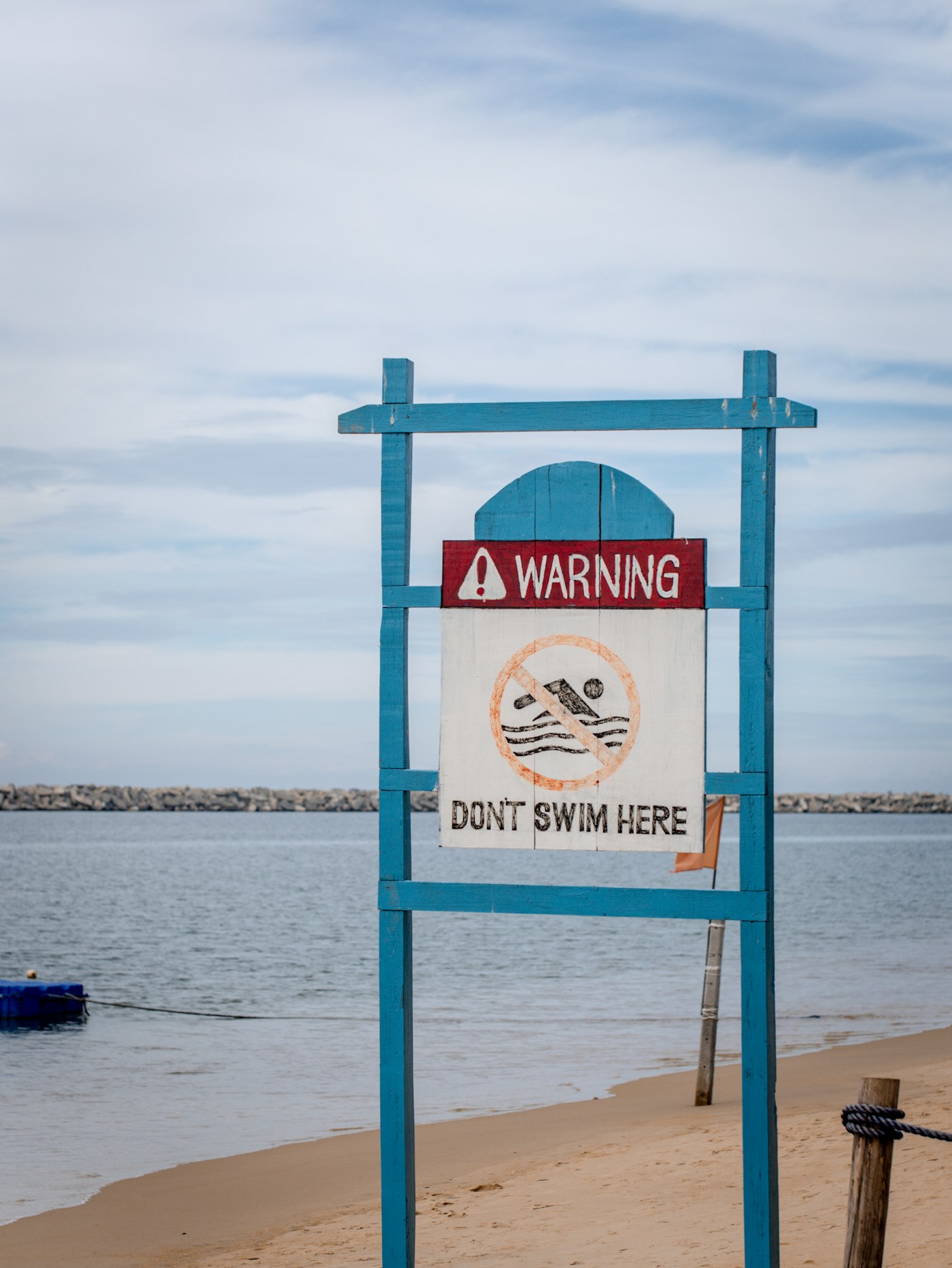
The tricky part is that the most dangerous-looking water is not always the most dangerous place to swim. Many people instinctively avoid foamy, breaking waves and move toward smoother water. But breaking waves can signal shallower sandbars, while the smoother gap may be the rip channel. That is why posted warnings, beach flags, and lifeguard advice matter more than guesswork from the shoreline.
Rip currents also change. A beach that seemed manageable in the morning can become riskier after the tide changes, the wind shifts, or a swell arrives from a distant storm. The National Weather Service issues surf zone forecasts and rip current outlooks for many coastal areas, often using low, moderate, and high risk levels. A low risk does not mean no risk, especially near piers, jetties, reefs, and groins where water flow is naturally funneled.
Why fighting the current is the dangerous mistake
The frightening moment in a rip current is usually not the current itself. It is the swimmer’s reaction to it. A person feels the shore moving farther away and tries to swim straight back against the flow. That can quickly lead to exhaustion. The current is moving away from shore, so swimming directly into it is like trying to walk the wrong way on a moving walkway.
NOAA and the National Weather Service advise swimmers caught in a rip current to stay calm, conserve energy, and avoid fighting the current directly. If possible, the safer move is to swim parallel to the shoreline until out of the narrow current, then angle back toward shore. If swimming out is not possible, floating or treading water helps conserve energy while signaling for help. The central principle is simple: get out of the channel before trying to return.
This advice sounds easy on land and feels much harder in the water, especially for a tired or surprised swimmer. That is why prevention matters so much. Choosing a lifeguarded beach, checking the local forecast, watching beach flags, and asking a lifeguard about conditions are not minor precautions. They are ways of avoiding a situation where good decisions have to be made under panic.
How beach shape and weather raise the risk
Rip currents are not random, even when they appear suddenly. The shape of the beach controls much of the risk. Sandbars can create deeper channels between shallow areas. Jetties and piers can interrupt the natural movement of water along the shore. Reefs and rocky structures can focus waves and return flow into narrow paths. Anywhere water is forced to move through a smaller opening, currents can strengthen.
Weather and wave conditions add another layer. A storm does not have to be close to make a beach risky. Swells can travel long distances across the ocean and arrive under sunny skies. That is one reason beach hazards can surprise people: the sky may look friendly while the surf zone is being shaped by energy from far away. Strong onshore winds, changing tides, and larger wave sets can all increase the amount of water piling up near shore.

Rip currents also vary by region. Atlantic beaches, Gulf Coast beaches, Pacific beaches, and Great Lakes shorelines each have their own patterns of waves, wind, sand, and warning systems. Local knowledge matters. A beach that is safe for wading one day may be unsafe for swimming the next, and a familiar shoreline can still produce an unfamiliar current after storms reshape the sand.
How to make safer choices at the beach
The safest beach decision happens before entering the water. Start by checking the local beach forecast, not just the air temperature. A hot, sunny day can still bring a high rip current risk. Look for posted signs and flag systems, and treat them as information about real conditions rather than background decoration. If lifeguards are present, ask where it is safest to swim and whether any areas should be avoided.
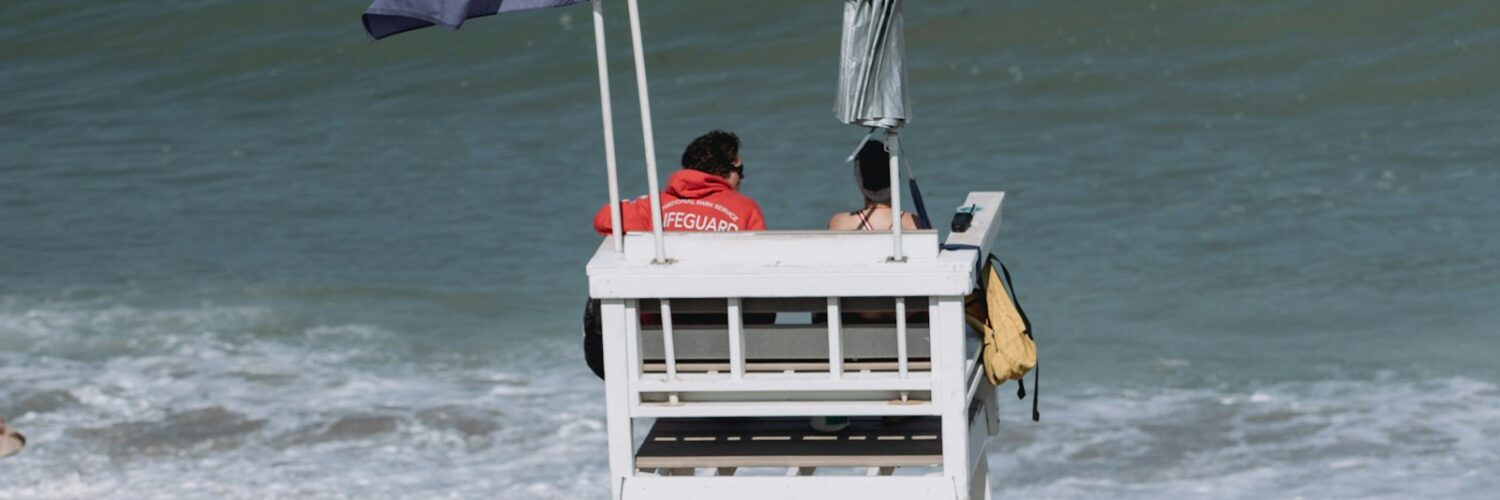
Swimming near a lifeguard is one of the most effective choices a beachgoer can make. Lifeguards watch patterns that casual swimmers often miss: where waves are breaking, where people are drifting, where sandbars have shifted, and where rescues have already happened that day. They also know local hazards that may not be obvious from a quick glance, such as sudden drop-offs or channels near structures.
- Check the forecast: Look for surf zone and rip current outlooks before leaving for the beach.
- Read the flags: Beach flag systems vary by location, but warnings should always be taken seriously.
- Choose lifeguarded areas: Swim where trained rescuers are watching the water.
- Avoid structures: Piers, jetties, groins, and reefs can create stronger currents nearby.
- Do not swim alone: Even strong swimmers can be caught off guard by moving water.
Parents and adults supervising children have an extra challenge because shallow water can still move with force. Children may be knocked down by waves or drift sideways without noticing. Staying within arm’s reach of young swimmers, keeping attention on the water, and avoiding rough surf are practical safeguards. A flotation toy is not a safety plan; it can drift, flip, or give a false sense of security.
Reading the ocean with respect
Rip currents show why the ocean should be treated as a moving environment, not a swimming pool with waves added. The water is constantly responding to wind, tide, seafloor shape, and incoming swell. Once that becomes visible, beach safety feels less like a list of rules and more like a way of paying attention.
The most useful habit is humility. If the water looks confusing, if flags warn of danger, if waves are knocking people down, or if no lifeguard is present, staying out of the surf is a reasonable choice. The beach can still be enjoyable from the sand. When conditions are safer, the same knowledge helps swimmers choose better places to enter, recognize when the water is changing, and respond more calmly if they feel themselves drifting.
A rip current is not a mysterious force. It is water finding a path back to the sea. That simple fact makes it easier to understand, easier to respect, and easier to avoid.