Akshay Dinesh
Covering a wall with wedge-shaped foam can make a room sound less hollow. Voices become easier to understand, recordings pick up fewer lingering reflections, and handclaps lose some of their metallic ring. Yet a television, drum kit, or conversation may still be clearly audible on the other side of the wall. That is not a failure of the foam. It is the result of asking a sound-absorbing material to perform a different job: soundproofing.
The distinction matters in bedrooms, classrooms, offices, home studios, and apartment buildings. Sound absorption manages reflections within a room, while soundproofing reduces the sound that travels from one space to another. Some materials contribute to both goals, but no single panel or product can replace an acoustic design that addresses the actual path the sound is taking.
What acoustic foam changes inside a room
Sound begins when a vibrating source creates changes in air pressure. Those pressure waves spread until they reach a surface. A hard wall reflects much of the incoming energy back into the room, so listeners hear the direct sound followed by many slightly delayed reflections. When reflections continue after the source has stopped, the persistence is called reverberation.
Open-cell acoustic foam is porous. Air moves through its interconnected passages, where friction and repeated changes in direction convert a small part of the sound energy into heat. The temperature change is far too slight to notice, but less energy returns to the room as reflected sound. Fiberglass and mineral-wool panels work on the same broad principle, although their density, thickness, mounting, and airflow resistance can make them effective over different frequency ranges.
This is useful wherever reflected sound is the problem. Absorption can improve speech clarity in a classroom, reduce the boxy character of a voice recording, and shorten the ring of a rehearsal room. The National Institute for Occupational Safety and Health also recommends absorptive wall, ceiling, and baffle treatments as one way to lower reverberant workplace noise. Thin foam is most effective at higher frequencies; thicker porous material, especially when mounted with an air gap behind it, can absorb farther down the frequency range.

Soundproofing deals with a path between spaces
To reach the next room, sound must make part of the building vibrate or find an opening through it. Airborne sound can strike drywall, set the wall assembly in motion, and radiate from the far side. Impact sound takes another route: footsteps, a closing door, or a washing machine can send vibration directly into the floor and framing. Pipes, ducts, joists, and other rigid connections can carry that vibration beyond the original room.
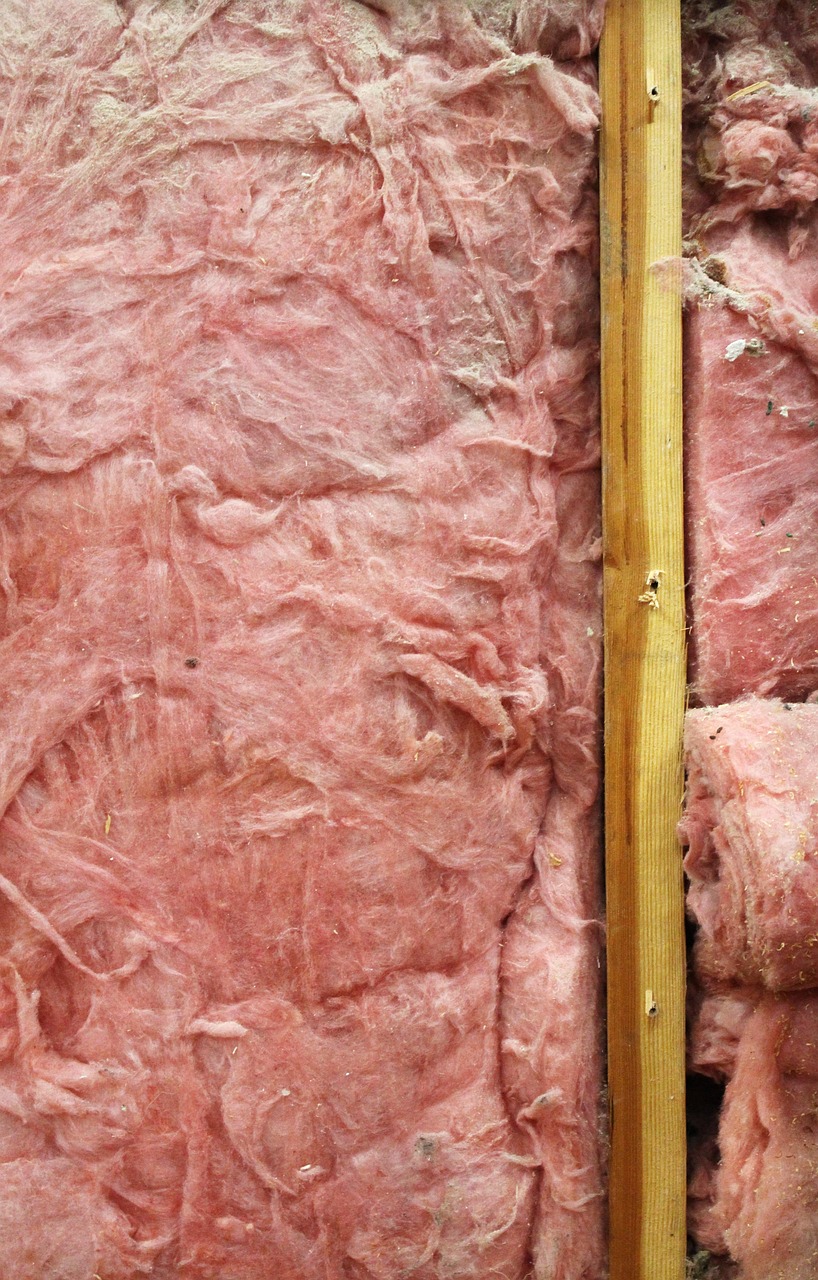
Effective sound isolation therefore relies on a combination of strategies. Mass makes a barrier harder to move. Airtightness closes the small gaps through which airborne sound leaks. Decoupling reduces rigid connections between the two faces of a wall or ceiling. Damping removes energy from a vibrating assembly. Porous insulation inside a cavity absorbs some of the sound bouncing between the wall faces, but it works as one part of the assembly rather than as a complete barrier by itself.
Consider a typical stud wall. Adding cavity insulation may improve its performance, but a more capable design might also use multiple layers of gypsum board, staggered or separate studs, resilient channels, and carefully sealed edges. Each detail changes how readily vibration can cross the structure. Workmanship matters too: a laboratory-tested wall can perform much worse in a building if joints are unsealed or electrical boxes are placed back-to-back.
Why a wall of foam still leaks sound
Acoustic foam is light and usually only a few centimeters thick. That makes it easy to mount, but it also means the material offers little resistance to the motion of the wall behind it. A low-frequency bass note has a long wavelength and can set the wall, floor, and ceiling vibrating while passing through thin foam with little reduction. Even at frequencies the foam absorbs well, the energy that does not reflect back into the room may still enter the wall assembly.
The common phrase “egg cartons soundproof a room” fails for the same reason. Their irregular shape may scatter a little high-frequency sound, but the cardboard has too little mass and depth to be a useful transmission barrier. It is also a poor substitute for tested acoustic treatment. Materials placed on walls should meet appropriate fire and building requirements, especially in rooms with electrical equipment or many occupants.
Foam can still improve a recording because microphones capture fewer reflections. That improvement is real, but it is an improvement in room acoustics, not privacy. A neighbor hearing nearly the same music after the foam goes up is evidence that the main transmission paths remain untouched.
NRC and STC measure different acoustic jobs
Product labels can add to the confusion because they use several one-number ratings. The Noise Reduction Coefficient, or NRC, describes sound absorption. It is calculated from absorption measurements at 250, 500, 1,000, and 2,000 hertz, then rounded to a single value. A high NRC suggests that a material absorbs much of the sound incident on it across those test bands. It does not say that the material will keep sound from entering the next room.
The Sound Transmission Class, or STC, rates how well a wall, floor, door, or other assembly reduces airborne sound across a range of frequencies. Laboratory transmission-loss testing and the classification method are defined in standards such as ASTM E90 and ASTM E413. In general, a higher STC indicates better isolation for speech-like sounds. It is not a complete description of performance, however, and it gives limited weight to very low frequencies such as deep bass.
These ratings should be read as summaries, not guarantees. NRC compresses frequency-dependent absorption into one average, while STC compresses the transmission behavior of an entire assembly into one class. Real buildings add flanking paths, installation errors, room dimensions, and background noise. For a music room, mechanical equipment space, or any project where low frequencies dominate, the underlying frequency data are more informative than the headline number.
Find the problem before choosing the material
A simple listening test can separate several common complaints. If speech is difficult to understand within the room and a handclap produces a long ring, reflected sound is probably part of the problem. Absorptive ceiling panels, wall panels, thick curtains, or other tested porous treatments may help. Their placement and total surface area matter more than arranging a few small foam squares for decoration.
If the problem is sound crossing a boundary, inspect the boundary as a system. Sound can pass under a door, around a loose frame, through a return-air grille, above a suspended ceiling, or along a shared duct. The NIOSH noise-control guidance makes the same practical distinction: absorbers reduce reflections, while barriers, enclosures, vibration isolation, and tight seals address other paths. An open or poorly sealed area can dominate the performance of a much heavier wall.

Start with the least complicated causes. Lower the noise at its source, move loud equipment away from shared surfaces, tighten rattling parts, and use vibration-isolating mounts where appropriate. Weatherstripping and a well-fitted door sweep may improve an obvious door leak, provided ventilation and safe egress are preserved. Larger construction changes should be planned with building, fire, moisture, and ventilation requirements in mind; sealing a room without considering fresh air can create a different hazard.
There is rarely a universal “best soundproofing material” because the weak path changes from one room to another. A lightweight interior door may undermine a heavy wall. A concrete wall may perform well while a shared ceiling plenum carries speech around it. Bass from a subwoofer may travel mainly through the structure, while voices leak through gaps. The useful question is not which product has the most dramatic texture. It is which path is carrying the unwanted sound, and which combination of mass, sealing, isolation, damping, and absorption addresses that path.
Acoustic foam deserves a place in rooms that need controlled reflections. It can make speech clearer and recordings cleaner, and it can be part of a thoughtfully treated studio. Quiet between rooms, however, comes from the less visible work of controlling transmission. Once absorption and soundproofing are treated as separate goals, material choices become easier to evaluate and expensive mistakes become easier to avoid.