
 Akshay Dinesh
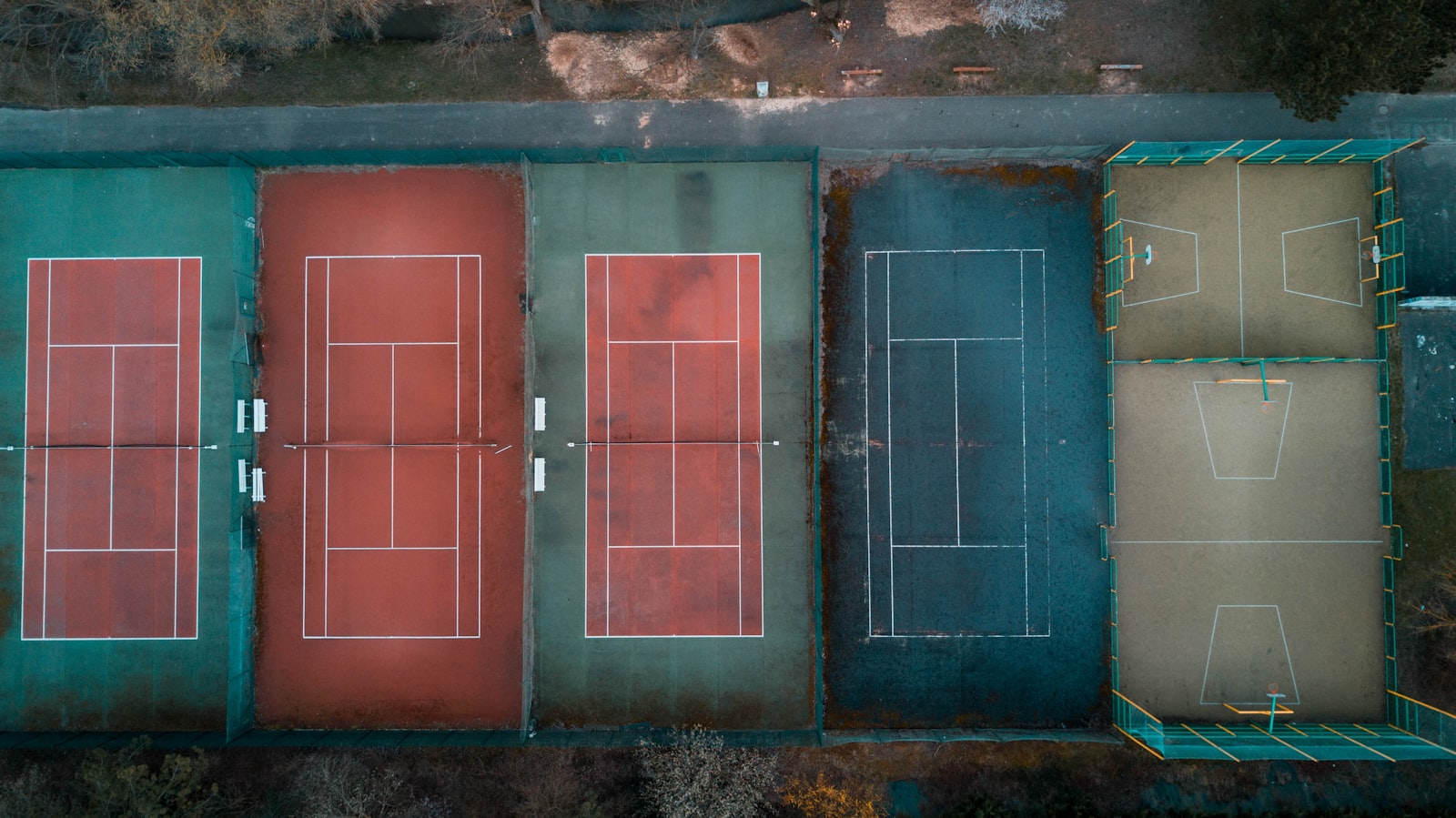
A tennis ball does not meet every court in the same way. On grass, it often skids forward and stays low. On clay, it can slow down, climb higher, and give the defender more time. On a hard court, it usually lands somewhere between those extremes, though the exact feel depends on the surface coating, age, weather, and maintenance.
That difference is one reason the same player can look calm on one surface and rushed on another. The court is not just scenery under the match. It is part of the physics of every serve, slice, topspin forehand, and awkward half-volley near the baseline. When tennis turns from clay season to grass season and then back to hard courts, the game changes because the ball’s collision with the ground changes.
The International Tennis Federation measures court pace by looking at the ball-surface interaction, especially friction and vertical restitution. Friction mainly affects how much horizontal speed the ball loses after impact. Vertical restitution affects how strongly the ball rebounds upward and how long it takes before the next bounce. Those two ideas explain much of what players and viewers notice: low skids, heavy kicks, long rallies, short points, and the feeling that time either opens up or disappears.
The Bounce Is a Collision, Not a Simple Rebound
It is tempting to imagine a tennis ball bouncing like a rubber ball on a sidewalk: down, up, done. A real tennis bounce is messier. The ball compresses, the felt grabs or slides, the surface may deform slightly, and the ball leaves with a different mix of forward speed, upward speed, and spin. The whole event is over in a blink, but it decides whether a shot rises comfortably into the hitting zone or stays down near the player’s shoes.
Two pieces of motion matter most. The first is the ball’s horizontal motion, the forward part that carries it across the court. The second is the vertical motion, the down-and-up part that determines bounce height. A court can reduce one more than the other. That is why a surface can feel “fast” even if the bounce is low, and “slow” even if the ball jumps high after landing.
Physicist Rod Cross, whose work on tennis court speed has been widely cited in sports engineering, measured how ball speed changes after impact on different surfaces. His research emphasizes that court speed is not one property. It depends on the coefficient of friction between ball and court, the coefficient of restitution that describes the upward rebound, the incoming angle, and the spin on the ball. In ordinary language, the court decides how much the ball grips, how much energy it gives back upward, and how much the bounce redirects the shot.
Why Grass Plays Fast and Low
Grass courts are famous for quick points because they tend to produce a low, skidding bounce. The ball keeps more of its forward speed because the surface has relatively low friction. Instead of gripping the felt strongly and turning forward motion into upward kick, the court lets the ball slide through the bounce. The player on the other side has less time and often has to hit from a lower contact point.
The low bounce is not caused by the blades of grass alone. Wimbledon’s own grass-court guidance notes that bounce is strongly tied to the soil beneath the grass, along with surface hardness, moisture, and consistency. The courts are rolled, monitored, and kept firm so they can survive high-level play. A dry, compact surface behaves differently from damp, softer ground, which is why grass can change during a tournament and even from morning to afternoon.
At Wimbledon, the grass is maintained at a very short height, and the courts have used 100 percent perennial ryegrass since 2001 to improve durability. That detail matters because a championship grass court is not simply a lawn. It is a carefully prepared sports surface built to stay even, firm, and playable under intense foot traffic. As the tournament progresses, worn baseline areas and changing moisture can alter how confidently the ball bounces and how safely players move.
For strategy, low bounce rewards compact swings, sharp returning, slices, and aggressive court position. A slice backhand that already carries backspin can stay especially low after landing on grass. A big serve may not bounce as high as it would elsewhere, but it can rush through the court so quickly that the returner has little time to set up.
Why Clay Slows the Ball and Helps It Climb
Clay courts change the collision in the opposite direction. The surface is rougher and more granular, so the ball grips more. That higher friction steals more horizontal speed. A shot that might skid through on grass can lose pace on clay, giving the opponent extra time to recover, slide, and prepare the next swing.
That same grip can help the ball jump. When a topspin shot lands on clay, friction between the felt and surface helps convert some of the ball’s rotation into a steeper upward rebound. The result is the familiar clay-court pattern: heavy topspin, higher contact points, longer rallies, and points that reward patience as much as first-strike power. Players who can defend, slide, and build points often gain more from clay than players who rely mainly on low, flat shots.
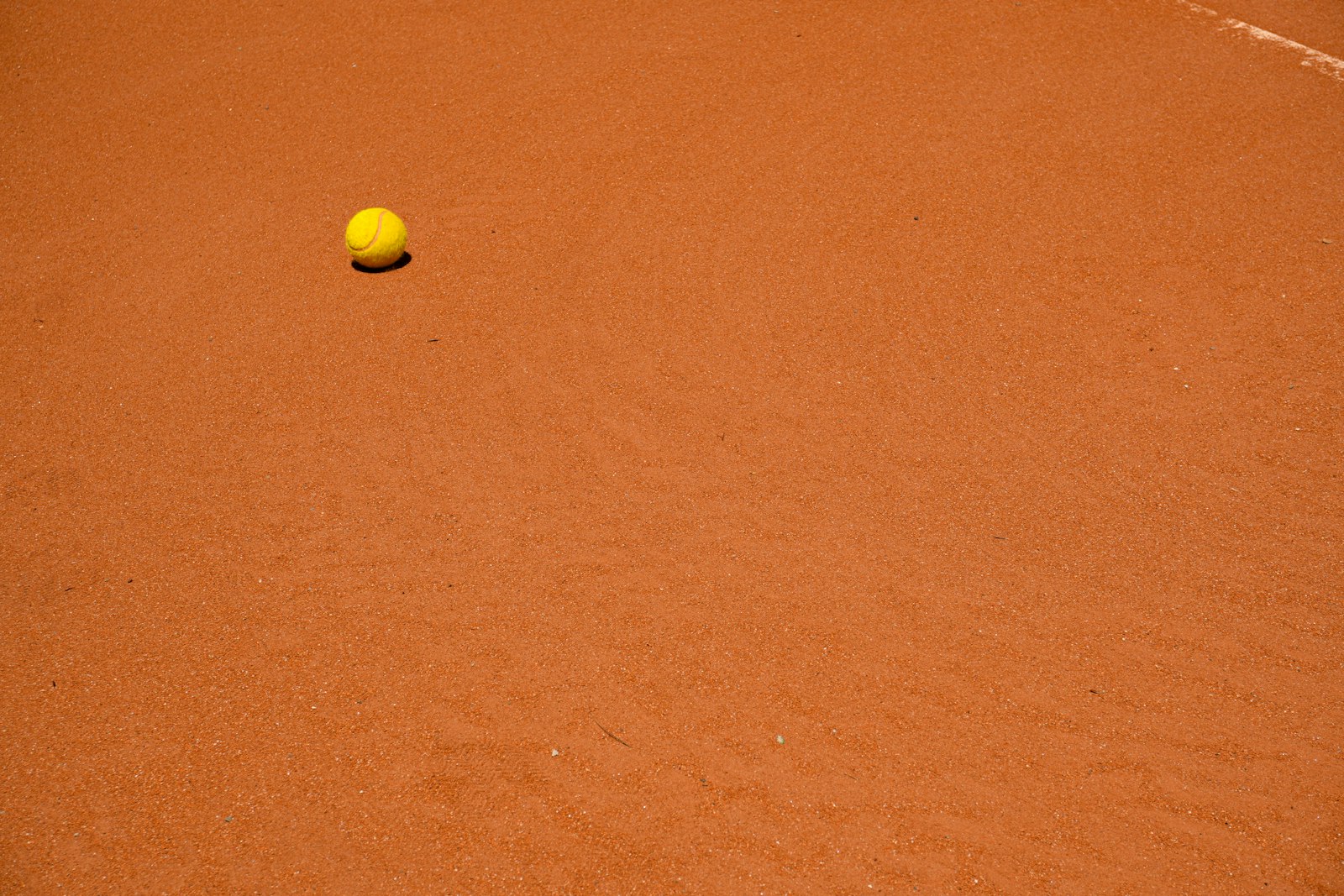
Clay also interacts with movement. Because players can slide into shots, they often defend corners differently than they would on grass or hard courts. The surface slows the ball, but it also asks for different footwork. The match becomes a conversation between ball bounce and body control: the ball gives a little more time, but the player must know how to use the surface without losing balance.
Clay’s slower reputation does not mean the ball is weak after the bounce. Cross’s measurements show that the vertical rebound on slower courts can be strong, with oblique bounces sometimes returning a surprisingly large share of upward speed. That is why clay can feel slow through the court but still demanding above shoulder height. The ball may arrive later, yet it may arrive higher and heavier.
Why Hard Courts Sit Between the Extremes
Hard courts are often described as medium-paced, but that label hides a lot of variation. A hard court is usually built from an asphalt or concrete base with acrylic layers above it. The top coating, sand content, age, maintenance, and weather all affect how rough, grippy, and lively the court feels. Two hard courts can look similar and still play differently.
Compared with grass, hard courts usually give a truer and more predictable bounce. Compared with clay, they usually do not slow the ball as much or lift topspin quite as dramatically. That middle position is why hard courts can support many styles: big serving, baseline defense, heavy topspin, flat attacking, and quick counterpunching. They do not push the sport as strongly toward one pattern as grass or clay can.
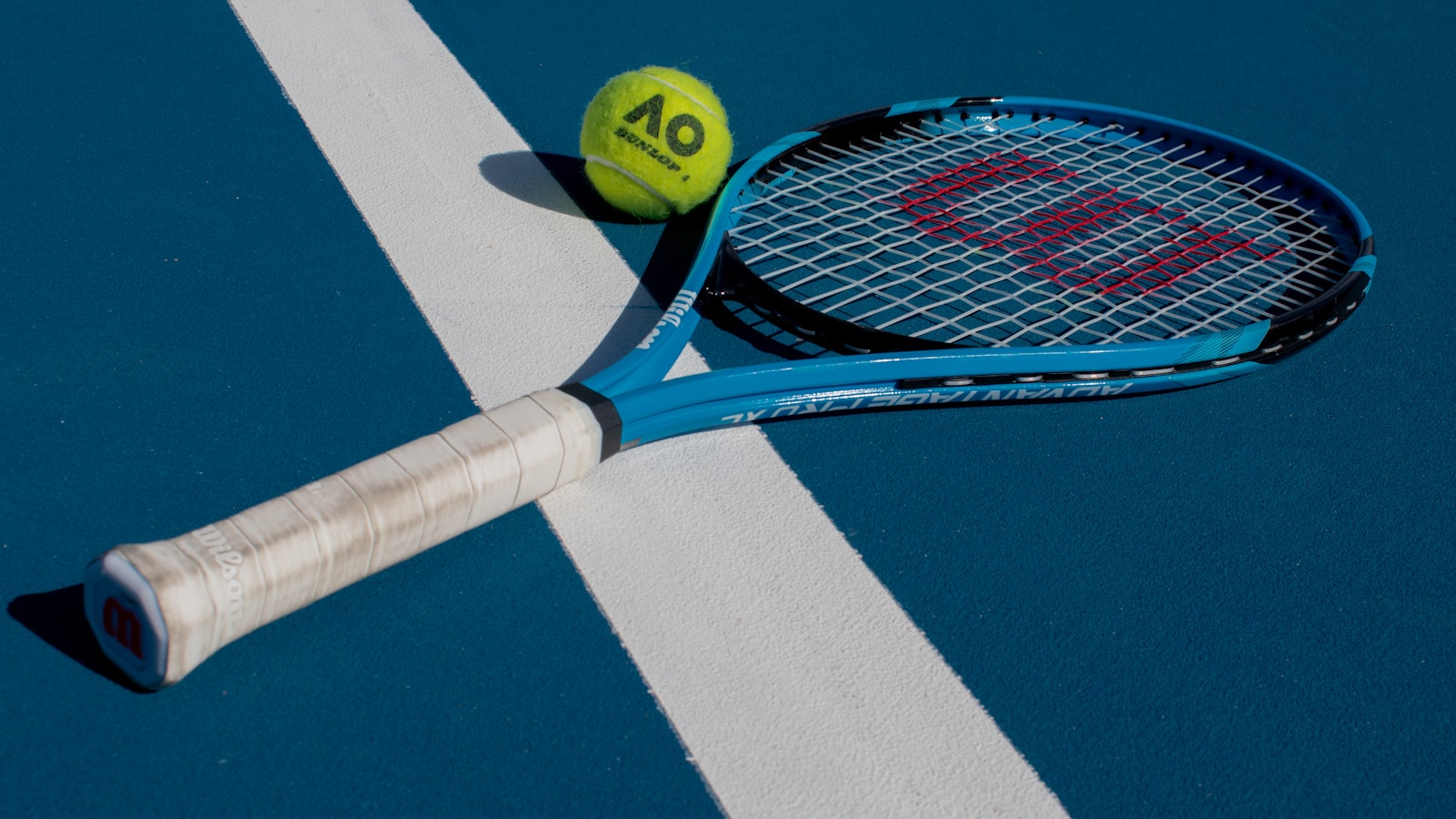
The surface coating makes friction adjustable. More texture can grip the ball more, slow it down, and raise the bounce. A smoother or worn surface can play faster because it offers less resistance during the bounce. Heat can also matter because balls, court materials, and air conditions do not behave exactly the same on a hot afternoon as they do in cooler weather.
For learners, hard courts are useful because they make the basic physics easier to see. A flat shot tends to come through lower and faster. A topspin shot tends to dip, grab, and rise. A slice tends to skid. Those patterns exist on every surface, but hard courts often show them in a balanced way, without the extreme low skid of grass or the heavy lift of clay.
Spin Changes the Surface Story
The surface does not act on a still ball. It acts on a ball that is usually spinning. Topspin means the top of the ball rotates forward in the direction of travel. Backspin means the bottom of the ball moves forward relative to the court. When either kind of spin meets friction, the bounce changes.
Topspin is especially powerful on a high-friction surface. The ball grips, slows, and kicks upward, forcing the opponent to strike higher. On clay, that can push rallies deep and make a shoulder-high forehand or backhand a routine challenge. On grass, the lower friction and lower bounce can reduce that kick, so the same topspin shot may not jump as dramatically.
Slice behaves differently. A sliced ball arrives with backspin and often stays lower after landing. Grass makes that effect more dangerous because the ball already tends to skid. On clay, the rougher surface can blunt some of the skid and give the receiver more time. On hard courts, the effect depends on texture and speed, but a good slice can still stay low enough to disrupt rhythm.
This is why professional players adjust more than their shoes when they change surfaces. They adjust swing height, contact point, recovery position, serve targets, return stance, and shot selection. The court changes what the ball is likely to do after landing, and the player has to prepare for that second life of the shot.
What Court Speed Really Means
“Fast court” sounds simple, but it can be misleading. A court feels fast when a player has less useful time after the bounce. That can happen because the ball keeps more forward speed, because it stays low, or because the rebound angle makes the next shot uncomfortable. Grass often feels fast because it combines forward skid with a low contact point.
A slow court is not just a court where the ball moves lazily. Clay may slow the ball’s forward motion, but it can also produce a high, heavy bounce that creates a different kind of pressure. Instead of rushing the player with speed, it may ask the player to handle height, spin, patience, and repeated movement. A defender may have more time, but an attacker may have to create several strong shots instead of one.
The ITF’s court pace system matters because it tries to turn those impressions into repeatable measurements. Its technical method fires tennis balls at a controlled speed and angle and measures the incoming and outgoing trajectory. That kind of testing cannot capture every moment in a match, especially when players add extreme spin or when weather changes during the day, but it gives a grounded way to compare surfaces beyond personal opinion.
The best way to watch tennis surfaces is to look after the bounce. On grass, notice how often players bend low or take the ball early. On clay, watch how topspin climbs and how defenders slide into wide balls. On hard courts, pay attention to how different coatings and conditions change the balance between attack and defense. The court is constantly answering the ball, and every answer shapes the point that follows.





Add comment