 Akshay Dinesh
A school zone speed limit can look surprisingly low when the road is wide, the weather is clear, and the school building is still half a block away. The physics behind it is less casual than the sign may seem. A driver does not stop at the moment a child steps toward a crosswalk. The vehicle keeps moving while the driver notices the movement, understands it, decides to brake, presses the pedal, and waits for the tires to turn motion into heat. In a place where children may be walking, biking, talking with friends, or misjudging traffic, those extra yards can decide whether a near miss stays a near miss.
Speed Changes More Than the Number on the Sign
Speed is distance per unit of time, so the first effect is straightforward. A car moving 20 miles per hour travels about 29 feet each second. At 30 miles per hour, it travels about 44 feet each second. That difference of roughly 15 feet per second may not sound dramatic until it happens beside a crosswalk, a bus stop, or a line of parked cars that can hide a student until the last moment.
Reaction distance grows directly with speed. If a driver needs even one second to recognize a hazard and begin braking, the faster vehicle has already covered more road before the brakes matter. If the driver’s attention is split by a phone, a dashboard screen, a dropped item, glare, or traffic confusion, the extra distance grows again. School zones are designed around real human attention, not perfect laboratory reaction time.
Braking distance grows in a less forgiving way. A moving vehicle carries kinetic energy, often written as Ek = 1/2mv^2. The squared speed term means that a modest increase in speed creates a larger increase in the energy the brakes and tires must remove. Double the speed and the kinetic energy becomes four times as large. Even when the tires grip well, the car cannot simply erase that energy instantly.
That is why school-zone speed limits are not just reminders to be polite. They change the physical problem. Lower speed shortens the distance traveled during reaction, gives brakes less energy to manage, and gives the driver more time to scan sidewalks, driveways, crossing guards, and students who may not behave like experienced pedestrians.
Stopping Distance Has Two Parts
Stopping distance is usually described as reaction distance plus braking distance. Reaction distance is the ground covered before braking begins. Braking distance is the ground covered after the brakes are applied. A driver can improve the first part by paying attention, but cannot reduce it to zero. The eyes and brain still need time to identify a problem, and the foot still has to move.
The second part depends on speed, tire condition, road surface, vehicle weight, brake performance, slope, and weather. Wet leaves, rain, snow, loose gravel, worn tires, or a downhill approach can all stretch the braking distance. A school zone does not become physically safer just because a driver believes the car has strong brakes. The tires still need friction with the road, and friction has limits.
A useful mental picture is a driver approaching a crosswalk where a child is partly hidden by a parked vehicle. At 20 miles per hour, the car covers less distance while the driver identifies the movement and starts braking. At 30 miles per hour, the car arrives much sooner, and it also needs more braking distance after the pedal is pressed. The problem is not only that the higher-speed car hits harder if it cannot stop. It may reach the crossing before the driver has fully responded.
Traffic engineers build around this reality. A Texas A&M Transportation Institute study on school-zone speed limits recommended placing school speed-limit signs far enough in advance of school driveways or marked crosswalks for drivers to slow before the key conflict point. The recommended distances grew with approach speed: about 200 feet for lower posted speeds, 300 feet for higher urban approaches, and up to 400 feet where the posted road speed was 50 miles per hour or more. The point was not that every school should look identical. It was that distance, speed, and driver behavior have to match each other.
Children Make School Zones Different
A school zone is not a miniature highway. It is a road space where children, families, buses, bikes, crossing guards, parked cars, and turning vehicles overlap during short, busy windows. Children are smaller and easier to hide behind vehicles or signs. Younger students may also have a harder time judging vehicle speed and gaps, especially when they are excited, late, distracted, or following a friend across the street.
The National Highway Traffic Safety Administration has repeatedly used back-to-school safety campaigns to remind drivers to obey school-zone speed limits, yield in crosswalks, and stop for school buses when lights and stop arms are active. Its 2024 back-to-school alert noted that 104 people died in school-transportation-related crashes in 2022, and that more than 1,000 people died in those crashes from 2013 through 2022. Those numbers cover more than school zones alone, but they show why transportation agencies treat the trip to and from school as a serious safety system rather than a routine commute.
School zones also have visual clutter. There may be flashing beacons, temporary cones, buses pulling in and out, parents stopping at curbs, students stepping from between parked cars, and crosswalks near intersections. Lower speeds buy time for the driver to sort that scene. They also make it easier for a crossing guard’s stop paddle, a flashing sign, or a student’s movement to become noticeable before the vehicle is too close.
The Federal Highway Administration’s Safe Routes to School guidance treats enforcement, education, traffic calming, route planning, and community design as parts of the same problem. A speed sign helps, but it works best when the street itself supports the message. Crosswalk markings, curb extensions, school-zone beacons, adult crossing guards, and slower design speeds all help make the correct behavior easier to see and easier to follow.
Lower Speed Reduces Impact Energy
Stopping before a collision is the goal, but speed matters even when a crash cannot be avoided. A vehicle moving faster carries more kinetic energy into impact. Because kinetic energy rises with the square of speed, the difference between 20 and 30 miles per hour is larger than the numbers suggest. Thirty is only 1.5 times twenty, but the kinetic energy is 2.25 times as large, assuming the same vehicle mass.
Pedestrian injury research shows the same pattern in human terms. The AAA Foundation for Traffic Safety has reported that the average risk of severe injury to a pedestrian rises sharply as impact speed increases, reaching about 25 percent at 23 miles per hour and about 50 percent at 31 miles per hour. Its estimates for fatality risk also rise with speed, from about 10 percent at 23 miles per hour to about 25 percent at 32 miles per hour. Real crashes vary by vehicle shape, pedestrian age, angle, braking, and many other details, but the direction of the pattern is not subtle.
Recent pedestrian-safety research from the Insurance Institute for Highway Safety adds another reason this matters: taller front ends can make impacts more dangerous, especially at higher speeds. In a school zone filled with SUVs, pickups, vans, buses, and family cars, the speed limit is one of the few protections that can apply to every vehicle. Slower travel gives more room to prevent impact and reduces the violence of impact if something still goes wrong.
This is why a small reduction can be meaningful. A change from 30 to 20 miles per hour does not merely trim a trip by a few seconds near the school. It shortens the distance traveled while the driver reacts, reduces the braking energy that must be absorbed, and lowers the impact speed if a collision occurs after hard braking. The safest crash is the one that never happens, but physics gives several chances for lower speed to matter before and during the emergency.
Why Signs, Sight Lines, and Habits Matter
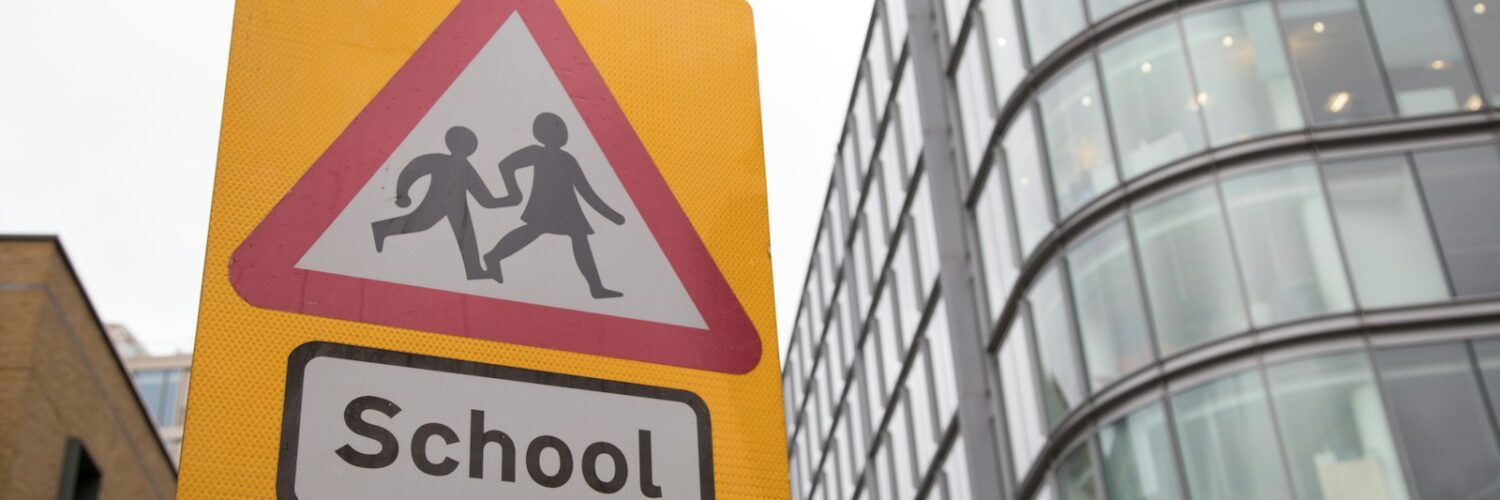
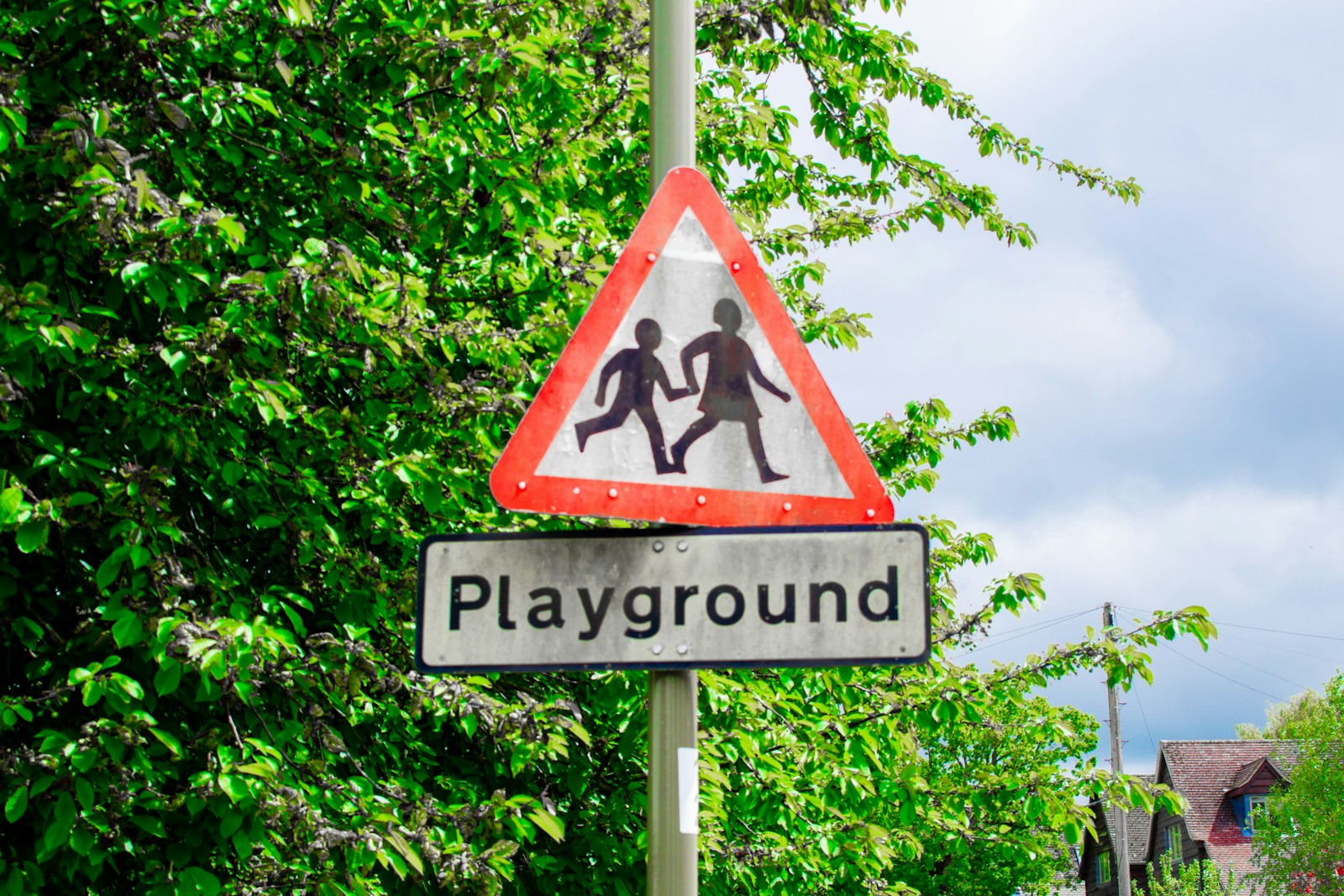
A school-zone sign at the exact edge of a crosswalk would be too late. Drivers need warning distance. They also need clear sight lines so they can see the crossing, the sidewalk, the school driveway, and any person preparing to enter the road. Parked cars too close to a crosswalk, overgrown shrubs, confusing lane markings, or faded signs can shrink the driver’s usable reaction time even when the posted speed is reasonable.
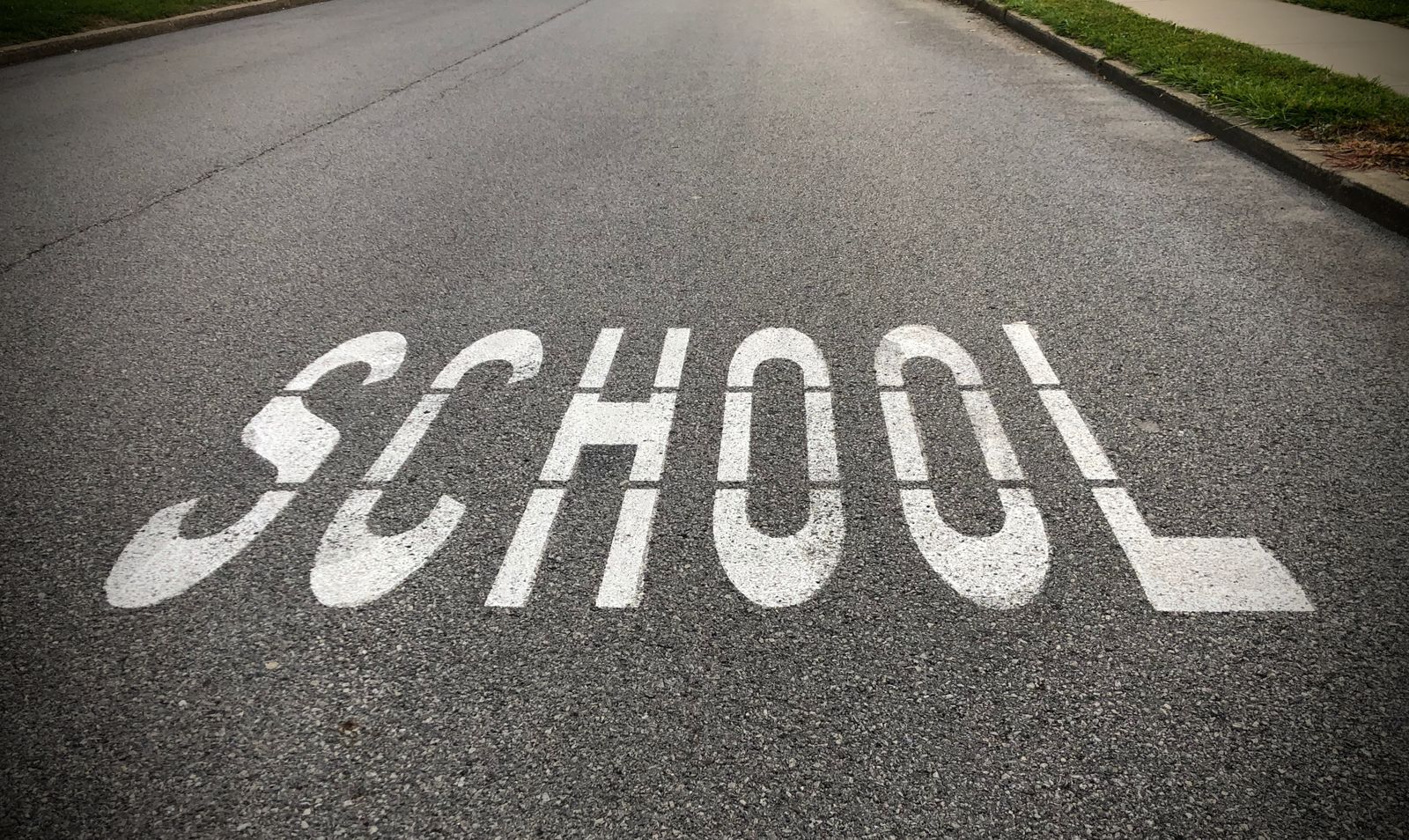
Good school-zone design gives the driver the same message more than once. A sign announces the zone. Pavement markings reinforce it. Flashers or time-of-day panels tell drivers when the limit applies. Crosswalk stripes mark where to expect people. A crossing guard can add a human signal that is hard to miss. Each cue helps the driver move from ordinary road speed to school-zone attention before reaching the most active area.
Drivers still have the final role. A school zone is the wrong place to treat the posted number as a target to hover above. It is a ceiling for good conditions, and conditions change quickly when children are nearby. Slowing early, covering the brake near crossings, leaving space from the vehicle ahead, and scanning both sidewalks make the posted limit work as intended.
The deeper lesson is that school-zone speed limits are not arbitrary caution tape wrapped around a building. They are a practical response to motion, energy, attention, and the limits of human bodies. A slower car gives the driver more time, gives the brakes a fairer job, gives signs and crossings a chance to be understood, and gives children a larger margin for the mistakes that children sometimes make. The physics is simple, but the result is deeply human: a few fewer miles per hour can mean a much larger safety margin at the place where students begin and end their day.