

 Akshay Dinesh
A heat pump sounds almost like a contradiction. If winter air feels cold, how can a machine pull heat from it and send that heat indoors? The answer is that cold air is not empty of thermal energy. Unless matter is at absolute zero, its particles are still moving, and that motion is heat a machine can collect, concentrate, and move.
That is why a heat pump is best understood as a heat mover rather than a heat maker. A furnace releases heat by burning fuel. An electric resistance heater releases heat by pushing current through a material that warms up. A heat pump uses electricity differently: it powers a compressor and fans that move heat from one place to another. The same idea explains why refrigerators keep food cold and why air conditioners cool rooms, but a heat pump can reverse the direction when a building needs warmth.
The Everyday Physics Behind a Heat Pump
Heat naturally flows from warmer places to cooler places. A mug of hot tea cools down because energy leaves the tea and spreads into the surrounding air. A heat pump works against that natural direction by using mechanical work, much like a pump can move water uphill even though water naturally flows downhill. The electricity does not become all the heat by itself; it helps move heat that already exists.
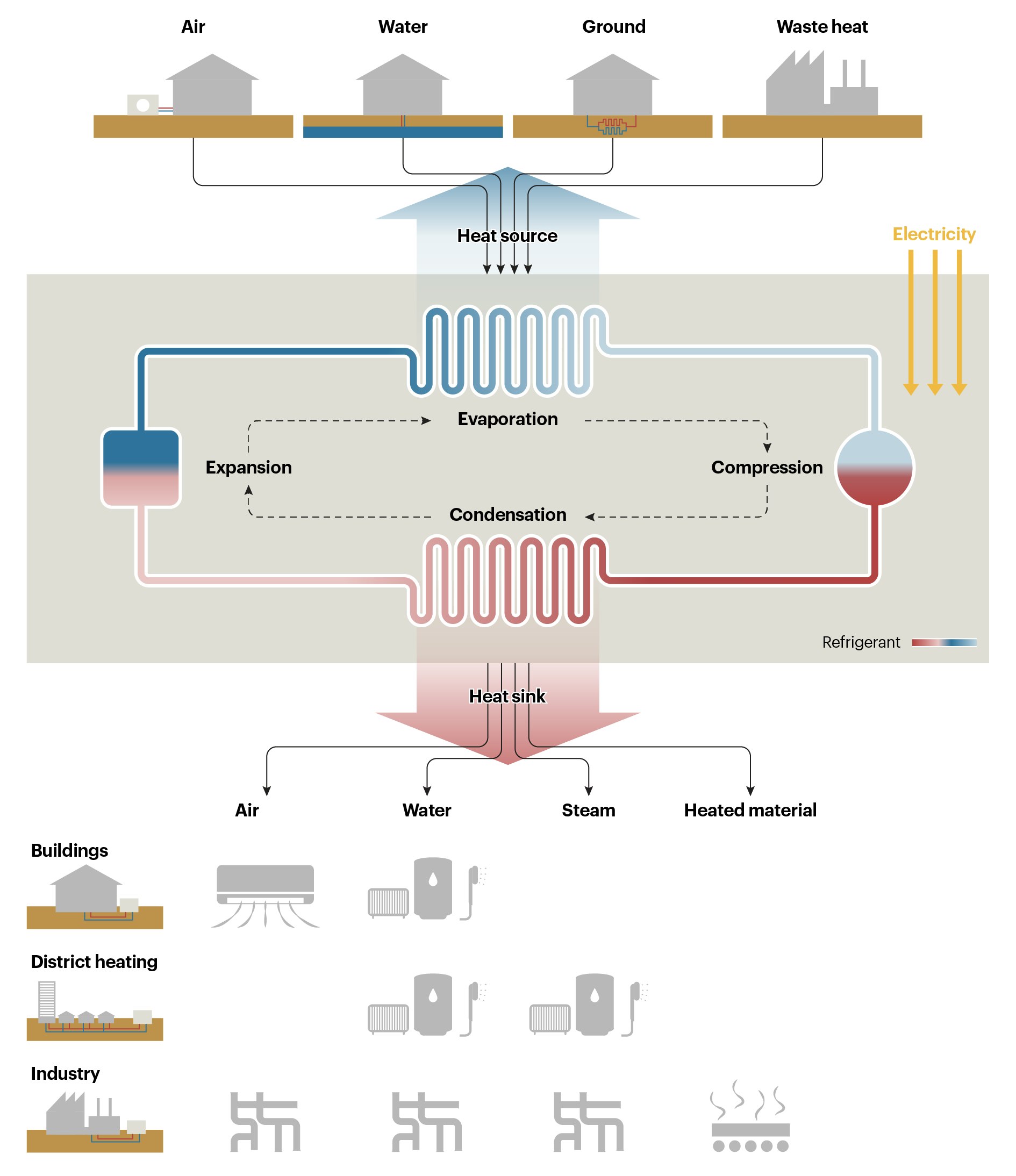
In a common air-source heat pump, the outdoor unit pulls air across a coil filled with refrigerant. Refrigerant is a working fluid chosen because it can change between liquid and gas at useful temperatures. When it evaporates, it absorbs heat from the air around the coil. Even on a chilly day, that outdoor air can still warm the refrigerant enough for the cycle to continue.
The compressor then squeezes the refrigerant gas. Compression raises its pressure and temperature, so the refrigerant becomes hot enough to give heat to the indoor air. Inside the building, another coil acts as a heat exchanger. Air passes over the warm coil, heat moves into the room, and the refrigerant condenses back toward a liquid. After that, an expansion valve lowers the refrigerant’s pressure, cooling it so it can absorb heat outdoors again.
Why Moving Heat Can Be More Efficient Than Making It
The efficiency claim around heat pumps can sound suspicious at first. How can a machine deliver more heat energy than the electrical energy it uses? The key is that the machine is not creating all that heat from scratch. It is using electricity to move a larger amount of thermal energy from outdoors, underground, water, or another source.
Engineers describe this with coefficient of performance, often shortened to COP. A COP of 3 means the system delivers three units of heat for every one unit of electrical energy used to run it. The International Energy Agency describes a typical household heat pump COP as around 4, meaning the heat delivered can be about four times the electricity used. Real performance changes with equipment, climate, installation, and operating conditions, but the basic advantage comes from transfer rather than direct heat production.
ENERGY STAR explains the same idea for air-source heat pumps: because they move heat instead of converting fuel into heat, some systems can deliver up to three times more heat energy to a home than the electricity they consume. The U.S. Department of Energy also notes that today’s air-source heat pumps can reduce electricity use for heating by up to 75 percent compared with electric resistance heating such as baseboard heaters or electric furnaces. Those comparisons are not magic; they come from using energy to run a cycle that gathers and concentrates heat.
Heating and Cooling Are the Same Cycle in Reverse
A heat pump’s double role makes more sense once the direction of heat movement is clear. In winter, the system absorbs heat outdoors and releases it indoors. In summer, it can run the other way, absorbing heat from indoor air and releasing it outdoors. That is why many heat pumps can replace both a furnace and a central air conditioner, though the exact setup depends on the building.
The reversing valve is the part that changes the direction of refrigerant flow. When the system switches modes, the indoor coil and outdoor coil trade jobs. The coil that was releasing heat can become the one absorbing it. The basic parts do not need to change; the pathway through the system does.
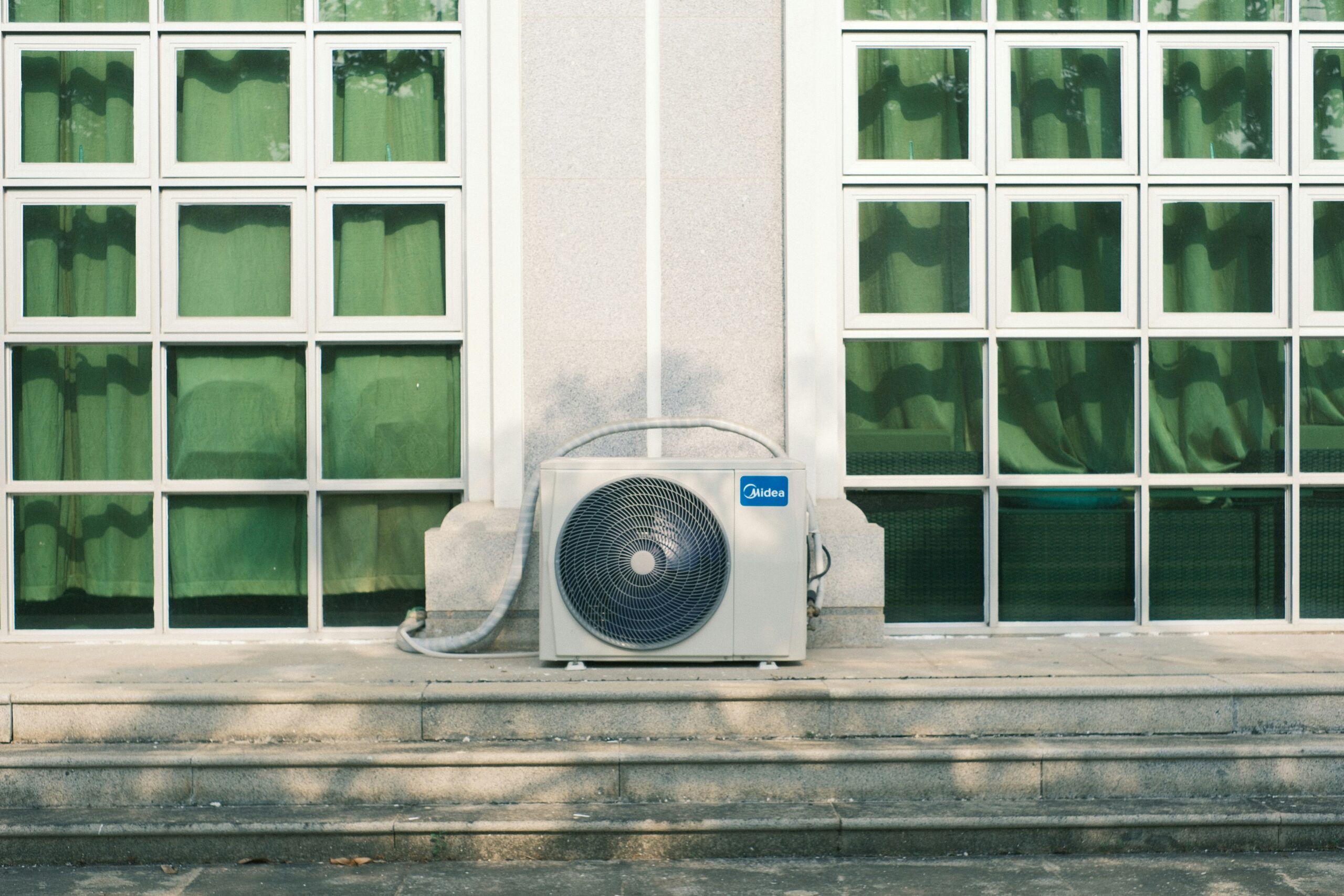
This also explains why heat pumps are often compared with refrigerators. A refrigerator removes heat from inside the food compartment and dumps that heat into the kitchen. Touch the back or underside of many refrigerators and it feels warm because the appliance has moved heat out of the cold space. A heat pump uses the same family of ideas at the scale of a room, house, water heater, or even an industrial process.
Why Cold Weather Makes the Job Harder
Heat pumps can work in cold weather because cold air still contains thermal energy. The challenge is that the colder the outdoor air becomes, the harder the system has to work to collect enough heat and raise it to a useful indoor temperature. The temperature lift gets larger, and efficiency usually falls as that lift grows.
Modern cold-climate air-source heat pumps address that problem with better compressors, refrigerants, controls, and heat exchangers. ENERGY STAR notes that certified cold-climate systems are tested for low-temperature performance, including conditions down to 5 degrees Fahrenheit. Some systems can keep operating below that point, though a backup heating source may be useful or more efficient during unusually severe cold, depending on the building and local energy costs.
Cold weather also creates a practical issue outside: frost. When an outdoor coil is cold enough, moisture in the air can freeze on it. A heat pump may briefly enter a defrost cycle, reversing operation long enough to warm the outdoor coil and melt frost. That temporary shift can surprise people because the system may pause normal heating, but it protects airflow and keeps the heat exchanger useful.
The Building Matters as Much as the Machine
A heat pump does not work alone. The same unit can perform very differently in two buildings because comfort depends on insulation, air sealing, ductwork, sizing, and controls. A drafty house leaks heat quickly, so the system must run longer to replace what escapes. Poorly sealed ducts can lose conditioned air before it reaches the room. An oversized unit may cycle on and off too often, while an undersized unit may struggle during peak demand.
That is why heat-pump discussions often include weatherization. Sealing air leaks, improving insulation, and making sure ducts are in good condition reduce the amount of heat that must be moved in the first place. Good sizing matters too. HVAC contractors often use a load calculation, commonly called Manual J in the United States, to estimate how much heating and cooling a specific home needs. Square footage alone is not enough, because windows, climate, ceiling height, orientation, leakage, and insulation all affect the load.
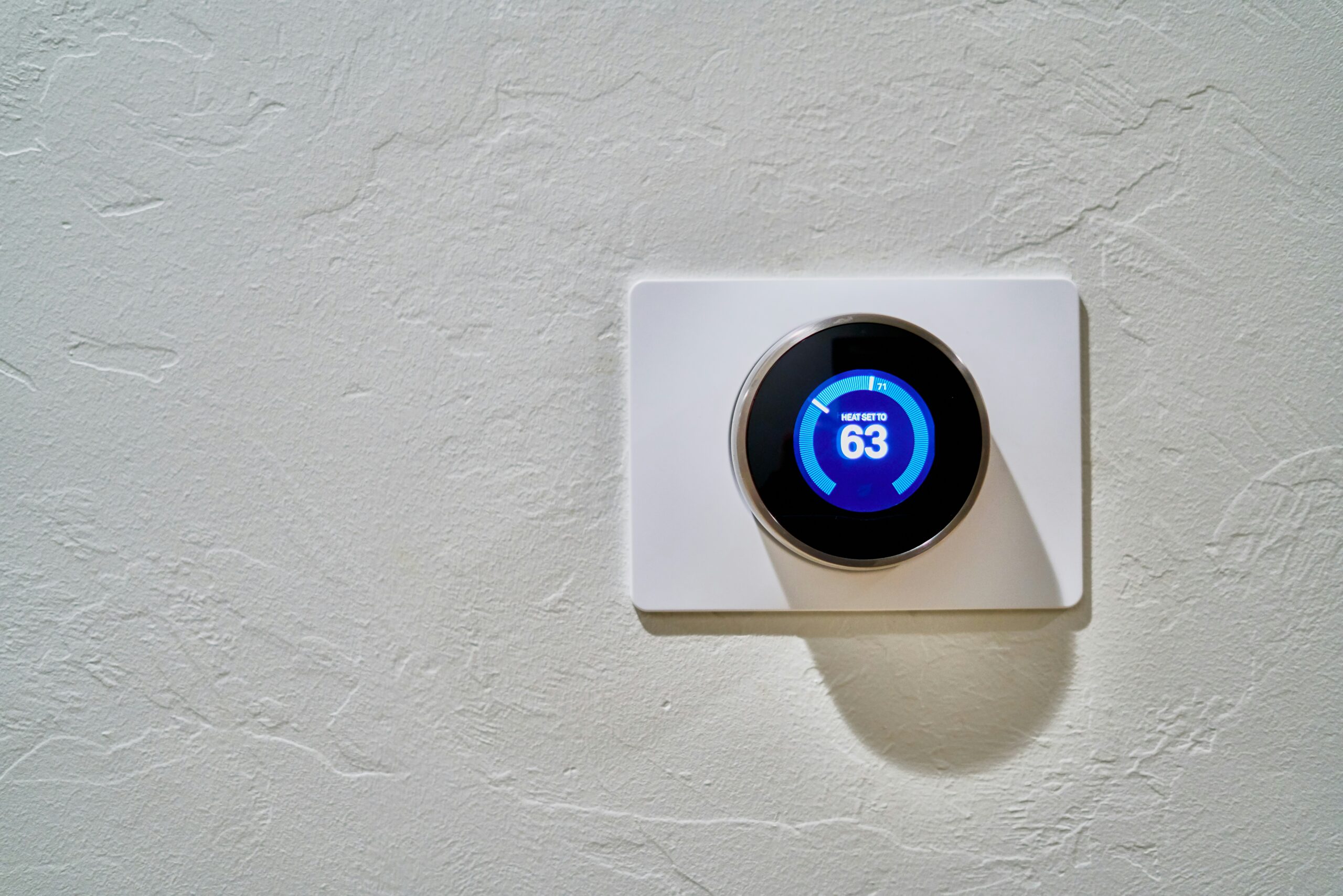
Controls also change performance. Many heat pumps are happiest when they maintain a steady indoor temperature rather than recovering from a deep setback. Variable-speed compressors can run gently for long periods, matching the home’s needs instead of blasting on and off. That steady operation may feel different from the hot bursts of a furnace, but it can keep rooms more even and reduce wasted energy.
Why Heat Pumps Are Becoming a Bigger Energy Topic
Heat pumps are not new, but they have become more visible because heating and cooling use a large share of household energy. ENERGY STAR estimates that almost half of a typical household energy bill goes to heating and cooling. A machine that can provide both services efficiently has obvious appeal for families, utilities, builders, and policymakers.
The International Energy Agency reported that heat pumps met about 10 percent of global space-heating needs in 2021, with installations growing and policy support expanding in many countries. The wider interest comes from several directions at once: lower operating energy in suitable homes, less direct combustion inside buildings, cooling during hotter summers, and the ability to run on electricity that can come from different sources. Those benefits do not remove the need for careful installation, fair upfront costs, or a reliable electric grid, but they explain why the technology keeps appearing in energy planning.
For learners, the most useful idea is also the simplest one. A heat pump does not violate conservation of energy. It uses work to push heat where people want it, the way a refrigerator pushes heat out of a cold box or an air conditioner pushes heat outdoors. Once that idea clicks, the machine stops seeming mysterious. It becomes a practical example of thermodynamics quietly working beside a house, above a ceiling, or on a wall: not making heat from nothing, but moving it with purpose.




Add comment