Akshay Dinesh
For years, the global story of mangrove forests seemed to move in one direction: coastal development, aquaculture, agriculture, and timber cutting were steadily shrinking them. A new four-decade satellite record shows a more complicated and cautiously hopeful picture. After losing nearly 3,000 square kilometers of mangroves between 1984 and 2010, the world gained almost 2,000 square kilometers from 2010 to 2023. The recovery has not erased earlier losses, and it has not reached every coast, but it marks a genuine change in the global trend.
That change matters because mangroves do several jobs at once. Their tangled roots slow waves, trap sediment, shelter young fish and crustaceans, and help coastlines withstand erosion. Their waterlogged soils can hold carbon for long periods. Understanding why these forests are growing in some places, while still disappearing in others, turns a hopeful headline into a useful lesson about how ecosystems recover.
How satellites revealed a turning point
The finding comes from a study led by environmental scientist Zhen Zhang and published in Science in 2026. The research team analyzed Landsat images collected from 1984 through 2023, building a consistent record of mangrove extent and canopy condition across tropical and subtropical coasts. Instead of comparing a few isolated snapshots, the team followed changes over almost 40 years. That long view exposed a shift that shorter records could easily miss.
Landsat is especially valuable for this work because its satellites have observed Earth repeatedly since the 1970s. A single image can show where vegetation exists, but a long sequence can reveal whether a forest is being cleared, regrowing, becoming denser, or spreading into a new area. Researchers classified coastal pixels using the spectral patterns of vegetation, water, and exposed ground, then checked how those patterns changed through time. The result was not just a map of where mangroves stand today, but a history of gains and losses.
The maps showed that mangrove area declined sharply before 2010 and then began increasing overall. They also revealed improvement in forest structure: many surviving mangroves had denser, more closed canopies in 2023 than in 2010. Canopy density is not a complete measure of ecological health, but it can signal that a previously thin or damaged stand is filling in. Measuring both area and density helped the researchers distinguish simple geographic expansion from recovery inside existing forests.
Why mangroves are growing again
No single cause explains the rebound. About two-thirds of the expansion identified by the study occurred where mangroves colonized places that had not recently supported them. The remaining share came from regrowth or restoration in previously degraded areas. That distinction matters because a new strip of trees on a mudflat and a repaired forest in an abandoned fish pond may look similar from above, yet they reflect different ecological processes.
In river deltas and other sediment-rich coasts, currents can deposit mud and build new ground in the intertidal zone. Mangrove seeds and floating seedlings may settle on those surfaces, take root, and gradually turn bare mud into forest. This process has contributed to gains near the Amazon River and in northern Australia. Some of the new sediment, however, can come from damaging erosion farther upstream, so growth at the coast is not automatically evidence that the entire watershed is healthier.
Human choices have also helped. Stronger protections, reduced clearing, and restoration projects have allowed forests to return in parts of Asia and elsewhere. In Myanmar’s Myeik District, mangroves have recolonized some abandoned rice fields and degraded coastal land after decades of loss. The study links that reversal to conservation efforts, legal protection, public awareness after the 2004 Indian Ocean tsunami, and favorable sediment conditions rather than to one simple planting campaign.
Climate is shifting mangrove boundaries too. At the cool edges of their range, freezes normally limit where tropical trees can survive. Warmer conditions and fewer hard freezes have allowed mangroves to expand into some higher-latitude areas, including parts of the southeastern United States. This is a real gain in mangrove cover, but it can also change neighboring salt-marsh ecosystems, showing why a larger area is not always an uncomplicated ecological victory.
The global gain hides serious local losses
A worldwide total combines many different coastlines. Gains in one country can outweigh losses in another without repairing the damaged fisheries, storm protection, or cultural resources of the place that lost its forest. The 2026 State of the World’s Mangroves report reaches the same broad conclusion as the Science study: mangrove cover is no longer retreating overall, but important regions remain in decline. Southeast Asia and eastern and southern Africa have experienced persistent losses across the longer record.
West and Central Africa have lost mangrove area since 2010, with the Niger Delta standing out as a major concern. Tropical cyclones have damaged broad areas in North America and southern Africa. Updated Global Mangrove Watch data also show large four-decade losses in Indonesia, Myanmar, Malaysia, and Nigeria even as recent trends have stabilized or improved in some of those countries. A global rebound therefore describes the direction of the total, not the condition of every forest.
Area alone also misses degradation. A mangrove stand can remain on the map while becoming fragmented, polluted, storm-damaged, or stripped of large trees. The research found that degradation rates have slowed, but they remain higher than outright forest loss in some assessments. Healthy recovery must include canopy condition, water flow, species composition, and the connection between mangroves and nearby seagrass beds, salt marshes, coral reefs, and tidal flats.
Mapping has limits as well. Improved satellite resolution and classification methods can reveal small forests that older maps missed, which may look like new growth even when some trees were already present. Researchers reduce that problem by applying consistent methods across the historical archive and checking results against other datasets and field observations. The agreement between two major 2026 mapping efforts makes the turning point more convincing, but local monitoring is still needed to explain what caused a change.
Why the rebound matters beyond forest area
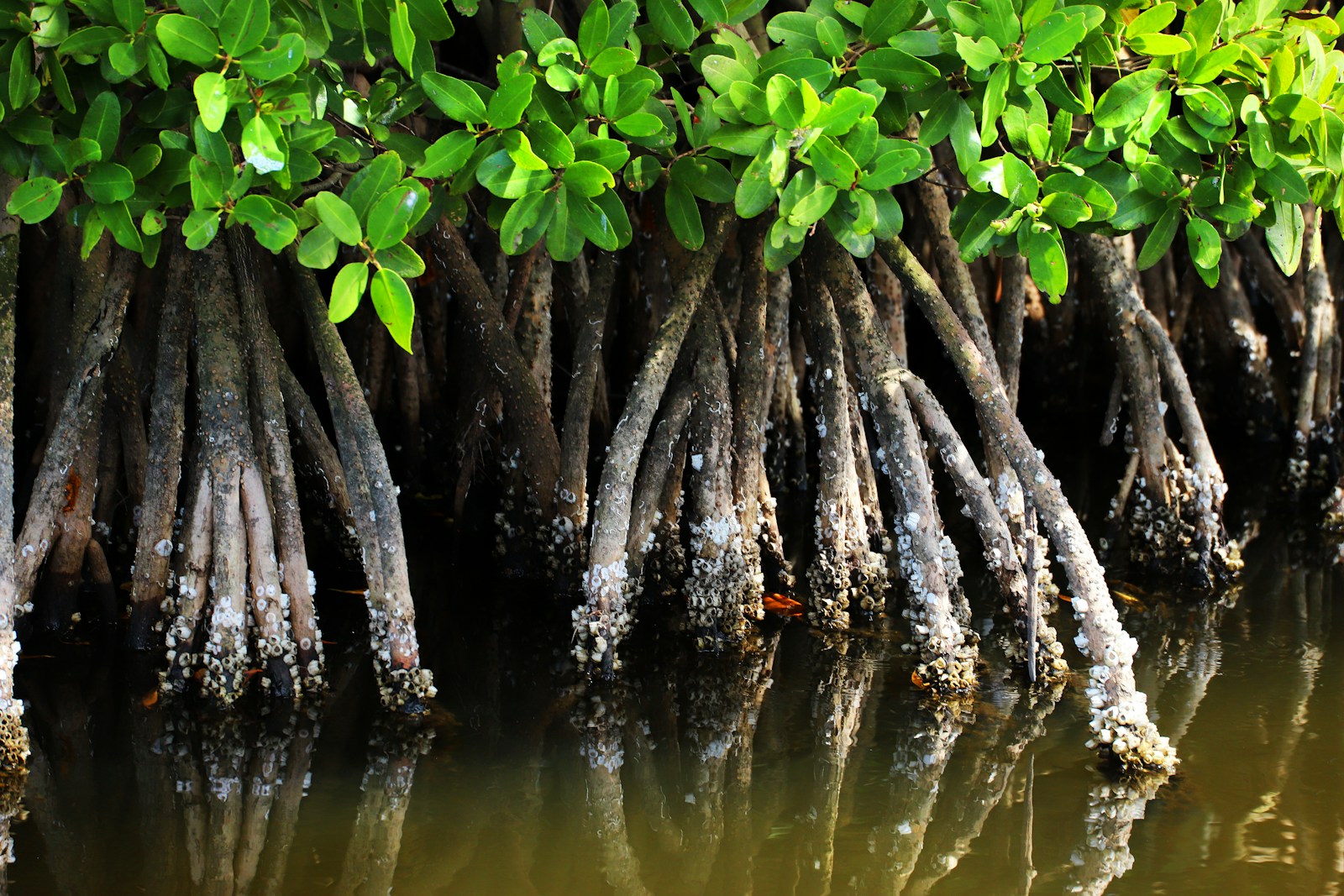
Mangroves occupy a narrow band between land and sea, yet their influence reaches far beyond it. Roots and trunks create friction that can reduce wave energy, while trapped sediment can help a shoreline build elevation. That protection is not an invisible wall: its strength depends on forest width, density, species, storm intensity, and local geography. Even so, preserving a living buffer can complement seawalls, evacuation planning, and other forms of coastal protection.
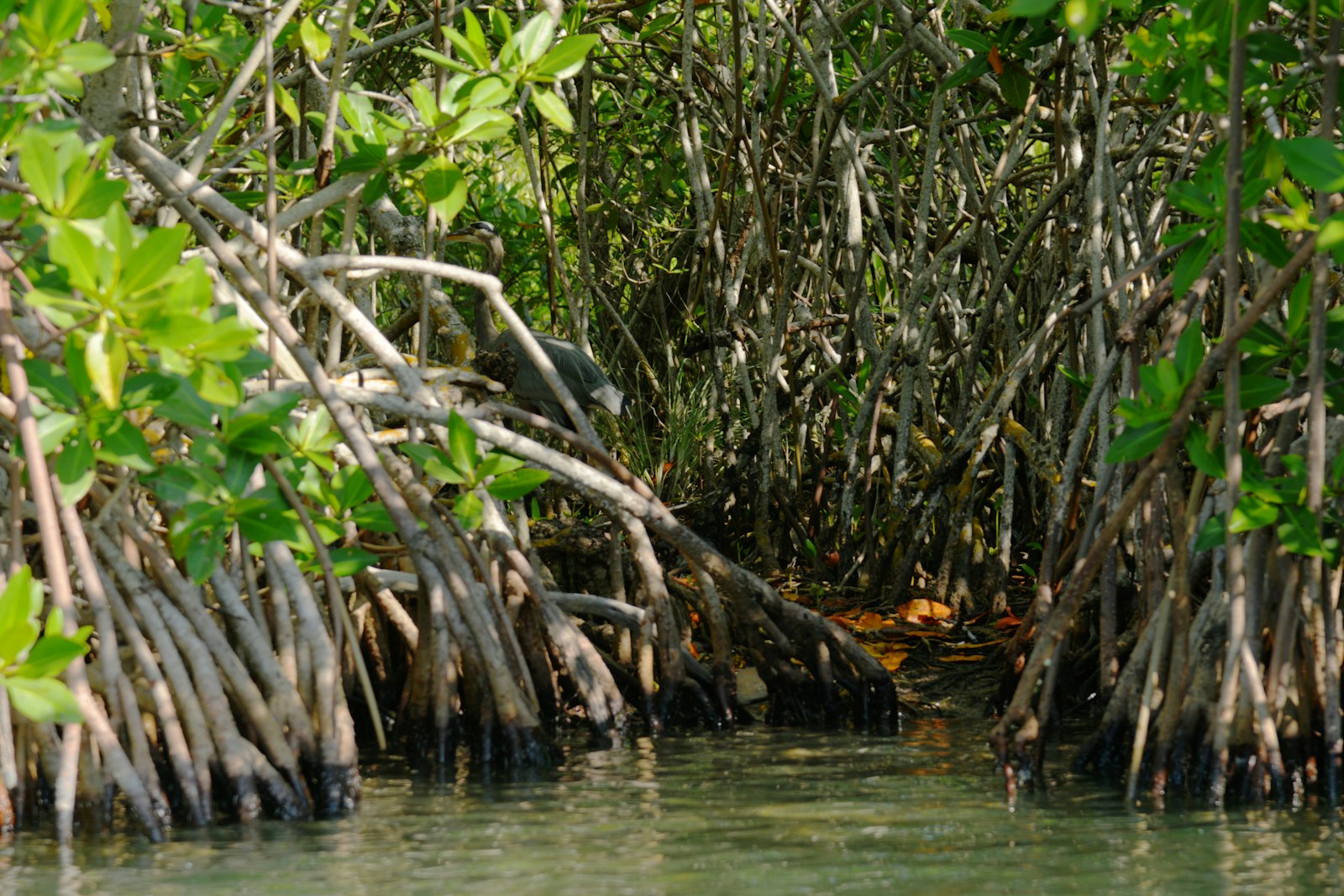
The same root networks form nurseries for fish, shrimp, and crabs. Young animals find food and shelter among submerged roots before moving into reefs, estuaries, or open water, so mangrove condition can affect fisheries well beyond the forest edge. Birds, reptiles, insects, and mammals also use these habitats. When a mangrove is replaced by a pond, road, or building, the loss is therefore not limited to a row of trees.
Mangroves are also part of the world’s blue-carbon systems. Leaves, wood, and roots store carbon, while slow decomposition in oxygen-poor mud can preserve organic matter underground for centuries. Clearing or draining the forest can expose some of that stored material and allow it to break down. New growth is useful, but protecting mature forests and their soils usually avoids losses that young plantings would take many years to replace.
What lasting recovery requires
The rebound offers evidence that conservation can work, but it does not support planting trees wherever there is an empty shoreline. Large planting drives often fail when they use the wrong species, ignore tides, or place seedlings where mangroves did not naturally grow. The 2026 global assessment stresses ecological restoration: remove the cause of damage, restore normal water and sediment movement, protect nearby seed sources, and let natural regeneration do as much of the work as conditions allow.
Local knowledge is essential because mangrove landscapes are also working landscapes. Communities may depend on them for fishing, fuel, storm protection, and access to the water. Restoration is more durable when residents help choose sites, monitor results, and share the benefits rather than receiving a short-lived planting project designed elsewhere. Satellite alerts can then support that local work by flagging fresh clearing or storm damage quickly.
The most useful reading of the new maps is neither celebration nor dismissal. Mangroves have shown that a heavily pressured ecosystem can reverse a global decline when natural expansion, reduced deforestation, protection, and careful restoration reinforce one another. At the same time, the remaining losses are concentrated in places where people and wildlife cannot be compensated by gains on a distant coast. The rebound is real, but keeping it real will require protecting existing forests, repairing damaged water systems, and judging success coast by coast.