

 Akshay Dinesh
A foggy winter morning can leave more than water on a windshield. When the fog is made of droplets cold enough to freeze on contact, branches may acquire a white coating and a road can become slick even without falling rain or snow. This is freezing fog: fog whose liquid droplets can freeze onto exposed surfaces. Its two hazards are easy to underestimate together: the fog makes it harder to see, while the ice it leaves behind may be difficult to see at all.
The phrase sounds contradictory. How can fog contain liquid water when the air is below freezing? The answer lies in the behavior of tiny droplets and the surfaces they meet. Following that water from vapor to droplet to ice also explains why the resulting coating is not necessarily the same thing as the familiar frost on a clear morning.
How fog can stay liquid below freezing
Fog is essentially a cloud at ground level. It forms when air near the surface becomes sufficiently saturated for some of its water vapor to condense into a multitude of tiny suspended droplets. One common path is overnight cooling: the ground loses heat, the air next to it cools, and its temperature approaches the dew point. Other routes include moist air moving over a colder surface or air cooling as it rises along a slope.
Liquid water does not always freeze the instant its temperature reaches 0°C (32°F). A tiny, relatively pure droplet can remain liquid below that temperature; it is then called supercooled. Forming an ice crystal requires an initial organized seed, a process called nucleation. In a small droplet, a suitable starting point may not be available immediately, so the liquid state can persist even though ice would be favored.
When supercooled fog droplets meet a sufficiently cold branch, railing or other surface, they can freeze there. The U.S. National Weather Service describes this contact-freezing process in its freezing fog safety guidance. Not every surface responds in exactly the same way: its temperature, the supply of droplets and the weather around it all affect whether and how much ice accumulates.
Why freezing fog leaves white rime
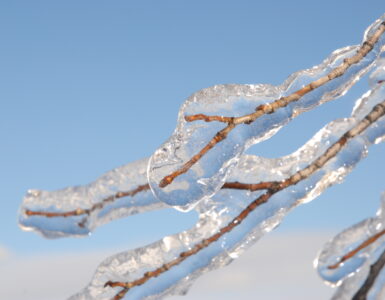
The white coating often associated with freezing fog is called rime ice. As moving air carries supercooled droplets against an exposed object, droplets freeze and build up a deposit. The UK Met Office describes rime as a rough white ice that can form on surfaces exposed to wind. Rapid freezing can trap air among the frozen droplets, helping give the deposit its cloudy appearance.
Imagine a wire fence in a shallow bank of freezing fog. Droplets arrive continually on the side facing the airflow, and the coating can grow outward as more droplets strike it. Branches and needles offer many narrow surfaces for droplets to hit, making the ice especially noticeable. Wind, droplet supply and temperature influence the shape and thickness, so a picture of a white tree alone cannot establish exactly how its coating formed.
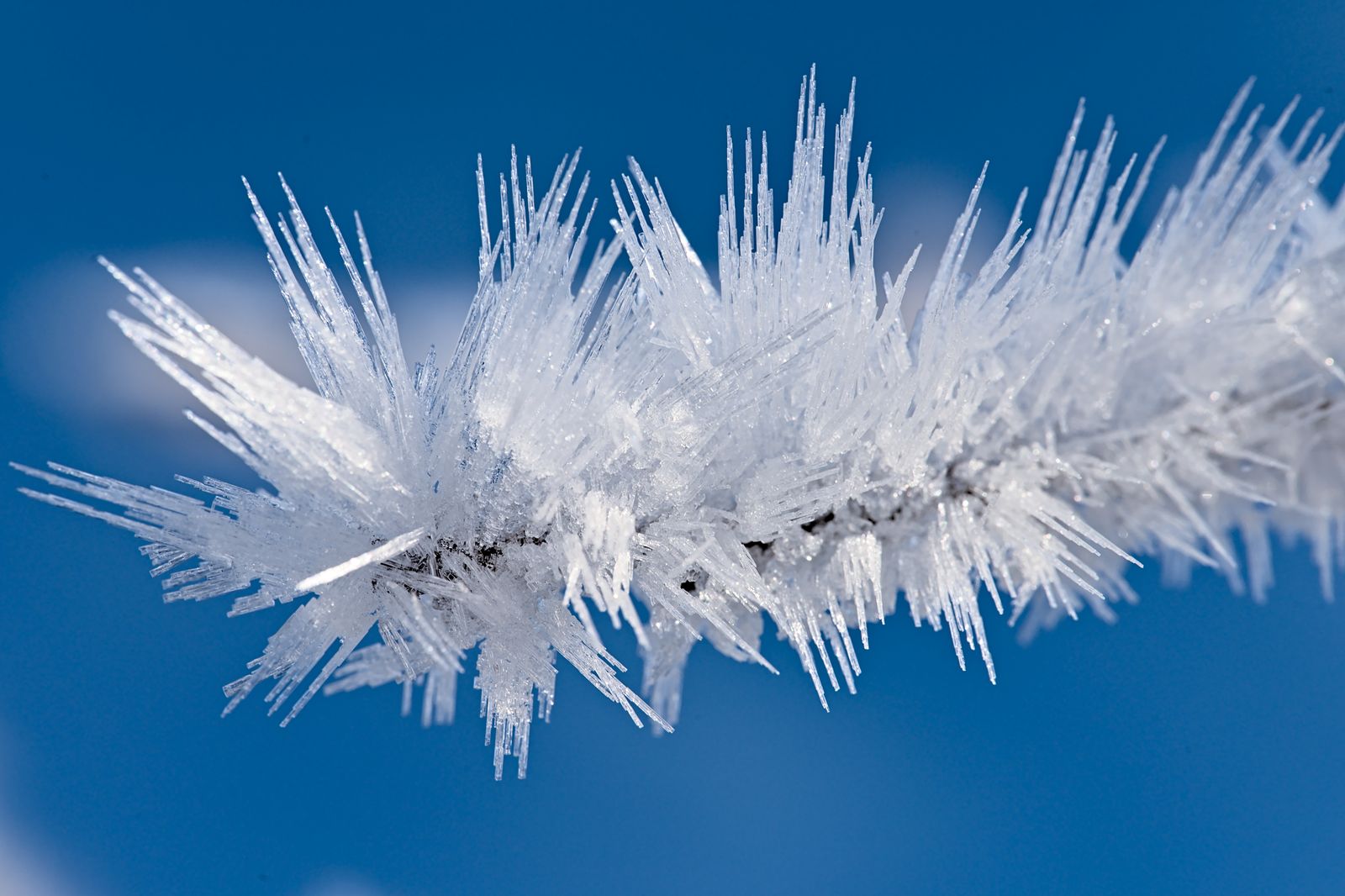
Hoarfrost can look similarly delicate, but its route to the surface is different. In hoarfrost, water vapor deposits directly as ice crystals on a cold surface; it does not first have to become a fog droplet. A clear, cold night can favor the cooling of exposed surfaces and help hoarfrost form. The Met Office explanation of frost and ice distinguishes that process from rime made by freezing fog droplets.
These labels describe formation, not a foolproof visual test. Conditions can change during a night, and different deposits can occur in the same area. Seeing fog, noting the wind and checking the weather report can provide clues, but appearance alone may leave room for doubt.
Freezing fog is not freezing rain or ice fog
Freezing fog and freezing rain both involve liquid water that can freeze on contact, but their droplets arrive differently. Fog droplets are suspended close to the ground and are carried by the air; freezing rain consists of falling raindrops. Freezing rain can produce a substantial glaze, while freezing fog can leave rime or a thin, inconspicuous icy coating. Neither requires the road to look white before it becomes hazardous.
Ice fog is a different term. In the National Weather Service glossary, it refers to fog made of suspended ice particles, typically under extremely cold conditions. Freezing fog, by contrast, is characterized by liquid droplets that freeze on contact. The words sound interchangeable in conversation, but the distinction identifies whether much of the water is still liquid in the air or already ice.
It is also possible to have ordinary fog in cold-looking scenery without proving that the fog itself is freezing. A thermometer gives useful context, but air temperature at one height is not an exact measurement of every pavement, bridge or railing. A surface can cool differently from the surrounding air, and local conditions can vary over short distances.
Why a quiet-looking morning can be slippery
Fog scatters light and reduces contrast, so headlights, bends and other vehicles can appear later than a driver expects. At the same time, the National Weather Service warns that freezing fog can produce black ice on roads. “Black” describes the pavement showing through a thin transparent layer; the ice itself is not black. Steps, sidewalks and railings can also collect ice.
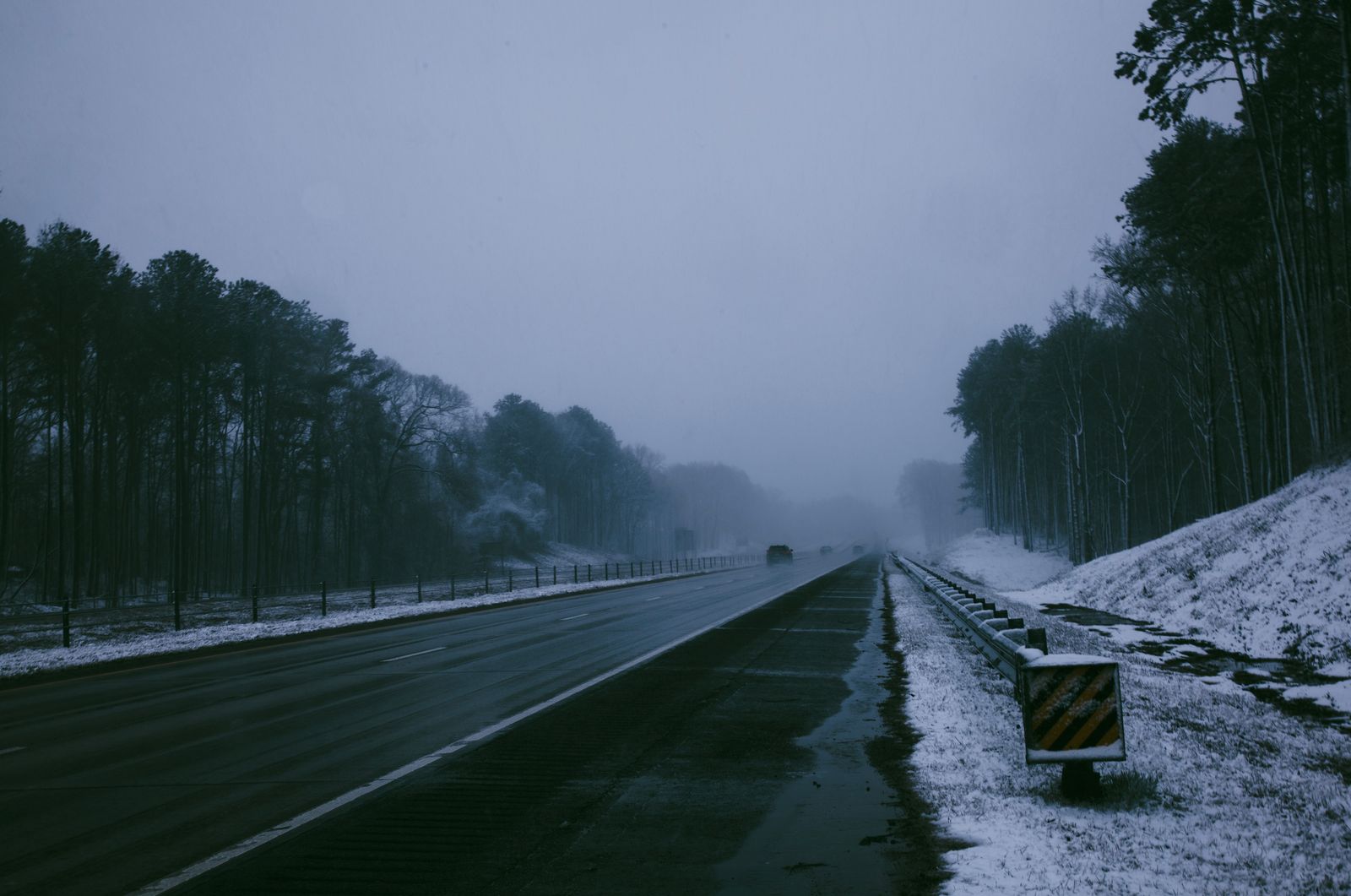
The combination calls for checking local forecasts and road conditions before a trip and allowing extra time. If travel is necessary, the National Weather Service advises slowing down when icy conditions are suspected. A dry-looking patch is not a reliable test of grip, and fog can obscure trouble ahead. Treat outdoor steps and walkways cautiously too, particularly where an unseen film could have formed.
Freezing fog is a useful reminder that weather hazards do not always arrive dramatically. Droplets small enough to hang in the air can obscure a road, then add ice to a surface they touch. Knowing the difference between the fog, its rime coating and frost formed directly from vapor makes the landscape easier to read, even when the view ahead is not.



Add comment