
 Akshay Dinesh
Acid rain begins with ordinary air pollution, but its effects can travel far from the smokestack, power plant, or road where that pollution first enters the atmosphere. When sulfur dioxide and nitrogen oxides mix with water, oxygen, and other chemicals in the air, they form sulfuric and nitric acids. Those acids can return to the ground in rain, snow, sleet, fog, or even as dry particles that settle onto surfaces.
The result is not rain that burns like a laboratory acid. Normal rain is already slightly acidic because carbon dioxide in the air forms weak carbonic acid. Acid rain is different because it is more acidic than normal precipitation and is often tied to human sources of pollution, especially the burning of fossil fuels. The U.S. Environmental Protection Agency describes acid rain, or acid deposition, as pollution that can affect lakes, streams, soil, forests, buildings, and human health indirectly through the pollutants that create it.
How Acid Rain Forms
The main ingredients behind acid rain are sulfur dioxide, often written as SO₂, and nitrogen oxides, often written as NOx. These gases can come from natural sources such as volcanoes and lightning, but many major sources are human-made. Coal-burning power plants, industrial facilities, vehicles, and other engines can release these pollutants into the air.
Once released, sulfur dioxide and nitrogen oxides do not always fall nearby. Winds can carry them across long distances before they react in the atmosphere and return to the surface. That is why acid rain became a regional environmental problem in places such as the northeastern United States, parts of Canada, and areas of Europe where emissions from one location could damage forests and lakes far away.

Why pH Matters
The pH scale measures how acidic or basic a substance is. A pH of 7 is neutral, lower numbers are acidic, and higher numbers are basic. Because the scale is logarithmic, each whole-number step represents a tenfold change in acidity. Rain with a pH of 4 is not just a little more acidic than rain with a pH of 5; it is ten times more acidic.
That difference matters because living systems often depend on narrow chemical ranges. A lake, stream, or patch of soil can absorb some acidity without obvious harm, especially if local rocks and minerals help neutralize it. But when acid deposition overwhelms that buffering ability, the chemistry of the ecosystem changes. Nutrients can wash out of soil, toxic aluminum can be released, and aquatic habitats can become harder for fish, insects, and amphibians to survive in.
Effects on Water, Soil, and Forests
Acid rain is often easiest to see in freshwater ecosystems. The EPA notes that acidic water can leach aluminum from soil and carry it into streams and lakes. More acidity and more dissolved aluminum can harm fish and other wildlife, especially eggs and young organisms that are sensitive to chemical changes.
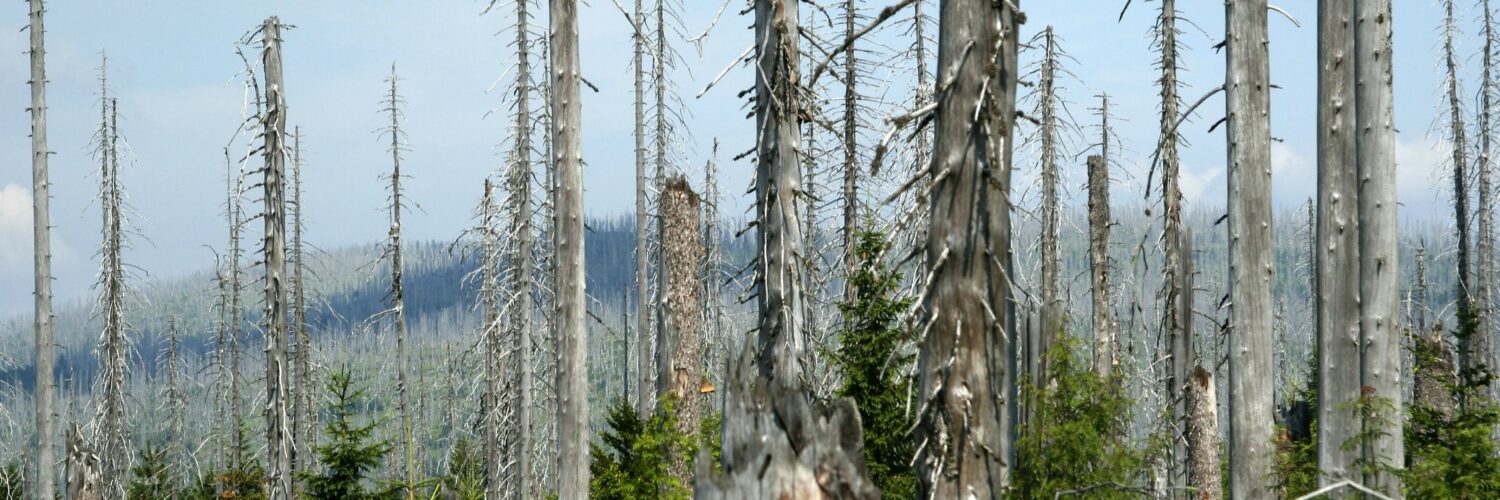
Forests can also suffer, especially at higher elevations where trees are exposed to acidic fog and cloud water. Acid deposition can remove important nutrients such as calcium and magnesium from the soil. At the same time, aluminum released from soil particles can make it harder for roots to take up water. Trees weakened this way may become more vulnerable to cold, drought, insects, and disease.
The damage is rarely as simple as one storm causing one dead tree. Acid rain usually works as a stressor that makes an ecosystem less resilient over time. A lake may slowly lose sensitive species. A forest may grow less vigorously. Soil may become less able to support healthy plant life. Those gradual changes are easy to miss until the ecosystem has already shifted.
Effects on People and Buildings
Walking in acid rain is not the main health concern. The larger risk comes from the same air pollutants that cause acid rain. Sulfur dioxide and nitrogen oxides can contribute to fine particles and ground-level ozone, which can irritate the lungs and worsen breathing problems. Reducing acid rain pollution can therefore improve both ecosystems and air quality.
Acid deposition also damages human-made structures. Limestone and marble, which contain calcium carbonate, can react with acids and wear away more quickly. That is why statues, monuments, and historic buildings in polluted areas may show pitted surfaces, softened details, or dark crusts. The loss is not only cosmetic; it can erase craftsmanship and historical detail that cannot be replaced once it is gone.
How Acid Rain Can Be Reduced
The most effective solutions focus on the source: reducing sulfur dioxide and nitrogen oxide emissions. Power plants can use scrubbers and cleaner fuels. Vehicles and industrial equipment can use pollution-control technology. Electricity systems can shift toward energy sources that release little or no sulfur dioxide when they operate, such as wind, solar, hydroelectric, and nuclear power.
Policy can make a measurable difference. In the United States, the Acid Rain Program created under the 1990 Clean Air Act Amendments helped cut sulfur dioxide emissions from power plants through emissions limits and market-based trading. The broader lesson is practical: acid rain is not an unsolvable natural disaster. It is a chemistry problem made worse by pollution, and it improves when emissions fall.
For students, acid rain is a useful example of how Earth systems connect. A decision about electricity or transportation can change the chemistry of the air. That chemistry can alter rain and fog. The rain can affect soil, water, forests, buildings, and health. Understanding those links makes the problem less mysterious and the solutions easier to see.





Add comment