Akshay Dinesh
A popcorn kernel looks dry and solid, yet it carries the ingredients for a rapid transformation: a little water, a dense supply of starch, and a tough outer hull. As the kernel heats, its trapped water creates rising vapor pressure. When the hull can no longer hold that pressure, it breaks, the softened starch rushes outward, and the familiar white flake forms in a fraction of a second.
That explanation sounds simple, but successful popping depends on a precise partnership. The hull must be strong enough to trap pressure without leaking, the kernel must contain the right amount of moisture, and heat must reach the center before the outside fails. A kernel that misses any one of those conditions may remain at the bottom of the bowl.
A popcorn kernel is a tiny pressure vessel
Popcorn is a special kind of maize, not simply a small version of sweet corn. Its seed has three main parts. The pericarp is the hard outer hull; the endosperm stores most of the starch and water; and the germ is the living part that could grow into a new plant. Other corn types have the same basic anatomy, but popcorn combines a dense, starchy interior with a hull that is unusually good at holding in moisture.
The hull is the key difference. If vapor could escape as soon as water warmed, the kernel would dry gradually and never build enough pressure to burst. A sound popcorn pericarp behaves more like the wall of a sealed pressure vessel. It restrains the expanding vapor until the force inside reaches the hull’s breaking point.
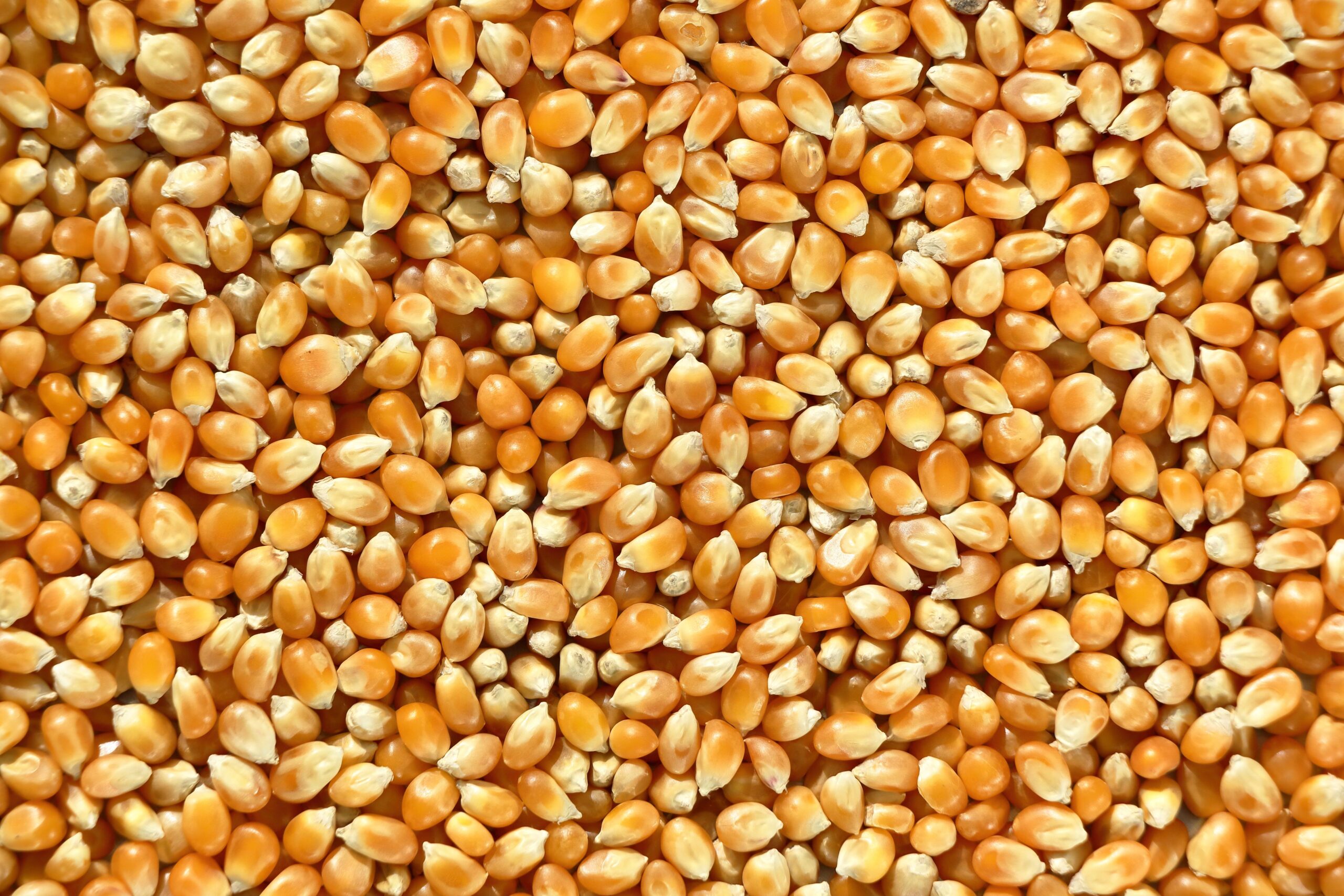
Inside that vessel, water is spread through the hard starch rather than sitting as a visible droplet. Commercial popcorn is commonly conditioned to roughly 13 to 14 percent moisture, a range that gives the kernel enough water to build pressure without making its structure too soft. The exact best level varies with the popcorn variety and the way it is heated, which is why moisture alone cannot guarantee a large, complete pop.
Heat turns trapped water into rising pressure
Water normally boils near 100°C at sea level, but water trapped inside a sealed kernel cannot expand freely. As the temperature climbs, some of it becomes vapor while the rest remains associated with the hot starch. The vapor presses outward on the pericarp, and its pressure rises far above the air pressure in the kitchen.
In a 2015 study published in the Journal of the Royal Society Interface, physicists Emmanuel Virot and Alexandre Ponomarenko heated kernels at controlled temperatures. Only 17 of 50 kernels popped at 170°C, while 48 of 50 popped at 180°C. Their measurements and pressure-vessel model placed the internal pressure at rupture near 10 bar, about ten times ordinary atmospheric pressure. The figures are estimates rather than a rule for every kernel, but they show why gentle warming is not enough: the kernel needs a sharp buildup of heat and pressure.
Once a weak point in the hull tears, the high-pressure interior suddenly meets the much lower pressure outside. Water vapor expands, and the pressure that had been contained for minutes is released in milliseconds. The change is mostly physical: heat, pressure, and water rearrange the starch into a new structure rather than creating an entirely new substance.
The white flake is starch turned into foam
Pressure explains the rupture, but it does not explain the soft-looking white shape by itself. During heating, water and heat disrupt the ordered structure of starch granules in a process called starch gelatinization. The endosperm becomes a hot, pliable mass just before the hull gives way.
When the pericarp breaks, that mass expands with the escaping vapor. Countless small bubbles stretch the starch into a foam, much as gas bubbles give bread its open crumb. The foam cools almost immediately in the surrounding air, so its thin walls harden into the crisp, irregular flake that people eat. What looks white is not a new coating; it is the kernel’s own endosperm, expanded and turned inside out.
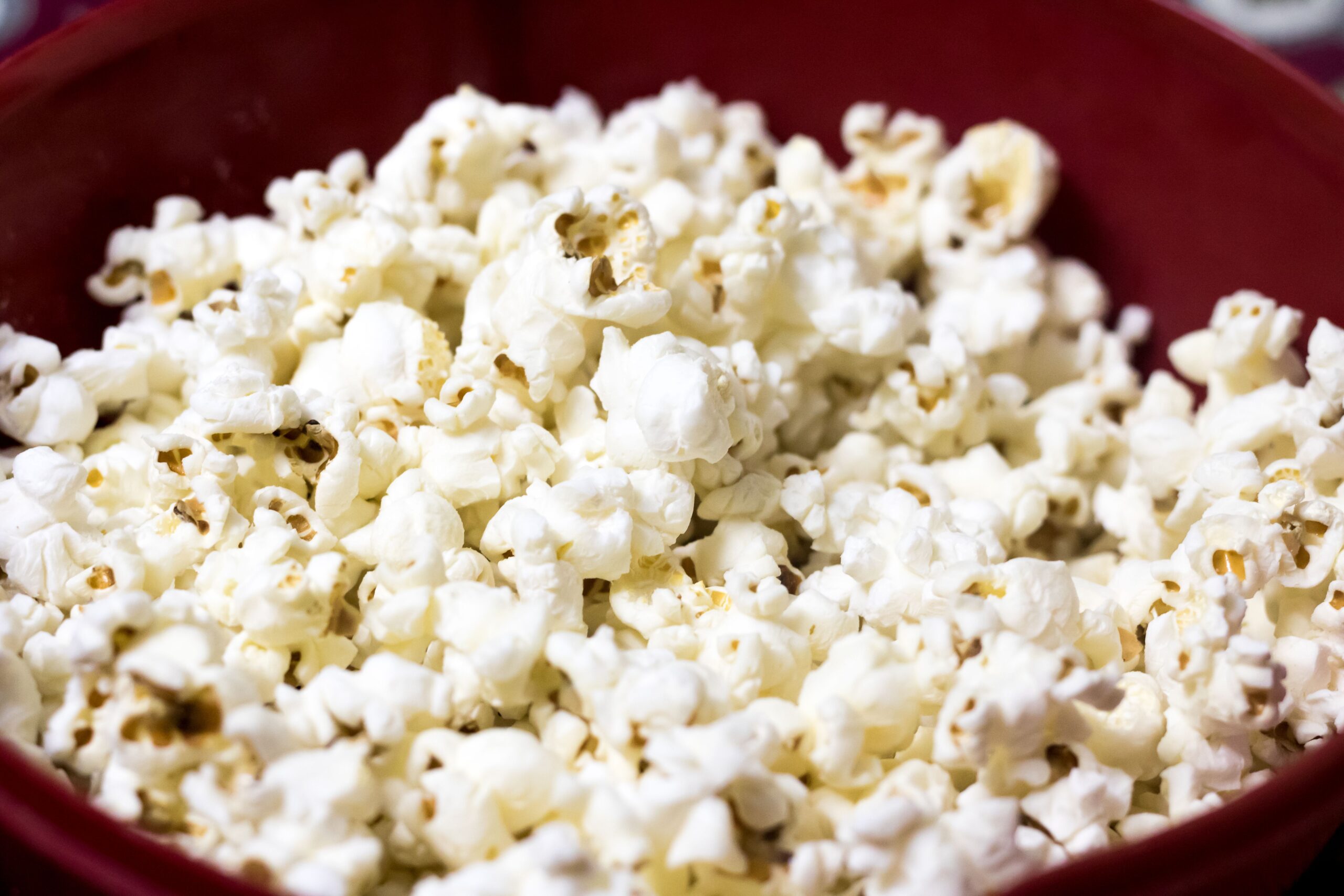
Popcorn flakes do not all take the same shape. “Butterfly” flakes spread into uneven wings and are light but fragile. “Mushroom” flakes are rounder and sturdier, which makes them useful for coatings such as caramel. Variety, kernel structure, moisture, and heating conditions all influence the final form. The sudden pressure drop makes the expansion possible, while the properties of the starch decide how that expansion sets.
Why some kernels never open
The hard kernels left behind are sometimes called old maids, but age is only one possible factor. The most common failures involve a leak, a poor moisture balance, or uneven heating. Even a hairline crack can let vapor escape too early. A very dry kernel may not produce enough vapor, while a damaged or unusually weak hull may split before the starch is ready to expand.
A 2005 Biomacromolecules study led by food chemist Bruce Hamaker at Purdue University compared popcorn varieties and examined the cellulose structure of their pericarps. The researchers found that moisture loss during microwave heating was linked to unpopped kernels. Better-performing kernels had hull structures that were more effective moisture barriers; leaky pericarps could not maintain the pressure needed for a full pop. The finding explains why two kernels heated side by side can behave differently even when they began in the same package.
Heating also matters. A kernel pressed against one hot spot can scorch on the outside before its center reaches popping conditions, while a kernel in a cooler part of the pan or microwave may never get hot enough. Oil is not what makes a kernel pop, but on a stovetop it transfers heat over the curved surface more evenly than isolated contact with a dry pan. In a microwave, electromagnetic energy is absorbed by water and other polar molecules, yet the field and the food load can still create hot and cool regions.
Good storage protects poppability. Keeping kernels in a tightly closed container at normal room conditions slows moisture loss and helps prevent hull damage. Refrigerating an opened package is not automatically helpful because repeated temperature changes can encourage condensation when the container is opened. Adding water directly to a batch is also unreliable: moisture may not move evenly through the hull, and excess water can reduce expansion rather than improve it.
The pop, jump, and pause all tell a story
The sound does not occur simply because a dry shell cracks. Virot and Ponomarenko synchronized high-speed video with audio and concluded that the release of water vapor produces the characteristic pop. Their recordings also showed that a kernel’s jump is not a rocket-like push from escaping steam. As the starch unfurls, it forms a temporary “leg” against the hot surface; that leg compresses and springs the flake upward, sometimes sending it into a somersault.
The changing rhythm in a pot or microwave is useful information. At first, relatively few kernels have reached the temperature and pressure needed to rupture. The popping accelerates as more kernels cross that threshold, then slows as the remaining batch becomes dominated by kernels that heat slowly or cannot hold pressure. Waiting for every last kernel usually burns the flakes that opened earlier, because some holdouts were never going to pop well.
A bowl of popcorn is therefore a record of many tiny experiments. Each flake marks a moment when moisture, hull strength, heat transfer, vapor pressure, and softened starch lined up closely enough for rapid expansion. Each unpopped kernel marks a condition that fell short. The snack’s dramatic change is familiar, but the mechanism joins plant structure, thermodynamics, and food chemistry in one remarkably compact package.