 Akshay Dinesh
A grain of table salt, a copper wire, a diamond, and a drop of water are all made from atoms, yet they behave in strikingly different ways. Salt forms brittle crystals, copper bends and carries electric current, diamond is exceptionally hard, and water remains liquid across the temperatures common on Earth. Those differences begin with chemical bonding: the attractions that organize atoms, ions, and electrons into stable structures. Learning the main bonding models makes it possible to predict far more than a chemical formula; it helps explain melting point, conductivity, solubility, shape, and strength.
Why atoms form chemical bonds
A chemical bond forms when an arrangement of nuclei and electrons has lower energy than the separated atoms. The positively charged nuclei attract negatively charged electrons, while nuclei repel other nuclei and electrons repel other electrons. A stable bond appears at a distance where these attractions and repulsions produce an energy minimum. Breaking the bond requires energy because the atoms must be moved away from that stable arrangement.
Valence electrons, the electrons in an atom’s outer occupied shell, play the largest role in ordinary bonding. Introductory chemistry often uses the octet rule to predict that many main-group atoms will gain, lose, or share electrons until their valence shell resembles that of a noble gas. The rule is useful, but it is a pattern rather than a universal cause. Hydrogen is stable with two valence electrons, some elements form electron-deficient compounds, and atoms from the third period onward can appear in structures with more than eight electrons around them.
Bond types are also models, not perfectly separated boxes. The International Union of Pure and Applied Chemistry recommends thinking about the amount of ionic character rather than treating every bond as purely ionic or purely covalent. Electronegativity, an atom’s tendency to attract shared electron density, helps describe that continuum. A small electronegativity difference usually points toward covalent bonding; a large difference gives a bond more ionic character.
Ionic, covalent, and metallic bonding
Ionic bonding builds charged lattices
Ionic bonding is the electrostatic attraction between oppositely charged ions. Sodium chloride is the familiar example: sodium atoms form positively charged sodium ions, while chlorine atoms form negatively charged chloride ions. A salt crystal is not made from isolated sodium-chloride pairs. It is a three-dimensional lattice in which each ion is attracted to ions of the opposite charge around it.
The lattice explains several properties of ionic solids. Strong attractions in many directions generally produce high melting points. The regular structure is hard, but it is brittle: shifting one layer can place ions with the same charge beside one another, creating repulsion and causing the crystal to split. A solid ionic compound does not conduct electricity because its ions are fixed in place. When the compound melts or dissolves and its ions can move, it may conduct.
Covalent bonding shares electron density
In a covalent bond, electron density is shared between atoms and attracted by both nuclei. Covalent bonding is common between nonmetals. Two hydrogen atoms form H2 by sharing a pair of electrons, while oxygen atoms in O2 share two pairs. A coordinate covalent bond is not a separate force: it is a covalent bond in which both electrons in the shared pair originally came from the same atom.
Covalent substances do not all have the same properties. Water and carbon dioxide consist of separate molecules, so their melting and boiling behavior depends largely on attractions between those molecules. Diamond and quartz are covalent-network solids in which bonds extend throughout a large structure; they are hard and have very high melting points. Graphite is another network solid, but its layered structure and mobile electrons make it soft between layers and able to conduct electricity. The label covalent identifies the bonding, not a single set of bulk properties.
Metallic bonding leaves electrons mobile
In a metal, positive atomic cores occupy a lattice while valence electrons are delocalized across the solid rather than belonging to one bond between one pair of atoms. This model explains why metals conduct electricity in both solid and liquid states: mobile electrons carry charge through the material. It also helps explain malleability and ductility. Layers of metal atoms can shift without forcing a row of identical, localized charges into direct opposition, so the material can often bend or stretch instead of shattering.

Metallic strength and melting point vary widely. They depend on factors such as the number of delocalized electrons, the size and charge density of the atomic cores, and the crystal structure. Mercury is liquid near room temperature, while tungsten has an extremely high melting point. Saying that metals simply have “moderately high” melting points misses this important range.
Bond polarity and molecular shape
When bonded atoms have different electronegativities, the shared electron density is pulled unevenly. The more electronegative atom gains a partial negative charge, written δ−, and the other gains a partial positive charge, written δ+. This creates a bond dipole. Electronegativity cutoffs can be useful classroom estimates, but they are not laws; composition, structure, and measured behavior matter when classifying a real substance.
A molecule’s overall polarity depends on both its bond dipoles and its shape. Carbon dioxide has two polar carbon-oxygen bonds, but the molecule is linear. The equal dipoles point in opposite directions and cancel, so CO2 has no permanent molecular dipole. Water also has polar bonds, but its bent shape prevents cancellation, making the molecule polar.
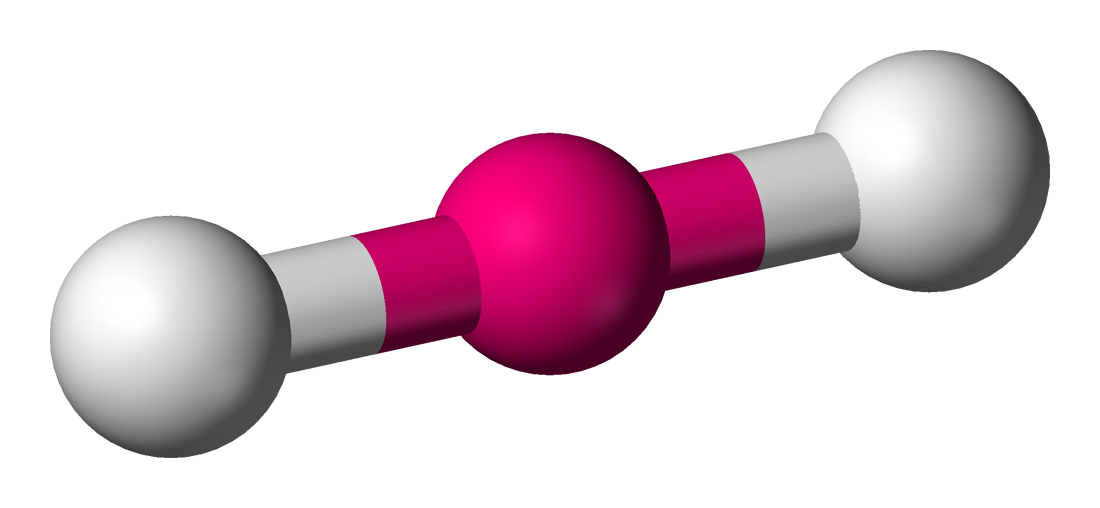
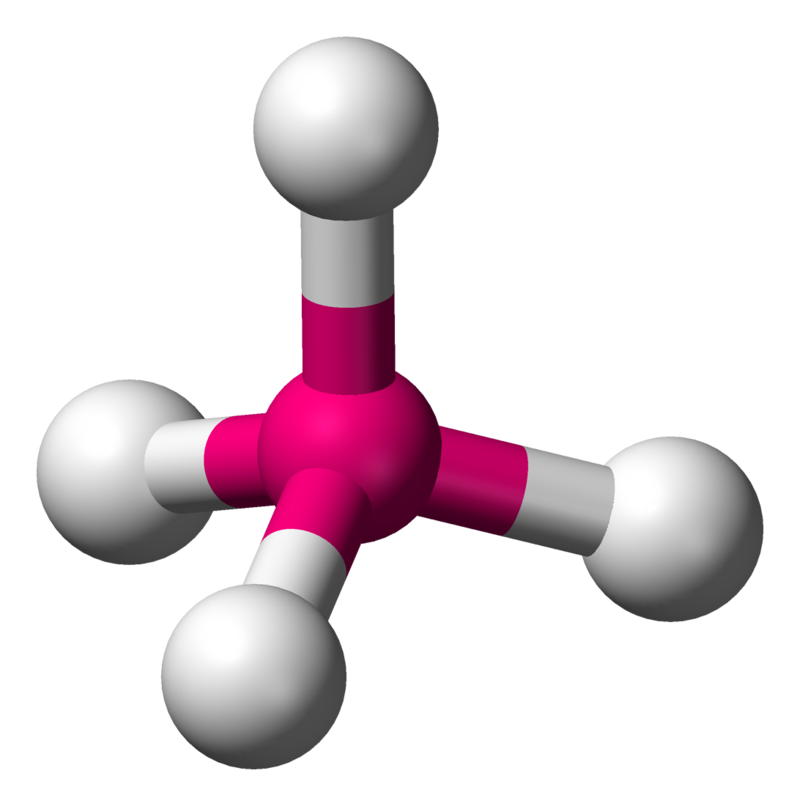
Valence-shell electron-pair repulsion theory, usually shortened to VSEPR, predicts many simple molecular shapes. Regions of electron density around a central atom arrange themselves to reduce repulsion. Two regions give a linear electron geometry, three give trigonal planar, and four give tetrahedral. Lone pairs occupy a little more space than bonding pairs, so they can compress bond angles and change the visible molecular shape. Four electron regions produce tetrahedral methane, trigonal-pyramidal ammonia when one region is a lone pair, and bent water when two are lone pairs.
Intermolecular forces are not chemical bonds within a molecule
The bonds within a molecule are intramolecular forces. Intermolecular forces act between separate particles. Confusing the two leads to a common mistake: when liquid water boils, the water molecules separate from one another, but the covalent oxygen-hydrogen bonds inside most molecules do not break. Energy is used mainly to overcome attractions between molecules.
London dispersion forces arise from momentary fluctuations in electron density. They occur in every atom and molecule, including nonpolar ones, and generally become stronger as electron clouds become larger and more polarizable. Molecular shape matters too: particles with more surface contact can experience stronger dispersion attractions than compact particles with similar electron counts.
Polar molecules also experience dipole-dipole attractions as partially positive regions attract partially negative regions on neighboring molecules. Hydrogen bonding is a particularly strong, directional form of dipole attraction. It occurs when hydrogen is covalently bonded to nitrogen, oxygen, or fluorine and interacts with a lone pair on a nearby electronegative atom. Hydrogen bonds help explain water’s unusually high boiling point for such a small molecule and contribute to the structures of proteins and DNA.
No single ranking predicts every boiling point. Hydrogen bonding may dominate one comparison, while the greater polarizability of a much larger molecule may dominate another. A sound comparison checks particle size, shape, polarity, and the number and arrangement of possible hydrogen-bonding sites.
How bonding predicts material properties
Bonding becomes most useful when it is connected to observable behavior. Begin by identifying the particles present: are they ions, separate molecules, atoms joined in a network, or metal atoms with delocalized electrons? Then ask what must move or be separated for the property in question. Electrical conduction needs mobile charged particles. Melting requires enough energy to disrupt the attractions holding a solid’s particles in place. Dissolving requires new solute-solvent attractions that compensate for attractions being broken.
This approach supports several reliable predictions:
- Ionic solids are usually hard, brittle, and high-melting. They conduct when molten or dissolved if mobile ions are present.
- Molecular substances often have lower melting and boiling points than ionic or network solids, although strong intermolecular forces can raise them substantially.
- Covalent-network solids are commonly hard and high-melting because separating their particles requires breaking covalent bonds throughout the structure.
- Metals usually conduct heat and electricity and can often be shaped, although their hardness and melting points vary.
- Solubility depends on the balance of attractions. Polar solvents often dissolve ions and polar molecules well, while nonpolar solvents more readily dissolve nonpolar substances.
These are patterns with exceptions, so structure should always come before memorization. Potassium nitrate contains ionic attraction between potassium and nitrate ions, yet the atoms inside each nitrate ion are covalently bonded. Graphite conducts even though it is a covalent-network solid. A molecule may contain polar bonds and still be nonpolar overall if its geometry cancels the bond dipoles.
Chemical bonding is therefore less a list of definitions than a way to connect invisible arrangements with visible properties. Once the particles, electron distribution, and structure are clear, the behavior of a substance becomes much easier to explain. The most useful question is not simply “What type of bond is this?” but “How does this bonding and structure control what the material can do?”