
 Rishay Dinesh
Bioluminescent Bays: Nature’s Glowing Wonders
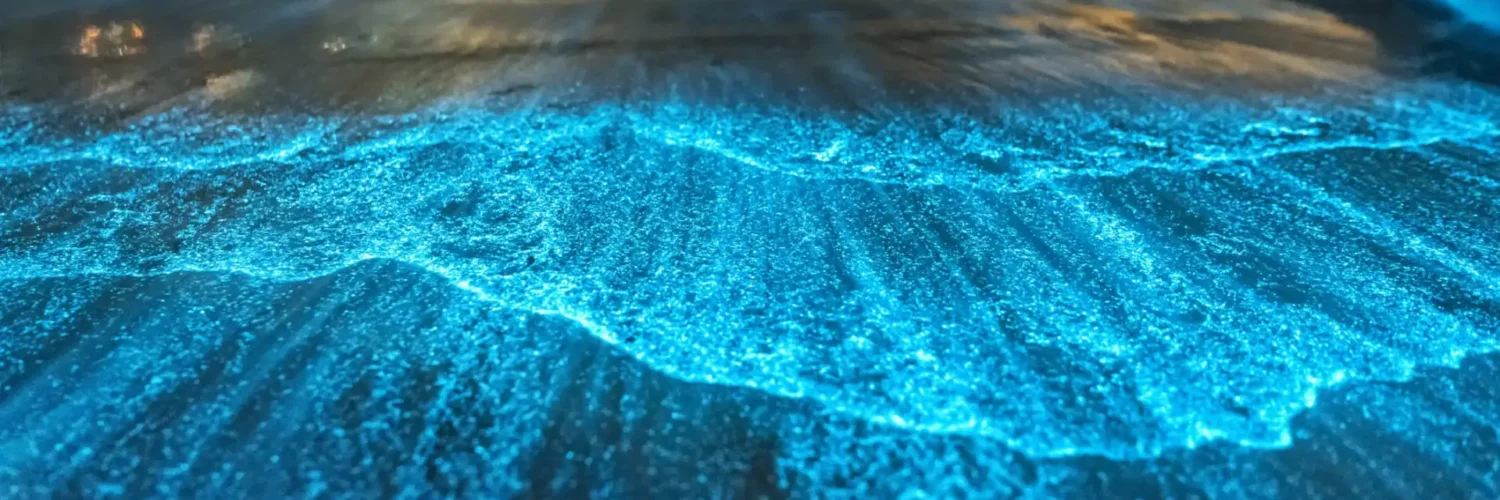
Bioluminescent bays are among the rarest and most enchanting natural phenomena on Earth. These waters glow at night, creating a magical experience for anyone who visits. Tiny microorganisms called dinoflagellates emit light through chemical reactions in their cells. Every splash, paddle stroke, or wave triggers thousands of flashes, producing ripples of glowing blue across the water. Mangrove forests often surround these bays, providing nutrients, filtering sediments, and protecting the plankton from strong currents.
The magic of glowing bays is more than visual. Students, researchers, and tourists witness fundamental principles of chemistry, biology, and ecology firsthand. Observing how microscopic organisms collectively produce large-scale visible effects demonstrates the complexity of natural systems. The delicate balance between water quality, nutrient availability, and plankton density highlights how interconnected ecosystems are, offering lessons about interdependence, adaptation, and environmental stewardship.
Visitors leave these bays with a sense of wonder, often reflecting on the power of even the smallest organisms to shape their environment. The experience inspires curiosity and encourages learning, showing that scientific phenomena can also be beautiful, immersive, and profoundly engaging.
What Causes the Glow in Bioluminescent Bays
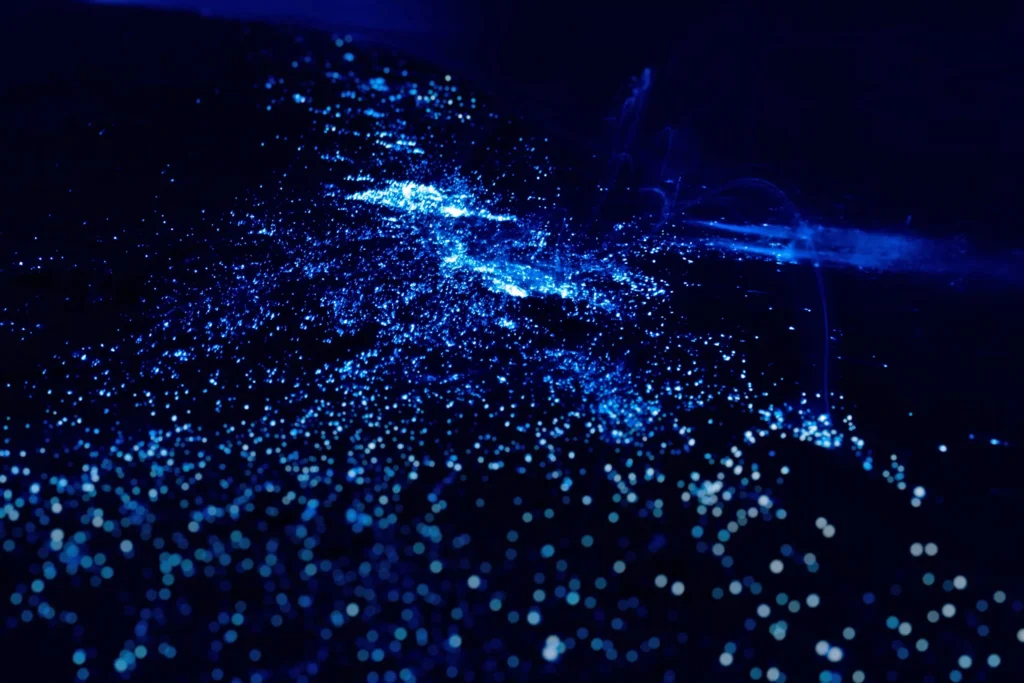
The bioluminescence in these bays is produced by dinoflagellates, microscopic plankton that contain luciferin and luciferase. When disturbed, these chemicals react to create brief flashes of blue light. Thousands of these flashes occur simultaneously, generating a continuous glow across the water. Unlike electricity, this luminescence relies entirely on chemical energy, which the plankton recharge during the day using sunlight.
The glow serves a purpose beyond visual delight. Dinoflagellates conserve energy by only glowing when disturbed, and the light can indicate environmental changes or predator presence. Scientists monitor brightness and flash frequency to assess plankton density, water quality, and ecosystem health. Students observing this phenomenon gain an understanding of enzyme activity, energy transfer, and ecological interactions in real-time, learning how microscopic life impacts entire ecosystems.
Why Some Places Form Bioluminescent Bays
Bioluminescent bays only exist where environmental conditions allow dense populations of dinoflagellates to thrive. Calm, nutrient-rich waters, narrow bay openings, and protective mangrove forests all play crucial roles. Mangroves supply nutrients, filter sediments, and shield the plankton from currents that would disperse them. Even small fluctuations in water temperature, salinity, or clarity can dramatically reduce the glow, highlighting the fragility of these ecosystems.
The rarity of glowing bays stems from the precise combination of geography, climate, and ecosystem stability required for their formation. Coastal topography, tides, and local vegetation all contribute to whether a bay can sustain plankton populations dense enough to produce visible light. Studying these locations allows students and researchers to understand how multiple factors interact to sustain species and maintain ecological balance.
Types of Dinoflagellates Found in Glowing Bays
Several species of dinoflagellates contribute to bioluminescence, each with unique characteristics. Pyrodinium bahamense produces bright, intense flashes, dominating many tropical bays. Noctiluca scintillans glows less frequently but adds subtle variations to the display. Lingulodinium polyedrum can create longer-lasting flashes under certain water conditions.
Species diversity influences glow intensity and visual patterns. Some plankton react rapidly to water movement, producing sharp flashes, while others respond more slowly, creating subtler illumination. Comparing these species allows students and scientists to study adaptation, evolution, and ecological interactions, showing how even tiny organisms shape their environment.
The distribution of species also affects the timing and brightness of the glow. In some bays, one species dominates, producing a near-constant light, while in others, a mix of species creates a dynamic, fluctuating display. These variations help researchers understand environmental preferences, resilience, and ecological specialization.
How Bioluminescence Works at the Chemical Level
Bioluminescence occurs when mechanical force triggers a chemical reaction in dinoflagellates. Specialized organelles called scintillons store luciferin and luciferase until activation. When disturbed, luciferase catalyzes the oxidation of luciferin, releasing photons that appear as blue light. This reaction is highly efficient, producing very little heat and conserving energy.
The emitted blue light penetrates water effectively, making the glow visible even from a distance. Dinoflagellates evolved to glow only when necessary, preventing energy waste while providing information about environmental changes. Students can observe how microscopic chemical reactions translate into large-scale, visible natural phenomena, linking biochemical principles to ecology.
Studying this reaction also has practical applications. Researchers investigate bioluminescence for medical imaging, energy-efficient lighting, and biosensors. Observing glowing bays allows scientists to see these processes in nature, providing insight into how biological systems efficiently convert chemical energy into visible light.
Nighttime Conditions That Strengthen the Glow
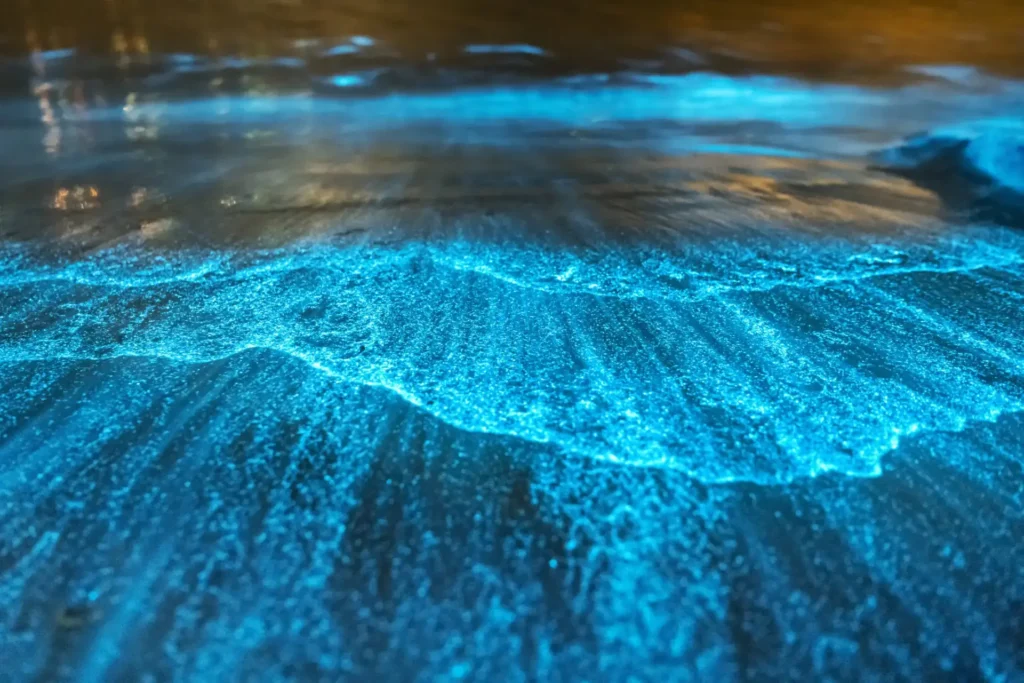
The glow is most vibrant under complete darkness. Moonlight, artificial lighting, or reflective surfaces can reduce visibility. Calm water is critical, as it allows plankton to remain near the surface, maximizing the luminous display. Rough waters mix deeper layers, diluting plankton density and decreasing glow intensity. Water temperature, salinity, and nutrient availability also affect chemical reaction efficiency and light output.
Tour guides often schedule nighttime visits according to tides, moon phases, and weather conditions to ensure optimal viewing. Environmental stability is essential for long-term glow health, as storms, pollution, and human interference can harm plankton populations. Observing these patterns teaches students how environmental conditions directly influence organism behavior and ecological processes.
Famous Bioluminescent Bays Around the World
Some of the brightest bioluminescent bays are found in Puerto Rico, including Mosquito Bay in Vieques and Laguna Grande in Fajardo. Pyrodinium bahamense thrives in nutrient-rich waters and calm conditions, producing vivid displays visible year-round. Jamaica’s Luminous Lagoon also maintains a bright glow throughout the year, while in the Maldives, glowing beaches create streaks of light along shorelines rather than enclosed bays.
Each location demonstrates how geography, climate, and ecosystem conditions influence bioluminescence. These bays serve as natural classrooms, allowing students and researchers to study marine biology firsthand. Observing multiple bays across the globe enables comparisons of species composition, water chemistry, and nutrient availability, deepening understanding of biodiversity and adaptation.
Tourism and Its Effects
Tourism can impact bioluminescent bays positively and negatively. Boats stir sediments, reducing water clarity and dimming the glow. Sunscreen, chemicals, and artificial lighting harm plankton populations, while noise and human activity can interfere with natural behavior.
Many communities implement rules to protect these ecosystems, such as limiting boat access, enforcing lighting restrictions, and providing educational tours. Tourism revenue can also support conservation projects, environmental monitoring, and citizen science programs. Students observing these interactions gain awareness of human impacts on natural systems and the importance of sustainable practices to preserve fragile environments.
Conservation Lessons from Bioluminescent Bays
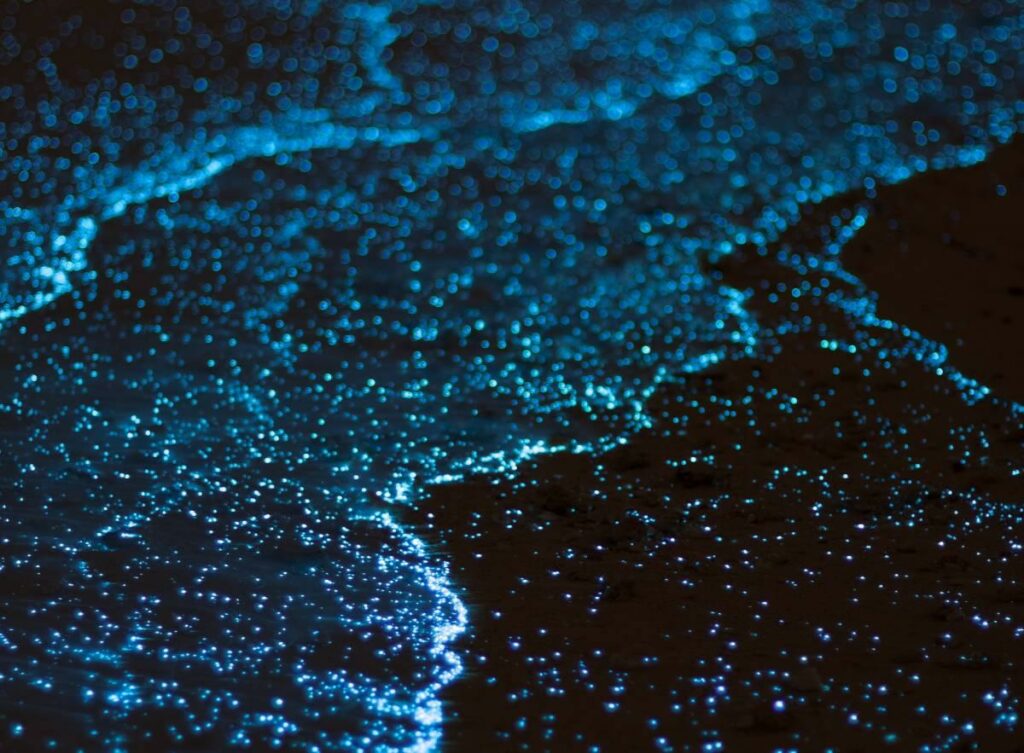
The delicate balance required for bioluminescent bays illustrates broader conservation principles. Mangroves, water quality, and plankton populations must remain healthy for bioluminescence to occur. Disruption of any one component can diminish or eliminate the glow entirely.
These ecosystems demonstrate cooperation in nature and the importance of environmental stewardship. Students, researchers, and visitors learn that maintaining natural wonders requires knowledge, planning, and responsible behavior. Protecting bioluminescent bays ensures that future generations can continue to experience these rare and magical environments.






Add comment