
 Akshay Dinesh
A flooded cranberry field can look like a lake covered in red fruit. The scene is so striking that it has created a stubborn misconception: cranberries must grow underwater. They do not. The plants spend the growing season rooted in drained soil, and farmers add water at carefully chosen moments because a ripe cranberry is unusually good at floating.
That temporary flood turns a difficult picking job into a controlled exercise in plant biology and fluid mechanics. Air spaces inside the fruit supply the buoyancy, specialized machines loosen berries from low vines, and floating barriers gather the crop for collection. Yet the same method that moves vast quantities efficiently is not ideal for every cranberry. The route from field to store begins with a choice between wet and dry harvesting.
Cranberries grow on low vines, not in a pond
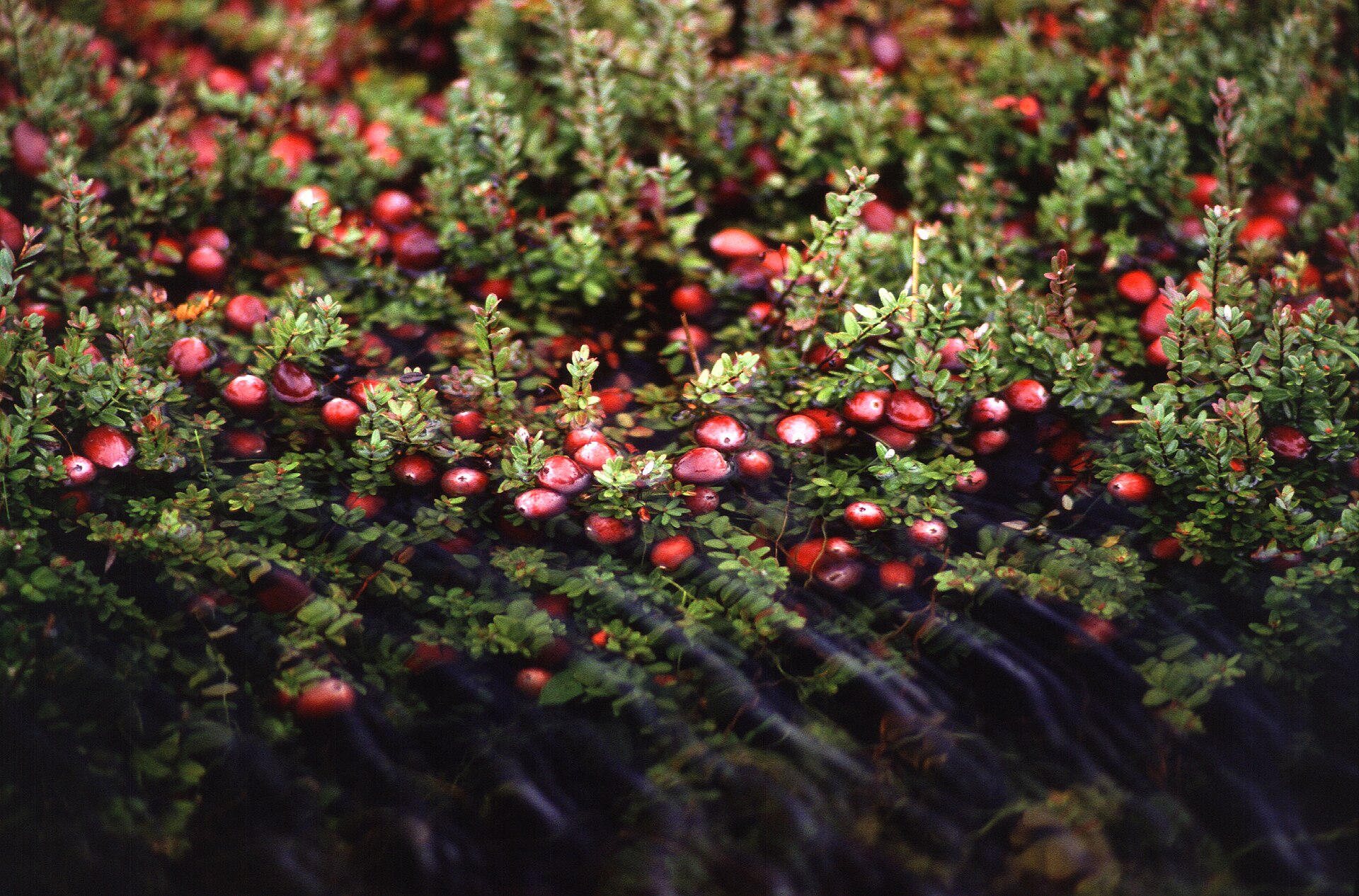
The American cranberry, Vaccinium macrocarpon, is a perennial evergreen plant native to North America. It grows as a dense mat of trailing vines close to the ground. Growers establish those vines in level beds built with layers that can include sand, peat, and other soil materials, then surround the beds with ditches, gates, pumps, and reservoirs. The result is a field that can be watered, drained, or deliberately flooded without leaving the roots submerged all year.
Cranberry plants favor conditions that would trouble many crops. Oregon State University Extension describes commercial beds with strongly acidic soil, generally around pH 4.0 to 5.5. The vines need moisture, but they also need oxygen around their roots during active growth. A field that stayed waterlogged through spring and summer would interfere with healthy root function and invite disease. In ordinary growing conditions, water arrives mainly through irrigation rather than as a permanent blanket over the plants.
The fruit also takes longer to develop than a quick glance at the autumn harvest suggests. Flower buds begin forming during one growing season, survive winter, and open the following year. Bees pollinate the pale pink flowers, and the fruit enlarges through summer before coloring and ripening in fall. Oregon State’s production guidance describes this as a roughly 16-month cycle from bud formation to harvest. Flooding is a management tool placed near the end of that long biological process, not the environment in which the berry spends its life.
Four air chambers make a ripe cranberry float
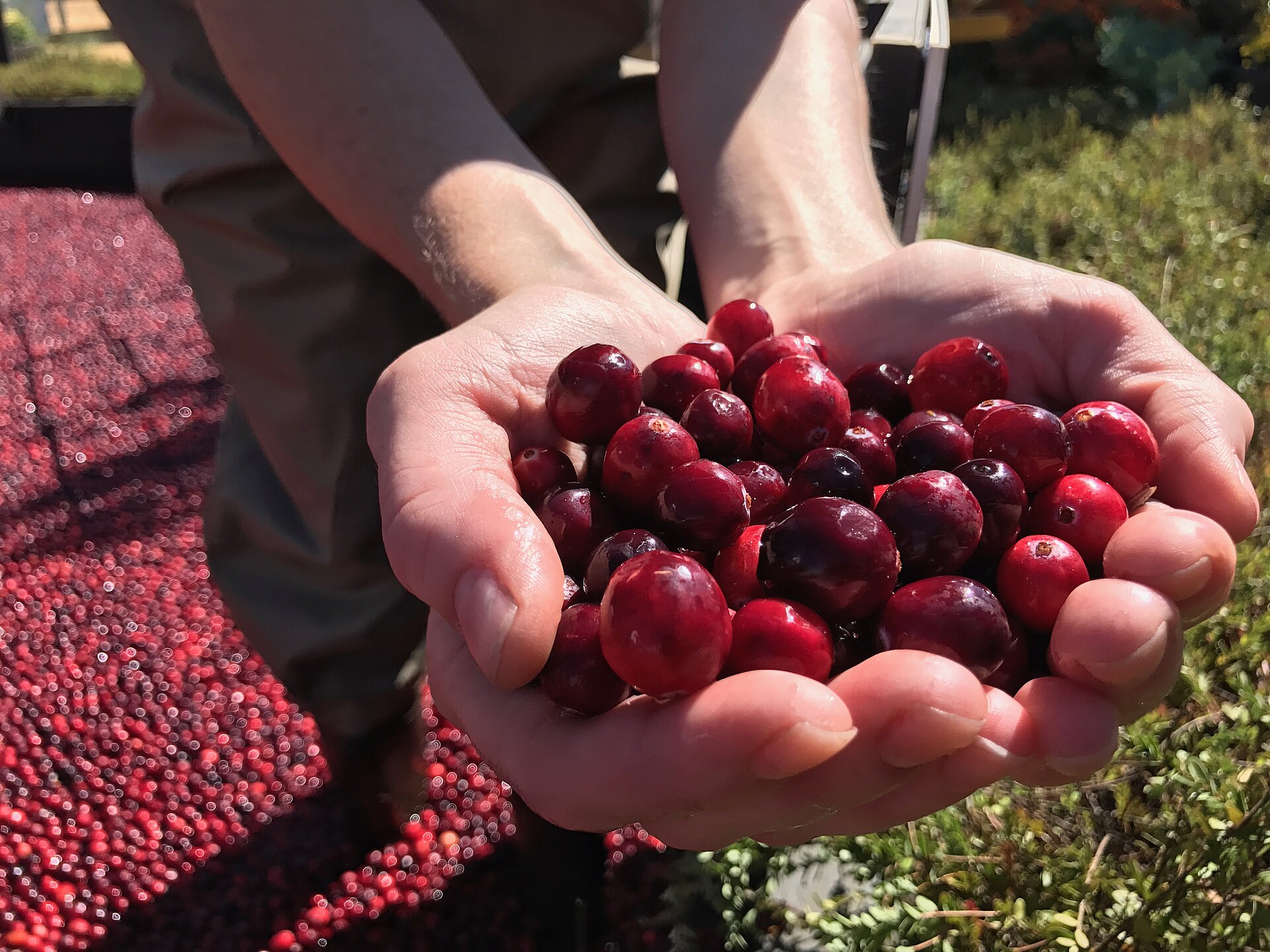
Cut a cranberry across its middle and its secret becomes visible. The fruit contains four hollow chambers arranged around its center, with seeds and supporting tissue between them. Those pockets reduce the berry’s average density. When the surrounding water displaces a volume that weighs more than the berry, the upward buoyant force wins and the cranberry rises to the surface.
The water is not pulling fruit from the vine by itself. An attached cranberry remains held by its stem, so growers first need mechanical action to release it. Once free, however, its ability to float separates the crop vertically from the vines below. Instead of searching through a thick ground-level mat for individual berries, workers can gather a visible layer at the water’s surface. The field becomes part of the handling system.
Those air chambers also help explain the famous cranberry bounce. A sound, firm berry can rebound when dropped because its structure springs back after impact. A soft or decayed berry absorbs more of that energy and tends not to bounce well. Cranberry handlers have long used bouncing as one way to separate firm fruit from damaged fruit, although modern grading also relies on equipment that checks size, color, and defects. Floating and bouncing are related signs of structure, but neither means that water has made the berry ripe.
How a wet cranberry harvest works
Wet harvesting begins only after growers judge that the crop has reached the right color and maturity. They flood the bed with enough water to cover the low vines. A machine often called a water reel or eggbeater then moves through the field. Its rotating parts agitate the vines and knock ripe berries loose without literally scooping them from the soil. As the freed fruit floats upward, the water changes from an empty-looking surface into a dense red layer.
Workers stretch floating booms across the bed and gradually tighten them, much as a net concentrates fish. The booms guide the cranberries toward a collection point, where a pump or conveyor lifts fruit from the water. Cleaning equipment removes leaves, twigs, and other field material before the crop enters a truck. Water drains away, and the bed returns to its normal growing condition after harvest and post-harvest work.
The scale of the method is its great advantage. Massachusetts Cranberries, a grower organization, reports that more than 90 percent of that state’s crop is wet harvested. A flooded bed allows a relatively small crew to collect enormous numbers of berries without crawling over the vines. The harvest window generally runs from September into early November, which is why images of red fields appear just before cranberry sauce becomes a fixture on many Thanksgiving tables.
Wet-harvested berries usually head for processing. They can become sauce, juice, sweetened dried cranberries, frozen ingredients, or extracts. The trip through a reel, a floating mass, pumps, and bulk transport is efficient, but it is not the gentlest path for fruit expected to sit fresh in a bag. That difference leads to a much smaller but important second harvest system.
Dry harvesting supplies most fresh whole berries
In a dry harvest, the grower does not flood the bed. A walk-behind mechanical picker combs berries from the vines and carries them into a bag or container. Older harvesting crews used hand-held scoops with comb-like teeth; modern equipment applies the same basic idea with less hand labor. The work proceeds more slowly than wet harvesting, and loaded containers must be moved carefully across beds that cannot support heavy traffic.
The reward is gentler handling and fruit suited to the fresh market. Dry-harvested cranberries are the ones most likely to appear as whole berries in produce departments for home cooking and baking. Wet-harvested fruit is not somehow inferior, but it has been routed toward products where appearance and long fresh storage matter less. The harvest method is therefore partly a logistics decision: farmers match handling speed and fruit condition to the product the buyer intends to make.
This distinction also explains why a photograph of a flooded field does not represent every cranberry in a grocery store. The spectacular wet harvest dominates both production and public imagery, while the smaller dry harvest operates on land that may look almost ordinary from a distance. One crop supports two systems because a berry destined for sauce can tolerate a journey that a berry sold fresh should avoid.
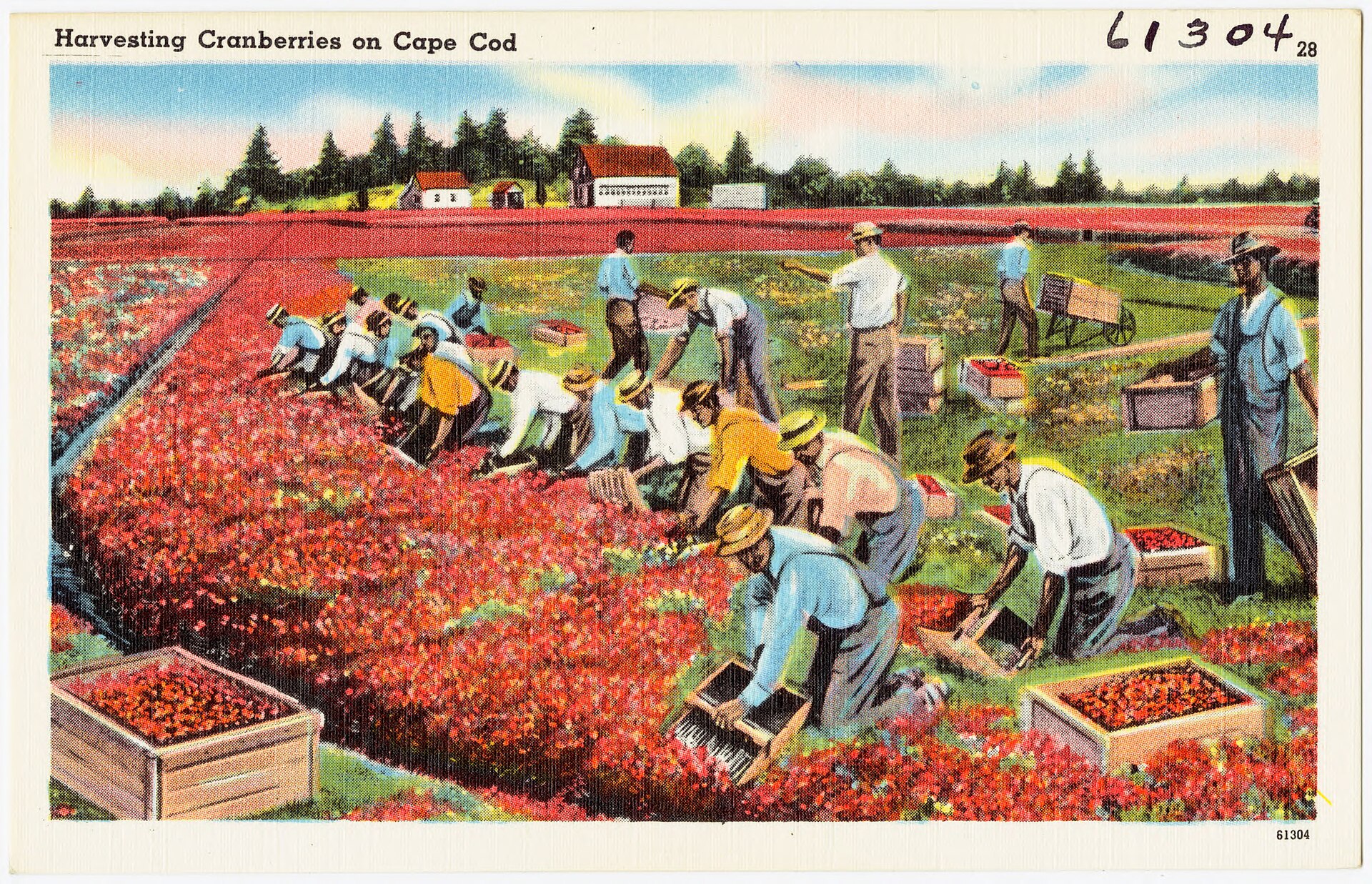
Flooding is one part of a larger water-management system
Harvest is not the only time cranberry growers use standing water. Sprinklers may protect ripening fruit from a damaging autumn frost by releasing heat as water freezes. In colder regions, growers can flood dormant beds during winter so a layer of ice shields vines from severe cold, drying winds, and rapid temperature changes. Water may also assist with removing fallen leaves or managing particular pests. Each use has its own timing, depth, and drainage plan.
That control matters because water is both essential and potentially harmful. Ditches must carry it where it is needed, reservoirs must hold an adequate supply, and growers often move or reuse it across beds. A poorly timed flood can spread weed seeds or plant disease, while drought can leave too little water available for an efficient harvest. Climate, soil, field design, and local water rules all shape what a farm can do.
The word bog can therefore be misleading when it suggests a permanently soggy natural marsh. A commercial cranberry bed is an engineered agricultural landscape designed to switch between moist, drained growing conditions and short periods of flooding. The brightest red harvest scenes capture one brief stage in a cycle that depends on months of dry-footed plant growth and years of careful water control.
The simple answer to why cranberry bogs are flooded is that ripe berries float after machines loosen them from the vine. The fuller answer is more revealing. Anatomy gives the fruit buoyancy, farm engineering gives water somewhere to go, and market needs determine whether the crop should ever enter the flood. What looks like berries growing in a lake is actually a temporary harvest system built around one useful feature hidden inside the fruit.