
 Akshay Dinesh
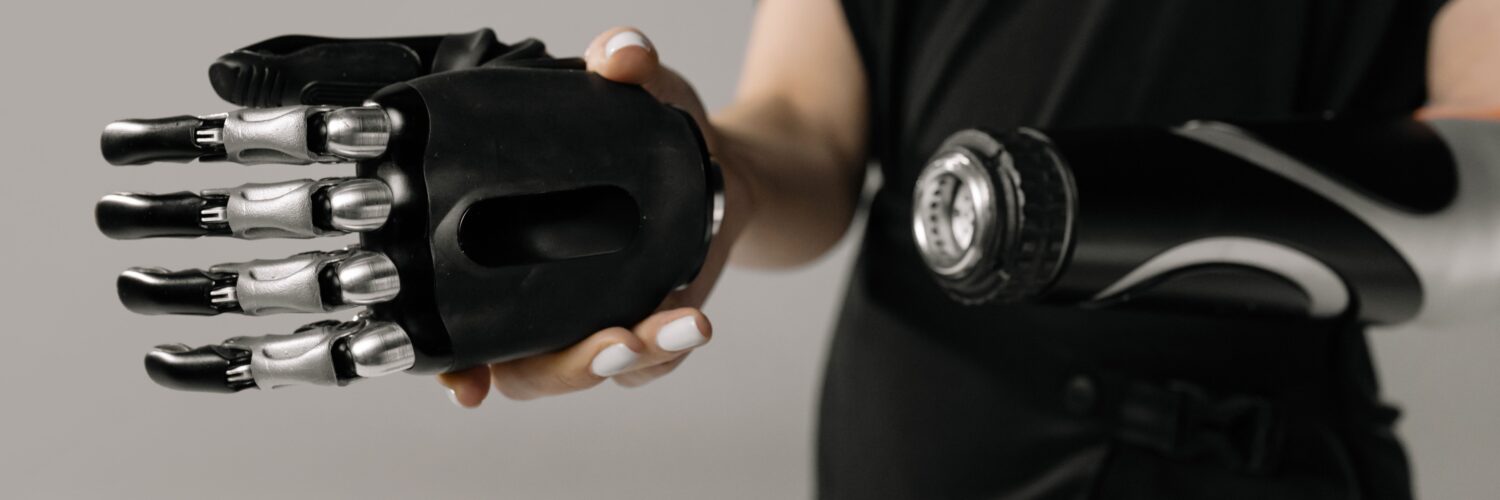
A modern prosthetic hand can open, close, and hold an object, yet movement alone does not recreate what a biological hand does. When you lift a paper cup, your fingertips report contact, pressure, slip, and finger position before you consciously think about any of them. Those signals help your brain tighten its grip just enough. Without them, even an advanced prosthesis may require constant watching: Is the cup secure? Is the grip crushing it? Has it begun to slide?
Researchers are building systems that send some of that missing information back to the user. Sensors in a prosthetic hand measure what is happening at the fingers, electronics translate the measurements into a coded signal, and an interface delivers the signal through the skin or nervous system. The result is not yet identical to natural touch, and most approaches remain in research or limited clinical use. Even so, human studies show that useful sensations of contact, force, position, and temperature can be restored in several ways.
Why Movement Without Touch Is Hard Work
Many powered upper-limb prostheses use electrical activity from muscles in the residual limb as a control signal. When a person attempts a familiar movement, electrodes detect patterns called electromyographic, or EMG, signals. A controller converts those patterns into commands for motors in the wrist and fingers. Information travels from the person to the device, but in a conventional setup very little travels back.
This is known as open-loop control. The user often replaces missing touch with vision, watching the hand closely to judge whether it has reached an object and how firmly it is holding it. Sound can help when a motor changes pitch or an object scrapes across a surface. The remaining limb may also feel vibration and forces through the prosthetic socket, but those indirect clues are limited and can be difficult to interpret.
Natural hand control works differently. It is a closed loop: the brain sends movement commands while receptors in the skin, muscles, and joints continually report the result. Touch receptors signal contact and texture. Pressure-sensitive receptors help detect grip force and slip, while proprioception tells the brain where the fingers and wrist are positioned. A touch-enabled prosthesis tries to rebuild a small part of that return path.
How a Prosthesis Closes the Feedback Loop
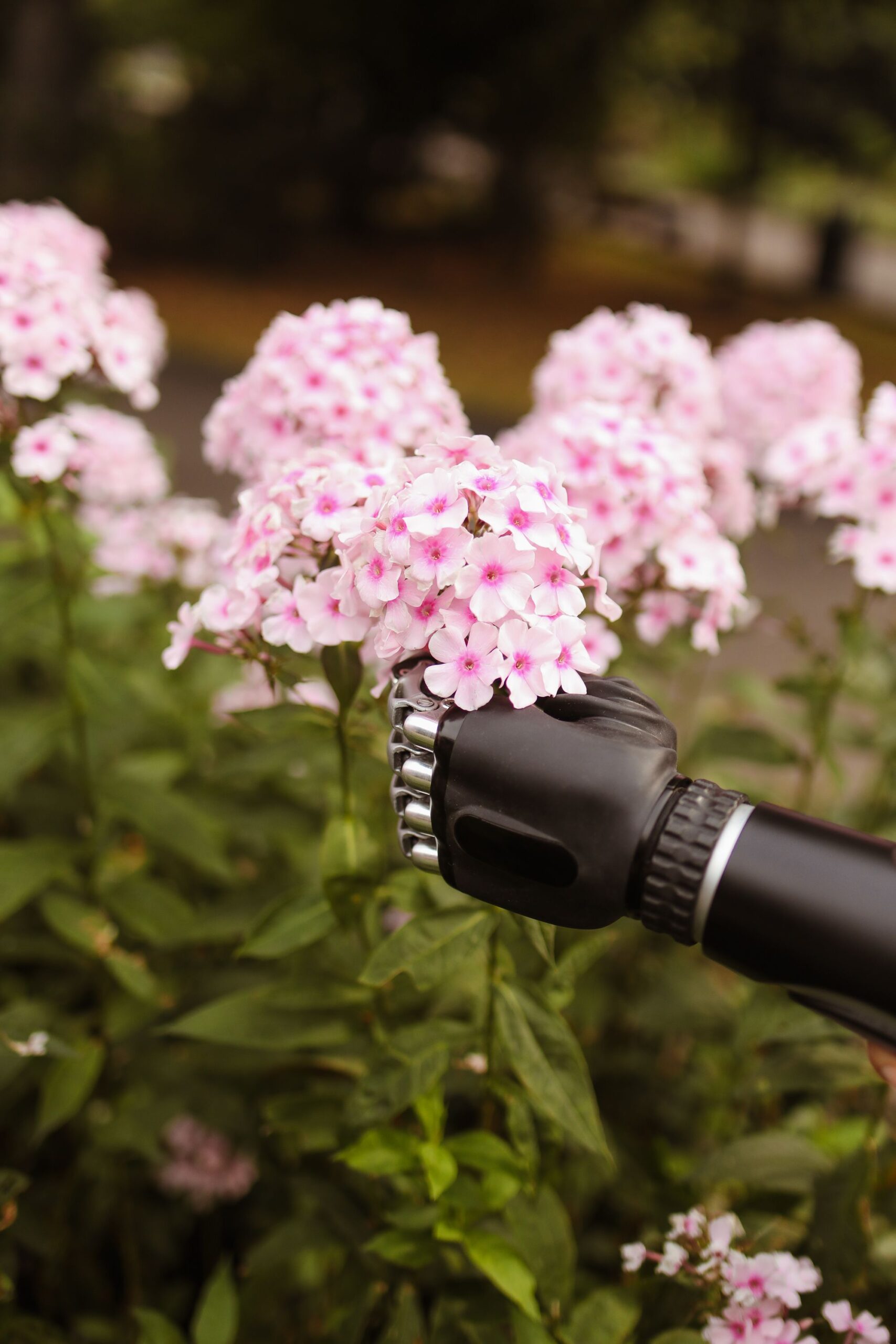
The process begins with sensing. Force sensors can measure how hard a fingertip presses against an object. Position sensors track the angle of a finger or wrist, and small accelerometers can detect vibration or the first signs of slip. Experimental systems may also measure temperature, proximity, or the distribution of pressure across a fingertip. A hand does not need to copy every biological receptor to provide useful information; it needs to capture signals that help with a specific task.
Raw measurements then have to be translated. A controller might make a vibration stronger as grip force rises, press harder against the skin as a finger closes, or activate separate locations to represent different fingertips. This conversion is called sensory encoding. Good encoding is predictable enough to learn but not so demanding that the person must solve a puzzle every time the hand touches something.
Timing matters as much as the code. Feedback that arrives late can make the user overcorrect, alternating between too little and too much force. The signal also needs enough range to distinguish a light contact from a firm grasp without becoming uncomfortable. Engineers therefore tune intensity, location, pulse timing, and delay while asking users which patterns remain understandable during real movements rather than only during a quiet laboratory test.
That design problem reveals why simply adding more sensors is not always better. A stream of detailed data can overwhelm the user or require too much attention. The practical goal is not to reproduce every nerve impulse from a natural hand. It is to deliver the smallest set of reliable cues that improves control, confidence, or awareness.
Three Routes From the Device Back to the Person
The least invasive approach delivers feedback through intact skin. Small motors can vibrate against the upper arm, while bands or pads can stretch, squeeze, or tap the skin. In a 2025 Scientific Reports study, researchers tested a haptic armband that represented finger position, finger force, and wrist rotation with combinations of tangential motion, pressure, and vibration. Such systems can be put on and removed without surgery, which makes them easier to test and adapt.
Skin-based feedback is sensory substitution: the person learns that a feeling on the arm stands for an event at the prosthetic fingers. With practice, the code may become quick to interpret, but the sensation usually remains located where the stimulator touches the body. The skin beneath a socket can also be sensitive, sweaty, or crowded by control electrodes, so comfort and placement are not minor engineering details.
A second route uses the body’s own nerve pathways. Electrodes can stimulate peripheral nerves in the residual limb, producing sensations that seem to come from the missing hand. Some interfaces sit on or around a nerve, while others penetrate it to reach smaller groups of fibers more selectively. Nerve stimulation may create more natural and precisely located sensations, but surgery, long-term electrode stability, calibration, and infection risk raise the clinical burden.
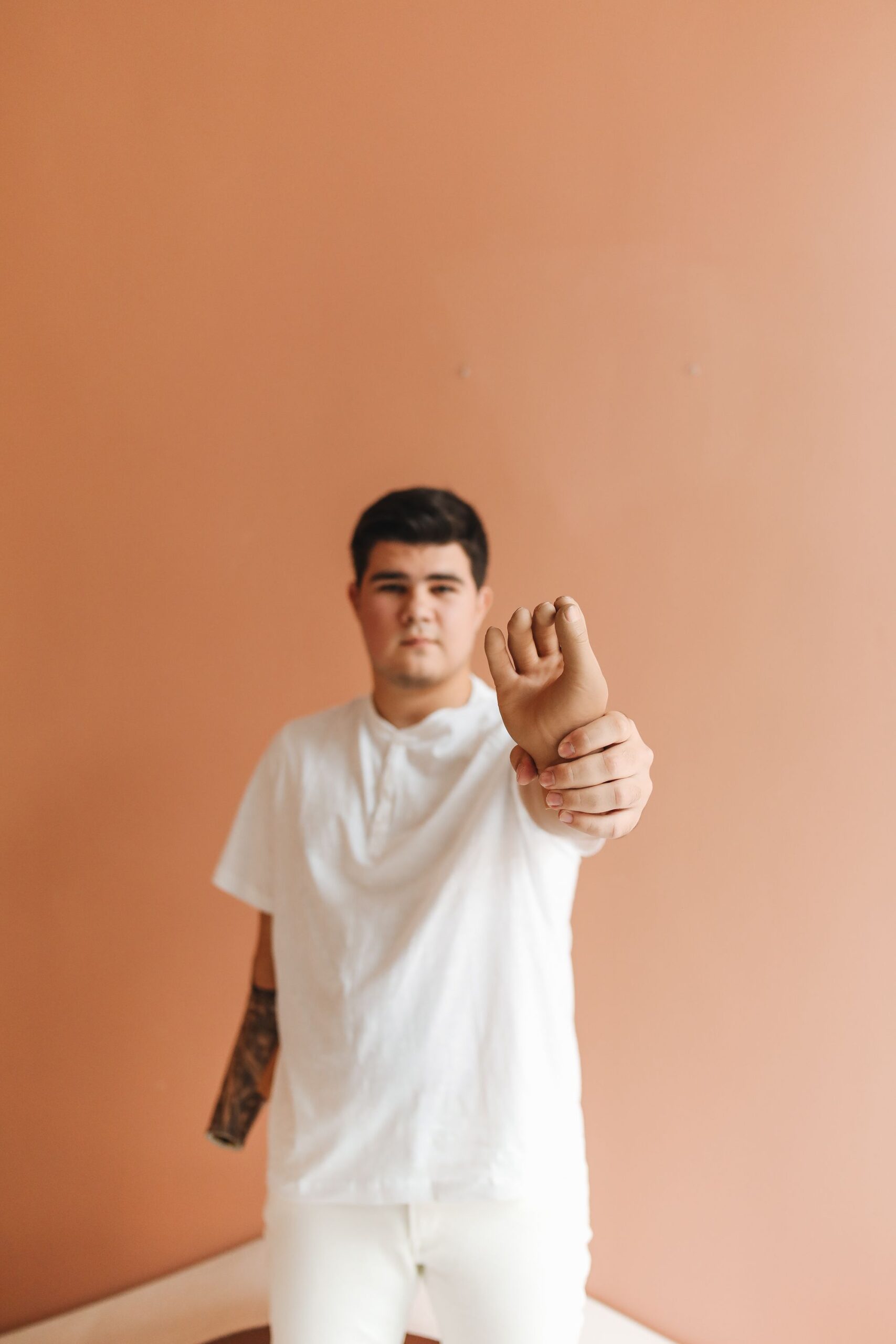
A third family of methods takes advantage of sensory remapping. After an amputation, touching a particular area of the residual limb can sometimes produce a sensation that seems to come from a missing finger. Surgeons can also redirect sensory nerves to new patches of skin in a procedure known as targeted sensory reinnervation. Once those locations are mapped, a prosthetic sensor can trigger pressure, vibration, or temperature at the corresponding spot. The user feels the stimulation through living tissue, yet may perceive it as belonging to the prosthetic hand.
What Human Studies Have Actually Shown
Recent results are encouraging, but their scale matters. The 2025 haptic-armband study included 28 participants without an upper-limb difference and 10 with one. Combining continuous hand control with feedback improved the ability to regulate position and force, and participants reported stronger perceptions of touch, position, and force. The researchers did not find a broad improvement in every dexterity or embodiment measure, however. That mixed result is valuable: receiving a signal is not the same as immediately gaining effortless, natural hand function.
Temperature offers another striking example. In a study published in Med in 2024, a system called MiniTouch placed a thermal sensor on a prosthetic fingertip and a thermal stimulator against a mapped area of the residual limb. One participant completed eight experimental sessions over six months. He distinguished objects by temperature and material and, while blindfolded, could tell a human arm from an artificial one using thermal information. The demonstration showed what is possible, but a single-participant study cannot establish how well the method will work across different users or during years of daily wear.
Lower-limb research points to the same broader principle. A 2024 Nature Communications clinical study used biomimetic nerve stimulation to return foot-contact information to people with lower-limb amputation. Signals designed to resemble natural receptor activity improved walking speed and confidence and reduced mental strain during tasks that divided attention. This does not mean the device recreated an ordinary biological foot. It suggests that feedback can be most useful when its timing and pattern fit the nervous system’s expectations.
Across these studies, success is not measured only by whether a person reports a sensation. Researchers also test object identification, grip-force control, walking stability, task time, error rate, visual attention, and mental effort. They ask whether the signal remains useful after the novelty fades and whether users can interpret it while talking, moving, or handling an unfamiliar object. Those demanding tests are closer to the conditions that decide whether a system earns a place in daily life.
Why Restoring Touch Is More Than Adding a Sensor
A laboratory prototype can use carefully placed equipment, frequent recalibration, and a narrow set of tasks. A daily prosthesis must work through changes in arm position, skin condition, battery level, clothing, temperature, and activity. It must survive impacts and moisture while staying light enough to wear. Signals must remain recognizable without becoming irritating, and the entire system must be simple enough to charge, clean, and troubleshoot.
People also differ. Nerve anatomy, amputation level, skin sensitivity, prior prosthesis use, pain, and personal goals all affect which feedback method is helpful. One person may value a clear warning before an object slips; another may care more about knowing wrist position without looking. A third may find an extra vibration distracting. Meaningful progress therefore depends on adjustable systems and studies that include people with limb differences early in the design process.
Cost and clinical support are part of the technology too. An interface that performs beautifully for a few hours may still fail if it requires repeated surgery, specialized maintenance, or training that is unavailable outside a research center. Researchers must also show that benefits last and outweigh discomfort or risk. Larger trials and longer home studies are needed before many of today’s sensory systems can become routine options.
The central achievement is already clear: information can travel both ways across the boundary between a person and a prosthetic limb. A sensor can detect contact, a controller can encode it, and the skin or nervous system can carry a useful signal to the brain. The remaining challenge is to make that loop fast, comfortable, durable, personal, and practical. A prosthetic hand does not need to duplicate every shade of natural touch to make a difference. Even a dependable sense of contact, force, or slip can reduce the need to watch every movement and make the device feel less like a tool being operated from a distance.