

 Akshay Dinesh
A chicken breast can be cooked thoroughly and still be part of an unsafe meal if its raw juices reach the salad served beside it. Germs can travel from raw poultry to a cutting board, a knife, hands, or a refrigerator shelf, then move on to food that will not be cooked. This is cross-contamination: the transfer of harmful microorganisms from one food or surface to another.
The solution is not to make a kitchen sterile. It is to interrupt those transfer routes at the moments they matter: when shopping and storing food, when switching tasks, and when moving cooked food to the table. A few deliberate habits make the process easier to remember even when several dishes are being prepared at once.
How germs move around a kitchen
Raw chicken can carry germs including Salmonella and Campylobacter, according to the Centers for Disease Control and Prevention (CDC). These microorganisms are too small to see, and their presence cannot be reliably judged by the food’s appearance or smell. The juices on a package or a utensil can therefore be a problem even when the kitchen looks clean.
Imagine cutting raw chicken, then using the same knife to slice a tomato for a salad. The knife provides a bridge between the two foods. Washing the chicken itself would not break that bridge; droplets from rinsing can spread germs to the sink and nearby surfaces. Cooking the chicken to the proper temperature addresses germs in the chicken, but it does not undo contamination already transferred to a salad or a serving plate.
Transfer does not require direct contact between two foods. A hand that touches raw poultry can touch a faucet handle, and another hand can later carry contamination from that handle to a sandwich. The chain may have several links, which is why cleaning hands and frequently touched surfaces belongs alongside separating foods.
Separate food from the cart to the cutting board
At the store, keep raw meat, poultry, and seafood apart from foods that are ready to eat. Place packages in separate disposable bags when available to contain leaks. At home, put raw poultry in a sealed container or wrap it securely on the refrigerator’s bottom shelf, where leaking juices are less likely to drip onto other food.
When preparing a meal, use separate cutting boards and plates for raw animal foods and foods that will be eaten without further cooking. A second board is convenient, but it is not essential: wash a board thoroughly with hot, soapy water before using it for a different food. USDA also recommends replacing boards that are excessively worn or have grooves that are difficult to clean. A board reserved for produce still needs washing between uses.
Order can help when counter space is limited. Prepare a salad first with clean hands, tools, and surfaces, then put it safely aside before handling raw poultry. Keep a clean plate and serving utensil ready for the cooked food. Never return cooked chicken to the unwashed plate that carried it raw, even for a moment.
Why washing raw chicken creates another route
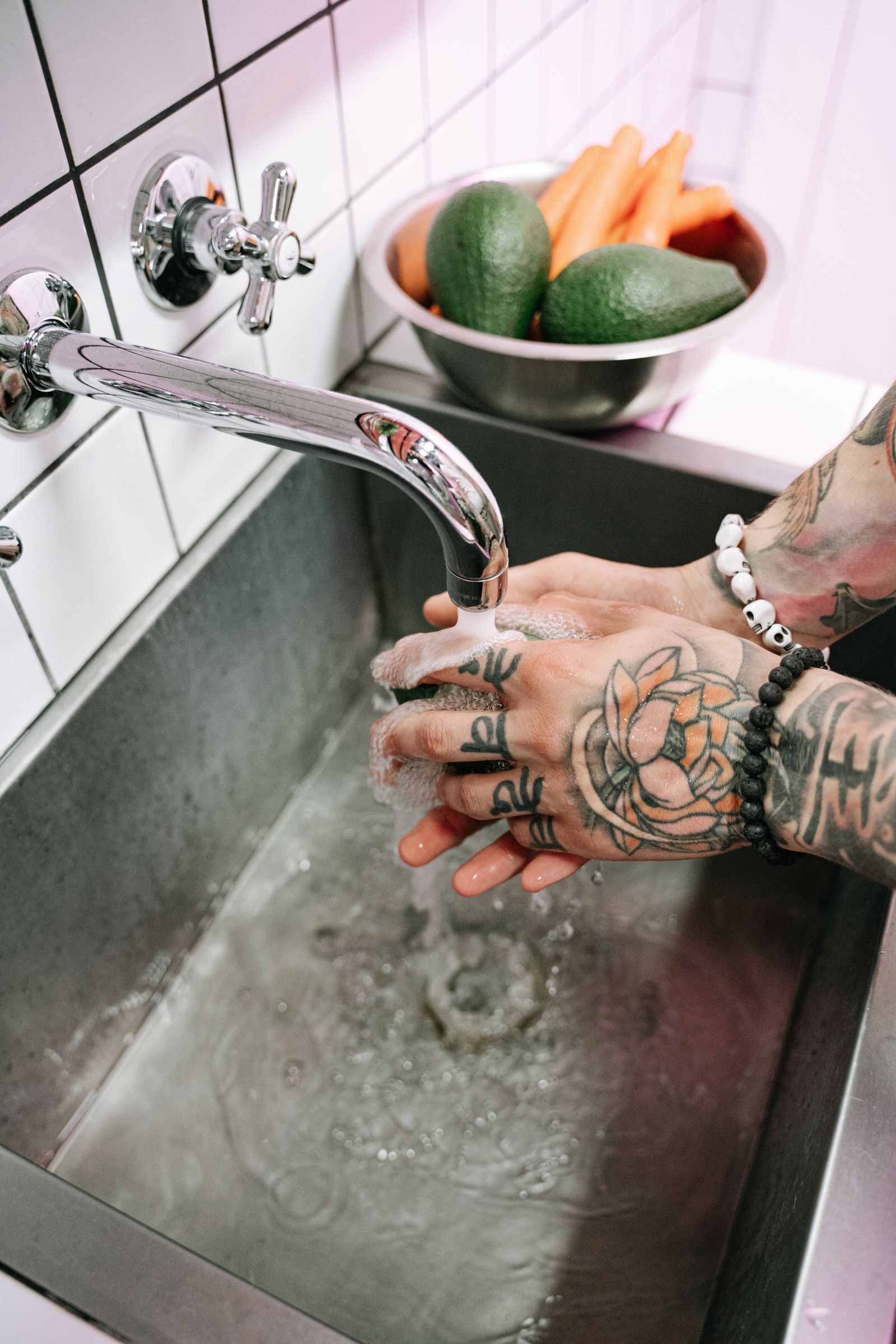
Raw chicken does not need to be washed before cooking. The USDA Food Safety and Inspection Service advises against washing poultry because water can splash bacteria onto food, utensils, and surfaces. Some bacteria may remain attached to the meat despite rinsing. Neither lemon juice nor vinegar is a substitute for proper cooking.
That splash can be difficult to see. CDC cites a USDA study in which about one in seven people who cleaned their sink after washing chicken still had germs in it. That result is a reminder of how easily contamination can persist, not a prediction that any particular meal will cause illness. If poultry has been washed, CDC advises cleaning the sink and surrounding area with hot, soapy water and sanitizing thoroughly.
Instead of washing chicken, handle it carefully and cook it to an internal temperature of 165°F (74°C), checking with a food thermometer. Insert the probe into the thickest part, avoiding bone, and check multiple areas when appropriate. Wash the probe after contact with raw or undercooked meat before using it again. A safe temperature and clean utensils address different parts of the same problem.
Clean hands and surfaces between tasks
Wash hands with soap and running water for at least 20 seconds before and after handling raw poultry. Pay attention to the backs of the hands, between fingers, and under nails. A quick rinse is not the same as washing with soap. Consider what was touched along the way, including package handles, taps, drawer pulls, and countertop edges, and clean those surfaces as needed.
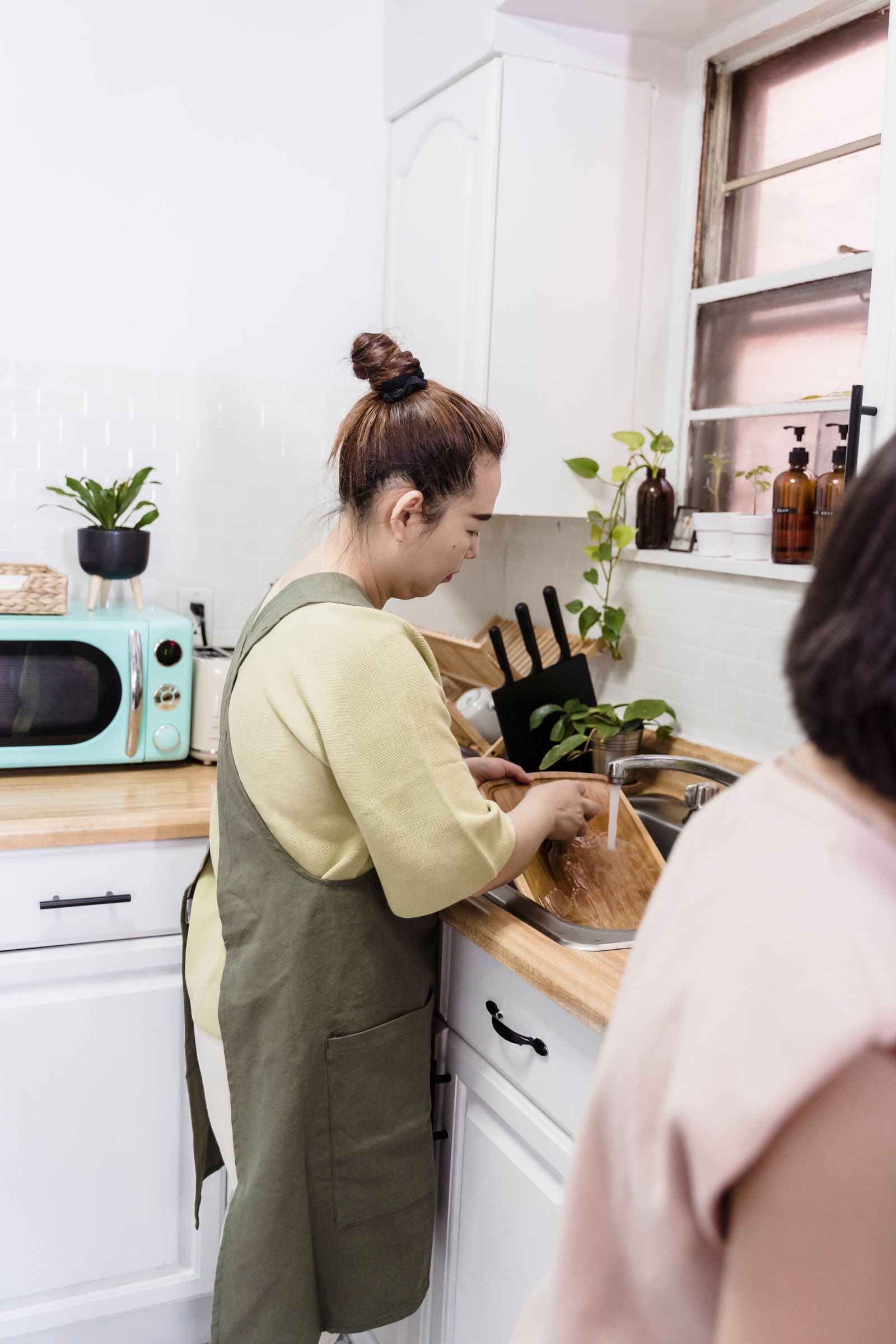
Wash cutting boards, knives, plates, and counters with hot, soapy water after they contact raw poultry and before preparing the next food. A USDA systematic review found moderate, consistent evidence that preventing cross-contamination at home may reduce exposure to foodborne pathogens, with cleaning food-preparation surfaces and utensils accompanied by handwashing among the helpful practices.
Cleaning removes visible soil and some germs; sanitizing reduces germs on a cleaned surface to a safer level. Clean first, because residue can interfere with sanitizing. When sanitizing is needed, use a product suitable for food-contact surfaces and follow its label for dilution, contact time, and rinsing. Never mix bleach with ammonia or other cleaners.
Keep the finished meal separate, too
The final transfer from pan to plate deserves the same attention as the first cut. Use clean tongs and a clean platter for cooked poultry, and keep ready-to-eat side dishes away from raw ingredients and their packaging. If raw juices have touched a food that will not be cooked, do not assume it can be made safe by wiping or rinsing it; discard the contaminated food.
Cross-contamination is easiest to prevent when the kitchen has a simple direction of travel: raw ingredients stay contained, hands and equipment are washed between jobs, and cooked or ready-to-eat food has its own clean space. These habits do not demand a perfect kitchen. They create reliable pauses at the points where invisible germs can otherwise move from one place to another.



Add comment